


Zep Mold Stain and Mildew Stain Remover Review
Zep Mold Stain and Mildew Stain Remover is mainly a stain-removal product, not a full mold remediation system. That difference matters. The product is designed to remove dark marks left by mold and mildew on surfaces that can tolerate a bleach-based cleaner.
Zep’s own product descriptions call it an industrial-strength, bleach-based formula that removes mold stains and mildew stains from compatible surfaces. The 1-gallon version is described as a ready-to-use formula that removes mold and mildew stains in one minute without scrubbing, while the 32-ounce spray is positioned for tough stains on indoor and outdoor surfaces.
That tells us the product’s strongest use case: fast cosmetic improvement. If your shower grout has black mildew stains, or your tub surround looks stained from bathroom moisture, Zep can give the kind of “wow, it actually worked” result that people want from a mold stain remover.
Public retailer reviews generally support that. Home Depot’s listing shows strong customer sentiment, with one search result showing a 4.6 rating from more than 2,000 reviews. Walmart review snippets also show customers praising the product for reducing scrubbing and making mold or mildew stains disappear quickly.
Still, the product name itself is important. It says “mold stain” and “mildew stain.” That is different from saying it can solve every mold problem in a building.
What People Usually Say About Zep Mold Remover
People usually praise Zep for three things: speed, visible whitening, and low effort. The most common positive review pattern is simple: someone had a shower, grout line, window area, or bathroom surface that looked bad, they sprayed Zep, waited, rinsed or wiped, and saw a major difference.
Walmart review snippets mention results such as “spray with no scrubbing” and mold being gone after application. Another Walmart review snippet says the product helped remove mildew staining from windows and reduced the need for heavy elbow grease.
Reddit discussions show a similar casual cleaning-community pattern. In one CleaningTips thread, a user said Zep Mold Stain and Mildew Stain Remover with “Powerful Bleach” made the mold disappear about 15 minutes after spraying. Another Reddit thread about Zep Mold and Mildew Remover described a negative experience where a rust-colored stain appeared where the product was sprayed, which supports the need for surface testing and caution around metals or sensitive finishes.
So the review picture is mostly positive, but not perfect.
What people like:
- Fast stain fading
- Strong whitening effect
- Less scrubbing
- Good results on bathroom grout
- Useful for tubs, showers, tile, and hard surfaces
- Affordable compared with professional cleaning
What people complain about:
- Strong bleach smell
- Possible surface discoloration
- Risk around metal finishes
- Not always effective on deep stains
- Mold can return if the moisture source remains
- Some surfaces need repeat treatment
In other words, users like Zep when the problem is a visible surface stain. They are less satisfied when they expect one spray to fix a deeper mold or moisture problem.
Our Hands-On View as a Professional Mold Cleaning Service
From a professional mold cleaning perspective, Zep is useful, but only in the right lane. We would treat it as a strong surface stain remover, especially for bathroom and exterior hard-surface staining. We would not treat it as a complete remediation method.
On real mold jobs, the first question is not, “Which spray kills mold?” The first question is, “Why is mold growing here?” Mold usually appears because moisture, organic residue, dust, poor ventilation, condensation, or water damage is present. If that condition does not change, the stain may come back even after the surface looks clean.

For a small shower stain, Zep can be practical. For a leaking wall, moldy drywall, wet cabinet, contaminated carpet backing, or AC-related mold smell, Zep is not enough.
Our field logic is:
- If the surface is hard, washable, and non-porous, Zep can help.
- If the issue is mainly staining, Zep can help a lot.
- If the issue is hidden moisture, Zep will not solve it.
- If the material is porous and contaminated, spraying the surface is usually not enough.
- If mold keeps returning, the building condition matters more than the cleaner brand.
EPA guidance says mold cleanup should include fixing the water problem and cleaning mold from hard surfaces with detergent and water, then drying completely. EPA also says bleach or other biocides are not recommended as a routine practice during mold cleanup, although there may be cases where professional judgment indicates their use.
That matches our view: Zep can be a useful tool, but it is not the whole process.
How Good the Product Is at Killing Mold
Zep is good at attacking visible mold and mildew stains on compatible surfaces because it uses bleach chemistry. Its Safety Data Sheet identifies sodium hypochlorite as an ingredient, and one SDS lists sodium hypochlorite in the 1% to 5% range for a foaming mold stain and mildew stain remover product.
Bleach-based cleaners can produce fast visual results because they break down dark organic staining and whiten the surface. That is why many people feel Zep “kills mold” instantly. The stain fades, the bathroom looks cleaner, and the surface smells like bleach.
But there is a technical difference between:
- Killing surface mold
- Removing mold residue
- Removing mold stains
- Preventing mold from returning
- Solving the moisture source
- Remediating contaminated building materials
Zep is strongest at the stain-removal part. It may also reduce or kill surface growth when used correctly on suitable non-porous surfaces, but the product is not a substitute for physical cleaning, drying, and source control.
EPA’s advice is useful here: mold can be scrubbed off hard surfaces with detergent and water, and the surface should be dried completely. If you only spray and leave a wet environment behind, you have not solved the condition that allowed mold to grow.
So, how good is it? For bathroom mildew stains, very good. For light mold staining on tile and grout, strong. For deep, hidden, porous, recurring, or building-wide mold contamination, not enough.
Where Zep Works Best
Zep works best on washable surfaces that can tolerate bleach. These are the surfaces where stain removal matters most and where the cleaner can actually touch the affected area.
Best-fit surfaces include:
- Ceramic tile
- Bathroom grout
- Fiberglass shower surrounds
- Porcelain tubs and sinks
- Shower walls
- Tub edges
- Some outdoor hard surfaces
- Caulk lines with light surface staining
- Non-porous bathroom surfaces
Zep’s own product bundle page describes the 32-ounce version as a bleach-powered spray that cleans and brightens grout, ceramic tile, fiberglass, and porcelain. Another Zep product page says the gallon version is made for tile, grout, tubs, showers, caulk, and bathroom surfaces.
This is exactly where we would expect it to perform well. Bathrooms create the perfect combination of moisture, soap scum, skin oils, dust, and poor ventilation. That buildup can feed mildew-like growth and stain surfaces. A strong bleach-based cleaner can make those areas look much cleaner quickly.
The product can also be useful when a surface is not deeply contaminated but has ugly staining. For example, grout that has dark mildew marks may brighten dramatically. A shower corner that looks black may look fresh again after treatment.
But even in these good cases, surface testing matters. Bleach can damage or discolor sensitive finishes. Do not assume it is safe on natural stone, unsealed surfaces, metals, colored grout, painted areas, fabrics, wood, or decorative finishes.
Where Zep Cannot Help at All
Zep cannot help when the real mold problem is behind the surface. That is the biggest limitation.
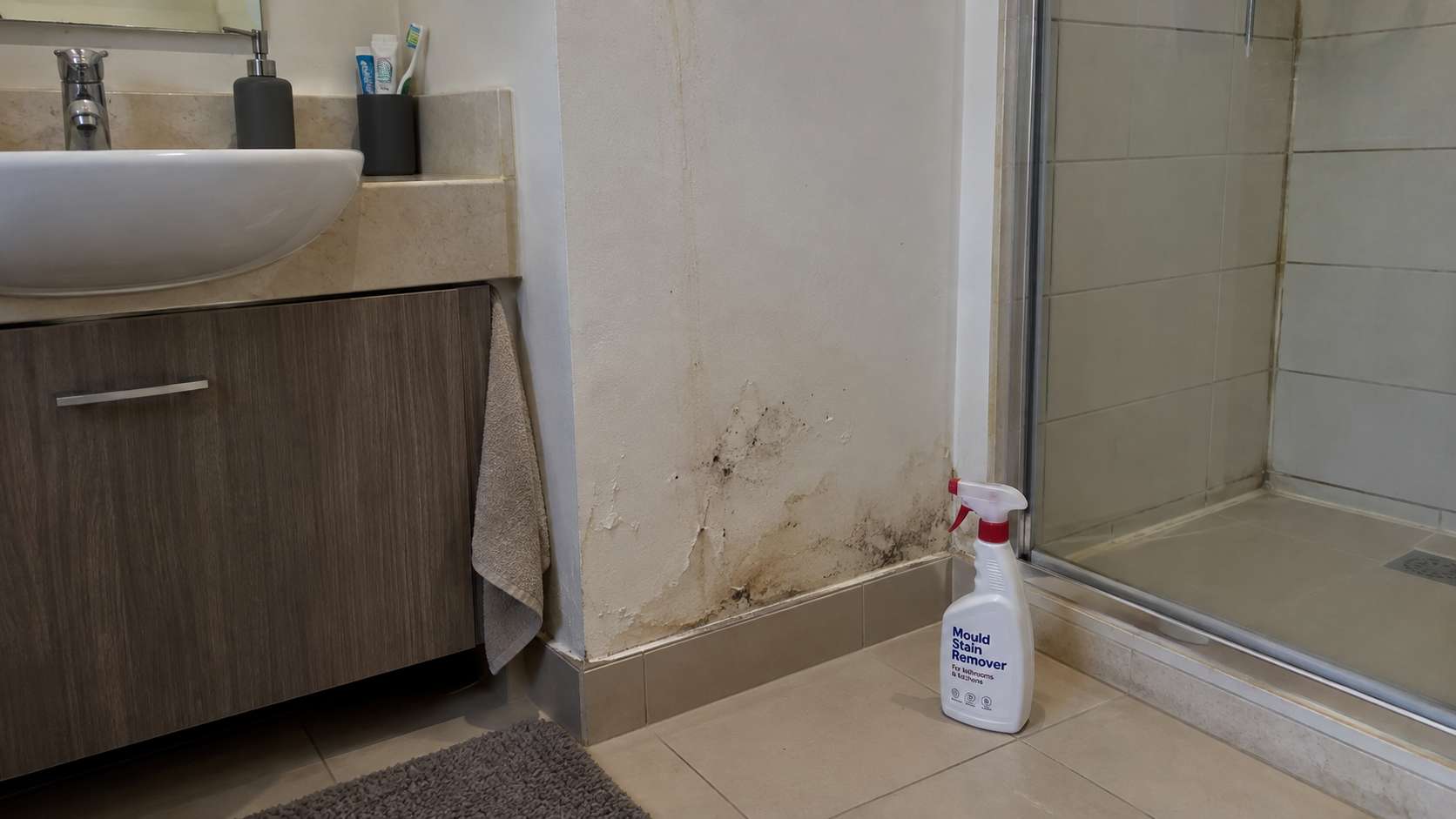
It cannot fix:
- A leaking pipe
- Wet drywall
- Mold behind cabinets
- Mold under flooring
- Mold inside insulation
- Mold behind baseboards
- AC condensation problems
- Hidden mold in wall cavities
- Recurring humidity
- Poor ventilation
- Flood-damaged porous materials
If mold is growing inside drywall, spraying the painted surface may make the wall look slightly cleaner, but the contamination can remain behind it. If bathroom caulk is moldy underneath, spraying the surface may whiten the top while the deeper growth stays trapped below. If grout is cracked or porous, stains may return because moisture is still entering the material.
Zep also cannot replace removal of unsalvageable materials. Porous materials like drywall, carpet padding, ceiling tiles, MDF, particle board, insulation, and cardboard can hold contamination below the surface. EPA notes that mold can infiltrate porous substances and may be difficult or impossible to completely remove from them.
This is where many DIY users become frustrated. They spray, the stain disappears, and then the mold comes back two weeks later. That usually means the environment is still supporting mold growth.
The product did not necessarily fail. The strategy failed.
Safety, Smell, and Surface Damage Concerns
Zep is a strong cleaner, so safety matters. Its SDS includes serious hazard language for some mold stain and mildew stain remover products, including warnings about severe skin burns and eye damage. The SDS also lists sodium hypochlorite, which explains the bleach smell and the stain-removal power.
Use gloves. Keep the area ventilated. Avoid breathing spray mist. Do not use it in a closed bathroom without airflow. Do not mix it with other cleaners, especially ammonia, vinegar, acid cleaners, toilet bowl cleaner, or descalers.
EPA warns that chlorine bleach should never be mixed with cleaning solutions or detergents that contain ammonia because toxic fumes can be produced. EPA also recommends protective gloves when using bleach or strong cleaning solutions for mold cleanup.
Surface safety is just as important. A Reddit user reported a rust-colored stain after using Zep Mold and Mildew Remover, which is a good reminder that bleach-based products can react badly with certain metals, residues, or finishes.
Avoid or test carefully on:
- Natural stone
- Colored grout
- Painted surfaces
- Aluminum
- Brass
- Copper
- Some stainless finishes
- Wood
- Fabrics
- Rubber parts
- Delicate sealants
- Decorative coatings
If the surface is expensive, old, custom, or easy to stain, test a hidden spot first. A product that works beautifully on white tile may be too harsh for specialty materials.
Our Final Verdict: DIY Cleaner or Professional Help?
Zep Mold Stain and Mildew Stain Remover is a strong DIY cleaner when the problem is small, visible, and surface-level. It is especially good for bathroom grout, shower walls, porcelain, fiberglass, tubs, and other bleach-safe hard surfaces.
You probably do not need a professional if:
- The affected area is small
- The surface is hard and washable
- There is no active leak
- There is no musty smell from behind walls
- The stain does not keep returning quickly
- The mold is not on porous building materials
- No one in the home has severe asthma, allergy, or immune concerns
You should consider a professional mold remediation service if:
- Mold keeps coming back
- The affected area is larger than a small patch
- You smell mold but cannot see the source
- There has been water damage or flooding
- Mold is on drywall, carpet, insulation, MDF, or wood framing
- The problem involves AC or HVAC systems
- The property is commercial, rental, or insurance-related
- Occupants have asthma, allergies, or immune vulnerability
EPA says if you hire a mold cleanup contractor, you should make sure the contractor has mold cleanup experience and follows professional or government guidance such as EPA, ACGIH, or IICRC guidance.
Our verdict is direct: Zep is a powerful stain remover, not a full mold solution. Use it for surface stains. Hire professionals when the mold is hidden, recurring, widespread, moisture-driven, or connected to health-sensitive indoor air concerns.
The Bottom Line
Zep Mold Stain and Mildew Stain Remover gets good reviews because it does what many shoppers want: it removes ugly mold and mildew stains quickly, especially on bathroom tile, grout, tubs, showers, fiberglass, and porcelain. Public reviews commonly praise its speed, whitening effect, and low-scrub performance.
But the product has limits. It smells like bleach, requires ventilation and gloves, may damage sensitive surfaces, and cannot fix the reason mold appeared in the first place. It can make a bathroom look clean, but it cannot repair leaks, dry walls, remove hidden mold, or remediate porous materials.
So the final answer is balanced: Zep is a strong DIY mold and mildew stain remover for small, surface-level, bleach-safe cleaning jobs. For serious mold, recurring mold, hidden contamination, water damage, or HVAC-related mold, professional mold remediation is the better and safer path.