


Will Varnish Prevent Mold?
Varnish can help prevent mold only in a limited way. It works by sealing the surface of wood, making it harder for water to soak in. Since mold needs moisture to grow, reducing moisture absorption can make the wood less friendly to mold.
But varnish is not a guaranteed mold barrier. Mold can still grow on dust, dirt, grease, or organic residue sitting on top of the varnished surface. It can also grow around cracks, edges, joints, screw holes, unsealed backs, undersides, and damaged areas where moisture enters.
This is why varnished wood can still become moldy in places like:
- Bathroom cabinets
- Kitchen cabinets
- Wooden wardrobes
- Window frames
- Outdoor furniture
- Damp doors
- Wooden skirting boards
- Storage shelves
- Furniture placed against damp walls
The biggest mistake is applying varnish over a mold problem and expecting the mold to disappear. If mold is already present, varnish may trap moisture and contamination underneath the coating. That can make the problem harder to see while the wood continues deteriorating.
So the direct answer is: varnish can help prevent mold on properly cleaned, dried, and prepared wood, but it cannot replace moisture control or mold removal.
Fact 1: Varnish Protects Wood From Moisture, Not From Every Mold Risk
Varnish helps because it reduces how much moisture the wood absorbs from spills, humidity, and surface contact. This is useful because raw wood is porous. It can soak up moisture, swell, stain, and hold dampness long enough for mold to grow.
When varnish is applied correctly, it creates a harder surface layer. Water may sit on top longer instead of soaking in immediately. That gives you more time to wipe the surface dry.
This is helpful for:
- Wooden countertops
- Cabinet doors
- Shelving
- Window frames
- Doors
- Wooden furniture
- Decorative panels
- Skirting boards
However, varnish does not make wood immune to mold. Mold can still grow if the area stays dirty and humid. For example, a varnished cabinet under a leaking sink can still become moldy because water may enter through the back, bottom, seams, screw holes, or unfinished edges.
Also, many wooden items are not sealed on all sides. The front may be varnished, but the back, bottom, inner edge, or cut side may remain exposed. Moisture usually finds the weakest point.
That is why varnish is useful, but only as part of a bigger mold prevention plan.
Fact 2: Varnish Should Never Be Applied Over Active Mold
You should not apply varnish over active mold. This is one of the worst shortcuts people take. The surface may look better for a while, but the real issue remains underneath.
Before varnishing, the wood must be:
- Clean
- Mold-free
- Fully dry
- Sanded or prepared properly
- Free from musty odor
- Free from leaks or dampness
- Suitable for coating
If you varnish over moldy wood, several problems can happen. The mold stain may still show through. Moisture may become trapped. The coating may peel, bubble, or fail. The musty smell may remain. Mold may continue growing around the edges or behind the coated area.
If the mold is only a small surface patch on solid wood, it may be possible to clean, dry, sand lightly if appropriate, and then refinish. But if the wood is soft, rotten, swollen, blackened deeply, or musty inside, varnish will not rescue it.
For moldy MDF, particle board, or plywood that has swollen from water damage, varnish is usually not enough. These materials can hold moisture inside, and once they swell or crumble, coating the surface is mostly cosmetic.
The safe rule is simple: remove the mold and moisture problem first, varnish later.
Fact 3: Varnish Does Not Fix High Humidity
Varnish will not fix a humid room. If indoor humidity stays high, mold can grow on walls, clothes, shoes, cabinets, curtains, leather goods, and even dust sitting on varnished surfaces.
This is especially important in hot and humid climates, closed apartments, bathrooms, kitchens, laundry rooms, and homes left empty during vacation. A varnished wardrobe in a humid room can still smell musty because the air inside the wardrobe is damp.
High humidity can also cause condensation. If a wooden surface becomes cool from AC and humid air touches it, moisture may form on or near the surface. Varnish may slow absorption, but it cannot stop condensation from happening.
To prevent mold properly, control humidity with:
- AC dry mode
- Dehumidifier
- Exhaust fans
- Better ventilation
- Leak repair
- Humidity monitor
- Proper airflow behind furniture
- Keeping cabinets and wardrobes less crowded
If the room smells musty, varnishing one wooden surface will not solve the room problem. You need to find why the room is damp.
Fact 4: Varnish Works Best on Solid Wood, Not Damaged Wood-Based Boards
Varnish works best on clean, dry, solid wood or properly prepared wood surfaces. It is less effective when the material is already damaged by water.
Solid wood can often be dried, cleaned, sanded, and refinished if the damage is limited. But MDF, particle board, and some plywood products are more vulnerable. Once they absorb water, they may swell, soften, delaminate, or crumble.
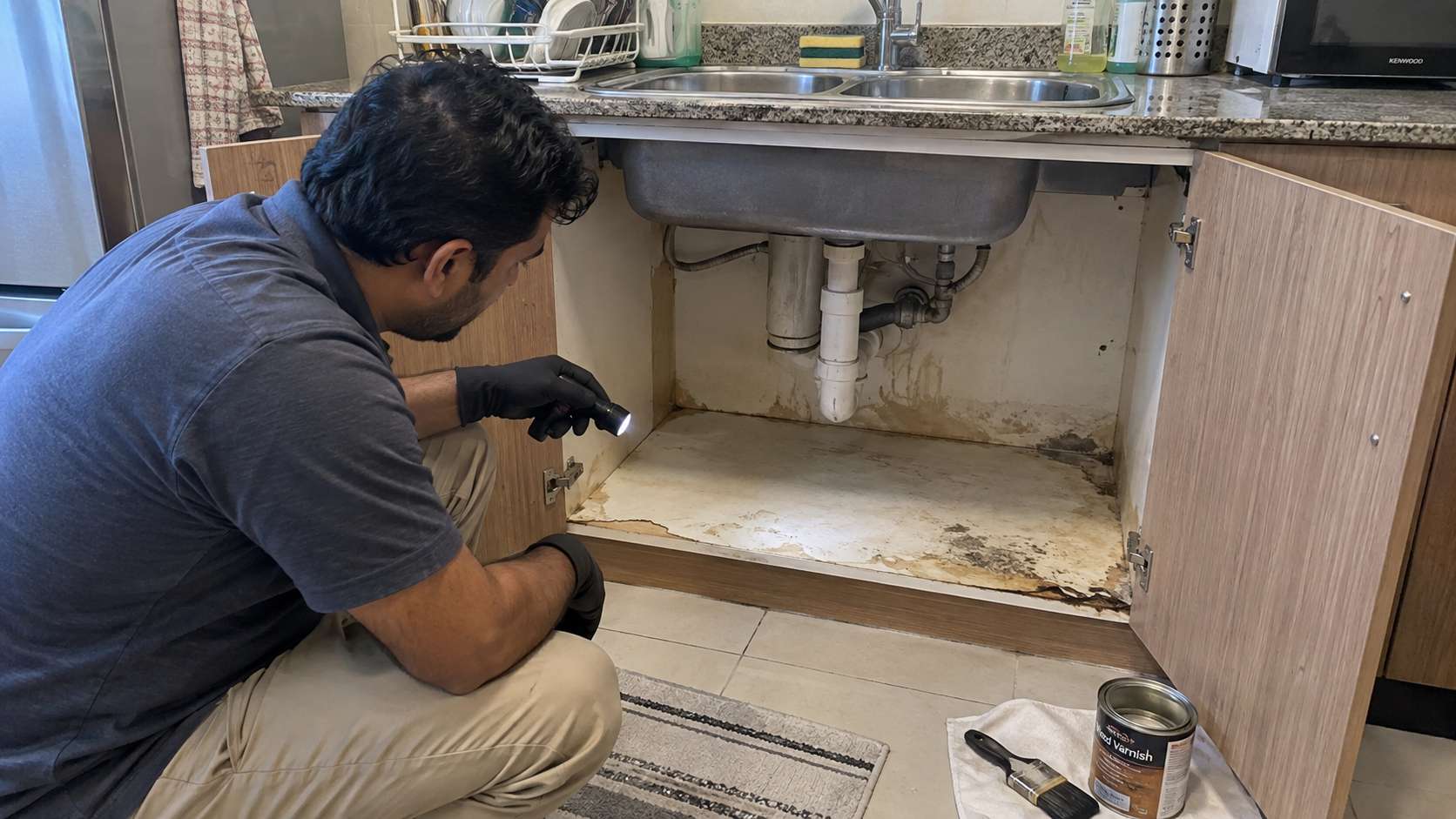
This matters for:
- Kitchen cabinets
- Bathroom vanities
- Wardrobes
- Drawer bases
- Under-sink panels
- Skirting boards
- Cheap furniture
- Storage shelves
If the board is swollen, varnish will not restore its strength.

If the inside is damp, varnish may trap the moisture. If the cabinet smells musty even after cleaning, the material may be contaminated deeper than the surface.
In that case, replacement may be better than coating. For example, a moldy under-sink cabinet base should often be replaced with a more moisture-resistant material rather than repeatedly cleaned and varnished.
Varnish is a protection layer, not a repair for ruined wood.
Fact 5: The Edges, Seams, and Back Side Matter Most
Many people varnish only the visible face of wood. But mold and moisture often attack the hidden sides first.
For example, a cabinet door may look perfect from the front, while the unsealed bottom edge absorbs water from mopping, splashes, or condensation. A wooden shelf may be coated on top, but the raw back edge touches a damp wall. A skirting board may be painted outside, but moisture enters from the wall side.
If you want varnish to help with mold prevention, the weak points must be protected too:
- Cut edges
- Corners
- Screw holes
- Joints
- Back panels
- Bottom edges
- Undersides
- Areas near sinks
- Areas near walls
- Areas close to floors
This is especially important in kitchens and bathrooms. Water rarely attacks only the center of a flat wooden panel. It usually enters through gaps, joints, and edges.
A good mold-resistant finish is not just about the product. It is about complete surface preparation and correct application.
Fact 6: Varnish Is Not the Same as Anti-Mold Paint or Wood Preservative
Varnish, anti-mold paint, wood sealer, waterproof coating, and wood preservative are not the same thing.
Varnish mainly forms a protective film over wood. Anti-mold paint is usually made for painted walls or ceilings and may contain additives that help resist mold growth on the paint film. Wood preservatives may be designed to protect wood from fungi, insects, or decay in specific conditions. Waterproof coatings may be designed for higher moisture exposure.
So, choosing the right product matters.
For indoor decorative wood, varnish may be enough if moisture risk is low. For bathrooms, kitchens, outdoor wood, or damp areas, you may need a more moisture-resistant coating system. For structural or exterior wood, you may need proper wood treatment or professional specification.
Do not assume any shiny coating means mold protection. Read the product label and check:
- Indoor or outdoor use
- Moisture resistance
- Mold or mildew resistance
- Surface compatibility
- Drying time
- Number of coats
- Ventilation requirements
- Maintenance instructions
The best finish depends on the location. A bedroom shelf, bathroom vanity, balcony wood panel, and kitchen sink cabinet do not face the same moisture risk.
Fact 7: Varnish Helps Most After Proper Mold Prevention Steps
Varnish is most useful after you have already controlled the real mold risks. It should be one part of the final protection step, not the first move.
Before varnishing, do this:
- Find the moisture source.
Check for leaks, condensation, humidity, poor ventilation, or damp walls. - Fix the water problem.
Repair pipes, improve ventilation, dry the room, or solve condensation. - Clean the wood.
Remove dirt, grease, dust, and any surface mold safely. - Dry the wood completely.
Do not coat damp wood. - Inspect for damage.
Soft, swollen, rotten, or musty wood may need replacement. - Prepare the surface.
Sand, clean, and follow the varnish manufacturer’s instructions. - Seal all vulnerable sides.
Protect edges, joints, and undersides where moisture may enter. - Maintain the area.
Keep the surface clean and dry after varnishing.
After varnishing, keep checking the area. If you see bubbling, peeling, staining, or musty smell, moisture may still be present.
When Varnish Is a Good Idea
Varnish can be a good idea when the wood is clean, dry, and not already mold-damaged. It is especially useful when you want to make wood easier to wipe and less likely to absorb small amounts of moisture.
Use varnish for:
- Clean wooden shelves
- Dry cabinet doors
- Indoor furniture
- Window frames
- Decorative wood panels
- Wooden doors
- Solid wood surfaces
- Areas with occasional splashes, not constant water
It works best when paired with good habits:
- Wipe spills quickly.
- Keep humidity controlled.
- Do not push furniture against damp walls.
- Ventilate bathrooms and kitchens.
- Fix leaks early.
- Clean dust and residue regularly.
- Recoat when the finish wears down.
Varnish is preventive support. It gives wood a better chance against moisture, but only when the environment is already under control.
When Varnish Will Not Help
Varnish will not help much when the mold problem is active, hidden, or caused by constant moisture.
Do not rely on varnish if:
- The wood is already moldy.
- The wood smells musty.
- The board is swollen or soft.
- The wall behind it is damp.
- A pipe leak is still active.
- The room humidity is high.
- Condensation keeps forming.
- Mold keeps coming back after cleaning.
- The material is rotten or crumbling.
- The mold is inside MDF or particle board.
- The area is exposed to regular water.
In these cases, varnish may only hide the problem temporarily. The correct solution may be drying, leak repair, mold removal, material replacement, better ventilation, or professional remediation. And if you need professional help for mold issues in your wooden furniture or basically anywhere in your home, give Bio-On a call. You’ll see no mold in no time.
The Bottom Line
Varnish can help prevent mold on wood, but only in the right conditions. It protects clean, dry wood by reducing moisture absorption and making the surface easier to wipe. That can lower mold risk.
But varnish will not kill mold, remove hidden contamination, fix leaks, stop humidity, dry damp wood, or save swollen wood-based boards. If you apply varnish over mold or moisture, you may trap the problem instead of solving it.
Use varnish as the final protective layer after the wood is clean, dry, and the moisture source is fixed. For serious or recurring mold, the real solution is not more varnish. It is moisture control, proper cleaning, damaged material removal, and long-term prevention.