


Will Paint Kill Mold?
It’s a big NO, guys! I know it’s sad, but paint will not kill mold growing on a wall, ceiling, wooden surface, or any other building material. It just temporarily covers the dark spots, but it doesn’t remove the mold colony or correct the moisture that allowed it to grow.
The Environmental Protection Agency specifically advises against painting or caulking over moldy surfaces. The surface should be cleaned and dried first because paint applied directly over mold is likely to peel.
There are several reasons paint fails as a mold solution:
- Paint doesn’t remove the mold. It creates a coating over the contamination.
- Moisture remains trapped. If the wall is still damp, the conditions that support growth haven’t changed.
- Paint can lose adhesion. Moisture, damaged drywall paper, and surface contamination can cause bubbling or peeling.
- Mold may spread beyond the visible stain. Growth can extend behind paint, wallpaper, drywall, baseboards, or cabinets.
- Dead mold still needs to be removed. Even when a chemical product kills some mold, the remaining material may still cause allergic reactions in sensitive people.
A freshly painted wall may look clean at first. That visual improvement can be misleading. If the leak, condensation, or humidity problem continues, the spots may return through the new coating.
Why Mold Comes Back Through New Paint
The reason is simple. Mold comes back because paint doesn’t remove what mold needs to grow: moisture and a suitable material. Drywall paper, dust, wood, wallpaper adhesive, and other organic debris can provide a food source when they remain damp.
For instance, suppose mold appears on a bedroom wall near an air-conditioning vent. Painting the wall may hide the stains, but it won’t fix condensation from the vent, a blocked drain line, cold-surface moisture, or a leak inside the wall. As long as the area continues getting wet, mold can return.
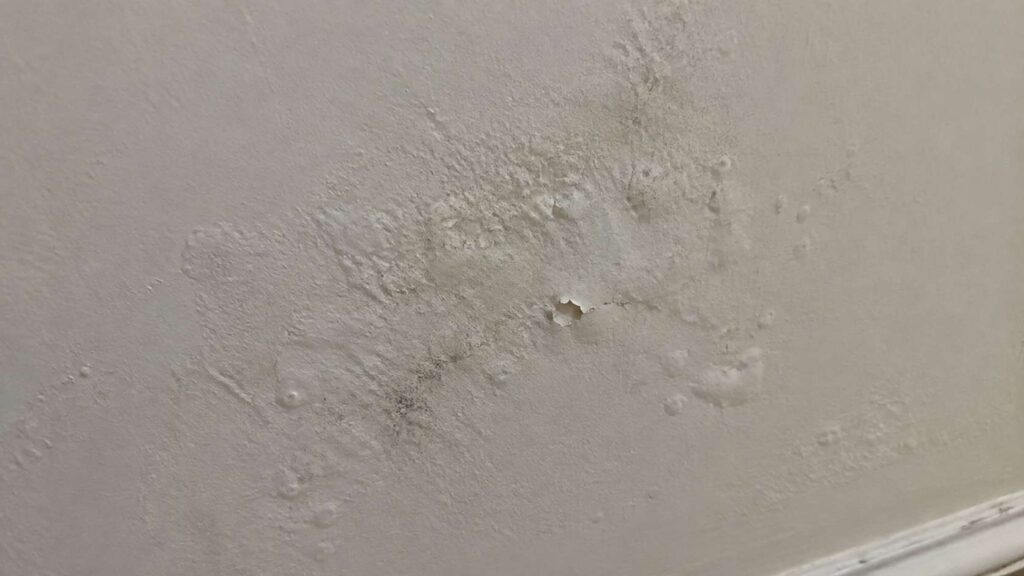
Common signs that mold was painted over include:
- Dark spots becoming visible again
- Yellow, brown, or gray discoloration
- Paint bubbling or blistering
- Peeling or flaking coatings
- A persistent musty smell
- Soft, swollen, or crumbling drywall
- Dampness around windows, pipes, or air-conditioning equipment
A painted surface can also conceal how serious the problem is. The visible patch may be small while the back of the drywall or the wall cavity is more heavily affected.
How to Remove Mold Before Painting
The best method for removing mold depends on the size of the affected area and the material on which the mold is growing. A small patch on a hard, washable surface is very different from widespread growth inside drywall or insulation.
1. Stop the Water or Humidity Source
Before cleaning, determine why the surface became damp. Possible causes include:
- Plumbing or roof leaks
- Air-conditioning condensation
- Poor bathroom ventilation
- Persistently high indoor humidity
- Previous flooding
Repair the leak, improve ventilation, or use appropriate humidity control. Cleaning without fixing the moisture source usually leads to another mold problem.

2. Protect Yourself During Cleanup
Mold cleanup can disturb spores and contaminated dust. The CDC recommends wearing at least a NIOSH-approved N95 respirator, protective gloves, and goggles that keep dust out of the eyes. People with asthma, severe allergies, immunosuppression, or other relevant health concerns should avoid performing mold cleanup themselves.
Keep children and pets away from the work area. Avoid aggressively dry-brushing mold because that can send more particles into the air.
3. Clean Hard, Nonporous Surfaces
Mold can generally be removed from hard surfaces using water and detergent. Scrub or wipe away the visible growth, remove the remaining residue, and dry the surface promptly and thoroughly.
Examples of relatively cleanable materials may include:
- Tile
- Glass
- Metal
- Certain sealed surfaces
- Some painted surfaces that are still structurally sound
The goal isn’t simply to spray a product and leave the dead mold in place. The contamination needs to be physically removed.
4. Remove Unsalvageable Porous Materials
Porous materials are more difficult because mold can grow into their gaps, fibers, or internal structure. Moldy ceiling tiles, carpet, insulation, and severely affected drywall may need to be removed and discarded rather than cleaned and painted.
The EPA notes that complete mold removal from porous materials can be difficult or impossible.
Drywall may need replacement when it is:
- Soft or swollen
- Crumbling
- Heavily stained
- Wet internally
- Moldy on both sides
- Giving off a persistent musty smell
Painting damaged drywall doesn’t restore its strength or remove contamination hidden inside it.
5. Dry the Area Completely
After cleaning or removing affected material, dry the area before applying primer or paint. Use ventilation, air-conditioning, or a dehumidifier as appropriate. Confirm that the leak has stopped and that dampness isn’t returning.
Don’t judge dryness only by touching the wall. The surface may feel dry while moisture remains behind it. Recurring stains, odors, peeling paint, or elevated humidity can indicate that the area still needs investigation.
Should You Use Bleach to Kill Mold?
Bleach shouldn’t be treated as the automatic solution for every mold problem. The EPA does not recommend using biocides such as chlorine bleach as a routine mold-cleanup practice. Its main point is that mold must be physically removed and the moisture problem corrected.
The CDC states that bleach or detergent may be used in some household mold-cleanup situations. The correct choice depends on the material, the amount of damage, and the cleaning conditions. When using any chemical cleaner, follow the product label and provide suitable ventilation. Never mix bleach with ammonia or other cleaning products. Mixing cleaners can produce dangerous fumes.
When Can You Safely Paint the Surface?
You can paint after the source of moisture has been repaired, visible mold and residue have been removed, damaged materials have been replaced, and the surface is completely dry.
Before painting, check that:
- No visible mold remains
- The musty odor is gone
- The material is dry and structurally sound
- The leak or condensation problem has been corrected
- Stains aren’t returning
- Loose or peeling coatings have been removed
- The surface has been prepared according to the paint manufacturer’s directions
A suitable primer may help cover remaining cosmetic stains after proper remediation. Mold-resistant paint or a compatible mold-inhibiting additive can provide extra protection in moisture-prone spaces, but it can’t compensate for leaks, poor ventilation, or consistently wet walls. The CDC describes mold inhibitors in paint as a preventive measure, not a method for covering active mold.
So, Will You Paint Those Moldy Walls?
Paint will not kill mold. At best, it hides the discoloration temporarily. At worst, it conceals an active moisture problem while the wall continues deteriorating underneath.
The correct solution is to find and repair the source of moisture, physically remove mold from cleanable surfaces, discard materials that can’t be properly restored, and dry the area completely. Primer and paint should only be applied after those steps are finished.