


Why Mold in House Usually Means a Moisture Problem
The reason why mold in house areas appears is almost always the same: a surface has remained damp. Mold spores are naturally present in indoor and outdoor air, but they generally can’t establish active growth unless they reach a material that provides moisture.
Many common household materials can easily become a mold colony’s delicious feast once they become damp. These include:
- Drywall and its paper facing
- Wood and wooden furniture
- Carpet and underlay
- Wallpaper and adhesive
- Ceiling tiles
- Dust collected on walls, vents, and other surfaces
- Fabrics, cardboard, and stored belongings
This is why mold should be considered a symptom of a moisture problem. The visible patch may be small, but the damp condition behind it can be larger or more persistent.
A bathroom wall, for example, may develop mold because steam repeatedly condenses on a cold surface. A bedroom corner may be affected because humid air becomes trapped behind furniture. Mold on a ceiling might result from a slow plumbing leak above it. In each case, the mold is responding to water that is already present.
The moisture source isn’t always obvious. Water can travel along pipes, framing, ceilings, or wall cavities before appearing somewhere else. A dark patch may therefore form several feet away from the original leak.
What the Location of Mold Reveals About Your House
Where mold appears can help you narrow down the type of moisture problem affecting the home. The location isn’t a complete diagnosis, but it gives you a useful place to begin investigating.
Mold around windows
Mold on window frames, seals, curtains, or nearby walls commonly points to condensation. Warm, humid indoor air cools when it touches cold glass or surrounding surfaces. When the air can no longer hold the same amount of moisture, water collects on the surface.
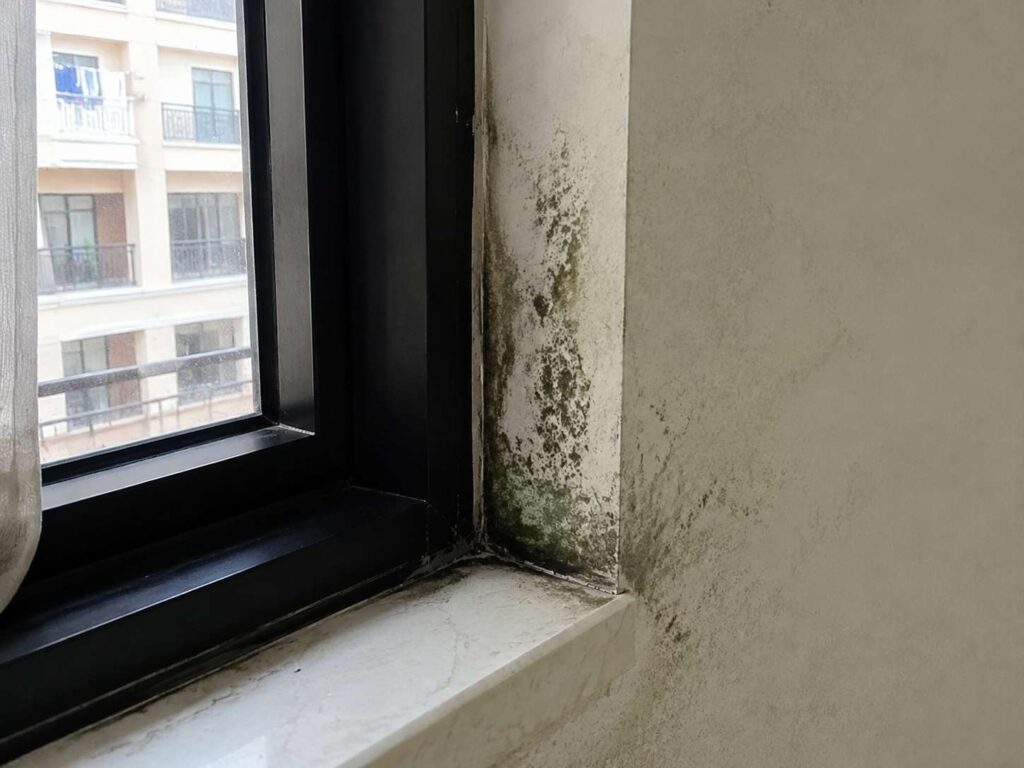
Mold on ceilings
A moldy ceiling can indicate several different sources. In a bathroom, the likely cause may be steam that isn’t being removed effectively. Elsewhere, it could suggest a leaking roof, an overflowing air-conditioning drain, or plumbing from the floor above.
Mold in wall corners or behind furniture
Corners and areas behind wardrobes, beds, or cabinets often receive little airflow. If the wall is cooler than the surrounding room, moisture may condense there even when the rest of the wall looks dry.
This pattern is particularly common on exterior walls. Large furniture placed tightly against the surface can trap humid air and prevent the wall from drying.
Mold near an air conditioner
Growth around an AC vent or unit may point to condensation, a blocked drain line, a dirty drip pan, poor insulation around cold components, or humid air entering the system.
Mold along the lower part of a wall
Growth near the floor may be connected to plumbing leaks, water entering from outside, wet flooring, flooding, or moisture moving through a concrete slab or foundation.
Swollen skirting boards, crumbling plaster, lifted flooring, or a visible moisture line can indicate that the problem extends beyond surface humidity.
The Main Ways Moisture Builds Up Indoors
Moisture doesn’t need to enter a house through a major flood. Small amounts of water added repeatedly can be enough to create a mold problem.

Leaks and water intrusion
Roof leaks, damaged window seals, leaking pipes, overflowing AC drains, and water entering through exterior walls can keep building materials damp for long periods.
Slow leaks are especially easy to miss. A pipe may release only a small amount of water, but enclosed drywall, insulation, or wood can dry very slowly. Mold may become visible only after the problem has continued for weeks.
Water-damaged materials should be dried quickly. EPA guidance says that drying damp areas and items within approximately 24 to 48 hours can often prevent mold growth from becoming established.
Condensation
Condensation occurs when humid air touches a cold surface. Common examples include water on windows, cold water pipes, exterior walls, AC vents, and bathroom ceilings.
It may appear to be only a few droplets, but repeated condensation can keep paint, dust, sealant, plaster, or drywall damp enough for mold to grow.
Condensation also reveals an imbalance between indoor humidity, airflow, insulation, and surface temperature. Reducing humidity, improving ventilation, insulating cold surfaces, or adjusting the room temperature can help, depending on the cause.
High indoor humidity
A house can have a moisture problem even when there is no visible leak. Showering, cooking, drying clothes indoors, and normal daily activity all release water vapor.
If that moisture isn’t removed, indoor humidity rises. Dampness may then develop on cooler walls, inside closets, behind furniture, or in rooms with limited airflow.
The CDC recommends keeping home humidity no higher than 50% where possible, while EPA guidance generally advises keeping it below 60%, ideally around 30% to 50%. A hygrometer can help show whether the air remains humid even when surfaces appear dry.
Poor ventilation
Ventilation helps carry humid air away from kitchens, bathrooms, laundry areas, and other moisture-producing spaces. Without it, water vapor remains inside and may settle on nearby surfaces.
An exhaust fan that is too weak, rarely used, blocked, or vented into a ceiling cavity may not solve the problem. Opening a door or window can help in some conditions, but it may add more moisture when the outside air is very humid.
Ventilation therefore needs to remove moisture from the building rather than merely move humid air into another room or enclosed space.