


1. Bathroom Ceilings and Corners
Bathroom ceilings and corners are among the most common places where mold grows because steam rises and collects on cooler surfaces. If the bathroom has weak ventilation, no exhaust fan, or a door that stays closed after showers, moisture can sit on the ceiling for hours.
You may first notice small black, gray, or green dots near the ceiling corner. Sometimes the paint starts looking dull, stained, or slightly fuzzy. If the same patch returns after cleaning, the room is probably staying too humid.
To reduce the risk, run the exhaust fan during and after showers, wipe wet surfaces, keep towels dry, and check whether the ceiling paint is suitable for damp rooms. If the mold spreads across the ceiling or the plaster feels soft, you may need more than cleaning. There may be moisture above the ceiling too.
2. Shower Grout and Silicone Lines
Shower grout and silicone lines grow mold because they stay wet repeatedly. Soap scum, shampoo residue, body oils, and poor drying give mold and mildew more to feed on.
This mold often appears as black lines along silicone, dark spots in grout, or pinkish-orange slime around corners. The pinkish slime may sometimes be bacteria rather than mold, but it still means the area is staying wet.
Clean small surface growth with a suitable bathroom cleaner, then dry the area completely. But if silicone is deeply stained, cracked, or peeling, cleaning may not be enough. Replace the sealant and fix the reason water is sitting there.
The prevention habit is simple: after showers, remove standing water and improve airflow.
3. Under Kitchen Sink Cabinets
Under the kitchen sink is a classic hidden mold hotspot. It is dark, enclosed, and full of plumbing connections. A tiny drip from the P-trap, faucet hose, shutoff valve, dishwasher line, or sink seal can keep the cabinet base damp for days.
The first clue is often a musty smell when you open the cabinet. Then you may see swollen MDF, black spots, soft wood, peeling laminate, or stains at the back panel.
Do not only wipe the visible mold. Use a dry tissue to check pipe joints and cabinet corners. If the tissue becomes wet, the leak is still active. Fix the leak first, remove wet items, dry the cabinet with airflow, and consider replacing swollen panels. Mold on a hard shelf may be cleaned, but mold inside damaged MDF usually needs removal.
4. Behind Large Furniture
Mold grows behind large furniture because airflow is weak there. Beds, wardrobes, sofas, cabinets, and bookshelves pushed tightly against walls can trap moisture. This is worse on exterior walls, cold AC-cooled walls, or walls affected by seepage.
You may not notice the mold until you move the furniture. The wall may have black or gray patches, peeling paint, or a musty smell. The furniture back may also become moldy, especially if it is made of wood, MDF, fabric, or leather.
Leave a small gap between furniture and walls. This helps air move and allows the wall to dry. If mold keeps returning behind the same furniture, inspect the wall for condensation, seepage, or hidden plumbing.
5. Inside Wardrobes and Closets
Wardrobes are perfect hiding places for mold because they are dark, packed, and poorly ventilated. Clothes, shoes, bags, leather goods, and stored fabric can absorb moisture from humid air. Once mustiness starts, it can spread quickly.

Mold inside wardrobes often appears on the back panel, shoes, bags, folded clothes, or the wall behind the wardrobe. You may notice a stale smell before you see any spots.
Avoid overpacking the wardrobe. Store only fully dry clothes. Keep leather goods ventilated. Open wardrobe doors regularly. Use a humidity monitor if the room is damp. If the wardrobe shares a wall with a bathroom or exterior wall, check for hidden dampness behind it.
6. Around AC Vents and Indoor Units
AC areas are major mold hotspots, especially in hot and humid climates. Mold can grow around vents, filters, drain pans, coils, ducts, or damp ceiling areas near the unit. This usually happens when dust and moisture combine.
Warning signs include musty air when the AC turns on, black spots around vents, condensation near diffusers, dripping from the indoor unit, or a moldy smell in one room.
The EPA says duct cleaning may be appropriate when there is substantial visible mold growth inside hard-surface ducts or on other HVAC components. If the smell returns after cleaning the filter, the issue may be deeper: coil, drain pan, blocked drain line, duct insulation, or nearby ceiling mold.
Do not spray perfume or bleach into the AC. Get the system inspected.
7. Carpets and Carpet Padding
Carpet can hide mold very well because the top may look dry while the padding underneath stays damp.
This often happens after a leak, spill, flood, AC drip, or carpet shampooing that did not dry properly.
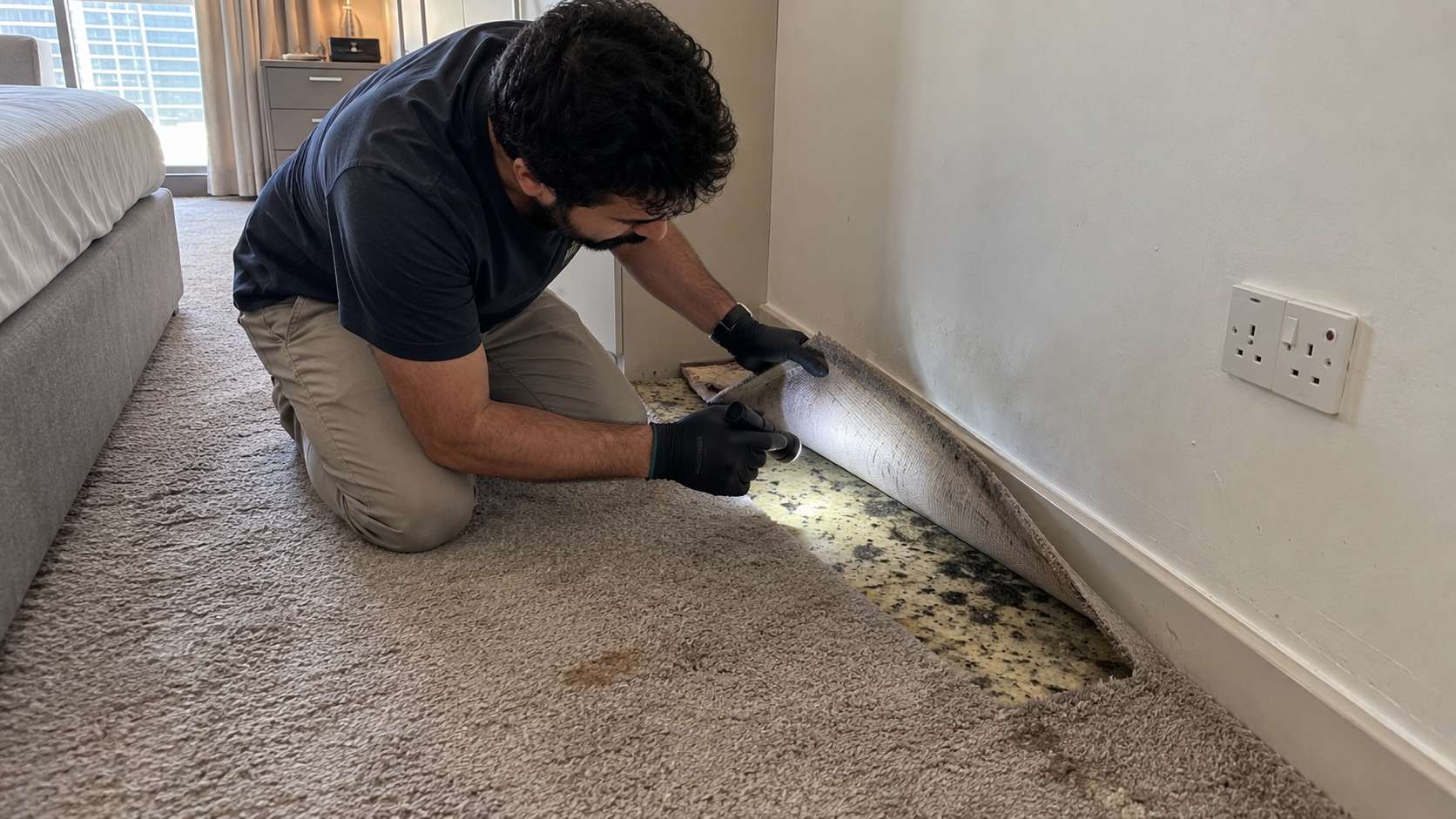
The EPA specifically lists the underside of carpets and pads as possible hidden mold locations. That matters because vacuuming the top does not solve mold underneath.
Check for musty odor, stains, damp feeling, or discoloration on the backing. If the carpet was wet for more than 24–48 hours, the risk is higher. Small clean-water spills may be dried and cleaned quickly, but moldy padding often needs replacement.
If the carpet smells musty after drying, something is still contaminated or damp.
8. Behind Wallpaper or Wall Paneling
Wallpaper and wall paneling can hide mold because they can trap moisture behind the surface. A wall may look decorative from the front while mold grows behind the covering.
This is especially risky after leaks, condensation, roof seepage, or damp exterior walls. You may notice bubbling wallpaper, peeling edges, soft spots, staining, or musty odor.
The EPA warns that mold can hide on the back side of drywall, wallpaper, or paneling. So if you smell mold but only see a small stain, the real growth may be behind the finish.
Do not simply glue the wallpaper back or cover it with another layer. Find out why the wall is damp first.
9. Inside Wall Cavities Around Pipes
Wall cavities around pipes are some of the worst places where mold grows because leaks can stay hidden for a long time. A slow drip inside a wall may not show on the surface immediately. By the time paint bubbles or stains appear, the drywall, insulation, or wood framing may already be damp.
Signs include cold wall patches, bubbling paint, peeling plaster, dark stains, soft drywall, musty smell, or mold returning in the same area.
The EPA notes that leaking or condensing pipes inside walls are possible locations for hidden mold. If you suspect this, do not keep cleaning the wall surface every week. You need moisture inspection and leak repair.
A moisture meter or professional inspection can help confirm whether the wall is wet inside.
10. Ceiling Tiles and False Ceilings
Mold grows above ceilings when roof leaks, AC condensation, pipe leaks, or duct problems wet the materials above. False ceilings are especially tricky because the visible stain may be far from the actual water source.
You may see brown circles, sagging panels, peeling paint, or mold near access panels. You may also smell mustiness from the ceiling when the AC runs.
EPA guidance lists the top side of ceiling tiles and roof materials above ceilings as places where hidden mold may occur. If the ceiling material is porous and moldy, wiping the bottom surface may not be enough.
Fix the leak first. Then remove damaged ceiling material, dry the cavity, and replace only after moisture is controlled.
11. Window Frames and Curtains
Window areas grow mold because of condensation, leaks, and dust buildup. When warm humid air touches a cooler window or frame, moisture can form. Curtains then absorb that moisture and hold it close to the wall.
Mold near windows may appear as black spots on the frame, musty curtain fabric, peeling paint, or damp sill corners. This can be worse in bedrooms where windows stay closed and AC runs for long periods.
Clean small mold on hard frames carefully, wash affected curtains if washable, and dry the area. But if the wall around the window is damp, check for seal failure, exterior water entry, or condensation patterns.
Keeping curtains slightly away from the wall can help airflow.
12. Laundry Rooms and Washing Machine Areas
Laundry areas are mold hotspots because they involve water, humidity, wet fabric, detergent residue, and hidden hoses. Mold can grow behind the washing machine, around drain lines, inside rubber seals, under flooring, or on damp walls.
A forgotten load of laundry can also trigger musty odor and mold growth on fabric. Wet towels left in a basket can do the same.
Check behind the machine regularly. Look for hose leaks, damp flooring, musty smell, and mold on walls. Keep the door of front-loading machines slightly open after use if the manufacturer allows it. Do not leave wet laundry sitting inside the washer.
If the floor under the machine is soft, stained, or swollen, inspect deeper.
13. Mattresses, Bedding, and Upholstered Furniture
Mold can grow on mattresses, pillows, sofas, and upholstery when moisture gets trapped in fabric. This can happen from high humidity, sweat, spills, poor ventilation, damp rooms, or furniture placed against cold walls.
A moldy mattress or sofa may smell musty before visible spots appear. Once mold enters thick padding, cleaning becomes difficult.
Watch for:
- Musty smell after sleeping
- Dark spots on mattress sides
- Damp-feeling bedding
- Mold behind headboards
- Sofa backs touching damp walls
- Poor airflow under mattresses
Use bed frames that allow airflow. Do not place mattresses directly on damp floors. Keep humidity controlled. If a mattress is heavily moldy, replacement is usually safer than trying to deep-clean the surface only.
14. Attics, Roof Spaces, and Insulation
Attics and roof spaces grow mold when heat, humidity, roof leaks, poor insulation, or weak ventilation create damp surfaces. In homes with false ceilings or roof voids, insulation can become moldy without anyone noticing.
Signs include ceiling stains, musty smell, damp insulation, roof leak marks, or mold appearing after rain. Moldy insulation is especially concerning because it is porous and hard to clean.
The EPA says absorbent or porous materials such as ceiling tiles and carpet may have to be thrown away if they become moldy. The same logic often applies to moldy insulation.
Do not simply spray moldy insulation. Find the leak or condensation source, remove affected material safely, dry the space, and replace it properly.
15. Storage Rooms, Cardboard Boxes, and Cluttered Corners
Storage rooms are often forgotten until the smell appears. Mold grows there because boxes, paper, fabric, luggage, shoes, and old furniture absorb moisture. Clutter also blocks airflow and hides damp walls.
Cardboard is especially risky. It absorbs moisture, holds dust, and can mold quickly in humid spaces. Once moldy, it is usually better to discard cardboard than try to save it.
Check storage rooms for musty odor, stained boxes, damp floors, mold on leather bags, and walls hidden behind stacked items. Keep items off the floor, use breathable storage, reduce clutter, and avoid placing boxes against exterior walls.
If the room has no ventilation and high humidity, use a dehumidifier or improve airflow.
The Bottom Line
Mold grows where moisture hides. The most common home hotspots are bathrooms, kitchens, AC areas, carpets, wardrobes, walls, ceilings, window areas, laundry spaces, furniture, insulation, and cluttered storage rooms.
The hidden places matter most. Mold may be behind drywall, under carpet padding, above ceiling tiles, inside wall cavities, behind furniture, and around ducts or pipes. That is why musty smell should not be ignored, even when the room looks clean.
The best prevention is simple but consistent: fix leaks quickly, control humidity, dry wet materials fast, improve ventilation, keep storage areas breathable, maintain AC systems, and inspect hidden corners regularly. If mold is large, recurring, hidden, or connected to water damage, call a professional before a small hidden hotspot becomes a full-home problem.