


What Does Mold Smell Like?
Mold usually creates an unpleasant smell that people compare to a damp basement, wet soil, old cardboard, decaying wood, or clothing left wet for too long. Some types may smell slightly sweet, sour, pungent, or mushroom-like.
These odors can come from microbial volatile organic compounds released while mold is growing. The US Environmental Protection Agency states that a moldy or musty odor suggests possible growth in the building and should be investigated.
Common descriptions include:
- Earthy: Similar to damp soil or fallen leaves
- Musty: Like an unaired cupboard, basement, or old room
- Damp: Similar to wet towels, carpets, or cardboard
- Stale: Heavy, closed-in air that doesn’t improve with normal ventilation
- Decaying: Like rotting wood, paper, or organic material

Not every mold problem smells exactly the same. The odor may change depending on the material, moisture level, airflow, and amount of growth. Smell also can’t tell you whether mold is “toxic” or identify its species.
Is It Mold, Mildew, or Another Household Smell?
Mold and mildew odors can be difficult to separate because mildew is a term commonly used for certain types of mold or flat fungal growth. Both are often described as musty or damp. Smell alone, therefore, can’t reliably distinguish them.
Instead, consider the odor’s location and what else you observe.
A mold-related smell often:
- Becomes stronger near a damp wall, carpet, cabinet, or AC vent
- Returns soon after the room is aired out
- Appears with water stains, bubbling paint, discoloration, or condensation
- Becomes more noticeable during humid weather or after rain
- Remains even after ordinary cleaning
Other household odors may have different clues. Sewage or drainage problems can produce a foul smell near sinks, toilets, or floor drains. Rotting food is usually strongest near bins, appliances, or cupboards. A dead pest may create a more intense decaying odor that worsens before eventually fading.
Because these smells can overlap, don’t assume every stale odor is mold. Look for moisture and physical damage before concluding.
Where Hidden Mold Odors Commonly Come From
If a room smells moldy but you can’t see anything, growth may be concealed inside or beneath damp materials. The EPA notes that hidden mold may occur behind drywall, wallpaper or paneling, above ceiling tiles, and underneath carpets and padding.
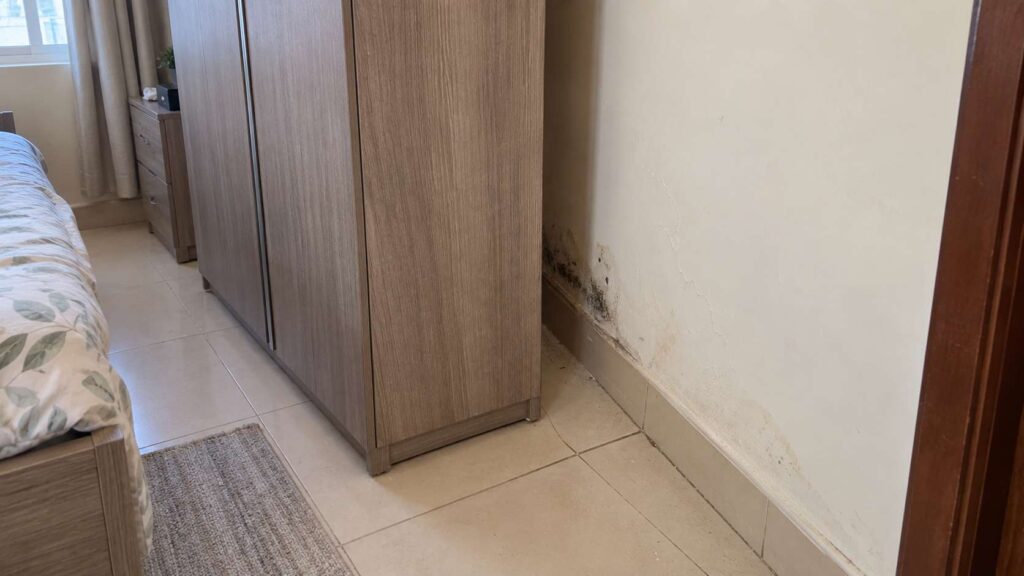
Likely hiding places include:
- Behind wardrobes, beds, and cabinets against exterior walls
- Under carpets, vinyl flooring, and wooden flooring
- Beneath kitchen or bathroom sinks
- Behind wallpaper or peeling paint
- Above ceilings affected by roof or plumbing leaks
- Around window frames where condensation forms
- Inside cabinets containing damp belongings
- Near AC drain pans, ducts, vents, and insulated pipes
- Behind drywall after flooding or a concealed pipe leak
The odor may travel through wall cavities or air movement, so the strongest-smelling spot isn’t always the exact source.
How to Trace a Mold Smell Safely
Start by identifying where the odor is strongest without pressing your face against surfaces or deliberately inhaling deeply.
Walk through the property room by room. Compare the smell near walls, floors, ceilings, windows, plumbing fixtures, AC units, and stored belongings. Then look for visible moisture clues such as staining, dampness, peeling paint, warped wood, swollen skirting boards, or condensation.
Check whether the smell changes:
- After rain
- While the AC is operating
- Following showers or cooking
- When a cupboard has been closed
- During humid weather
- Near a recently repaired leak
Any indoor mold growth also indicates that a water or moisture issue needs attention.
Don’t cut into walls, pull up large carpets, or disturb extensive growth without appropriate precautions. Hidden contamination can be larger than the visible or suspected area.
However, sometimes the mold is hidden from our normal sight. In that case, a professional mold inspection and detection of musty odors is right up your alley. We humbly recommend Bio-On mold remediation service for detecting mold that you cannot see with the naked eye and providing full remediation.
Call Bio-On now for a total mold solution.
The Bottom Line: What Should You Do About the Smell?
A faint odor limited to one damp item may disappear after the item is removed and the area is completely dried. A persistent smell that returns after ventilation deserves further investigation, particularly when it stays in one room or becomes stronger near a wall, floor, ceiling, cabinet, or AC system.
Visible mold, recurring water stains, soft drywall, swollen materials, active leaks, sewage contamination, or an odor spreading through several rooms are stronger warning signs. In those situations, find and repair the moisture source before cleaning or replacing damaged materials.
In short, the smell is not the source. Moisture is the source. Find the damp material first.