


What Eats Mold? Pests Commonly Found Around Mold Infestations
Some tiny organisms and insects can feed on mold or are attracted to environments where mold grows. They usually appear in areas with high humidity, leaks, condensation, poor ventilation, or water damage.
Here are the pests commonly associated with mold problems:
1. Mold Mites
Mold mites are one of the most common organisms found in homes with moisture problems. These tiny pests feed on fungi, mold spores, and organic debris.
They are often found in:
- Damp walls
- Wet insulation
- Stored paper products
- Bathrooms
- Basements
- Humid storage areas
Because mold mites are extremely small, many homeowners do not notice them immediately. Instead, they may see tiny moving dots near moldy surfaces.
However, mold mites do not eliminate mold. A large population usually means the environment has enough moisture and fungal growth to support them.
2. Springtails
Springtails are small insects that often appear in damp areas. They are commonly found around soil, drains, bathrooms, kitchens, and areas affected by water leaks.
They feed on:
- Mold
- Fungi
- Decaying organic matter
- Algae
Springtails are often mistaken for fleas because they can jump when disturbed. While they are not usually dangerous, they are a warning sign that moisture levels are too high.
If springtails keep returning, the underlying humidity or water issue needs to be addressed.
3. Silverfish
Silverfish do not mainly eat mold, but they are strongly attracted to humid environments where mold problems often occur.

They feed on materials containing starch and carbohydrates, including:
- Paper
- Cardboard
- Wallpaper glue
- Old books
- Fabric materials
A home with hidden mold, damp walls, and poor ventilation can create ideal conditions for silverfish.
Their appearance can indicate that moisture control is needed.
4. Fungus Gnats
Fungus gnats are small flying insects usually associated with fungi and excessive moisture.
They are commonly found near:
- Overwatered indoor plants
- Damp soil
- Wet organic materials
- Moist areas near leaks
Although fungus gnats are more common around plants, they can also appear in homes where moisture creates fungal growth.
5. Cockroaches and Other Moisture-Loving Pests
Cockroaches do not eat mold as their primary food, but they are frequently found in homes with moisture problems.
They are attracted to:
- Water leaks
- Damp cabinets
- Dark humid spaces
- Food debris
- Organic materials
A mold-infested home can become more attractive to cockroaches because it provides shelter, moisture, and food sources.
Other pests that may appear around damp, moldy areas include:
- Centipedes that hunt smaller insects
- Termites attracted to moisture-damaged wood
- Booklice that feed on mold and fungi
The important point is that pests appearing near mold are usually symptoms of the same problem: excess moisture.
How to Get Rid of Pests Appearing Around Mold
Removing pests is important, but it should not be the only step. If the moisture problem remains, pests and mold can return.
The first step is identifying why the pests appeared.
Fix Moisture Problems First
Most mold-related pests survive because the environment provides enough humidity.
Check for:
- Plumbing leaks
- Roof leaks
- AC condensation problems
- Poor bathroom ventilation
- Damp walls
- Water trapped behind furniture
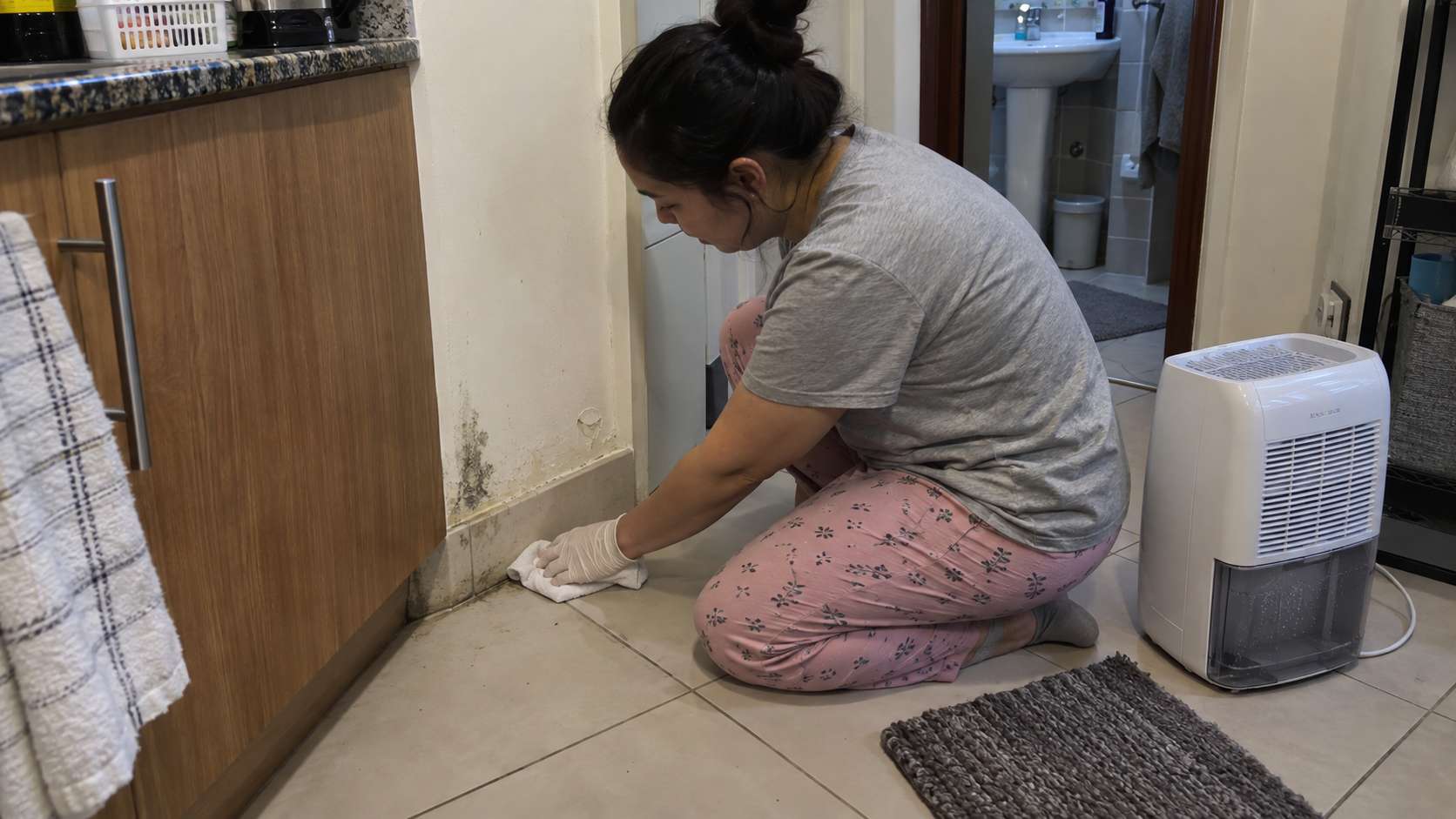
Reducing moisture makes the area less suitable for both pests and mold growth.
Improve Ventilation and Humidity Control
High indoor humidity encourages fungal growth and attracts moisture-loving pests.
Helpful methods include:
- Running bathroom exhaust fans
- Improving air circulation
- Using a dehumidifier when necessary
- Drying wet areas quickly
- Avoiding storing wet materials indoors
Keeping indoor humidity at a reasonable level helps prevent both mold and pest recurrence.
Use Appropriate Pest Control Methods
The treatment depends on the pest type.
Examples:
- Mold mites may require moisture removal and deep cleaning.
- Springtails often require drainage and humidity correction.
- Cockroaches may need targeted pest treatments.
- Termites require professional inspection if wood damage is suspected.
Simply spraying insects without fixing the damp environment usually provides only temporary results.
Remove Contaminated Materials When Needed
Some materials can become permanent pest and mold reservoirs.
These may include:
- Severely damaged drywall
- Wet insulation
- Moldy cardboard
- Water-damaged furniture
- Rotten wood
Removing affected materials may be necessary when contamination has spread deeply.
How to Remove Mold Safely After Pest Problems
Once pests have appeared around mold, cleaning only the visible spots may not solve the problem. Mold can spread behind walls, under flooring, inside cabinets, or around HVAC systems.
Safe mold removal starts with controlling exposure.
Wear Proper Protection
Before disturbing mold growth, use appropriate protective equipment, including:
- Gloves
- Protective eyewear
- Respiratory protection such as an appropriate mask
- Long sleeves and protective clothing
This helps reduce direct contact with mold particles during cleaning.
Identify and Stop the Moisture Source
Mold removal will fail if the water source remains.
Before cleaning, check:
- Where the moisture is coming from
- Whether there is hidden water damage
- Whether affected materials are still damp
A dry environment is necessary for long-term mold control.
Clean Small Surface Mold Carefully
For small areas on non-porous surfaces, cleaning may be possible.
Examples include:
- Tiles
- Glass
- Metal surfaces
- Some plastic materials
However, porous materials such as drywall, insulation, and heavily damaged wood may require removal because mold can grow inside the material.
Consider Professional Mold Remediation for Severe Cases
Professional help may be needed when:
- Mold covers a large area
- The source of moisture is unknown
- Mold is inside walls or HVAC systems
- There is extensive water damage
- People in the building experience ongoing irritation or discomfort
Professionals can inspect hidden areas, contain contamination, remove affected materials, and restore the property properly.
How to Fully Restore a Home After Pest Removal and Mold Remediation
Removing pests and mold is only part of restoring a building. A complete restoration focuses on returning the property to a safe, dry, and functional condition.
The restoration process usually includes:
1. Moisture Damage Repair
Any source that caused mold growth should be repaired, such as:
- Plumbing repairs
- Roof leak repairs
- Waterproofing improvements
- AC drainage repairs
- Wall moisture treatment
Without this step, mold can return even after successful cleaning.
2. Structural Restoration
Depending on the damage, restoration may involve:
- Replacing damaged drywall
- Repairing flooring
- Restoring cabinets
- Repainting affected areas
- Replacing damaged insulation
The goal is not just removing stains but repairing the materials affected by moisture.
3. Air Quality Improvement
After mold remediation, indoor air quality should be improved by:
- Cleaning HVAC systems when needed
- Removing airborne particles
- Improving ventilation
- Controlling humidity
This helps reduce the chance of mold spores spreading again.
4. Long-Term Prevention
A restored home should include habits and improvements that prevent future problems:
- Regular leak inspections
- Proper ventilation
- Controlled humidity
- Quick response to water damage
- Regular cleaning of damp areas
A property that stays dry is the best defense against both mold and moisture-loving pests.
The Bottom Line
Pests such as mold mites, springtails, silverfish, and fungus gnats may appear in homes with mold problems, but they do not actually remove the infestation. Their presence usually indicates that moisture conditions are allowing mold and pests to survive together.
The correct approach is to remove the pests, fix the moisture source, safely eliminate mold, and restore damaged areas completely. Treating only the visible mold or spraying only the insects often leaves the underlying problem unresolved. A dry, properly restored building is what prevents both mold and pest problems from coming back.