


What Happens During Wall Restoration After Mold Damage?
Wall restoration after mold damage begins after the mold contamination has been removed and the affected area has been confirmed safe for rebuilding.
The exact restoration process depends on how severe the damage is.
Minor mold damage may only require:
- Surface repairs
- Cleaning
- Repainting
- Replacing small damaged sections
More serious mold damage may require:
- Removing contaminated drywall
- Replacing insulation
- Repairing wall framing
- Restoring flooring and ceilings
- Fixing plumbing or water intrusion issues
The biggest mistake homeowners make is restoring the appearance before solving the moisture problem.
For example, repainting a mold-stained wall without repairing a leaking pipe may temporarily hide the damage, but mold can return behind the new paint.
A proper restoration process follows this order:
- Remove mold contamination
- Identify and repair the moisture source
- Dry affected areas completely
- Replace damaged materials
- Restore finishes and appearance
This approach reduces the chance of repeated mold problems.
How Is Drywall Repaired or Replaced After Mold Damage?
Drywall repair or replacement is one of the most common parts of wall restoration after mold damage.
Drywall is highly vulnerable to mold because it can absorb moisture and provide organic material for fungal growth. Once drywall becomes heavily contaminated, cleaning may not always be enough.
When drywall can be repaired
Drywall may sometimes be repaired when:
- Mold growth is limited to the surface
- The drywall remains structurally strong
- Moisture exposure was short-term
- The affected area is small
The repair process may include:
- Removing damaged sections
- Cleaning remaining surfaces
- Applying appropriate treatments
- Filling holes or cracks
- Sanding the repaired area
- Preparing for painting
When drywall needs replacement
Replacement is often necessary when drywall is:
- Soft or damaged from moisture
- Crumbling
- Heavily contaminated
- Wet for an extended period
- Contaminated behind the surface
Professional replacement usually involves:
- Cutting out damaged drywall
- Inspecting the cavity behind the wall
- Checking insulation and framing
- Installing new drywall panels
- Sealing joints
- Applying finishing compounds
- Sanding and preparing the surface
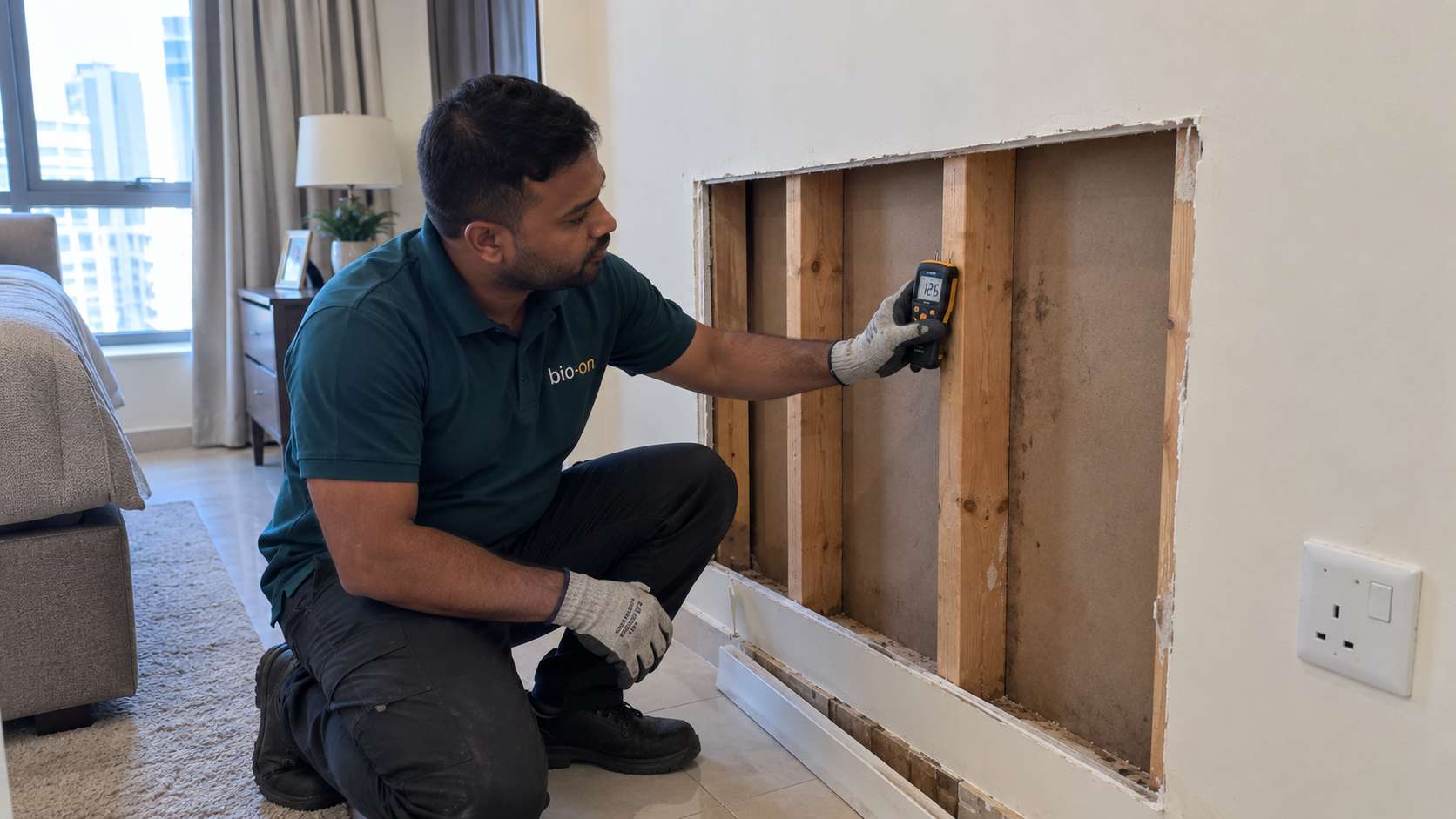
Replacing drywall without checking the area behind it can leave hidden moisture problems unresolved.
How Are Walls and Ceilings Repainted After Mold Damage?
Painting is usually the final visual step of wall restoration after mold damage, but it should only happen after remediation and repairs are complete.
Fresh paint can improve appearance, but it cannot solve active mold growth.

Before painting, professionals usually ensure:
- The wall is completely dry
- Damaged materials have been repaired
- Surface preparation is complete
- Previous stains have been properly addressed
The painting process may include:
- Cleaning and preparing the surface
- Applying primer when needed
- Repairing imperfections
- Applying new paint layers
For ceilings, additional attention may be needed because mold damage can result from:
- Roof leaks
- AC condensation problems
- Bathroom humidity
- Plumbing leaks from upper floors
If the moisture source is not fixed, new paint may eventually develop stains, peeling, or mold growth again.
Should Damaged Flooring Be Replaced During Mold Restoration?
Yes, damaged flooring may need replacement if mold or moisture has affected the materials underneath.
Mold problems are not always limited to walls. Water can spread through floors and affect:
- Carpet
- Carpet padding
- Wooden flooring
- Laminate
- Underlayment
- Baseboards
The restoration approach depends on the flooring type.
Examples:
Carpet flooring
- Mold-contaminated carpet and padding often require removal because they can trap moisture and spores.
Wood flooring
- Minor surface damage may be repairable, but warped or heavily affected wood may need replacement.
Laminate flooring
- Water-damaged laminate often requires replacement because moisture can damage the layers underneath.
Before installing new flooring, professionals should check whether the subfloor is dry and free from ongoing moisture problems.
Installing new flooring over a damp surface can recreate the same mold conditions.
How Are Trim and Molding Restored After Mold Damage?
Trim and molding are often overlooked during mold restoration, but they can hold moisture and show visible damage.
Affected areas may include:
- Baseboards
- Door frames
- Window trim
- Decorative molding
Minor damage may be repaired through:
- Cleaning
- Sanding
- Repainting
However, replacement may be needed when trim is:
- Swollen
- Warped
- Soft
- Permanently stained
- Mold-damaged internally
New trim installation should happen after wall repairs are complete to ensure proper fitting and finishing.
Matching the original design is also important, especially in homes with decorative interior details.
Should Mold Remediation Companies Provide Restoration After Mold Removal?
Yes, a mold remediation company can provide restoration after mold removal, and in many cases, it is beneficial because it creates a smoother recovery process.
However, homeowners should understand that mold remediation and restoration are different services.
Mold remediation focuses on:
- Removing mold contamination
- Controlling airborne spores
- Treating affected areas
- Preventing contamination from spreading
Restoration focuses on:
- Rebuilding damaged areas
- Installing new materials
- Repairing finishes
- Returning the property to its original condition
A company that provides both services can offer advantages:
- Better communication between removal and rebuilding teams
- Faster project completion
- Less coordination required from homeowners
- Better understanding of the original damage
However, homeowners should still check whether the company has proper experience with construction repairs, drywall work, flooring installation, and painting.
Some remediation companies specialize only in mold removal and outsource restoration work to contractors. That approach can also work if the teams coordinate properly.
The most important factor is not whether one company handles everything. It is whether the entire process is completed correctly, from moisture repair to final restoration.
The Bottom Line
Wall restoration after mold damage is more than repainting a damaged wall. A complete recovery may involve drywall replacement, ceiling repairs, flooring installation, trim restoration, and fixing the plumbing or moisture source that caused the problem.
A mold remediation company can provide restoration services after removal, but homeowners should confirm that the company has the right restoration capabilities or works with trusted professionals.
The best results come from treating mold damage as a complete restoration project: remove the mold, fix the cause, rebuild damaged areas, and restore the home properly.