


Urine Test for Mold Toxicity: What It Actually Checks
A urine test for mold toxicity usually looks for mycotoxins, which are toxic secondary metabolites produced by some molds. In commercial functional medicine testing, these panels may report compounds linked with mold groups such as Aspergillus, Penicillium, Stachybotrys, Fusarium, and Chaetomium. Some UAE providers describe the test as a urine-based panel that screens for multiple mycotoxins from mold species, often using a first-morning urine sample or a home collection kit.
The diagnostic profile may include markers such as:
- Ochratoxin A
- Aflatoxin M1
- Gliotoxin
- Mycophenolic acid
- Sterigmatocystin
- Citrinin or dihydrocitrinone
- Roridin E
- Verrucarin A
- Zearalenone
- Enniatin B
- Chaetoglobosin A
- Urine creatinine for result normalization
That sounds very specific, and it can feel reassuring because the report gives numbers. But a number is not automatically a diagnosis. CDC has warned that urine mycotoxin testing is not approved by FDA for accuracy or clinical use, and that mycotoxin levels that predict disease have not been established. CDC also notes that low levels of mycotoxins may be found in the urine of healthy people because some mycotoxins can come from food.
So what does the test actually give you? It gives a laboratory measurement from your urine sample. It may support a broader conversation about exposure, detoxification, diet, indoor environment, and symptoms. But it cannot, by itself, prove that your home caused your symptoms, identify the contaminated room, or replace a medical diagnosis.
Why People Consider This Test for Unexplained Health Issues
People usually search for this test when they feel stuck. They may have gone through basic blood work, allergy medicine, sinus treatment, sleep advice, supplements, or stress management, but still feel unwell. When symptoms seem worse at home, in the office, or after staying in a damp building, mold becomes a possible suspect.
Common reasons people consider urine mycotoxin testing include:
- Chronic fatigue
- Brain fog
- Headaches
- Recurring sinus issues
- Persistent allergies
- Coughing or respiratory irritation
- Skin flares
- Poor sleep
- Mood changes
- Symptoms that improve away from a building
- History of water leaks, AC leaks, dampness, or visible mold
UAE providers often position these tests toward people with unexplained fatigue, brain fog, immune dysfunction, damp-environment exposure, or suspected hidden mold. AEON, for example, describes its MycoTox Mold Test as a urine test for people exposed to damp environments or experiencing unexplained fatigue, brain fog, or immune dysfunction.
But this is where expectations need to stay realistic. Mold can cause or worsen respiratory symptoms, allergies, asthma symptoms, and irritation in sensitive people. CDC says people sensitive to mold may experience symptoms like stuffy nose, wheezing, red or itchy eyes, or skin irritation.
Still, symptoms like fatigue and brain fog can have many causes. Thyroid problems, anemia, sleep apnea, vitamin deficiencies, chronic infections, medication side effects, stress, autoimmune conditions, poor sleep, and other environmental exposures can overlap. A urine mold test may become one clue, but it should not become the only explanation.
DHA-Licensed Home Visits and Skipping Clinic Lines
One reason urine mycotoxin testing is attractive in Dubai is convenience. Some UAE providers offer home sample collection, which means you can book the test online or by phone, provide the sample at home, and receive results digitally. This can help people avoid traffic, waiting rooms, and clinic queues.

OneLife lists a Mycotox Mold Test at AED 2,800 with urine as the sample type, first urine sample protocol, reports within 3–4 weeks, and at-home sample collection. Its page also says it has DHA registered nurses and a DHA registered certified facility.
Zain Care lists a MycoTOX Profile urine mycotoxin test at AED 2,499 with home session booking, urine sample type, 25–30 day turnaround, and Dubai-wide home, office, or hotel collection. Its FAQ says a DHA-licensed nurse collects the urine sample with a sterile, single-use kit and that it is processed at a DHA-accredited partner laboratory.
This home-visit model is especially useful if you are tired, symptomatic, busy, privacy-conscious, or simply don’t want to sit in clinic lines. But convenience should not remove medical oversight. A home collection service can collect the sample. It cannot replace a physician who understands your symptoms, medications, medical history, and risk factors.
The best version of this process is simple: book with a licensed provider, follow the collection instructions exactly, then schedule a physician review when the report comes back.
What to Expect Before, During, and After the Test
Preparation depends on the specific lab and provider. Many urine mycotoxin profiles prefer a first-morning urine sample because it can be more concentrated. AEON lists first-morning urine as preferred for best accuracy, while OneLife lists the protocol as first urine sample.
Before the test, ask the provider:
- Is this a first-morning urine sample?
- Should I avoid excess fluids before collection?
- Do I need to stop supplements?
- Do I need to avoid certain foods?
- Does the test require a physician order?
- Where is the sample processed?
- How long will results take?
- Is a doctor review included or separate?
During home collection, you usually receive a sterile urine collection kit. A nurse or healthcare professional may guide the process, label the sample, package it, and send it to the lab. The procedure is non-invasive, private, and usually quick.
After collection, results may take weeks because many mycotoxin panels are specialized tests. AEON lists a 2–3 week turnaround, OneLife lists 3–4 weeks, and Zain Care lists 25–30 days.
When the result arrives, avoid the biggest mistake: reading the flagged values alone and immediately starting a random “detox” protocol. Bring the result to a physician, ideally one familiar with environmental medicine, allergy/immunology, internal medicine, or functional testing limitations. You need interpretation, not fear.
UAE Providers and Price Range for Urine Mycotoxin Tests
Prices can change, and availability may vary, so always confirm directly before booking. Based on currently listed public pages, four UAE options include:
| UAE Provider | Listed Test | Sample / Collection Notes | Listed Price |
|---|---|---|---|
| Zain Care | MycoTOX Profile – Comprehensive Urine Mycotoxin Test | Urine sample, home session in Dubai, 25–30 day turnaround | AED 2,499 |
| OneLife Home Health Care Center | Mycotox Mold Test | Urine, first urine sample, at-home sample collection, 3–4 week report | AED 2,800 |
| AEON Clinic | MycoTox Mold Test | Urine home collection kit, first-morning urine preferred, 2–3 week turnaround | AED 4,110.75 |
| Vero Health | MycoTox Mold Exposure Test | Listed under functional and wellness testing; urine mycotoxin panel | AED 2,765 |
Zain Care lists AED 2,499, OneLife lists AED 2,800, AEON lists AED 4,110.75, and Vero Health lists AED 2,765 for its MycoTox Mold Exposure Test.
So, a practical UAE price expectation is around AED 2,500 to AED 4,100 for the test itself. Doctor consultation, home visit fees, follow-up plans, additional blood tests, allergy testing, supplements, detox support, or environmental inspection may cost extra.
Also, don’t choose only by price. Check whether the provider offers licensed sample collection, clear instructions, transparent turnaround time, doctor interpretation, and proper handling of abnormal results. A cheap test without interpretation may leave you more confused than before.
How to Understand the Result Without Overreacting
A urine mycotoxin result can feel powerful because it names specific toxins. But interpretation is the most important part.
CDC says mycotoxins are primarily known to cause illness after ingestion of contaminated foods, and low levels can be found in many foods. That means a urine result may reflect dietary exposure, environmental exposure, or a mix of both. CDC also states that levels predicting disease have not been established and that urine mycotoxin tests are not FDA-approved for accuracy or clinical use.
AAAAI also warns against overinterpreting “toxic mold syndrome.” It notes that functional medicine providers began offering urine mycotoxin testing and detox programs, but major reviews have found insufficient evidence to support a relationship between inhaled mycotoxins and the broad range of nonspecific symptoms often attributed to toxic mold syndrome.
This does not mean you should ignore symptoms. It means you should interpret the result responsibly.
A careful interpretation asks:
- What symptoms do you have?
- Are they respiratory, allergic, neurological, digestive, or general?
- Do symptoms improve outside the building?
- Is there visible mold or a musty odor?
- Is there water damage or AC leakage?
- Could food exposure affect the result?
- Are there other medical explanations?
- What treatment would actually change based on this result?
Your physician may recommend further evaluation such as allergy testing, asthma assessment, sinus evaluation, inflammatory markers, liver/kidney function tests, nutritional testing, or other investigations depending on your symptoms. The test should guide a bigger clinical conversation, not replace it.
Actionable Medical Path to Recovery
The medical recovery path starts with a proper diagnosis. Do not jump straight into toxin binders, antifungals, IV therapy, sauna routines, or expensive supplement stacks without medical supervision.
A sensible medical pathway may look like this:
- Review symptoms with a physician.
Explain your timeline, building exposure, symptoms, current medications, and previous test results. - Interpret the urine test in context.
Ask what the result can and cannot prove. A flagged result may support exposure concerns, but it does not automatically prove causation. - Check for common medical causes.
Fatigue, brain fog, sinus issues, and headaches can come from many conditions. A good doctor should not skip basic medical evaluation. - Treat confirmed conditions.
If you have mold allergy, asthma, chronic sinusitis, or another diagnosis, treat that condition properly. - Use binders only when prescribed correctly.
Some clinicians use toxin binders as part of a supervised plan. But binders can affect medication absorption, digestion, bowel habits, and nutrient status. They should be timed and monitored properly. - Track progress.
Keep a symptom diary. Note sleep, exposure, building changes, medication, supplements, and improvements or setbacks. - Reassess if you do not improve.
If symptoms persist after treatment and environmental correction, your physician may need to investigate other causes.
The goal is not to “detox harder.” The goal is to reduce exposure, support the body safely, and avoid missing other medical conditions.
Actionable Environmental Path to Recovery
Medical testing cannot clean your home, villa, apartment, office, AC system, or storage room. If the source remains, exposure may continue.
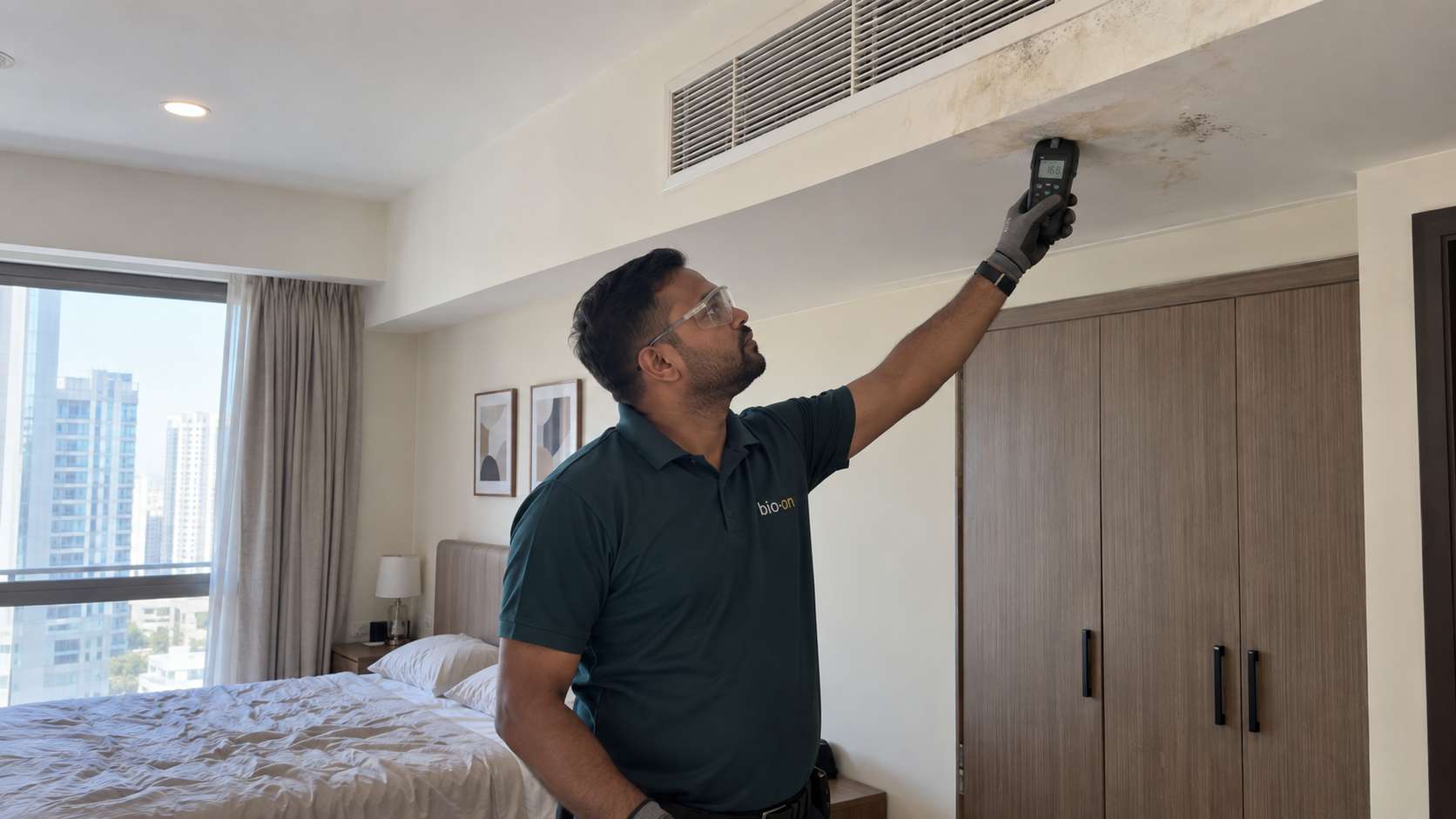
CDC says if mold is growing in your home, you need to clean up the mold and fix the moisture problem. CDC also says you do not need to know the type of mold before removing it.
EPA gives the same core principle: mold control depends on moisture control. It says mold should be scrubbed from hard surfaces with detergent and water and dried completely, and that the water or moisture problem must be completely fixed before remediation is considered finished.
In the UAE, environmental investigation often needs to focus on:
- AC leakage
- Poor ventilation
- Hidden condensation
- Bathroom exhaust issues
- Damp gypsum walls
- Leaking balcony doors or windows
- Water-damaged cabinets
- Musty wardrobes
- Moldy duct or AHU areas
- High indoor humidity
- Poorly dried flood or leak events
A mold remediation expert can inspect the space, identify moisture sources, contain affected areas, remove contaminated porous materials, clean salvageable hard surfaces, use HEPA equipment where appropriate, dry the area, and help prevent regrowth.
This step is essential because a urine result cannot identify exactly where the exposure came from. A building inspection can. The test may raise suspicion, but the remediation plan must be based on the actual building condition.
When You Need a Physician and a Mold Remediation Expert Together
You need both sides when symptoms and building evidence overlap. For example, if your urine test is flagged, your symptoms worsen at home, and your apartment has AC leakage with musty bedroom odor, the solution should not be only supplements. It should include medical follow-up and building correction.
Call a physician when:
- Symptoms are persistent or worsening
- You have asthma, allergies, sinus disease, or immune issues
- You have neurological symptoms, severe fatigue, or unexplained illness
- You are considering binders, antifungals, or detox protocols
- You need help interpreting a urine mycotoxin report
- Children, elderly family members, pregnant people, or immunocompromised people are affected
Call a mold remediation expert when:
- You see visible mold
- You smell musty odor
- Mold keeps returning after cleaning
- There was water damage
- AC leakage or condensation is present
- Mold may be behind walls, cabinets, or ceiling
- The affected area is large
- The property is commercial, rental, or insurance-related
These roles should stay separate. Your doctor diagnoses and treats you. The remediation expert diagnoses and fixes the building. A remediation company should not tell you what illness you have, and a lab report should not be used as proof that a specific room is contaminated without environmental evidence.
The Bottom Line
A urine test for mold toxicity can be a useful part of a bigger investigation, especially when you have unexplained symptoms and a possible damp-building exposure. In Dubai and the UAE, home sample collection makes the process easier, with some DHA-licensed or DHA-registered providers offering urine collection so you can skip clinic lines. Current listed prices from four UAE providers range roughly from AED 2,499 to AED 4,110.75.
But this test is not a magic answer. CDC has clearly warned that urine mycotoxin tests are not FDA-approved for clinical use, that disease-predicting levels have not been established, and that healthy people can have detectable mycotoxins from food. So the result should be reviewed with a qualified physician, not used alone to diagnose every unexplained health issue.
The best recovery path is two-sided. On the medical side, get proper interpretation, follow-up testing when needed, and supervised treatment if binders or other interventions are considered. On the environmental side, inspect the home or office, fix leaks and humidity, remove contaminated materials, and hire mold remediation experts when the issue is hidden, recurring, or widespread.
In simple terms: use the urine test as a clue, not a conclusion. Then treat the person, fix the building, and track whether life actually gets better after both sides are handled.