


What Is Thermal Camera Water Leak Detection?
Thermal camera water leak detection uses infrared technology to measure temperature differences across surfaces.
When water leaks into building materials, it can change the temperature of the affected area. Moisture may make certain areas cooler because water absorbs and releases heat differently compared with dry materials.
A thermal imaging camera can help identify unusual patterns around:
- Walls
- Ceilings
- Floors
- Pipes
- Bathrooms
- HVAC systems
- Water heaters
- Roof areas
For example, a leaking pipe behind a wall may not create visible stains immediately. However, the moisture may create a temperature difference that appears on a thermal camera scan.
This allows inspectors to investigate potential problems before cutting into walls or removing materials unnecessarily.
How Does Thermal Imaging Help With Mold Detection?
Thermal cameras are especially useful for mold inspections because mold requires moisture to grow.
The camera itself does not identify mold species or prove mold contamination. Instead, it helps locate areas where moisture conditions may support mold growth.
Finding hidden moisture behind walls
One of the biggest advantages of thermal imaging is detecting problems that cannot be seen with the naked eye.
Examples include:
- Hidden plumbing leaks
- Water trapped behind drywall
- Damp insulation
- Moisture around windows
- Ceiling leaks
A wall may look completely normal from the outside while moisture is already developing behind the surface.
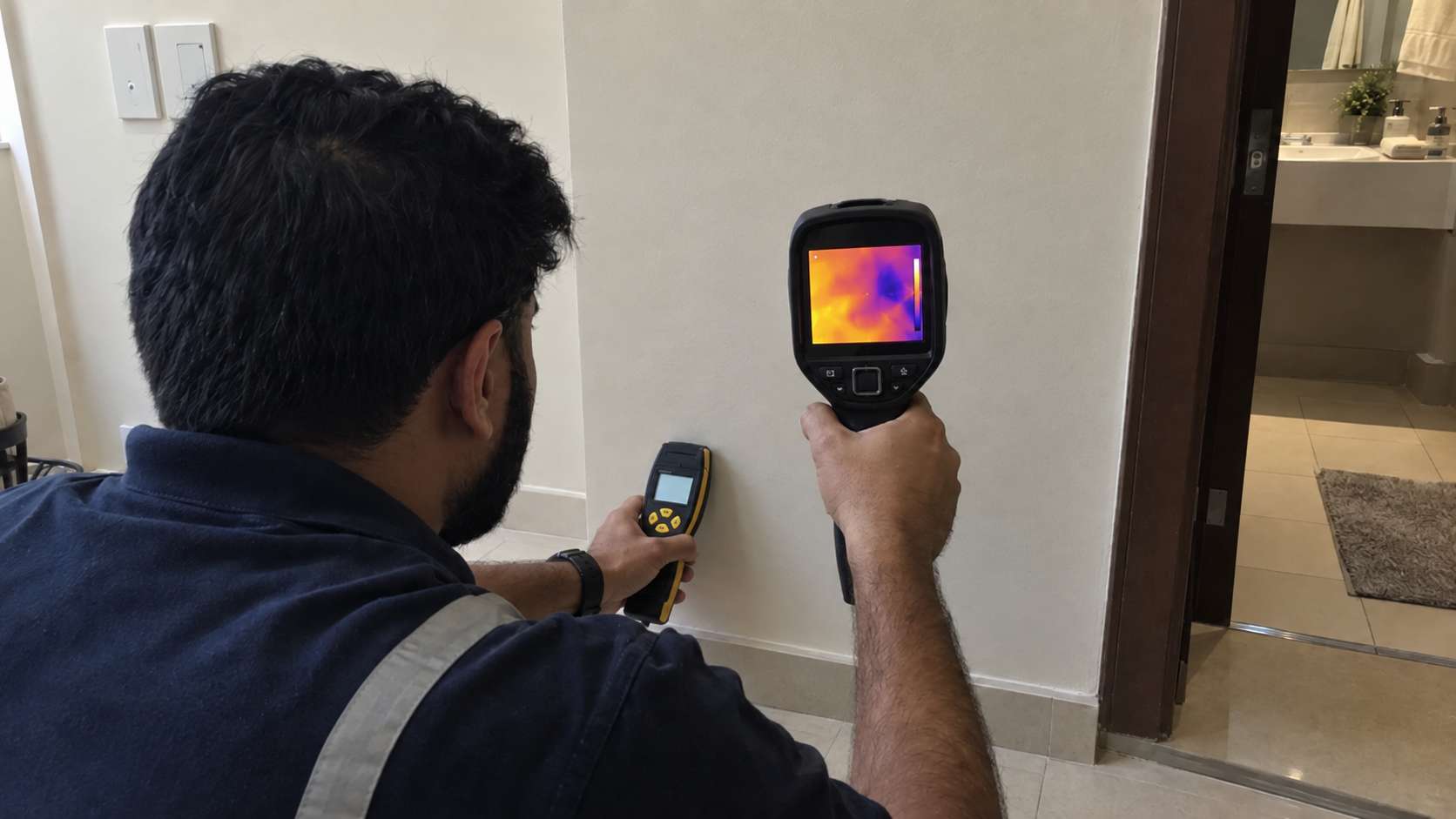
Finding these areas early allows professionals to investigate before mold spreads.
Identifying the source of recurring mold
Recurring mold usually means the moisture problem was never solved.

For example:
- Mold keeps appearing near a bathroom wall
- A ceiling stain returns after repainting
- A musty smell continues despite cleaning
Thermal imaging can help locate the hidden moisture source instead of only treating the visible mold.
This is important because removing mold without fixing the water issue often leads to the same problem returning.
Reducing unnecessary demolition
Without proper detection, finding a leak may require opening multiple areas of a building.
Thermal cameras can help narrow down the suspected location, allowing professionals to perform targeted repairs instead of unnecessary damage.
This can save:
- Repair time
- Labor costs
- Restoration expenses
What Other Problems Can Thermal Cameras Detect?
Thermal imaging is not only useful for mold-related inspections. It is also widely used for general building maintenance.
Plumbing leak detection
Thermal cameras can help identify unusual temperature patterns around:
- Hot water pipes
- Cold water lines
- Leaking plumbing connections
- Underfloor heating systems
This is especially useful when leaks are hidden beneath flooring or inside walls.
HVAC inspections
Building owners can use thermal imaging to identify issues such as:
- Poor insulation
- Uneven cooling
- Air leakage
- HVAC system performance problems
For commercial properties, this can help improve energy efficiency and reduce unnecessary operating costs.
Electrical inspections
Thermal cameras can also detect abnormal heat patterns in electrical systems.
Potential uses include checking:
- Electrical panels
- Connections
- Overloaded components
- Equipment overheating
Finding these problems early can help prevent equipment failure.
Building envelope inspections
Developers and property managers may use thermal imaging to identify:
- Missing insulation
- Air leaks
- Moisture intrusion
- Construction defects
This makes it useful during property handovers and maintenance inspections.
Why Thermal Imaging Matters as Formal Documentation
Thermal camera reports can become valuable documentation for different property situations.
For landlords and property managers
Rental properties often face disputes about water damage responsibilities.
A thermal inspection report can help document:
- Where moisture was detected
- Possible leak locations
- The condition of the property at inspection time
- Whether repairs were completed properly
This creates clearer communication between landlords, tenants, and maintenance teams.
For insurance claims
Insurance providers often require evidence when reviewing water damage claims.
Thermal imaging documentation may support claims by showing:
- The affected areas
- The extent of suspected moisture
- The need for further investigation or repairs
However, insurance coverage depends on the policy and circumstances. A thermal image alone does not guarantee claim approval.
For property developers
Developers can use thermal inspections during:
- Construction stages
- Final inspections
- Building handovers
- Warranty periods
It can help identify hidden defects before they become expensive problems for future owners.
Examples include:
- Poor waterproofing
- Hidden leaks
- Insulation problems
- Construction-related moisture issues
Should You Hire Thermal Camera Water Leak Detection or a Mold Remediation Service?
The right choice depends on what problem you are trying to solve.
Hire thermal camera inspection when:
A thermal inspection is useful if you suspect hidden moisture but do not know the source.
Examples:
- There is a musty smell but no visible mold
- A wall feels damp
- A ceiling has unexplained stains
- You suspect a hidden pipe leak
- You need documentation for a property issue
Thermal imaging is mainly a diagnostic tool.
Hire a mold remediation service when:
You already know mold exists and need removal.
Examples:
- Visible mold growth is present
- Mold covers a large area
- There is confirmed water damage
- Mold keeps returning after cleaning
- Building materials are contaminated
A mold remediation service focuses on:
- Removing mold contamination
- Treating affected areas
- Managing safety risks
- Restoring damaged materials
Consider a combined approach
In many cases, the best solution is not choosing only one.
A complete mold investigation may involve:
- Thermal imaging to locate possible moisture problems
- Moisture measurement to confirm damp areas
- Mold inspection or testing when necessary
- Remediation if mold is confirmed
This approach addresses both the symptom and the cause.
The Bottom Line
Thermal camera water leak detection is a powerful tool for finding hidden moisture problems before they become major damage. It can support mold inspections, plumbing investigations, HVAC checks, and building assessments without immediately damaging walls or ceilings.
However, thermal imaging is not a replacement for mold remediation. It helps answer “where is the moisture problem?” while remediation answers “how do we remove and fix the mold problem?”
For property owners, landlords, developers, and facility managers, using thermal imaging as part of a proper inspection process can provide valuable evidence, reduce unnecessary repairs, and help prevent recurring moisture-related problems.