


What Happens When You Leave Sweating AC Ducts Untreated?
Sweating AC ducts happen when warm, humid air contacts cold duct surfaces, causing condensation to form. A small amount of condensation may not seem serious, but repeated moisture exposure can gradually damage your property.
Here are the major problems that can develop if you ignore the issue.
Mold Starts Growing Around the AC Duct Area
The biggest risk of untreated sweating AC ducts is mold growth.
Mold needs three things to grow:
- Moisture
- Organic materials to feed on
- Time
Sweating ducts provide the moisture. Nearby materials such as ceiling boards, insulation, drywall, dust, and wooden structures can provide enough organic material for mold growth.
Over time, mold may develop on:
- Duct insulation
- Ceiling surfaces
- Drywall around vents
- Air handler areas
- Nearby walls
The dangerous part is that mold growth may not always be visible at first. It can begin inside insulation or above ceilings where moisture collects unnoticed.
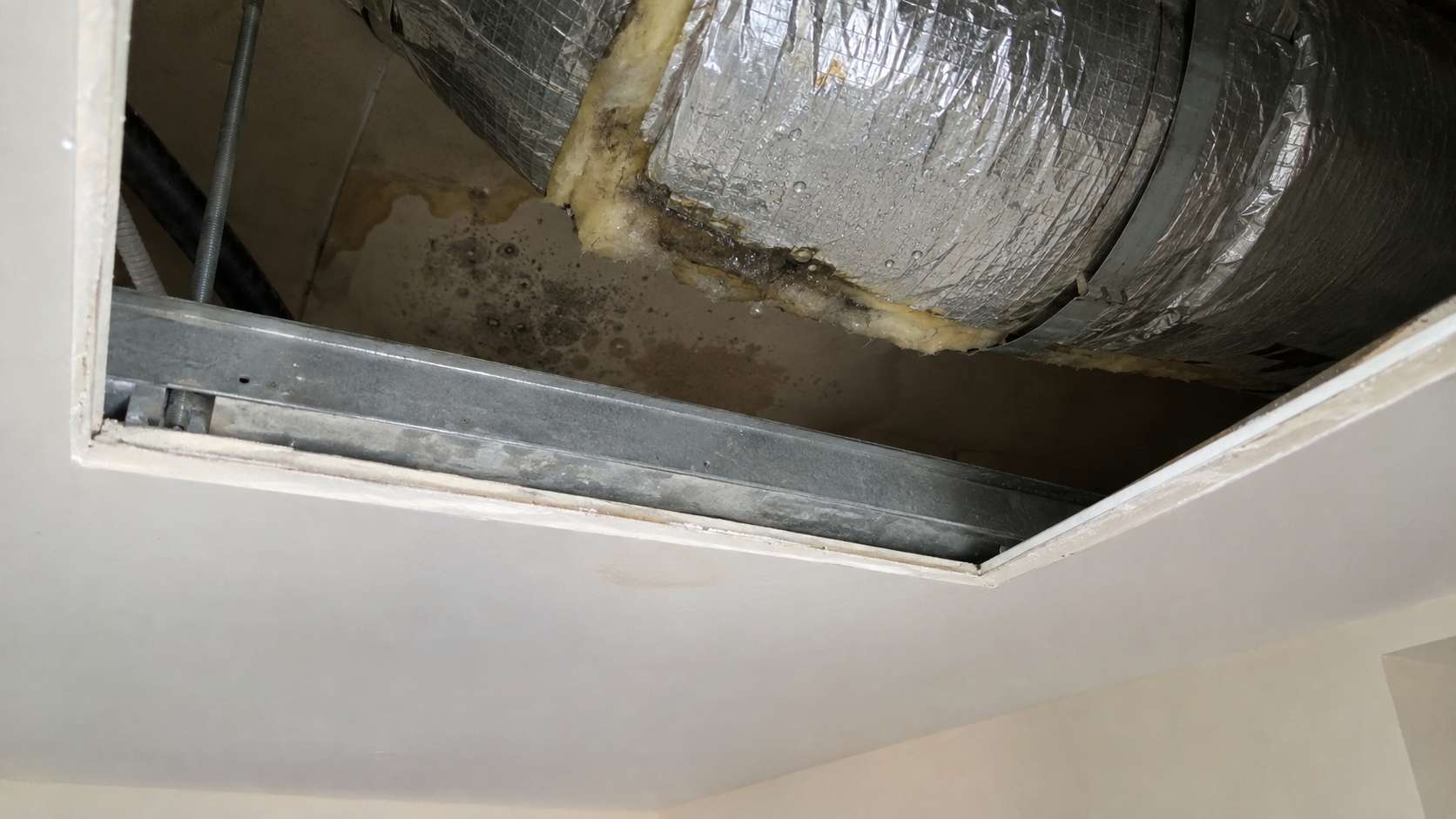
Why hidden mold around ducts is a serious problem
When mold develops near AC systems, it can become harder to control because air movement may spread spores throughout the building.

Potential warning signs include:
- Musty smells when the AC turns on
- Dark spots around ceiling vents
- Water stains near air outlets
- Increasing allergy-like complaints
- Mold returning after cleaning
Simply wiping visible mold from the ceiling does not solve the problem if the duct continues producing moisture.
Mold Can Spread Into HVAC Components
Sweating ducts can also create conditions where mold develops closer to the HVAC system itself.
Air conditioning systems naturally move large amounts of air. If moisture problems occur around components such as:
- Duct insulation
- Supply vents
- Air handling areas
- Drain systems
mold contamination may become more difficult to manage.
This does not mean every sweating duct automatically contains mold inside the HVAC system. However, persistent moisture increases the chance of contamination and should be investigated.
Professional inspection may be needed to determine whether the problem is limited to external condensation or has affected internal HVAC areas.
Your Indoor Air Quality May Get Worse
A mold problem around AC ducts can affect how fresh and comfortable indoor spaces feel.
People may notice:
- Musty odors
- Stale indoor air
- Increased dust
- Uncomfortable humidity levels
For buildings such as offices, apartments, hotels, and commercial spaces, these issues can become noticeable to occupants and lead to repeated complaints.
A building that constantly smells damp often indicates that moisture control needs improvement, not just more frequent cleaning.
Ceiling and Wall Damage Can Develop
Sweating AC ducts can slowly damage surrounding materials.
Common signs include:
- Water stains around vents
- Peeling paint
- Bubbling surfaces
- Soft drywall
- Damaged ceiling panels
Once drywall or ceiling materials absorb enough moisture, they may require replacement instead of simple cleaning.
In commercial buildings, this can become a larger restoration project because the damage may spread across multiple rooms or floors.
Your Energy Bills May Increase
Although mold is the main concern, sweating AC ducts can also affect energy efficiency.
When ducts are poorly insulated or experiencing excessive condensation, the cooling system may lose efficiency.
Possible consequences include:
- Longer AC operating times
- Increased electricity consumption
- Reduced cooling performance
- More stress on HVAC components
A properly insulated duct system helps maintain the intended air temperature and prevents unnecessary energy loss.
Why Do AC Ducts Sweat in the First Place?
Understanding the cause is important because cleaning mold without fixing condensation will not prevent the problem from returning.
Common causes include:
Damaged or insufficient duct insulation
Duct insulation creates a barrier between cold air inside the duct and warm air outside.
If insulation is:
- Too thin
- Damaged
- Wet
- Poorly installed
condensation can form on the duct surface.
High indoor humidity
When humidity levels are high, warm moisture-filled air is more likely to create condensation when it contacts cold surfaces.
This is common in humid climates where AC systems run frequently.
Poor AC maintenance
HVAC problems can contribute to moisture issues, including:
- Dirty filters
- Drainage problems
- Incorrect cooling settings
- Poor airflow
Regular AC maintenance helps identify issues before they create bigger moisture problems.
How Can You Fix Sweating AC Ducts Before Mold Develops?
The solution depends on the cause, but common fixes include:
Repair or replace damaged insulation
A professional HVAC technician may need to inspect the duct insulation and repair areas where cold surfaces are exposed.
Control humidity levels
Reducing excess humidity can help prevent condensation.
Possible solutions include:
- Improving ventilation
- Using dehumidifiers
- Repairing moisture sources
- Monitoring indoor humidity
Schedule AC inspection and maintenance
A professional HVAC inspection can identify whether the condensation is caused by:
- Poor airflow
- Drain issues
- Equipment problems
- Installation problems
Address existing mold properly
If mold has already developed, regular cleaning may not be enough.
A professional mold remediation service may be needed when:
- Mold is spreading
- Ceiling materials are damaged
- The odor continues after cleaning
- Mold is inside inaccessible areas
The moisture problem must still be corrected; otherwise, mold can return after remediation.
The Bottom Line
Leaving sweating AC ducts untreated can turn a simple condensation problem into a major mold and property damage issue. The constant moisture can support mold growth around ducts, ceilings, insulation, and nearby surfaces.
The most important step is fixing the source of the condensation. Improving insulation, controlling humidity, and maintaining the AC system can prevent future moisture problems.
If mold has already developed, treating only the visible spots will not be enough. A complete solution requires removing the mold safely while correcting the moisture condition that allowed it to grow in the first place.