


Why Sofa Fabric Matters in Humid Homes
Humidity creates a challenging environment for upholstered furniture.
Sofas contain multiple layers:
- Outer fabric
- Foam padding
- Internal lining
- Wooden frame
The outer fabric can influence how quickly moisture enters and leaves the sofa.
In humid homes, fabrics that easily absorb water may stay damp longer after:
- Spills
- Cleaning
- High indoor humidity exposure
- Condensation
Long drying times create better conditions for mold and mildew growth, especially when combined with:
- Dust accumulation
- Food particles
- Poor airflow
- Dark areas behind furniture
A sofa placed directly against a damp wall or in a poorly ventilated room is also more vulnerable, regardless of the fabric type.
1. Leather: One of the Best Sofa Materials for Humid Homes
Leather is often considered one of the most practical sofa materials for humid environments because it has a naturally less absorbent surface compared with fabric upholstery.
Why leather works well against moisture
Leather does not easily trap liquid on the surface. Most spills remain on the outside layer and can be wiped away quickly when handled properly.
Benefits include:
- Low moisture absorption
- Easy surface cleaning
- Faster drying after spills
- Less dust accumulation compared with some fabric sofas
Because mold requires moisture and organic material, reducing moisture retention can lower mold risk.
Limitations of leather sofas
Leather is not completely mold-resistant.
Problems can still occur when:
- Humidity remains consistently high
- The sofa is rarely cleaned
- It is placed in damp areas
- Moisture reaches underneath cushions
Leather also requires maintenance because excessive dryness or humidity changes can damage the material.
Regular conditioning helps maintain its surface quality.
2. Microfiber: A Practical Choice for Moisture-Prone Homes
Microfiber is a popular synthetic fabric made from very fine fibers.
It is often recommended for homes where easy cleaning and durability are priorities.
Why microfiber can help reduce mold risks
Microfiber has a tightly woven structure that:
- Resists some liquid penetration
- Does not easily trap dirt compared with looser fabrics
- Dries relatively quickly after cleaning

This makes it suitable for:
- Family rooms
- High-use sofas
- Homes with children or pets
Mold prevention advantages
Because microfiber is easier to maintain, homeowners can remove:
- Dust
- Food particles
- Surface moisture
before they contribute to odor or microbial growth.
Limitations of microfiber
Microfiber is still an upholstered material.
If water penetrates into:
- Foam cushions
- Inner layers
- Sofa seams
drying can become difficult.
Quick response to spills is still necessary.
3. Performance Fabrics: Designed for High-Use and Humid Conditions
Performance fabrics are specially engineered upholstery materials designed to handle moisture, stains, and frequent cleaning.
They are commonly used in:
- Outdoor furniture
- Luxury residential furniture
- Hospitality environments
Why performance fabrics work well in humid homes
Many performance fabrics offer:
- Moisture resistance
- Faster drying
- Stain resistance
- Improved durability
Some are treated to reduce liquid absorption, allowing spills to remain on the surface longer before soaking in.
Mold prevention benefits
Their main advantage is moisture management.
A fabric that dries faster reduces the amount of time moisture remains available for mold growth.
This is especially useful in:
- Humid living rooms
- Coastal homes
- Frequently used sofas
Important consideration
Not all performance fabrics are identical.
Homeowners should check:
- Fiber type
- Moisture resistance rating
- Cleaning requirements
- Manufacturer recommendations
4. Synthetic Blends: Affordable and Humidity-Friendly Options
Synthetic fabrics such as polyester blends are commonly used for sofas because they are durable and easier to maintain.
Examples include:
- Polyester blends
- Nylon blends
- Acrylic blends
Why synthetic fabrics perform well in humid climates
Compared with some natural fibers, many synthetic materials:
- Absorb less moisture
- Dry faster
- Resist shrinking
- Maintain shape better
This can help reduce prolonged dampness after cleaning or spills.
Mold prevention advantages
Synthetic blends can be a practical choice because they reduce one major mold factor:
Long-lasting moisture retention.
A sofa that dries faster is less likely to develop musty odors caused by trapped moisture.
Limitations
Synthetic fabrics can still collect:
- Dust
- Body oils
- Dirt
Regular vacuuming and cleaning remain necessary.
5. Tightly Woven Fabrics: Better Than Loose Weaves in Humid Homes
Fabric construction matters as much as the material itself.
A tightly woven sofa fabric generally performs better in humid environments than loose, highly absorbent fabrics.
Why weave matters
Tightly woven fabrics:
- Reduce spaces where dust can accumulate
- Slow liquid absorption
- Are easier to clean
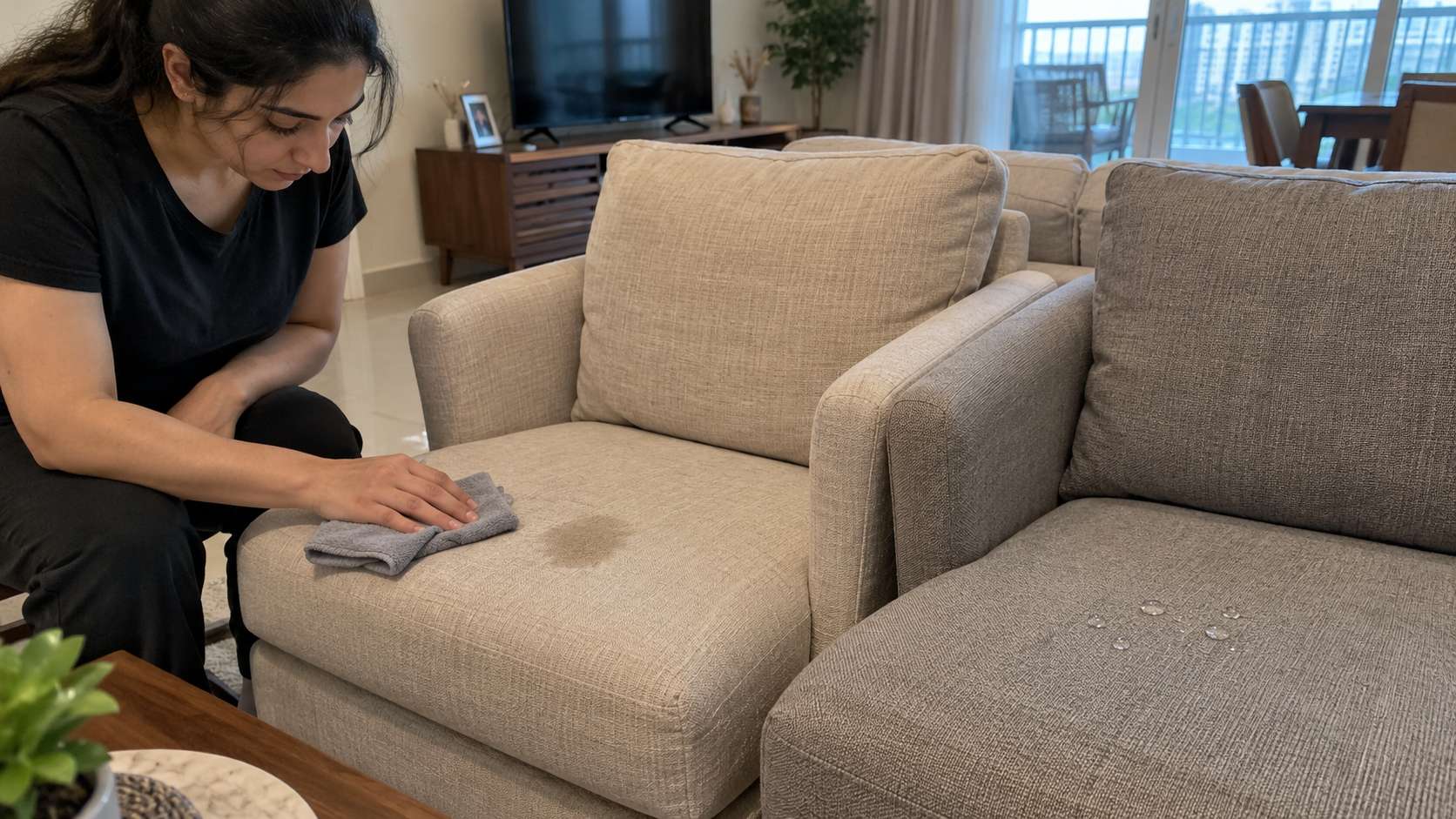
Loose fabrics may hold more moisture and organic particles, increasing cleaning challenges.
Examples of fabrics that often have tighter construction include:
- Dense polyester fabrics
- Microfiber
- Certain performance textiles
Sofa Fabrics That May Require More Care in Humid Homes
Some natural fabrics create more challenges in humid environments because they can absorb and retain moisture.
Cotton upholstery
Cotton feels comfortable and breathable, but it can absorb moisture easily.
Potential concerns:
- Longer drying time
- Higher moisture retention
- Greater sensitivity to damp conditions
Linen upholstery
Linen has a premium appearance and good breathability, but it can wrinkle and absorb moisture.
It may require more maintenance in humid homes.
Velvet upholstery
Velvet can create a luxurious appearance, but its dense surface can trap:
- Dust
- Humidity
- Debris
This does not mean these fabrics cannot be used, but they require better humidity control and maintenance.
Other Ways to Prevent Mold on Sofas in Humid Homes
Even the best sofa fabric cannot prevent mold if the surrounding environment remains damp.
Follow these practices:
Control Indoor Humidity
Use:
- Humidity sensors
- Dehumidifiers
- Proper AC operation
Keeping indoor humidity controlled reduces the chance of mold developing inside furniture.
Keep Airflow Around the Sofa
Avoid placing sofas:
- Directly against exterior walls
- In damp corners
- Blocking ventilation pathways
Leave enough space behind furniture for air movement.
Clean Dust Regularly
Dust provides organic material that can support microbial growth.
Regular maintenance includes:
- Vacuuming upholstery
- Cleaning underneath cushions
- Removing trapped debris
Dry Spills Immediately
Never allow moisture to remain inside sofa cushions.
After spills:
- Remove wet covers if possible
- Increase airflow
- Use fans or dehumidification
- Check whether moisture reached the foam
The Bottom Line
The best sofa fabrics for humid homes are materials that manage moisture effectively, dry quickly, and are easy to maintain. Leather, microfiber, performance fabrics, synthetic blends, and tightly woven textiles are generally better choices for reducing mold risk compared with highly absorbent fabrics.
However, the fabric alone does not determine whether a sofa develops mold. A humid room, poor ventilation, hidden moisture inside cushions, or delayed cleaning can still create problems.
The most effective approach combines the right sofa material with good humidity control, proper airflow, regular cleaning, and quick action whenever moisture appears.