


How a Smart Home for Mold Prevention Works
A smart home for mold prevention works by connecting sensors to devices that reduce moisture. The sensor detects a problem. The hub or app reads the condition. Then the system triggers an action.
For example, a humidity sensor in the bathroom notices that relative humidity has reached 65%. The smart home system turns on the exhaust fan or dehumidifier. If humidity drops below 50%, the system turns the device off. Another example: a water leak sensor under the kitchen sink detects water. The system sends a phone alert, triggers an alarm, and may turn off a smart water valve if one is installed.
This is useful because mold often starts before homeowners notice anything. You may not see the first moisture problem behind a cabinet, under a washing machine, near an AC drain, or inside a closed wardrobe. By the time you smell mustiness, the surface may already be damp enough for growth.
The goal is not to make your home “smart” for style. The goal is to create a moisture-response system.
A good mold-prevention automation watches for:
- High humidity
- Water leaks
- AC drain overflow
- Poor ventilation
- Damp bathrooms
- Closed humid rooms
- Laundry moisture
- Vacation-home humidity
- Water heater or sink cabinet leaks
Then it responds with:
- Dehumidifier activation
- AC activation
- Exhaust fan activation
- Phone notification
- Alarm sound
- Water shutoff, if supported
- Reminder to inspect or dry the area
Devices You Need for Detection
The first layer is detection. Without sensors, your smart home is guessing. For mold prevention, the two most important sensors are humidity sensors and water leak sensors.
Humidity Sensors
A humidity sensor measures relative humidity in a room. This helps you know whether the air is becoming mold-friendly. TP-Link’s Tapo T310, for example, is a smart temperature and humidity sensor, while Tapo T315 is a temperature and humidity monitor with a display. Aqara also offers a temperature and humidity sensor and lists humidity detection accuracy of ±3%.
Place humidity sensors in:
- Bathrooms
- Laundry rooms
- Bedrooms with previous mold
- Closed wardrobes
- Storage rooms
- Basements, if any
- Kitchens
- Rooms with poor ventilation
- Vacation homes or empty properties
The ideal setup is not one sensor for the whole home. Humidity can be different from room to room. A bedroom may be fine while a bathroom cabinet or laundry room is too humid.
Water Leak Sensors
Water leak sensors detect water where it should not be. They are especially useful because many mold problems begin as slow leaks. Aqara’s water leak sensor is designed for smart-home automation and can work with Apple Home through its hub-based setup. TP-Link also lists the Tapo T300 smart water leak sensor in its smart sensor lineup.
Place leak sensors in:
- Under kitchen sinks
- Under bathroom vanity cabinets
- Near washing machines
- Near dishwashers
- Near water heaters
- Near AC indoor units
- Around AC drain lines
- Inside utility rooms
- Near refrigerator water lines
- Under built-in cabinets sharing a wet wall
Leak sensors are small, but they can save you from a major mold issue. A tiny drip under the sink can soak MDF cabinets for days if no one checks.
Devices You Need for Action
Detection is only half of the system. The next layer is action. Once the home detects humidity or water, something should happen automatically.
Smart Plug for Dehumidifier or Fan
A smart plug can turn a plugged-in device on or off based on sensor readings. Aqara describes automations where its temperature and humidity sensor works with a smart plug to turn on devices such as a fan or humidifier based on temperature or humidity conditions. Aqara also gives a mold-prevention example where a humidity sensor can trigger a fan or dehumidifier through a smart plug.
Use smart plugs for:
- Dehumidifiers
- Exhaust fans
- Air movers
- Small ventilation fans
Important: check the wattage.

A smart plug must support the power draw of the device. Large AC units, high-powered dehumidifiers, or hardwired exhaust fans may need proper smart relays, smart switches, or professional electrical installation instead of a simple plug.
Smart AC Control
If your AC supports smart control, you can use it to reduce humidity when a room gets too damp. If your AC is not smart, you may use an IR blaster, smart thermostat, or brand-specific controller, depending on the AC type.
A practical automation is:
- If bedroom humidity rises above 60%, turn on AC dry mode or cooling mode.
- If humidity drops below 50%, return to normal setting.
- If you are on vacation, keep humidity control active instead of turning AC off completely.
This is especially useful in humid climates or closed homes.
Smart Exhaust Fan
Bathrooms and laundry rooms need ventilation. If your exhaust fan can be controlled by a smart switch or relay, connect it to your humidity sensor.
Example:
- If bathroom humidity rises above 65%, turn exhaust fan on.
- Keep it running until humidity drops below 55%.
- Add a 15-minute delay after shower use.
This prevents the classic problem: someone showers, leaves the room wet, closes the door, and mold starts around grout, ceiling corners, or silicone.
Smart Water Shutoff Valve
For stronger protection, install a smart water shutoff valve. This is more advanced and usually needs professional plumbing installation. The value is huge: if a leak sensor detects water, the system can alert you and shut off water before cabinets, flooring, and drywall get soaked.
This is best for:
- Villas
- Rental units
- Vacation homes
- Homes left empty often
- Properties with expensive interiors
- Homes with previous pipe leaks
- Water heater risk areas
Simple Mold-Prevention Automations to Set Up
You do not need a complicated system. Start with a few reliable automations.
Automation 1: High Humidity Response
Use this for bathrooms, bedrooms, wardrobes, and laundry rooms.
Trigger: humidity rises above 60%.
Action: turn on dehumidifier, AC dry mode, or exhaust fan.
Stop condition: humidity drops below 50–55%.
Alert: send phone notification if humidity stays high for more than 60 minutes.
This prevents humidity from sitting too long.
Automation 2: Bathroom After-Shower Drying
Trigger: bathroom humidity rises quickly or passes 65%.
Action: turn on exhaust fan.
Delay: keep fan running 20–30 minutes after humidity starts dropping.
Alert: notify if humidity remains high after one hour.
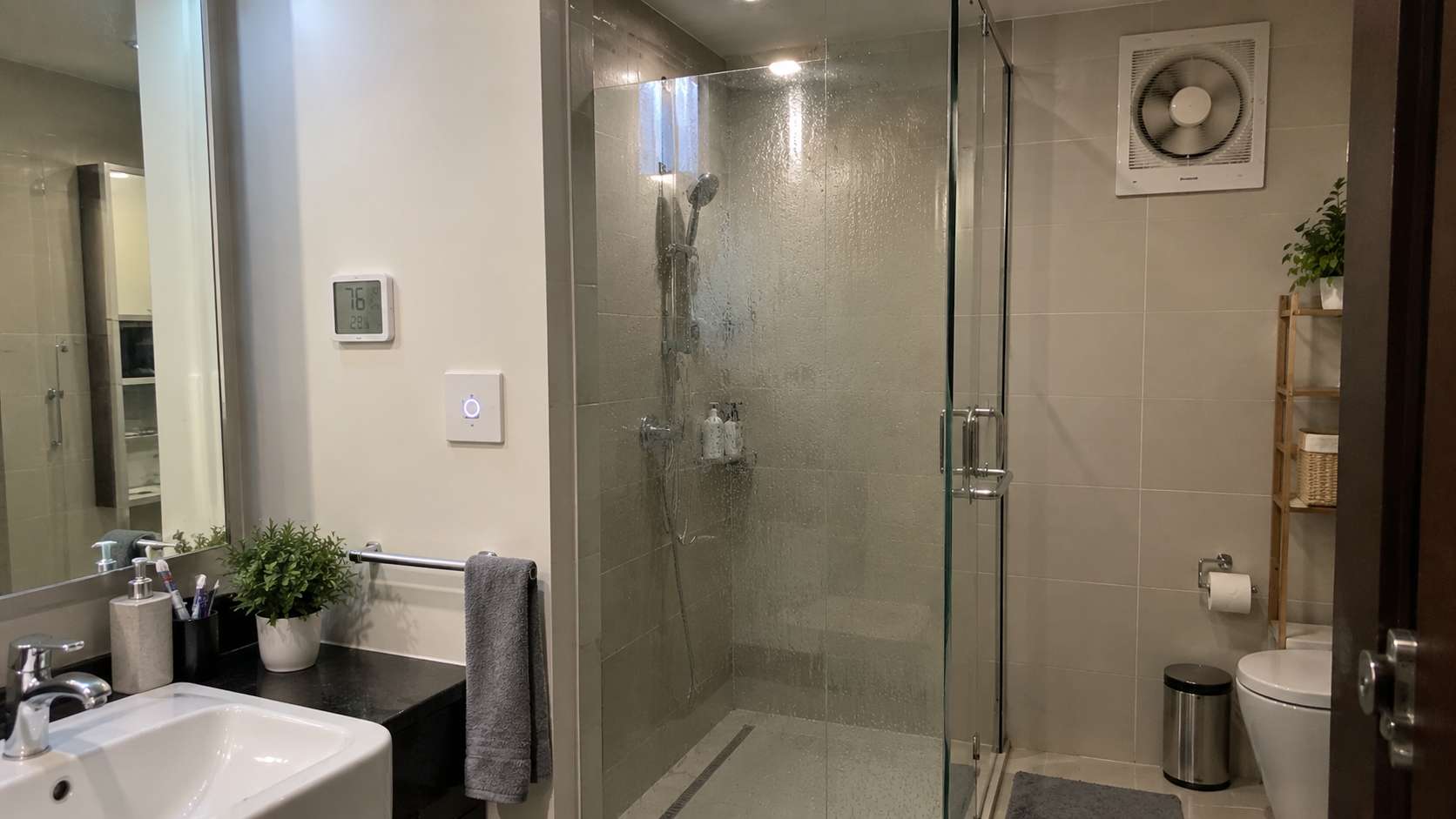
This is useful because bathroom mold often grows from repeated short moisture events.
Automation 3: Leak Emergency
Trigger: water leak sensor detects water.
Action: send urgent phone alert, sound alarm, turn off smart water valve if available.
Extra action: turn on nearby fan or dehumidifier only after the water source is controlled.
Do not rely only on drying devices if water is still leaking. Stop the source first.
Automation 4: Vacation Mold Prevention
Trigger: home is in vacation mode.
Action: keep AC or dehumidifier available for humidity control.
Condition: if humidity rises above 60%, turn on drying device.
Alert: notify if humidity stays above 60% for several hours or if any leak sensor detects water.
This helps prevent the musty smell people often discover after returning home.
Automation 5: Wardrobe Protection
Trigger: wardrobe or bedroom humidity rises above 60%.
Action: turn on room dehumidifier or AC dry mode.
Reminder: notify you to open wardrobe doors and inspect if humidity remains high.
Wardrobes are common mold zones because they are dark, closed, and packed with fabric.
Best Smart Home System Types for Mold Prevention
You can build this system in different ways.
Simple Wi-Fi Setup
This is easiest for beginners. Use Wi-Fi devices from the same brand, such as Tapo smart sensors, smart plugs, and smart controls. TP-Link’s Tapo lineup includes temperature and humidity sensors, water leak sensors, smart plugs, and other automation devices.
Best for apartments and small homes.
Hub-Based Zigbee Setup
Aqara-style systems often use a hub and Zigbee sensors. Zigbee sensors are usually small, battery-efficient, and reliable for low-power sensors. Aqara’s water leak and humidity sensors are designed around this smart-home ecosystem.
Best for homes with many sensors.
Matter-Compatible Setup
Matter is an open smart-home standard designed to let devices work across compatible ecosystems with one protocol. Google describes Matter as a standard that lets devices work with any Matter-certified ecosystem using a single protocol.
Best for people who want more long-term flexibility across Apple Home, Google Home, Alexa, Samsung SmartThings, and other platforms.
Important Setup Mistakes to Avoid
A smart home can help prevent mold, but only if you set it up correctly.
Avoid these mistakes:
- Placing one humidity sensor in the hallway and assuming the whole home is safe.
- Putting leak sensors where water will never reach.
- Using a smart plug that cannot handle the device’s wattage.
- Turning on a fan without fixing an active leak.
- Running AC without checking a clogged drain line.
- Setting humidity thresholds too high.
- Ignoring phone alerts.
- Forgetting to replace sensor batteries.
- Using automations without manual inspection.
- Assuming smart devices can remove existing mold.
Smart devices are early-warning and response tools. They are not mold remediation tools. If mold is already growing, you still need cleaning, material removal, moisture repair, and sometimes professional remediation.
The Bottom Line
A smart home for mold prevention works best when it follows a simple chain: detect moisture, trigger drying, send alerts, and stop water when possible. Start with humidity sensors and water leak sensors. Then connect them to smart plugs, dehumidifiers, exhaust fans, AC controls, and possibly a smart water shutoff valve.
For most homes, the best starter setup is one humidity sensor in each high-risk room, leak sensors under sinks and near appliances, a smart plug for a dehumidifier, and an automation that turns drying devices on when humidity rises above safe levels.
This will not replace leak repair or professional mold removal, but it can catch moisture before mold becomes a bigger problem. And for a safer, healthier indoor environment, early moisture control is exactly where you want to start.