


What Is Seepage Detection?
Seepage Detection is the process of finding where unwanted moisture is entering or moving through a building. It is not just about locating a visible stain. It is about tracing the water source, confirming the affected area, and deciding what repair is actually needed.
Seepage can come from many places. In UAE homes and buildings, common sources include bathroom waterproofing failure, roof leakage, balcony cracks, external wall cracks, plumbing leaks, AC condensation, poor drainage slope, or water entering through poorly sealed joints. The tricky part is that water does not always appear directly below or beside the source. It can travel through concrete, plaster, tile adhesive, pipe sleeves, ceiling voids, and wall cavities before showing up as dampness somewhere else.
That is why guessing is risky. If you only repaint the stain or apply sealant on the visible patch, the dampness can return. If you break the wrong wall, you may spend money on demolition and repair without fixing the root cause.
A proper seepage detection service usually tries to answer four questions:
- Where is the moisture coming from?
- How far has it spread?
- Is the source active or old?
- What repair method is needed to stop it?
The goal is not only to “find water.” The goal is to avoid blind repair work. Good detection gives you a clearer path before waterproofing, plumbing repair, AC repair, or wall restoration begins.
How Non-Invasive Seepage Detection Services Work
Non-invasive seepage detection works by reading signs of moisture, sound, temperature difference, and material dampness without immediately cutting open walls or floors. This does not mean no surface will ever need to be opened. It means the inspection helps confirm where opening or repair should happen, if opening is needed at all.
Thermal Imaging Cameras
A thermal imaging camera detects temperature differences on walls, ceilings, and floors. Damp areas often hold heat or coolness differently from dry areas.

In air-conditioned properties, this contrast can sometimes make hidden moisture patterns easier to see.
Thermal imaging is useful for checking:
- Damp walls behind paint
- Ceiling seepage below bathrooms or roofs
- Moisture near AC ducts or drains
- Hidden wet patches around windows
- Bathroom or balcony leakage patterns
- Water spread behind plaster or tile areas
However, thermal imaging does not magically “see water inside the wall” in every situation. It reads surface temperature differences. A trained inspector still needs to interpret the image carefully and compare it with other signs. Heat from sunlight, AC airflow, electrical equipment, or recent cleaning can affect readings.
That is why thermal imaging is strongest when combined with moisture scanning and visual inspection.
Acoustic Listening
Acoustic listening tools help detect the sound of water escaping from pressurized pipes. This is especially useful when the seepage may be caused by a hidden plumbing leak inside a wall, under a slab, or below flooring.
The equipment can pick up vibration or sound patterns from leaking pipes. This allows the technician to narrow the suspected location before cutting tiles or opening concrete. Dubai leak detection providers commonly describe acoustic detection as part of non-invasive leak tracing, especially for buried, slab, or concealed pipe leaks.
Acoustic listening is most helpful when:
- Water pressure is dropping
- A pipe leak is suspected
- Dampness appears near plumbing lines
- The leak is hidden behind tiles or concrete
- There is no obvious external waterproofing failure
But acoustic tools are not always the answer for every seepage issue. If the problem is roof waterproofing, balcony slope, wall cracks, bathroom membrane failure, or AC condensation, other inspection methods may be more relevant.
Moisture Scanners and Moisture Meters
Moisture scanners measure dampness in building materials. They help map how far moisture has spread and whether an area is still wet.
This is important because a wall can look dry on the surface but still hold moisture deeper inside. It can also look stained even after the original leak has stopped. Moisture scanning helps separate active dampness from old cosmetic staining.
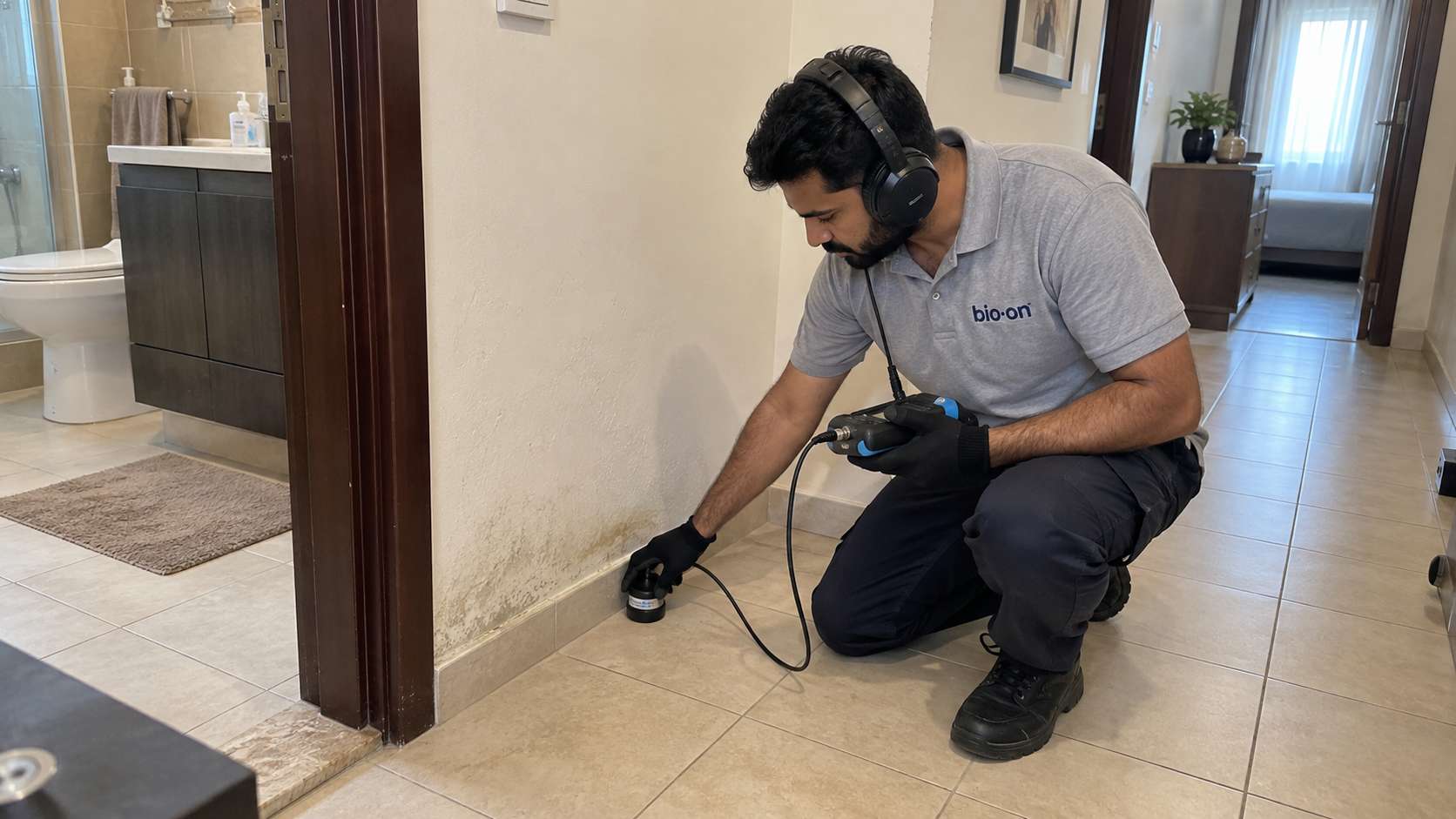
Moisture readings may be used on:
- Painted walls
- Plaster
- Gypsum board
- Ceilings
- Floors
- Skirting areas
- Areas behind cabinets
- Corners near windows or balconies
A good inspector will usually not rely on one reading only. They may compare affected and unaffected areas, check the pattern of dampness, and look for the highest moisture concentration. That pattern can help point toward the source.
For example, moisture that is strongest near the floor may suggest rising dampness, bathroom leakage, or water traveling under tiles. Moisture that is strongest near the ceiling may suggest roof, upstairs bathroom, pipe, or AC-related leakage.
When Seepage Detection Leads to Waterproofing
Seepage detection leads to waterproofing when the moisture source is not only a pipe leak, but a failure in the building’s water barrier. In simple words, waterproofing is needed when water is entering through surfaces, joints, cracks, roofs, balconies, bathrooms, basements, or external walls.
This is where many property owners make the wrong move. They see damp paint and ask for wall repainting. But if the waterproofing layer behind the tiles, roof, balcony, or exterior wall has failed, paint will not solve the problem. It may only hide the damage for a short time.
Common waterproofing procedures after seepage detection include:
- Bathroom waterproofing: Used when leakage comes from shower areas, floor traps, wet zones, or failed membrane below tiles.
- Roof or terrace waterproofing: Used when rainwater, ponding water, cracks, or membrane failure causes ceiling dampness.
- Balcony waterproofing: Used when water enters through tile joints, poor slope, wall-floor junctions, or cracks.
- External wall waterproofing: Used when rain, humidity, cracks, or façade defects allow water to enter.
- Injection grouting: Used for certain cracks, joints, basement walls, or localized leakage paths.
- PU or epoxy crack injection: Used when water moves through cracks or concrete joints.
- Sealant and joint repair: Used around windows, expansion joints, pipe penetrations, or wall gaps.
The correct method depends on the source. For example, applying waterproof coating inside a room may not stop water entering from the roof. Sealing a visible crack may not fix a leaking pipe. Injecting one area may not solve a failed bathroom membrane.
Good seepage detection should therefore come before waterproofing. It helps the contractor choose the right repair instead of applying a generic coating and hoping it works.
Clear Price Estimates for Seepage Detection and Waterproofing
Seepage detection price depends on the inspection method, property size, number of affected areas, access difficulty, and whether the technician needs multiple tools. In Dubai, recent service guides show basic engineer visits or starting checks from around AED 150 plus VAT, while full detection can range much higher depending on the method and area involved. One recent Dubai leak detection guide places full detection roughly between AED 750 and AED 8,000 plus VAT for more complex cases.
A practical estimate may look like this:
| Service Type | Estimated Price Range | Best For |
|---|---|---|
| Basic site inspection | AED 150–500 | First check, visible dampness, simple cases |
| Thermal imaging inspection | AED 300–1,500 | Hidden moisture behind walls, ceilings, floors |
| Acoustic leak detection | AED 500–2,500+ | Suspected concealed pressurized pipe leaks |
| Moisture mapping | AED 300–1,200 | Measuring spread of dampness |
| Full seepage detection report | AED 750–3,500+ | Multiple areas, landlord/tenant issues, insurance, property management |
| Complex villa/building detection | AED 3,000–8,000+ | Large properties, multiple leak sources, difficult access |
These are not fixed prices. They are useful planning ranges. A small apartment wall stain should not cost the same as a villa roof seepage case with multiple affected ceilings.
Waterproofing pricing also varies by method. UAE waterproofing price guides commonly place roof or terrace waterproofing around AED 25–70 per square meter, bathroom waterproofing around AED 400–1,200 per bathroom, basement or retaining wall waterproofing around AED 40–100 per square meter, and water tank waterproofing around AED 800–3,000. Other Dubai-focused guides show injection grouting around AED 150–300 per meter, depending on the site and method.
A simple waterproofing estimate may look like this:
| Waterproofing Procedure | Estimated Price Range | Notes |
|---|---|---|
| Roof or terrace waterproofing | AED 25–70 per sqm | Depends on coating or membrane system |
| Bathroom waterproofing | AED 400–1,200 per bathroom | Can rise if tile removal is needed |
| Balcony waterproofing | AED 35–90 per sqm | Depends on slope, cracks, and finish |
| External wall waterproofing | AED 30–90 per sqm | Depends on height and access |
| Basement wall treatment | AED 40–100 per sqm | More complex if active leakage exists |
| Injection grouting | AED 150–300 per meter | Used for cracks, joints, or localized leakage |
| Emergency leakage repair | AED 800–3,500+ lump sum | Depends on access and urgency |
The most important thing is not to compare price alone. Compare what the price includes. A cheap quote may exclude moisture detection, surface preparation, crack repair, primer, membrane reinforcement, warranty terms, or post-repair testing.
What a Good Seepage Detection Report Should Include
A good seepage detection report should clearly explain what was inspected, what tools were used, what the findings were, and what repair is recommended. It should not be a vague message saying, “Leak found, waterproofing needed.”
A useful report may include:
- Photos of affected areas
- Thermal images, if used
- Moisture readings or moisture map
- Suspected source of seepage
- Whether the source appears active or old
- Affected rooms, walls, ceilings, or floors
- Recommended repair method
- Whether plumbing, AC, or waterproofing is needed
- Estimated repair scope
- Optional price estimate or quotation
- Notes on risks if repair is delayed
This is especially useful in rental properties, apartments, villas, commercial spaces, and insurance-related cases. A clear report helps everyone understand the problem. It can reduce arguments between tenants, landlords, property managers, maintenance teams, and contractors.
You should also ask whether the company can retest after repair. This is helpful because waterproofing work may look complete on the surface, but the real test is whether the affected area starts drying and whether seepage stops returning.
The Bottom Line
Seepage detection is the smart first step before waterproofing, repainting, wall repair, or mold treatment. It helps find the hidden moisture source using non-invasive tools such as thermal imaging cameras, acoustic listening devices, and moisture scanners, so you do not waste money breaking the wrong wall or sealing the wrong surface.
The best service should not only tell you that seepage exists. It should explain where the moisture may be coming from, how far it has spread, what repair is needed, and what the likely cost range looks like.
For a small visible damp patch, a basic inspection may be enough. For recurring seepage, hidden leaks, ceiling stains, bathroom leakage, roof dampness, or mold-prone walls, a more complete detection process is usually worth the cost. The right diagnosis can save you from repeated repainting, failed waterproofing, and long-term property damage.