


Plumber or Mold Specialist: Who Should Come First?
The right first call depends on whether the moisture source is still active. If there is an active plumbing issue, call a plumber first. If the water source is unclear, the mold is recurring, or you need to know how far contamination has spread, call a mold specialist first.
A plumber is the correct first call when you see obvious signs of water movement, such as:
- Water dripping from a ceiling
- A leaking pipe under the sink
- A wet wall behind a bathroom
- A burst pipe
- A toilet, bidet, or shower leak
- Water pooling near cabinets
- Dampness around a water heater
- A ceiling stain that gets worse after upstairs water use
In these cases, mold removal before leak repair is pointless. The mold will return because the material keeps getting wet.
A mold specialist is the better first call when the water source is not obvious, the mold is already visible, or the problem may involve hidden contamination. Mold specialists usually look at the whole moisture-and-contamination picture. They may use moisture meters, thermal imaging, air or surface testing, containment, HEPA filtration, drying equipment, removal protocols, and post-remediation checks.
So the decision is not really about plumber versus mold specialist. It is about sequence.
If water is actively leaking, stop it first. If mold is already present, assess and remove it safely after the moisture problem is controlled.
Why a Plumber May Need to Come First
A plumber may need to come first because mold cannot be solved while water is still feeding it. If the mold is caused by a leaking pipe, bathroom fixture, drain line, water heater, or hidden plumbing failure, the plumbing repair is the foundation of the whole solution.
A plumber can help with:
- Finding pipe leaks
- Repairing burst or damaged pipes
- Fixing leaking faucets, toilets, showers, or bidets
- Checking drain lines
- Repairing water heater leaks
- Testing water pressure issues
- Identifying leaks inside bathroom or kitchen areas
- Stopping active water before further damage happens
The biggest advantage of calling a plumber first is speed. If water is still flowing, you need someone who can stop the leak quickly. Every extra hour of moisture can damage drywall, cabinets, flooring, plaster, insulation, paint, and electrical areas.
A plumber also helps prevent wasted mold-remediation work. Imagine removing mold from a kitchen cabinet while the pipe behind it is still leaking. The visible mold may disappear for a while, but the wet wood or MDF will keep supporting new growth.
However, a plumber has limits. Most plumbers are not trained to assess mold contamination, set up containment, remove mold-damaged porous materials, clean airborne spores, or verify indoor air quality. A plumber may fix the pipe perfectly and still leave you with contaminated walls, cabinets, insulation, or AC airflow.
That is why plumbing repair is often step one, not the full solution.
The Downsides of Calling a Plumber First
Calling a plumber first can be the wrong move if the problem is not actually plumbing. Mold can come from many moisture sources that have nothing to do with pipes.
For example, mold may be caused by:
- Roof leakage
- Balcony seepage
- Failed waterproofing
- Exterior wall dampness
- AC condensation
- Dirty AC coils or drain pans
- Poor ventilation
- High indoor humidity
- Window condensation
- Flood history
- Damp furniture pressed against cold walls
A plumber may inspect the pipes, find no leak, and leave. Meanwhile, the mold problem remains.

This can waste time if the real cause is building seepage, HVAC contamination, or condensation.
Another downside is that some plumbing work can disturb moldy materials. If the plumber opens a wall, cuts into a moldy cabinet, or removes wet drywall without containment, spores and contaminated dust may spread into the room. This is especially risky if the mold is heavy, dry, powdery, or hidden inside a wall cavity.
A plumber may also tell you, “The leak is fixed now,” which is good news, but that does not mean the area is safe or clean. Wet porous materials may still need drying, removal, or remediation. If you repaint too quickly, mold may return behind the fresh finish.
So yes, call a plumber first for active water. But do not assume the job is finished after the pipe is repaired.
Why a Mold Specialist May Need to Come First
A mold specialist may need to come first when the mold is already visible, recurring, hidden, or connected to a musty smell with no obvious leak. Their job is not only to remove what you can see. Their job is to understand where moisture and mold may be hiding.
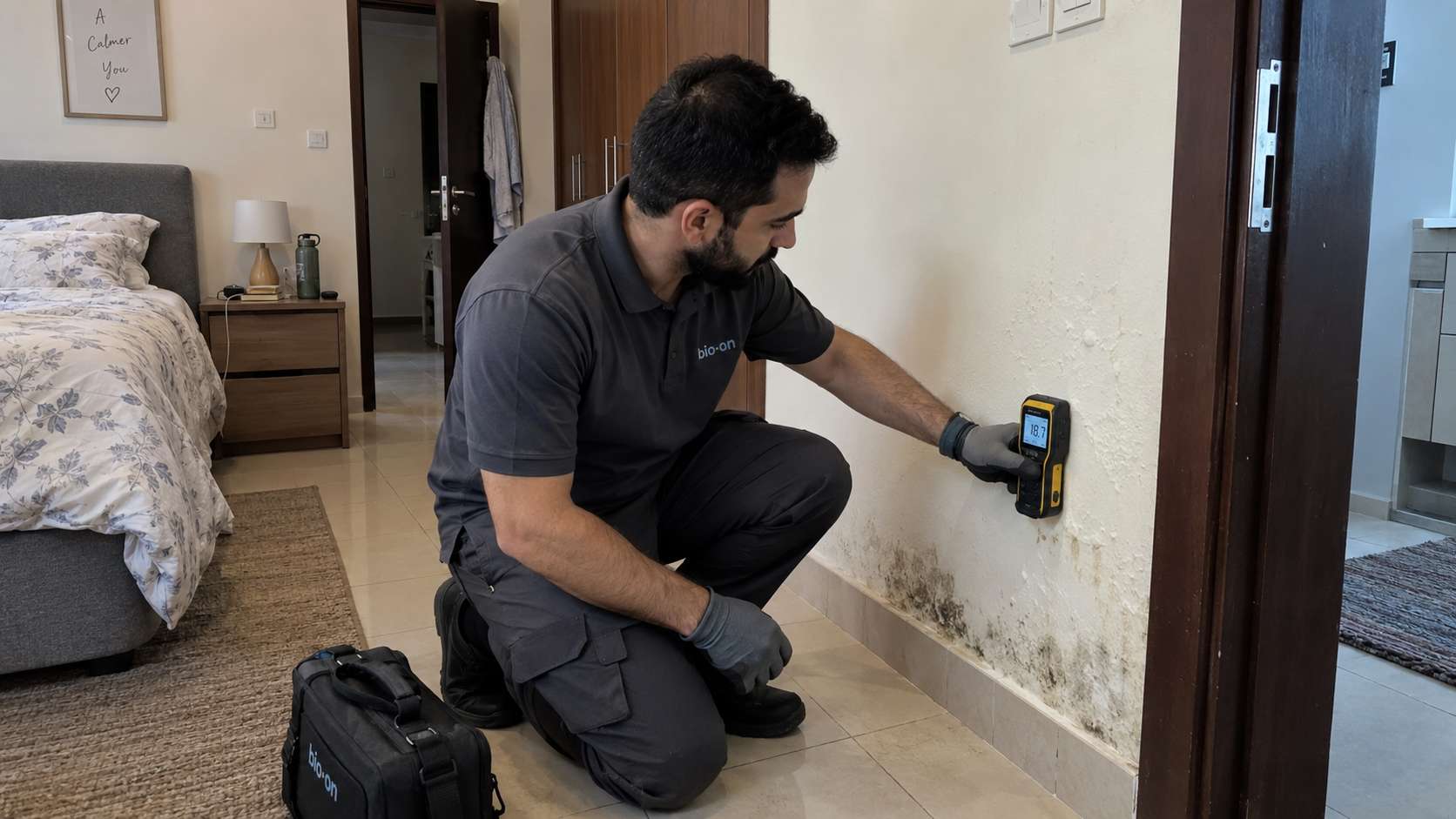
A mold specialist can help with:
- Mold inspection
- Moisture mapping
- Finding hidden damp areas
- Checking whether mold is active or old
- Assessing wall, ceiling, floor, cabinet, and AC-related contamination
- Recommending lab testing when needed
- Setting up containment
- Using HEPA filtration or air scrubbers
- Removing contaminated porous materials
- Cleaning surfaces safely
- Drying affected areas
- Post-remediation verification
- Restoration planning
The biggest advantage is that a mold specialist looks beyond the obvious stain. Mold on a wall may be the final symptom of a deeper problem behind the paint. A musty smell may come from a ceiling void, AC duct, damp cabinet, or wall cavity. A plumber may not inspect those areas unless a pipe is involved.
A mold specialist is also useful when you need evidence. For example, if you are renting a moldy apartment, renewing rent, filing an insurance claim, negotiating repairs with a landlord, or checking whether previous remediation failed, a written mold and moisture assessment can be more useful than a verbal opinion.
Another benefit is safety. Mold removal can disturb spores and contaminated dust. A professional mold team should know when to isolate the work area, protect clean rooms, remove damaged materials, and avoid spreading contamination.
The Downsides of Calling a Mold Specialist First
Calling a mold specialist first can be frustrating if there is active water that still needs urgent plumbing repair. A mold specialist may inspect the area, confirm moisture, and then tell you to call a plumber anyway.
That is not wasted information, but it can delay the water shutoff if the leak is obvious and active.
A mold specialist may also cost more than a simple plumbing visit, especially if testing, detailed reporting, containment, remediation, drying equipment, or restoration is included. If the problem is only a small leak under a sink with no visible mold and no material damage, a plumber may be the more practical first call.
There is also a difference between a true mold remediation company and a basic cleaning company. Some cleaners may offer “mold removal” but only spray, wipe, or paint the area.
That is not enough for serious mold. If you call a mold specialist first, make sure they actually inspect moisture, address the source, and explain the remediation process.
The mold specialist should not promise a permanent solution unless the moisture source is fixed. If they ignore the cause and only talk about spraying chemicals, that is a red flag.
The Best Sequence: Leak First, Mold Second
The best sequence is simple: stop the moisture, dry the materials, remove the mold, then restore the area.
This sequence matters because mold is not only a surface stain. It is usually a symptom of moisture. If the moisture stays, mold can return after cleaning, painting, spraying, or even professional remediation.
A good process usually looks like this:
- Identify the moisture source
Is it plumbing, AC condensation, seepage, roof leakage, bathroom waterproofing, or humidity? - Stop the water
If it is a plumbing leak, call a plumber. If it is seepage, call waterproofing. If it is AC-related, call an HVAC technician. - Measure and dry the affected area
Walls, ceilings, cabinets, and flooring may hold moisture even after the leak stops. - Assess mold contamination
Check whether materials can be cleaned or need removal. - Remediate safely
Use containment, PPE, HEPA filtration, proper cleaning, and safe disposal when needed. - Verify the result
Make sure the area is dry, clean, and ready for repair. - Restore only after drying
Repaint, rebuild, or reinstall cabinets only when the moisture problem is controlled.
This order prevents the most common mistake: cleaning mold while the building is still wet.
When You Need Both a Plumber and a Mold Specialist
You need both a plumber and a mold specialist when there is water damage and mold contamination at the same time. This is very common in bathrooms, kitchens, ceilings, laundry areas, water heater closets, and apartments with upstairs leaks.
You likely need both when:
- A leak has lasted more than a day or two
- The wall or ceiling is soft, stained, or bubbling
- Mold is visible near the leak
- The cabinet smells musty
- Drywall or gypsum board is wet
- The floor is swollen
- The leak was hidden for weeks
- Mold returns after plumbing repair
- You smell mold but cannot see the full source
- Someone in the home has asthma, allergies, or respiratory symptoms
In this situation, the plumber fixes the water source, and the mold specialist handles contamination and drying. The order can overlap. For example, a mold specialist may inspect first, then recommend a plumber for the leak, then return for remediation after the source is repaired.
If you only call a plumber, you may be left with moldy materials. If you only call a mold specialist, the mold may return if the pipe is still leaking. The best result often needs both.
Plumber vs Mold Specialist: Pros and Cons
Here is the simplest comparison.
| Option | Best For | Pros | Cons |
|---|---|---|---|
| Plumber | Active pipe leaks, bathroom leaks, kitchen leaks, water heater leaks | Stops water fast, fixes plumbing source, prevents more damage | Usually does not remediate mold, may not inspect hidden contamination |
| Mold Specialist | Visible mold, musty smell, recurring mold, post-leak contamination | Finds mold risk, checks moisture, removes contamination safely, may provide reports | May still need a plumber, can cost more, quality varies by company |
| Both | Leak plus mold, wet materials, hidden damage | Solves source and contamination together | Requires coordination and clearer scope |
The wrong choice usually happens when people treat mold as only a cleaning issue or treat leaks as only a plumbing issue. In reality, a leak can become a mold problem, and a mold problem usually points back to moisture.
If You Can Call Only One Service, Which One Should It Be?
If you can call only one service, call a professional mold remediation company that also provides moisture inspection, leak detection support, drying, and restoration coordination. This is the better single-call option when mold is already part of the problem.
Why? Because a good mold specialist will not only look at the stain. They should investigate the moisture, identify whether a plumber is needed, advise what materials are contaminated, and help plan the correct order of repair.
However, there is one exception: if water is actively leaking right now, call an emergency plumber first. Active water is the immediate threat. You can call the mold specialist after the leak is stopped.
So the practical rule is:
- Active water emergency? Call a plumber first.
- Mold already visible or returning? Call a mold specialist first.
- Need only one service? Choose a mold remediation company with moisture inspection and repair coordination, unless water is actively leaking.
The best one-service provider is not a basic cleaner. It should be a company that can inspect, identify the moisture source, coordinate plumbing or waterproofing, remediate mold safely, dry the area, and restore the damaged materials.
That gives you one accountable team instead of several disconnected contractors blaming each other.
Questions to Ask Before Hiring Either One
Before hiring a plumber or mold specialist, ask questions that reveal whether they understand the full problem.
Ask a plumber:
- Can you identify whether the leak is active?
- Can you test the pipe, drain, fixture, or water line?
- Will you check nearby walls, cabinets, and flooring for water damage?
- Can you provide photos or a repair report?
- Should a mold specialist inspect the affected materials after the leak is fixed?
Ask a mold specialist:
- Will you check the moisture source before remediation?
- Do you use moisture meters or thermal imaging?
- Do you inspect AC, ducts, walls, ceilings, and cabinets if needed?
- Do you use containment and HEPA filtration?
- Will contaminated porous materials be removed if necessary?
- Do you provide post-remediation verification?
- Can you coordinate with plumbers, waterproofing, or AC technicians?
Avoid anyone who gives a permanent guarantee without inspecting the source. Also avoid anyone who says spraying chemicals or repainting is enough for recurring mold.
The Bottom Line
If you are choosing between a plumber or mold specialist, start with the moisture source. Call a plumber first if water is actively leaking, dripping, or spreading. You need to stop the water before mold removal can work.
Call a mold specialist first if mold is visible, recurring, hidden, musty, or already affecting walls, ceilings, cabinets, AC areas, or indoor air. A mold specialist can assess contamination, find moisture patterns, and plan safe remediation.
If there is only one service you should call, choose a professional mold remediation company that also offers moisture inspection, drying, leak detection support, and repair coordination. But if water is actively leaking right now, make the plumber your first emergency call.
The real answer is not plumber versus mold specialist forever. It is plumber for the active water source, mold specialist for the mold contamination, and one coordinated solution when you need both.