


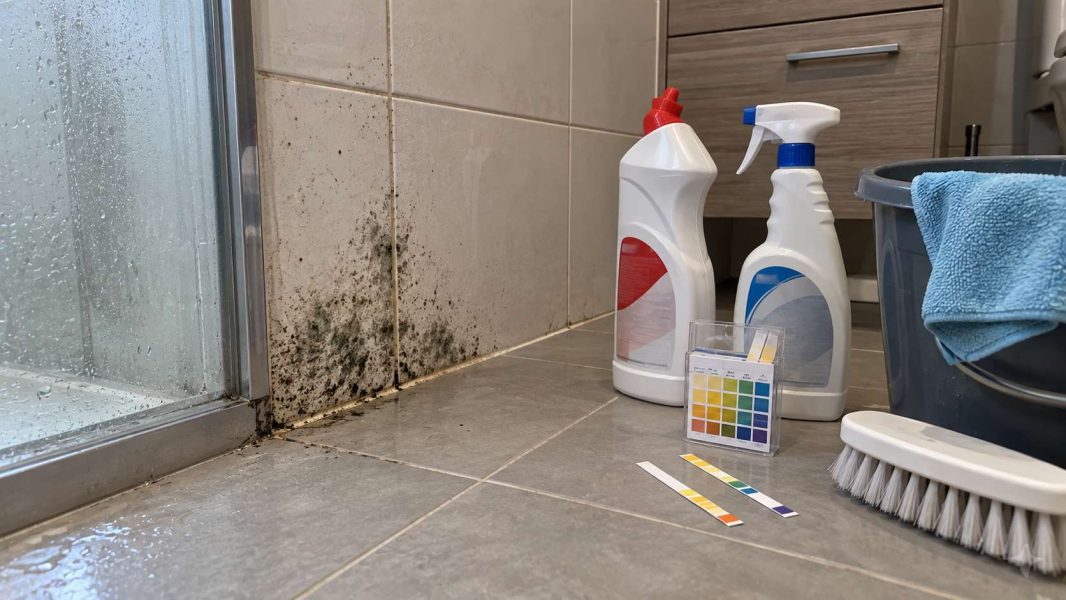
What pH Level to Kill Mold Actually Works?
There isn’t a reliable number such as “pH 2 kills all mold” or “pH 12 permanently kills mold.”
That would be convenient, but mold biology isn’t that simple.
Different fungi tolerate different environments. Some fungi grow comfortably across a surprisingly broad pH range because they can adjust their metabolism to changing acidity or alkalinity. Research on fungi has documented this broad ability to respond to environmental pH, including species capable of living in strongly alkaline environments.
As a simple way to think about the pH scale:
- pH 1–6: acidic
- pH 7: neutral
- pH 8–14: alkaline
Move far enough toward either end and conditions can become stressful for many organisms.
But “stressful” does not automatically mean every mold spore is dead.
One laboratory study comparing toxigenic molds found that Aspergillus species generally handled alkaline conditions better, while Penicillium species were more tolerant of acidic conditions.
That’s the problem with looking for one magic mold-killing pH: you don’t normally know exactly which species you have, and different molds behave differently.
Why Can Some Mold Survive Such a Wide pH Range?
Mold is much tougher than it looks.
Fungi have biological systems that help them detect changes in their surroundings and adjust how their cells function. This ability helps explain why fungi can survive across environments that vary considerably in pH.
Some fungi are especially impressive.
Research on alkali-tolerant fungi has documented organisms growing around pH 7–11, while some specialized fungi favor environments above pH 9.
So pouring something acidic or alkaline onto a moldy area doesn’t necessarily create an instant kill switch.
There is another complication.
The pH you measure in a cleaning liquid isn’t necessarily the pH that mold experiences deep inside:
- Wood
- Drywall
- Carpet
- Grout
- Insulation
- Ceiling material
The chemical may touch the surface while mold remains deeper inside.
That’s why what the mold is growing on matters just as much as what you put on it.
Do Acidic Household Cleaners Kill Mold?
The most familiar example is vinegar.
Vinegar is acidic, so people often assume:
Acid + mold = dead mold.
Sometimes an acidic cleaner may inhibit or damage fungal growth on a suitable surface. But that does not mean an ordinary household acid reliably eliminates every mold species or every mold problem.
Consider a moldy wall.
You might apply an acidic cleaner and successfully remove what is growing on the painted surface.
But if moisture has reached the drywall underneath, the cleaner may never reach the deeper growth.
The wall looks clean.
A few weeks later?
The spots appear again.
That doesn’t necessarily mean the cleaning product “did nothing.” It may mean you treated the surface while leaving the environment that caused the mold untouched.
What About Alkaline Cleaners?
The same problem applies in the opposite direction.
Highly alkaline conditions can be unfavorable to many molds, and some cleaning products work at an alkaline pH.
But again, mold species vary.
Some fungi tolerate alkaline environments better than others.
And making a surface alkaline doesn’t:
- Repair a leaking pipe
- Dry wet drywall
- Remove damp insulation
- Lower excessive humidity
- Fix AC condensation
- Remove mold buried inside porous materials
That’s why choosing a cleaner based purely on its pH can give you false confidence.
Does Bleach Kill Mold Because of Its High pH?
Bleach is alkaline, but its mold-killing properties aren’t simply a matter of having a high pH.
More importantly, the U.S. EPA does not recommend routinely using biocides such as chlorine bleach for mold cleanup. For many ordinary hard-surface mold problems, its guidance emphasizes physically cleaning mold using detergent and water and then drying the surface completely.
That distinction is useful.
You don’t necessarily need to find the strongest possible chemical.
What you actually need to accomplish is:
Remove the contamination + dry the material + stop it getting wet again.
Also, never casually mix bleach with acids or other household cleaners. Chemical combinations can create dangerous gases.
Surface Type Matters More Than People Think
Imagine finding the same small mold patch in two locations.
One is on ceramic tile.
The other is inside drywall.
Same mold. Completely different cleaning problem.
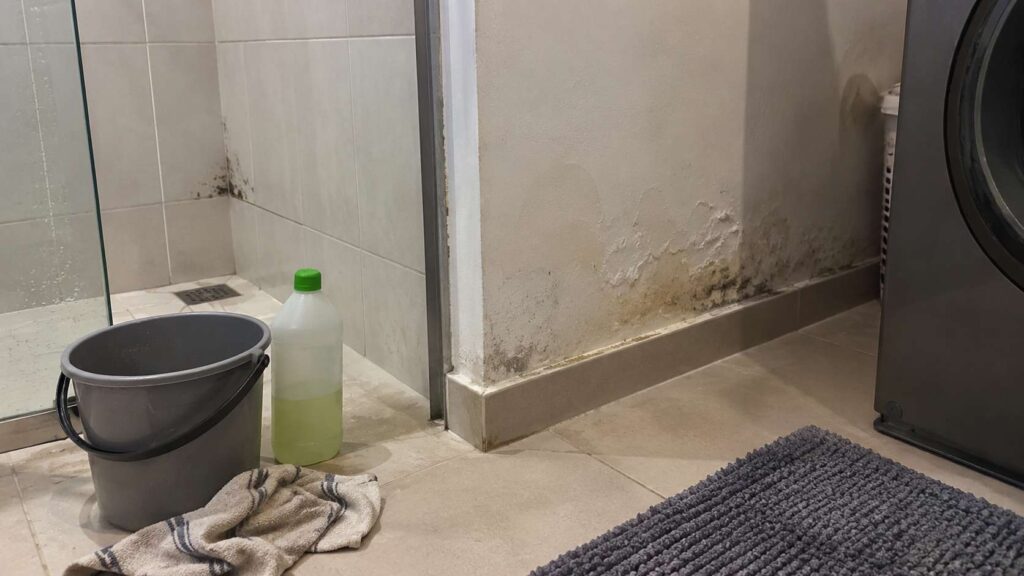
Hard, Non-Porous Surface
Materials such as certain tiles, glass, metal, and hard plastics usually allow much easier physical cleaning because mold cannot penetrate deeply into the material itself.
EPA guidance recommends scrubbing mold from hard surfaces with detergent and water and drying them completely.
Porous Surface
Now consider:
- Carpet
- Ceiling tiles
- Drywall
- Insulation
- Some wood products
Mold can enter spaces and crevices inside porous materials.
At that point, changing the surface pH doesn’t necessarily reach the entire colony.
The EPA notes that moldy absorbent materials such as carpet and ceiling tiles may sometimes need to be discarded because complete mold removal can be difficult or impossible.
That’s why a bottle of “mold killer” can work beautifully on one surface and be completely inadequate for another.
Why Does Mold Return Even After You Kill It?
Here’s the part that matters most.
Mold needs moisture.
If the wall, ceiling, floor, cabinet, or carpet remains damp, you’ve left the biggest part of the problem untouched.
The EPA summarizes mold control very simply: moisture control is the key. Water problems should be fixed and affected materials should be dried completely.
Suppose you have mold beside your bedroom window.
You clean it perfectly.
But every night condensation wets the same wall.
The cycle becomes:
Moisture → mold growth → cleaning → moisture again → mold again.

Changing the pH only affects one moment in that cycle.
Stopping the water breaks the cycle.
What Should You Focus on Instead of pH?
If you’re trying to stop household mold, use a much simpler checklist:
- Find the moisture. Look for leaks, condensation, humidity, flooding, or wet building materials.
- Fix the water problem. Cleaning before doing this often means cleaning the same mold twice.
- Remove the mold physically. Hard surfaces can often be cleaned appropriately rather than merely sprayed.
- Dry everything completely. Dampness gives remaining or newly arriving spores another chance to grow.
- Inspect porous materials. Moldy carpet, ceiling tiles, insulation, or badly contaminated drywall may require removal rather than endless treatment.
Notice what isn’t on that list?
Trying to make your wall reach some perfect mold-killing pH.
The Bottom Line: Is There a pH Level That Kills Mold?
There is no single pH level that reliably kills every type of mold in a real home.
Strongly acidic or alkaline conditions may inhibit or kill certain molds, but fungal species differ considerably in what they can tolerate. Some can survive across surprisingly broad pH ranges.
So don’t turn your mold problem into a chemistry experiment.
If mold is growing on a washable hard surface, proper physical cleaning and complete drying may be enough. If it is growing inside drywall, carpet, insulation, or other porous materials, surface cleaners may not reach the whole problem.
Most importantly, get rid of the dampness. You can change the pH today, but if that wall is still wet tomorrow, mold may simply come back.