


What Is Orange Mold and How Do You Identify It?
Orange mold is not one specific type of mold. Instead, it describes mold colonies that develop orange, peach, yellow-orange, or rusty colors due to their natural pigments.
Unlike black mold, which is often recognized by dark patches, orange mold can be confusing because it may resemble other household problems such as:
- Rust stains
- Food residue
- Dirt buildup
- Soap scum
- Mineral deposits
- Decaying organic material
Proper identification starts with looking at several signs together, not just color.
What Does Orange Mold Look Like?
Orange mold can appear in different forms depending on the species and surface it grows on.
Common appearances include:
- Bright orange spots or patches
- Orange-yellow fuzzy growth
- Slimy orange film
- Powdery orange residue
- Rust-colored stains that return after cleaning
- Small clusters growing along damp edges
The texture is often a better clue than the color.
Orange mold may feel:
- Soft or fuzzy when actively growing
- Slimy in constantly wet areas
- Powdery when dry
- Slightly raised compared to normal stains
You may find it in areas such as:
- Shower corners and bathroom grout
- Around leaking pipes
- Under sinks
- Behind furniture against damp walls
- Wooden cabinets or furniture
- Air-conditioning areas with condensation problems
- Window frames with moisture buildup
In the UAE, orange mold is more likely to appear in places where indoor humidity combines with poor ventilation, condensation, water leaks, or hidden moisture. Air-conditioned homes can sometimes create these conditions because cold surfaces may collect condensation while outdoor humidity remains high.
The Creepy Dark Truths About Orange Mold (Without the Fear)
Orange mold may look strange, but the reality is more interesting than frightening. Here are some facts that explain why it appears and why you should pay attention when you discover it.
Orange Mold Is a Sign That Something Is Feeding It
The first “creepy” truth about orange mold is that it does not randomly appear overnight. Like all mold, it needs the right environment to grow.
The main ingredients are:
- Moisture
- Organic material
- Suitable temperature
- Time
Your home provides plenty of organic materials that mold can use, including:
- Wood fibers
- Dust particles
- Paper products
- Fabric
- Drywall materials
- Soap residue
The orange color is simply the visible result of a colony developing under favorable conditions.
Finding orange mold is like finding a warning signal. The mold itself is the visible part, but the hidden message is usually: somewhere nearby, moisture is staying longer than it should.
Orange Mold Can Hide Behind Beautiful Interiors
One of the surprising things about orange mold is that it does not always grow in obviously dirty places.
A clean-looking home can still have mold problems if moisture is hidden.

Examples include:
- Behind wardrobes pushed tightly against walls
- Under kitchen cabinets
- Inside wooden furniture joints
- Behind bathroom panels
- Around AC vents with condensation
- Inside wall cavities after leaks
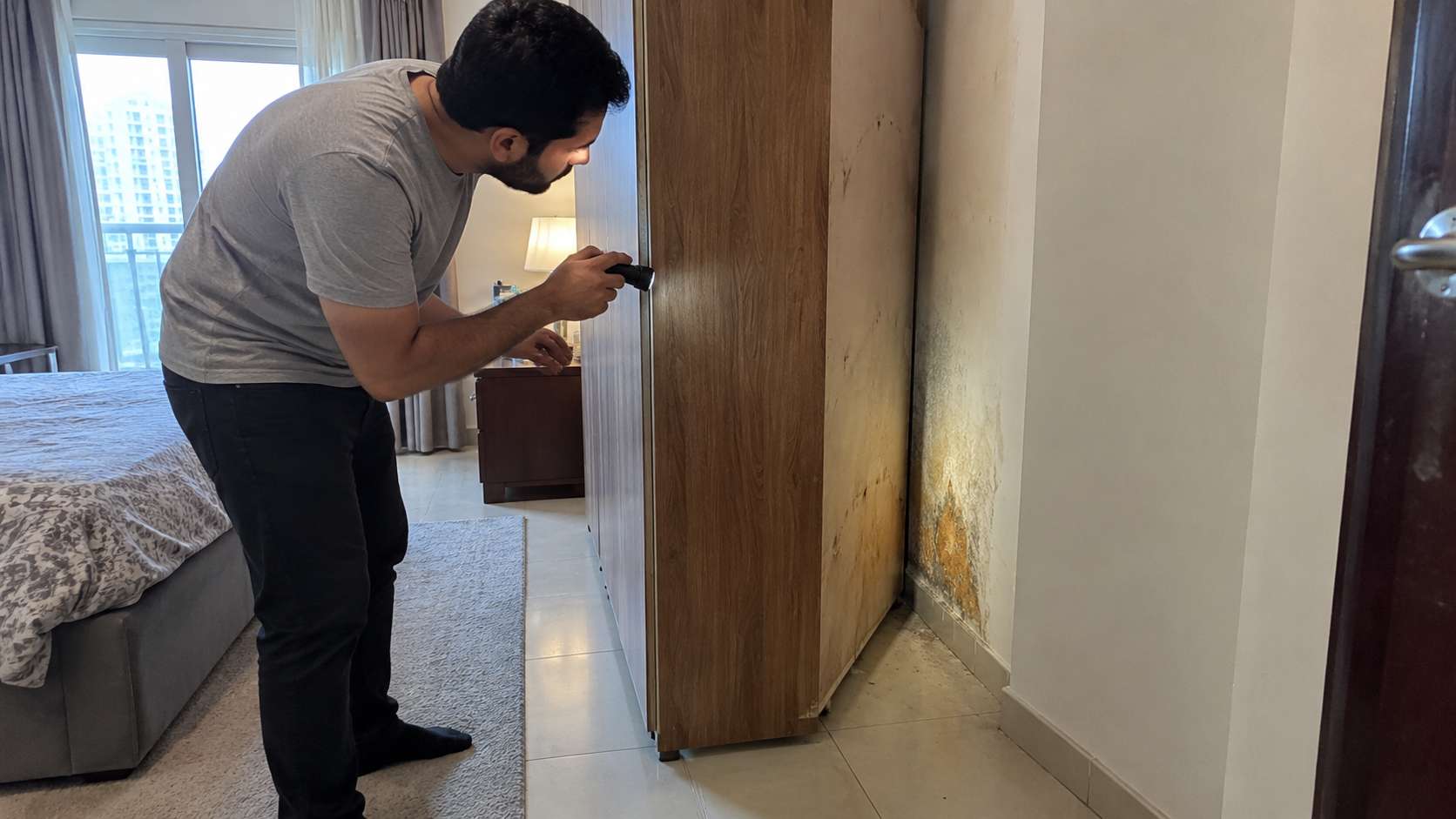
This is especially relevant in UAE homes where closed windows, strong air conditioning, and indoor cooling can sometimes reduce natural airflow.
A small orange patch behind furniture may not mean your home is dirty. It may simply mean moisture has been trapped in a place where it cannot dry properly.
Orange Mold Is Not Always the Same as “Toxic Mold”
A common fear is that any unusual-colored mold must be extremely dangerous. That is not accurate.
The color of mold alone does not tell you:
- How harmful it is
- What species it belongs to
- Whether it produces harmful compounds
- How much exposure risk exists
Orange mold does not automatically mean a severe toxic mold situation. However, all indoor mold growth should be treated seriously because mold can contribute to indoor air quality problems, especially for sensitive individuals.
People who may experience stronger reactions include:
- Individuals with mold allergies
- People with asthma
- Young children
- Older adults
- People with weakened immune systems
The important question is not only “What color is the mold?” but also:
- How large is the growth?
- Where is it growing?
- Is the moisture problem fixed?
- Is it spreading?
Orange Mold Can Return If You Only Clean the Surface
Another interesting truth is that wiping orange mold away may create the illusion that the problem is solved.
However, mold can return when the original moisture source remains.
For example:
- Cleaning orange mold from bathroom grout will not solve a leaking shower.
- Removing mold from wooden furniture will not fix a damp wall behind it.
- Wiping condensation around an AC vent will not solve ongoing moisture buildup.
Successful mold control requires two actions:
- Remove the existing growth.
- Fix the condition allowing mold to grow.
Skipping the second step is one of the biggest reasons homeowners repeatedly see mold come back.
How Should You Deal With Orange Mold at Home?
If you discover a small area of orange mold, the first step is not panic. The first step is assessment.
Ask yourself:
- Is the affected area small or widespread?
- Is the surface non-porous or absorbent?
- Is there an active leak or moisture problem?
- Is the mold growing on furniture, walls, or HVAC components?
For small surface growth on non-porous materials, basic cleaning may sometimes be enough.
General steps include:
- Wear gloves and avoid disturbing dry mold unnecessarily.
- Improve airflow in the area.
- Remove excess moisture.
- Clean the affected surface using an appropriate mold-cleaning method.
- Dry the area completely.
- Monitor whether the growth returns.
Be more cautious when orange mold appears on:
- Drywall
- Wooden furniture interiors
- Insulation
- Large wall areas
- Air-conditioning systems
Porous materials can allow mold growth deeper inside, meaning surface cleaning may not completely solve the problem.
When Should UAE Homeowners Consider Professional Mold Removal?
Professional mold remediation may be needed when orange mold is not just a small surface issue.
Consider professional help if:
- The mold keeps returning after cleaning
- There is a hidden water leak
- The affected area is large
- Mold is inside walls or ceilings
- Furniture has deep contamination
- There is a strong persistent musty smell
- HVAC systems may be affected
A professional assessment can help identify whether the problem is only surface-level or connected to a larger moisture issue.
In UAE homes, this is especially important because humidity, AC condensation, and hidden plumbing issues can continue feeding mold growth even after visible cleaning.
The Bottom Line
Orange mold may look creepy because of its unusual color, but it is not something you need to fear blindly. The important thing is understanding what it represents.
It is a sign that moisture and organic material have created the right environment for growth. The color can help you notice the problem, but it does not determine the danger level by itself.
If you discover orange mold at home, focus on three things: identify where it is growing, remove the moisture source, and make sure the affected material is properly cleaned or restored. A small discovery handled early is much easier to manage than a hidden moisture problem that has been feeding mold for months.