


Why Your Car Smells Musty
Your car smells musty because moisture has mixed with dust, organic residue, and poor airflow. That combination can allow mold, mildew, bacteria, or odor-producing microbial buildup to grow.
Cars are almost perfect little odor traps. They have fabric seats, carpets, insulation pads, floor mats, AC ducts, hidden cavities, and very little airflow when parked. Add heat, humidity, rainwater, spilled drinks, sweaty gym clothes, wet shoes, or AC condensation, and the smell can build quickly.
The smell may be described as:
- Damp towel
- Wet socks
- Old carpet
- Dirty AC
- Closed basement
- Moldy fabric
- Sour air
- Humid cabin smell
Mold-related odors often come from microbial volatile organic compounds, sometimes called mVOCs. EPA explains that some compounds produced by molds have strong, unpleasant odors and may be the source of the moldy or musty smell associated with mold growth. EPA also notes that the health effects of inhaling these compounds are not fully understood, though exposure has been linked with complaints such as headaches, nasal irritation, dizziness, fatigue, and nausea.
That does not mean every musty car smell is dangerous. But it does mean the smell deserves attention. Odor is often the first clue that something is damp before you see visible mold.
The Most Common Causes of Musty Smell in Car
The most common causes are AC moisture, dirty filters, wet carpets, water leaks, and damp upholstery. Each source smells slightly different, so the timing of the odor helps you troubleshoot.
AC Evaporator Moisture
If the smell appears when you turn on the AC, especially during the first few seconds, the evaporator is a prime suspect. The evaporator gets cold while the AC runs. Moisture from warm cabin air condenses on it. Normally, that water drains out through the AC drain tube. But if moisture stays inside the evaporator housing, mold and bacteria can grow.
Consumer Reports explains that moisture can collect in the evaporator, and if it sits there long enough, bacteria and mold can form and create smell inside the cabin.
This is extremely common in hot and humid climates because the AC works hard almost every time you drive. In the UAE, for example, some auto-service guides point to evaporator bacterial or mold buildup as a common cause of musty AC smell because dust and humidity collect in the cooling system.
Dirty Cabin Air Filter
The cabin air filter traps dust, pollen, debris, and sometimes moisture. If it becomes dirty or damp, it can smell bad and spread odor every time the fan runs.
A clogged filter can also reduce airflow. Lower airflow makes it harder for the evaporator and duct area to dry. That means a cheap filter problem can slowly become an AC odor problem.
Wet Carpets and Floor Mats
Wet carpets are one of the biggest hidden causes. The top surface may feel dry, while the padding underneath stays damp for days. Mold and mildew can grow in that lower layer, especially if the car is parked closed in heat.
Common reasons include:
- Rainwater tracked in by shoes
- Flooding
- Leaking door seals
- AC drain leak into the passenger footwell
- Spilled drinks
- Wet floor mats
- Poorly dried interior detailing
- Open window during rain
If the smell is strongest near the floor, check carpets carefully.
Leaking Seals or Water Intrusion
Water can enter through damaged door seals, sunroof drains, windshield seals, trunk seals, tail light gaskets, or blocked drainage channels. Sometimes you only notice it after heavy rain or car washing.
If the musty smell appears after rain, don’t only clean the interior. Find the leak. Otherwise, the smell will return.
Old Spills and Food Residue
Coffee, milk, juice, baby formula, food crumbs, and forgotten takeaway can create sour or musty smells. If the spill soaked into carpet padding or seat foam, wiping the surface will not be enough.
Mold in Upholstery or Trunk
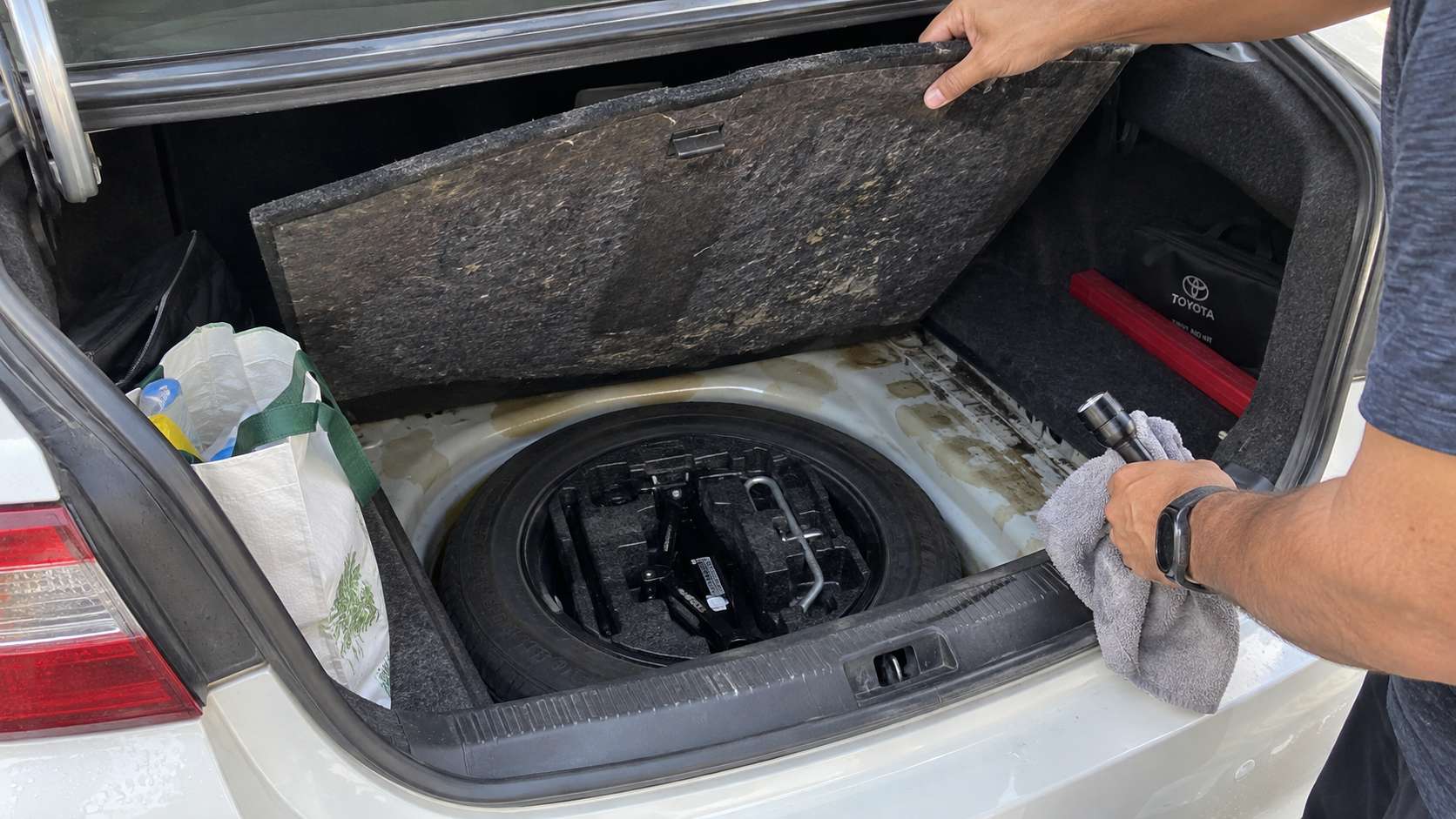
The trunk can hold moisture from leaks, wet umbrellas, sports gear, cleaning tools, spare tire wells, or stored items. If the cabin smells musty but the front seats look clean, open the trunk and smell around the spare tire area.
Health Risks of Moldy Car Air
Moldy car air may irritate some people, especially those with allergies, asthma, respiratory sensitivity, or weakened immune systems. The risk depends on how much mold is present, where it is growing, whether the AC is blowing contaminated air, and how sensitive the person is.
CDC says mold can cause symptoms such as stuffy nose, sore throat, coughing, wheezing, burning eyes, or skin rash, and people with asthma or mold allergies may have stronger reactions. EPA also describes mold, dust mites, pollen, pet allergens, and pest materials as biological contaminants that can trigger asthma symptoms and allergic reactions in indoor environments.
In a car, the exposure pattern can feel intense because the space is small. If the AC fan blows air from a contaminated evaporator, filter, or vent system, you may smell it directly. If damp carpet is growing mold, every drive can stir up particles and odor.
Possible symptoms in sensitive people include:
- Sneezing
- Runny or blocked nose
- Itchy eyes
- Coughing
- Throat irritation
- Headache
- Wheezing
- Chest tightness
- Worsening asthma
- Nausea from strong odor

Do not use symptoms alone to diagnose mold. Car fragrances, cleaning chemicals, exhaust leaks, fuel smell, ozone treatments, dust, and pollen can also irritate people. But if symptoms happen mainly inside the car and improve when you leave it, the car environment needs inspection.
Troubleshooting: What to Check First
The easiest way to troubleshoot musty smell in car is to follow the smell timing.
If the smell appears when AC turns on
Start with the AC system.
Check:
- Cabin air filter
- AC vents
- Evaporator odor
- Drain tube
- Moisture under dashboard
- Smell difference between fresh air and recirculation mode
Try running the fan without AC for a few minutes before parking. This can help dry the evaporator. Consumer Reports suggests turning off the AC but keeping the fan running near the end of a drive to help dry the system.
If the smell keeps coming back, you may need an evaporator cleaning treatment or professional AC cleaning.
If the smell is always there
If the car smells musty even before starting the engine, check the cabin materials.
Look at:
- Floor mats
- Carpet under mats
- Seat gaps
- Trunk carpet
- Spare tire well
- Under-seat area
- Door pockets
- Seat foam
- Headliner stains
- Damp odor near windows or doors
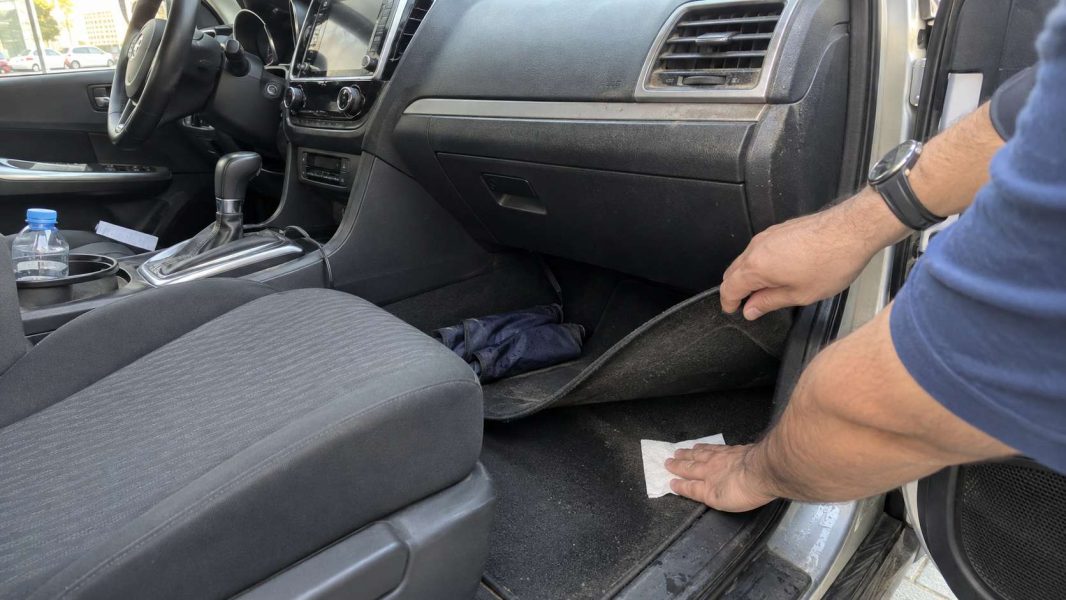
Press a dry tissue or paper towel into the carpet, especially in footwells. If it comes up damp, you have a moisture problem.
If the smell appears after rain or washing
Suspect water intrusion.
Check:
- Door seals
- Window seals
- Sunroof drains
- Windshield edge
- Trunk seal
- Tail light area
- Spare tire well
- Damp floor on one side
- Water trails or stains
A technical service bulletin from the U.S. NHTSA notes that if odor is noticeable when the engine is not on, the cause may be mold and mildew in the passenger compartment rather than the AC system, and that the evaporator drain should be open and the cabin should be sealed with no water ingress.
That is a good troubleshooting rule: AC smell when AC starts, cabin smell when the car is off.
DIY Solutions for Musty Car Smell
DIY can work if the source is light, recent, and reachable. It usually fails when the odor source is deep inside the AC evaporator, carpet padding, seat foam, or a hidden leak.
Replace the Cabin Air Filter
This is one of the easiest fixes. A dirty cabin filter can hold dust, pollen, moisture, and odor. Check your owner’s manual for the filter location. Many are behind the glovebox.
If the filter looks grey, clogged, damp, or smells bad, replace it. Do not spray perfume onto the filter. That only creates scented mustiness.
Dry the Interior Completely
Remove floor mats and dry them outside. Vacuum the carpets. If the floor is damp, use towels, airflow, sunlight, or a wet-dry vacuum. Keep doors open in a safe place to air the cabin out.
For serious dampness, the carpet may need to be lifted so the padding underneath can dry. This is where many DIY fixes fail. The carpet surface dries, but the underlay stays wet.
Clean Hard Surfaces
Wipe dashboards, door panels, cupholders, seat rails, trunk panels, and plastic trim. Moldy smells can cling to dust and residue.
Use a mild interior cleaner suitable for car materials. Avoid soaking electronics, buttons, seat controls, and seams.
Use Fabric and Carpet Cleaner Carefully
Fabric cleaners can help with old spills and upholstery odor. But do not over-wet the fabric. Too much moisture can make the musty smell worse.
After cleaning, dry the area fast with airflow. Never close the car while seats or carpets are still damp.
Clean AC Vents
You can use automotive AC cleaner sprays designed for vents or intake areas. Follow the product directions closely. Some products are sprayed into the air intake while the fan runs; others are used through vents.
Remove or replace the cabin filter as directed. Consumer Reports notes that if the car has a cabin filter, removing it before spraying disinfectant can help the product move through the system.
Use Odor Absorbers, Not Just Fragrance
Activated charcoal bags, baking soda containers, or moisture absorbers can help with leftover smell. But they are support tools, not source removal. If something is still wet or moldy, odor absorbers will not solve it.
Avoid These Mistakes
Do not cover musty smell with perfume. Do not use household bleach inside the car. Do not soak the carpet unless you can extract and dry it properly. Do not run ozone treatment while people or pets are inside the car. Do not ignore a leak just because the smell improves for a few days.
When DIY Is Not Enough
DIY is not enough when the odor keeps returning after filter replacement, cleaning, and drying. Recurring smell means the source is still active.
You should get professional help if:
- The AC smells musty every time it starts
- Carpets feel damp under the mats
- The smell returns after rain
- There is visible mold on upholstery
- The trunk or spare tire area is wet
- You had floodwater enter the car
- You smell mildew after detailing
- Someone with asthma reacts inside the car
- You cannot locate the source
- The car has a history of water damage
A professional may inspect the AC evaporator, drain tube, cabin filter housing, carpet underlay, door seals, sunroof drains, and trunk area. They may also use extraction, steam cleaning, enzyme treatment, antibacterial evaporator cleaner, ozone treatment, or interior disassembly depending on the source.
Just be careful with “quick deodorizing” services. A pleasant smell after treatment does not always mean the mold or moisture source is gone.
Cost Expectations for Fixing Musty Car Smell
Costs depend on the source. A cabin filter is cheap. A dashboard-out evaporator job can be expensive. Interior mold after water damage can also cost more because it may require deep extraction, disassembly, and drying.
Here are realistic cost ranges, using UAE/Dubai-style pricing where available:
| Service | Expected cost |
|---|---|
| Cabin air filter replacement | AED 80–200 |
| Basic AC antibacterial treatment | AED 150–300 |
| Condenser cleaning | AED 150–250 |
| AC drain pipe cleaning | AED 150–400 |
| Full AC system flush and recharge | AED 400–700 |
| Evaporator coil replacement | AED 900–2,200 |
| AC compressor replacement | AED 800–2,500 |
| Car interior deep cleaning/detailing | Often starts around AED 299+ |
| Heater core replacement, if odor is coolant-related | AED 2,000–4,500 |
Dubai AC repair guides list cabin filter replacement around AED 80–200, condenser cleaning around AED 150–250, full AC flush and recharge around AED 400–700, and evaporator coil replacement around AED 900–2,200. Other UAE guides place evaporator antibacterial cleaning at about AED 150–300 and drain pipe cleaning around AED 150–400 depending on access.
If the musty smell is only from a dirty cabin filter, the fix may be simple. If the smell is from moldy carpet padding after a leak, the cost can rise because the carpet may need lifting, extraction, drying, and leak repair. If the evaporator itself is contaminated, a cleaning treatment may help, but replacement or major disassembly is much more expensive.
The best way to avoid high cost is to act early. A small AC smell today may become a full evaporator or carpet problem later if moisture is ignored.
How to Prevent Musty Car Smell From Coming Back
Prevention is mostly about drying and cleanliness. Mold and mildew need moisture, so your goal is to stop the car from staying damp.
Try these habits:
- Replace the cabin filter regularly.
- Run the fan without AC for the last few minutes of a drive.
- Remove wet mats and dry them outside.
- Do not leave wet towels, gym clothes, umbrellas, or shoes in the car.
- Check carpets after heavy rain or car washing.
- Keep sunroof drains and door seals clear.
- Clean spills immediately.
- Vacuum dust and crumbs often.
- Use recirculation wisely, but allow fresh air sometimes.
- Fix AC drain issues early.
- Keep the trunk dry.
- Avoid over-wetting carpets during DIY cleaning.
In humid climates, prevention matters even more. The car may feel dry because the AC is cold, but condensation can still form inside the system. That moisture needs a way to drain and dry.
The Bottom Line
A musty smell in your car is usually a moisture problem. The source may be the AC evaporator, cabin air filter, carpet padding, trunk, upholstery, old spills, leaking seals, blocked drains, or mold and mildew buildup in hidden areas.
Start with the simple checks. Replace the cabin filter. Smell the AC vents. Inspect floor mats and carpets. Check the trunk and spare tire area. Watch whether the smell appears when the AC starts, when the car is off, or after rain. That timing usually tells you where to look first.
DIY cleaning can work for light odor, dirty filters, small spills, and surface dampness. But if the smell keeps returning, do not keep spraying fragrance. Find the moisture source. For AC contamination, wet carpet padding, water leaks, visible mold, or strong recurring odor, professional AC cleaning or interior detailing may be the better investment.
A fresh-smelling car is not just about comfort. It is a sign that the cabin, AC system, and interior materials are staying clean and dry.