


Why Moldy Walls Keep Coming Back
Moldy walls keep coming back because the wall is still getting moisture. Cleaning the visible mold without fixing the water source is like wiping smoke off a wall while the fire is still burning.
Common causes include:
- Pipe leaks inside the wall
- Roof or ceiling seepage
- Balcony or exterior wall water intrusion
- Bathroom waterproofing failure
- AC condensation near vents
- High indoor humidity
- Poor ventilation
- Furniture pushed tightly against cold or damp walls
- Wet drywall after a previous water leak
- Mold hidden behind paint, wallpaper, or paneling
This is why the same black, green, gray, or white patch often returns in the same corner. The mold is not “magically strong.” The wall is still damp.
The CDC says mold grows where there is moisture, including around leaks in roofs, windows, or pipes. It also links damp and moldy environments with possible health effects such as upper respiratory symptoms, cough, wheeze, and asthma symptoms in people with asthma.
So, the question is not only “How do I clean this wall?” The better question is “Why is this wall wet enough for mold to grow?”
Until you answer that, any fix is temporary.
Short-Term Fixes for Moldy Walls
Short-term fixes are meant to reduce exposure and slow the spread while you investigate the cause. They are not the final solution for recurring or hidden mold.
First, protect the room. Keep children, babies, elderly people, and anyone with asthma, allergies, or breathing issues away from the affected area if possible. Do not dry-brush mold, sand it, or scrape it aggressively. That can spread particles into the air.
For a small mold patch on a hard, washable surface, you may clean it carefully with soap and water or a suitable household cleaner. Wear gloves, eye protection, and a mask if there is visible mold or musty odor. EPA guidance says areas under about 10 square feet can often be handled by homeowners, but larger areas or heavy water damage may need professional remediation.
Then focus on drying and airflow:
- Open windows briefly if outdoor humidity is not high.
- Run the AC or dehumidifier to lower humidity.
- Use fans to move air across the damp area.
- Pull furniture away from the wall.
- Remove wet curtains, rugs, cardboard, or fabric nearby.
- Keep wardrobes and cabinets open if they share the damp wall.
- Check for water dripping, stains, bubbling paint, or soft drywall.
Do not paint over the mold. Do not cover it with wallpaper. Do not spray perfume or air freshener and assume it is fixed. Those actions hide the warning signs while moisture continues behind the surface.
Short-term goal: reduce exposure, dry the area, and stop the mold from spreading while you prepare the real repair.
Long-Term Fixes That Actually Work
Long-term fixes for moldy walls must deal with the source. The wall has to stop getting wet. Otherwise, the mold will return.
Start with moisture investigation.

Check the other side of the wall, nearby bathroom plumbing, AC vents, ceiling lines, window frames, exterior cracks, roof seepage, balcony waterproofing, and pipes. A moisture meter or thermal camera can help identify damp areas that are not visible.
Then repair the actual cause:
| Cause | Long-Term Fix |
|---|---|
| Pipe leak inside wall | Plumbing repair, wall opening, drying, material replacement |
| AC condensation | AC servicing, insulation correction, drain line repair |
| High humidity | Dehumidifier, AC dry mode, ventilation improvement |
| Bathroom moisture | Exhaust fan, waterproofing repair, better sealing |
| Roof or balcony seepage | Waterproofing, crack repair, drainage correction |
| Damp exterior wall | Building envelope repair, waterproof coating where appropriate |
| Wet drywall | Remove affected drywall, dry cavity, replace after moisture control |
| Mold behind wallpaper | Remove wallpaper, inspect wall, clean or replace material |
If drywall, insulation, MDF, or gypsum board stayed wet for too long, surface cleaning may not be enough. The EPA says wet or damp materials should be dried within 24–48 hours after a leak or spill to help prevent mold growth. If mold growth covers more than 10 square feet or there has been a lot of water damage, EPA recommends consulting larger remediation guidance.
The ultimate long-term fix is this sequence:
- Find the moisture source.
- Stop the moisture.
- Remove moldy material that cannot be saved.
- Clean remaining hard surfaces safely.
- Dry the structure completely.
- Verify moisture levels.
- Rebuild only after the wall stays dry.
- Prevent recurrence with humidity control and ventilation.
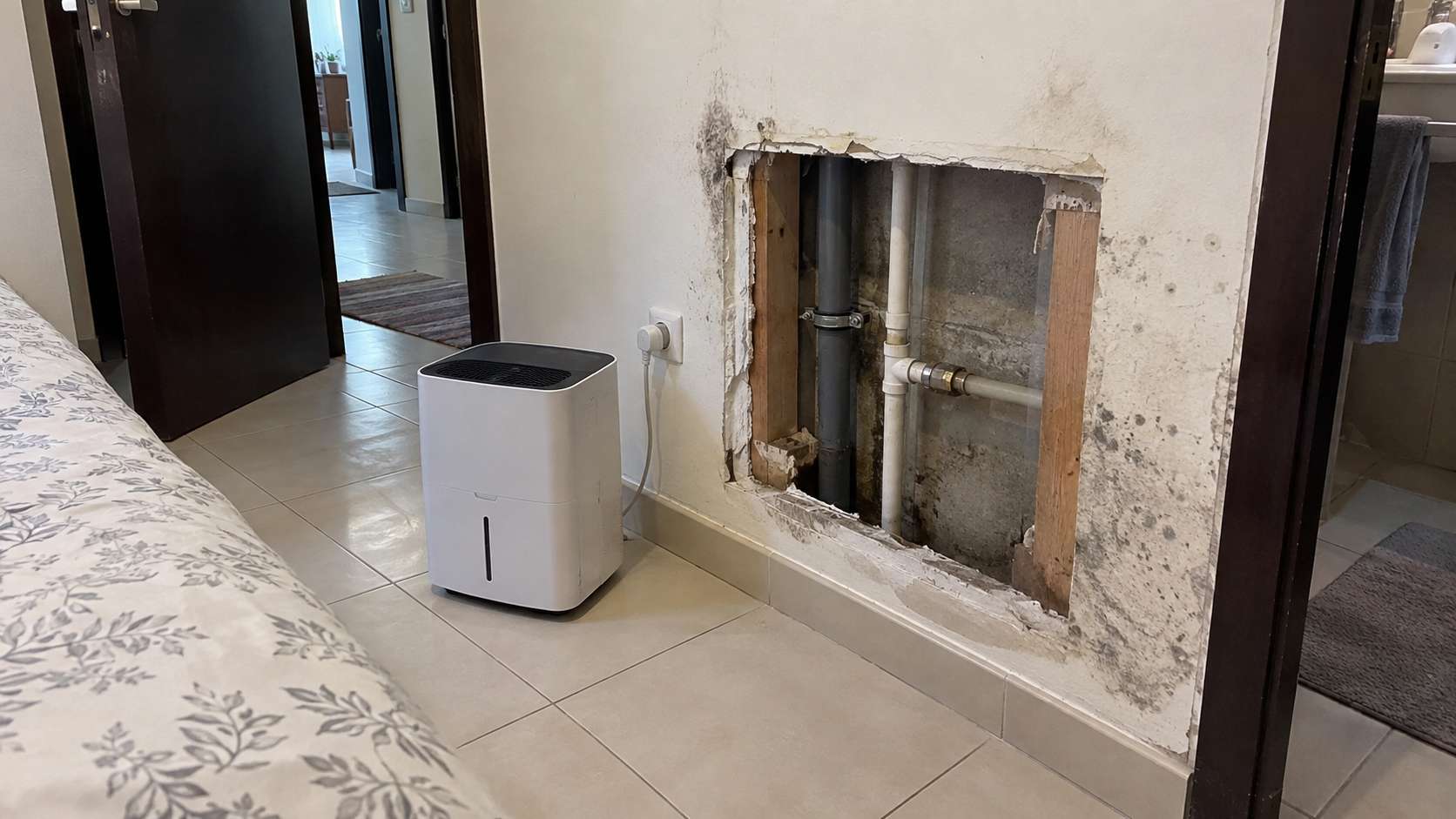
That is how you stop moldy walls from becoming a monthly cleaning routine.
When You Need Professional Mold Remediation
You need professional help when the moldy wall is more than a small surface issue. A cleaner can wipe a stain, but a remediation company should investigate moisture, contain the affected area, remove contaminated material, dry the structure, and prevent spread.
Call professionals if:
- The mold covers more than a small patch.
- The wall feels soft, swollen, or cold.
- Paint is bubbling or peeling.
- There is a strong musty smell.
- Mold returns after cleaning.
- The wall was wet for more than 48 hours.
- Mold may be behind drywall, wallpaper, or paneling.
- The mold is near AC vents.
- There was a pipe leak, roof leak, or flood.
- Someone in the home has asthma, allergies, chronic lung disease, or immune weakness.
The CDC notes that people in damp buildings have reported respiratory symptoms, asthma development or worsening, hypersensitivity pneumonitis, allergic rhinitis, and eczema. It also advises people with asthma and other lung conditions not to enter buildings with indoor water leaks or mold growth that can be seen or smelled in severe-weather contexts.
A professional service should not only spray chemical. Ask them:
- What caused the wall mold?
- Is the wall damp inside?
- Do you use moisture meters?
- Does drywall need removal?
- Will you contain the work area?
- Do you use HEPA filtration or HEPA vacuuming?
- How will you dry the wall cavity?
- Do you provide before-and-after photos?
- How do you verify the mold will not return?
If they cannot explain the moisture source, they are not solving the real problem.
Should You Move to Another House or Apartment?
You usually should not move out immediately just because you found moldy walls. Many cases can be fixed with proper moisture repair, removal, drying, and remediation. Moving is expensive and stressful, and it may not be necessary if the problem is limited and repairable.
However, temporary relocation may be smart during serious remediation, especially if walls need to be opened, moldy drywall must be removed, or sensitive people live in the home.
Consider staying elsewhere temporarily if:
- The mold is in a baby room or bedroom.
- You have asthma or breathing symptoms.
- There is strong musty odor throughout the home.
- The work will disturb moldy drywall or insulation.
- The AC system may spread odor or particles.
- Children, elderly people, or immune-compromised people live there.
Consider moving out permanently only if the home cannot be made dry and safe. This may happen when:
- Mold keeps returning after proper remediation.
- The landlord or building owner refuses to fix the moisture source.
- There is repeated roof, wall, or plumbing leakage.
- The building has chronic humidity or seepage problems.
- Professional reports show major hidden mold that requires major reconstruction.
- Your symptoms consistently improve away from the home and return inside.
- The cost, risk, or disruption of repair is greater than relocation.
So the answer is balanced: do not panic-move at the first mold patch, but do not keep living indefinitely in a home that cannot be remediated.
Mistakes That Make Moldy Walls Worse
The worst mistake is treating moldy walls as a paint problem. Mold is not solved by covering it. It is solved by removing moisture and contamination.
Avoid these mistakes:
- Painting over mold
- Using wallpaper to hide stains
- Spraying bleach repeatedly without drying the wall
- Pushing furniture back against damp walls
- Ignoring musty smell
- Running a humidifier in a damp room
- Cleaning the same patch every week without checking for leaks
- Closing the room and hoping it disappears
- Using air freshener instead of finding moisture
- Rebuilding before the wall cavity is dry
Also avoid assuming that the visible patch is the full problem. Mold on the front of a wall may be only the sign. The larger issue may be behind it.
The Bottom Line
Moldy walls are a moisture warning. Short-term fixes can reduce exposure and slow the spread, but they are not enough if the wall is still damp. The long-term fix is to find the moisture source, repair it, remove damaged materials when needed, dry the wall completely, clean safely, and verify that the mold does not return.
You usually do not need to move to another house or apartment right away. Many moldy wall problems are fixable. But if the mold keeps returning after proper remediation, the moisture source cannot be repaired, or the home is affecting your health, moving out becomes a reasonable decision.
A clean wall is not the real goal. A dry wall that stays clean is.