


1. What Is Moldy Insulation?
Moldy insulation is insulation material that has become damp enough for mold to grow on it, inside it, or around it. It may affect fiberglass insulation, cellulose insulation, foam insulation, duct insulation, wall insulation, roof insulation, or acoustic insulation above false ceilings.
You may not always see it directly. In many UAE apartments and villas, insulation is hidden above gypsum ceilings, around AC ducts, inside wall cavities, or behind service panels. That is why the first clue is often not a visible patch. It may be a musty smell, recurring wall mold, damp ceiling stains, AC odor, or mold returning after cleaning.
Moldy insulation matters because insulation is not like tile or glass. You cannot always wipe it clean. Fibrous and porous materials can hold dust, moisture, spores, and odor. If the moisture source continues, the insulation can stay damp and keep affecting the surrounding air or building materials.
So when someone says, “There is mold on the ceiling,” the actual issue may be deeper. The ceiling paint may only be showing what is happening above it: wet insulation, leaking AC lines, roof seepage, or condensation around ductwork.
2. Is Moldy Insulation Dangerous?
Moldy insulation can be a health and indoor air concern, especially if it is disturbed, hidden near airflow, or connected to ongoing moisture. It does not mean everyone in the home will get sick, but it should not be ignored.
The CDC says mold can grow on insulation, drywall, carpet, fabric, wallpaper, dust, and many other indoor materials. It also says mold exposure can cause symptoms in some people, including stuffy nose, sore throat, coughing, wheezing, burning eyes, and skin rash. People with asthma or mold allergy may react more strongly, while people with weakened immune systems or chronic lung disease may face higher risks.
The concern with insulation is location. Moldy insulation may sit:
- Above bedrooms
- Near AC ducts
- Around ceiling vents
- Behind baby room walls
- Inside damp wall cavities
- Near pipe leaks
- Above kitchens or bathrooms
If moldy insulation is disturbed during repair, particles can spread into the room. If it is near an AC air path, musty odor or contamination may move through the apartment. If it stays damp, the mold problem can continue growing behind the visible surface.
So the danger is not only “what type of mold is it?” The real danger is hidden damp material that stays untreated.
3. What Causes Moldy Insulation in UAE Homes?
Moldy insulation in the UAE is usually caused by moisture, not dirt alone. The UAE climate makes this more likely because homes often rely heavily on AC, while indoor and outdoor temperature differences can create condensation problems.
Common causes include:
- AC condensation around ducts
- Poorly insulated chilled-water or split AC lines
- Blocked AC drain lines
- Roof seepage after rain
- Balcony or exterior wall leaks
- Pipe leaks inside ceilings or walls
- Bathroom waterproofing failure
- High indoor humidity
- Poor ventilation in closed rooms
- Water damage after a leak
- Damp gypsum ceiling cavities
- Insulation installed against a wet surface
AC-related moisture is a major one. If cold air ducts or pipes are poorly insulated, warm humid air can condense on them. That water can drip into ceiling spaces and wet insulation. Over time, mold odor, ceiling stains, and visible patches may appear below.
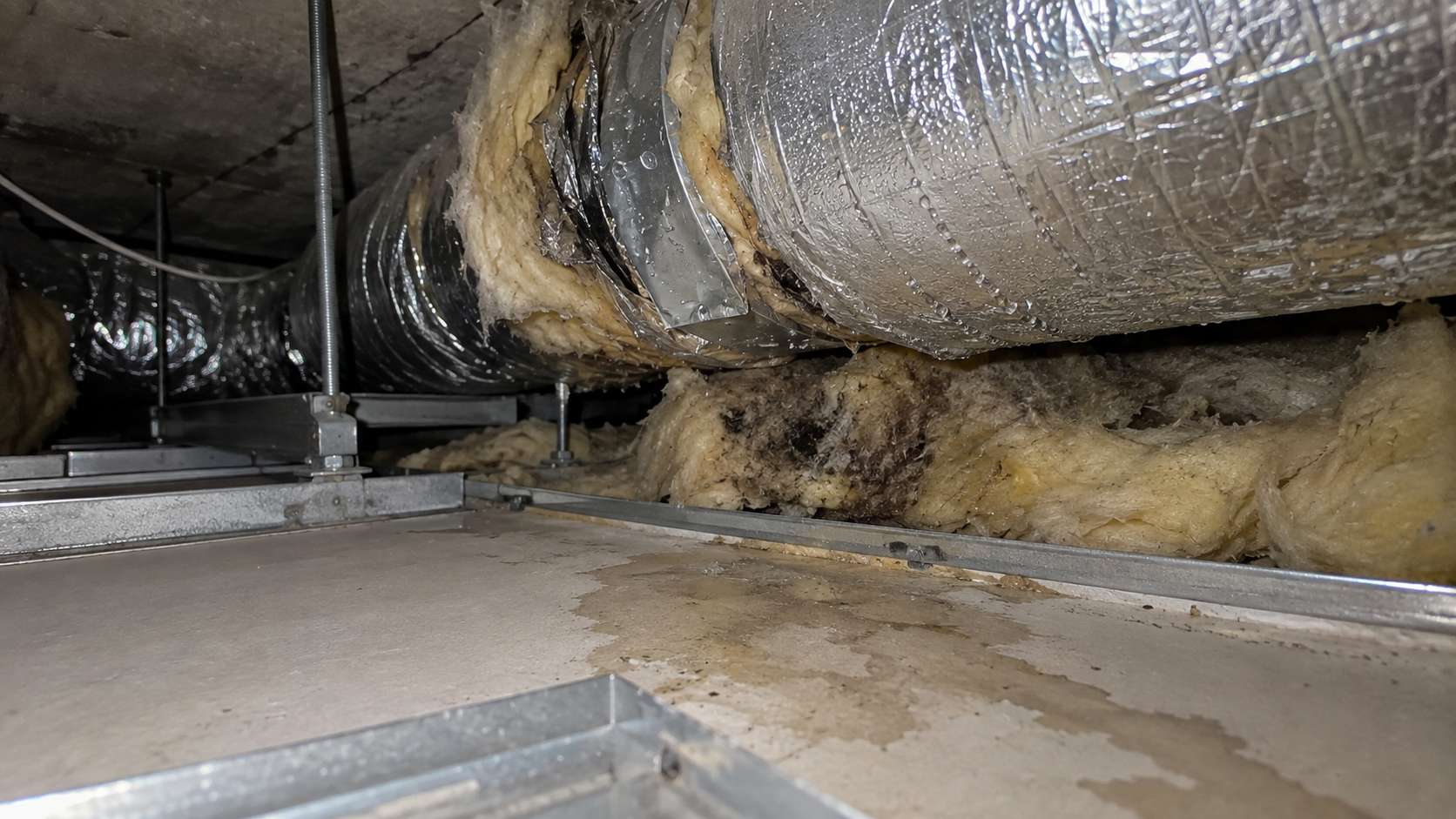
Roof and balcony seepage are another common cause, especially after heavy rain. The insulation above the ceiling may get wet before the homeowner sees any damage inside the room.
The EPA notes that hidden mold may occur inside walls around leaking or condensing pipes, inside ductwork, and in roof materials above ceiling tiles because of roof leaks or insufficient insulation.
4. How Do You Know If Insulation Is Moldy?
You may suspect moldy insulation when the same room smells musty, the ceiling or wall keeps staining, or mold comes back even after surface cleaning. Since insulation is often hidden, indirect signs matter.

Watch for:
- Musty smell from ceiling or AC vents
- Brown, black, gray, or green ceiling stains
- Mold returning on the same wall or ceiling
- Damp patches after AC use
- Dripping from AC access panels
- Peeling paint or bubbling gypsum board
- Soft ceiling areas
- Mold smell after rain
- Higher humidity in one room
- Allergy-like symptoms worse in one area
- Visible mold when an access panel is opened
If you can access the area safely, do not touch or pull out suspicious insulation casually. Moldy insulation can release dust and particles when disturbed. Use a flashlight and look for discoloration, dampness, matting, dark patches, or musty odor.
A moisture inspection is often more useful than guessing. A professional may use a moisture meter, thermal camera, humidity meter, borescope, or ceiling inspection to check whether insulation and surrounding materials are wet.
If the insulation is inside an AC or ceiling system, inspection should be done carefully because disturbing it can spread contamination.
5. Can You Clean Moldy Insulation Yourself?
Usually, you should not try to clean moldy insulation yourself, especially if it is inside a ceiling, wall, or AC-related space. Some small surface mold on hard materials can be cleaned, but insulation is different. It is fibrous, porous, and difficult to clean thoroughly.
The EPA’s mold remediation guidance says porous materials that are wet and have mold growing on them may have to be discarded. It also mentions cellulose and fiberglass insulation among water-damaged materials that may have to be thrown away.
DIY cleaning is risky because:
- You may spread mold dust into the room.
- You may not remove contamination inside the insulation.
- You may miss the leak or condensation source.
- You may leave wet material behind.
- You may contaminate clothes, tools, and furniture.
- You may expose children, pets, or sensitive people.
- You may damage ceiling or AC components.
Spraying bleach, vinegar, or disinfectant onto insulation is not a reliable solution. It can wet the material more, fail to reach the deeper contamination, and leave the moisture problem unresolved.
If insulation is moldy, the more realistic solution is removal, safe disposal, drying, source repair, and replacement.
6. Should Moldy Insulation Be Removed or Replaced?
In many cases, yes, moldy insulation should be removed and replaced. This is especially true if it is wet, smells musty, visibly moldy, compressed, contaminated after a leak, or located near an air pathway.
The reason is simple: insulation is not meant to be scrubbed like tile. Once mold and moisture enter the material, it may not return to a clean, dry, reliable condition. Keeping it can allow odor, moisture, or contamination to remain inside the structure.
Replacement is more likely needed when:
- Insulation has visible mold growth.
- It stayed wet for more than 24–48 hours.
- It smells musty.
- It is above a bedroom or baby room.
- It is near AC ducts or vents.
- It was affected by roof or pipe leakage.
- It is sagging, clumped, or compressed.
- Mold returns after surface cleaning below it.
- The surrounding gypsum board is stained or soft.
EPA remediation guidance for water-damaged materials includes “discard and replace” for fiberglass insulation in certain water-damage situations.
The important rule is not only to replace the insulation. You must fix the moisture source first. If you replace insulation while the AC line still condenses or the roof still leaks, the new insulation can become moldy too.
7. What Should You Do First After Finding Moldy Insulation?
The first thing you should do is avoid disturbing it. Do not pull it out, shake it, brush it, vacuum it with a normal vacuum, or spray it randomly.
Use this first-response checklist:
- Keep people away from the affected area.
This is especially important for babies, elderly people, asthma sufferers, and anyone with breathing sensitivity. - Stop the moisture source if obvious.
If there is a leaking AC line, dripping pipe, or roof leak, stop or control it as quickly as possible. - Take photos and videos.
Document visible stains, leaks, wet insulation, ceiling damage, and mold patches. - Do not run affected AC if mold is near airflow.
If the moldy insulation is near ducts or vents, running the system may spread odor or particles. - Call a qualified inspection or remediation company.
Ask for moisture inspection, source identification, safe removal, drying, and replacement guidance. - Notify landlord, building management, or insurer if relevant.
In UAE apartments, ceiling leaks and AC drainage problems may involve building maintenance.
If water damage is recent, speed matters. CDC disaster cleanup guidance says items that cannot be cleaned and dried quickly should be thrown away, and EPA repeatedly emphasizes drying wet materials quickly to prevent mold.
8. Can Moldy Insulation Affect Your AC?
Yes, moldy insulation can affect your AC if it is around ducts, above vents, near chilled-water lines, or inside ceiling voids connected to airflow. In UAE apartments, many musty AC complaints are not only about dirty filters. Sometimes the smell comes from damp insulation around ducts, condensation above the ceiling, or moldy materials near the air path.
Signs the AC may be involved include:
- Musty smell when the AC turns on
- Odor strongest near a specific vent
- Ceiling stains around AC diffusers
- Condensation around vents
- Dripping from AC access panels
- Recurrent mold near supply vents
- Damp insulation around ductwork
- Mold smell after AC servicing
The EPA says if you suspect the HVAC system may be contaminated with mold, for example because it is part of an identified moisture problem or there is mold near the intake, you should consult HVAC duct-cleaning guidance.
Do not assume a normal AC cleaning will solve moldy insulation. AC service may clean filters, coils, drain pans, and ducts. Mold remediation may be needed if insulation, gypsum board, ceiling cavities, or surrounding building materials are contaminated.
The best approach is combined inspection: AC technician plus mold/moisture specialist when needed.
9. Is Moldy Insulation Covered by Insurance in the UAE?
Moldy insulation may be covered only if it was caused by a sudden and accidental insured event, such as a burst pipe, sudden escape of water, or covered storm/flood damage. It is usually not covered if the cause is gradual maintenance, long-term AC condensation, poor ventilation, high humidity, unresolved seepage, or ignored minor leaks.
This depends heavily on your specific UAE home insurance policy. Many policies distinguish sudden water damage from gradual deterioration, damp, rot, mold, wear and tear, and lack of maintenance.
To protect your claim:
- Take photos before removing anything.
- Report the damage quickly.
- Get an AC, plumbing, or leak report.
- Get a mold remediation report.
- Ask for moisture readings and cause explanation.
- Keep invoices and quotations.
- Do emergency drying to reduce further damage.
- Ask insurer before major reinstatement work if possible.
Your insurer will usually care about the cause. A sudden pipe burst that wet ceiling insulation is different from months of AC condensation that was never repaired.
This article is not insurance advice. Always verify with your insurer, broker, landlord, or building management.
10. Who Is Responsible for Moldy Insulation in a UAE Apartment?
Responsibility depends on the cause and your ownership or rental situation.
If you rent, the landlord may be responsible for building-related issues such as roof leaks, pipe leaks inside walls, failed waterproofing, or defective AC systems, depending on the tenancy agreement and local practice. The tenant may be responsible for daily ventilation, reporting leaks quickly, preventing avoidable humidity buildup, and not ignoring visible damage.
If you own the apartment, responsibility may involve you, the building management, the developer, or the owner association, depending on where the leak or defect is located. A leak from common building systems may need management involvement. A problem inside your private AC unit or ceiling may be your responsibility.
Document everything early:
- Date you noticed the smell or stain
- Photos and videos
- Messages to landlord or management
- Technician reports
- Moisture readings
- Quotes
- Repair records
Do not wait until the insulation is heavily moldy. Delayed reporting can make responsibility harder to prove and may worsen the damage.
11. What Does Professional Moldy Insulation Removal Include?
Professional moldy insulation removal should be more than removing old material and stuffing new insulation into the ceiling. A proper process should control contamination and fix the reason it happened.
A good process may include:
- Moisture inspection
- Leak or condensation source identification
- AC duct or pipe inspection
- Containment of the work area
- PPE for workers
- Careful removal of contaminated insulation
- Bagging or sealing material before disposal
- Cleaning nearby surfaces
- HEPA vacuuming after drying and removal
- Drying with dehumidifiers or air movers
- Repairing leaks or condensation issues
- Replacing damaged gypsum board if needed
- Installing new insulation only after the area is dry
- Post-remediation inspection
EPA guidance recommends assessing the size and extent of the mold problem and any continuing moisture problems before remediation. It also says HEPA vacuums are recommended for final cleanup after materials have been thoroughly dried and contaminated materials removed.
Ask the company if they can provide before-and-after photos, a written report, and moisture readings. This is especially useful for landlords, building management, and insurance claims.
12. How Do You Prevent Moldy Insulation From Coming Back?
To prevent moldy insulation from coming back, you must stop the moisture source and keep hidden spaces dry. Replacing insulation without fixing the cause is a waste of money.
Prevention steps include:
- Repair roof, balcony, and wall seepage quickly.
- Fix pipe leaks inside ceilings or walls.
- Check AC condensate drain lines.
- Insulate cold AC ducts and chilled-water pipes properly.
- Prevent condensation around vents and ducts.
- Keep indoor humidity controlled.
- Use exhaust fans in bathrooms and kitchens.
- Avoid turning AC off completely during long vacations.
- Keep access panels available for inspection.
- Inspect ceiling stains immediately.
- Use leak sensors near AC and plumbing risk areas.
- Schedule AC maintenance before peak summer.
- Dry wet areas within 24–48 hours when possible.
In UAE homes, AC condensation control is especially important. Cold ducts or pipes surrounded by humid air can create repeated moisture problems above the ceiling. If that is the cause, better insulation, sealing, drainage, and humidity control may all be needed.
The goal is a dry ceiling cavity, not just clean paint.
The Takeaway
Moldy insulation in the UAE is a hidden moisture warning. It often points to AC condensation, roof seepage, pipe leaks, damp ceiling cavities, or high humidity. Because insulation is porous or fibrous, it usually cannot be cleaned like tile, glass, or metal. If it is wet, musty, or visibly moldy, removal and replacement are often safer than spraying it.
The right process is: find the moisture source, stop it, contain the area, remove contaminated insulation, dry the space, clean properly, and replace insulation only when the structure is dry.
If the moldy insulation is near AC airflow, above a bedroom, inside a baby room ceiling, or connected to recurring odors, do not treat it as a simple DIY cleaning job. Get a professional inspection before the hidden problem becomes a bigger mold issue.