


When a moldy carpet Might Be Saved
A moldy carpet might be saved when the moisture problem is minor, recent, and controlled. For example, a small clean-water spill, a short AC drip, or a quickly discovered pipe leak may not automatically destroy the carpet if you act fast.
The best-case situation looks like this:
- The water source was clean.
- The carpet was wet for less than 24–48 hours.
- The wet area is small.
- There is no strong musty smell.
- The carpet backing is not moldy.
- The padding underneath is dry or can be removed.
- The subfloor is dry.
- No one sensitive is being affected.
- The carpet can be extracted, cleaned, and dried properly.
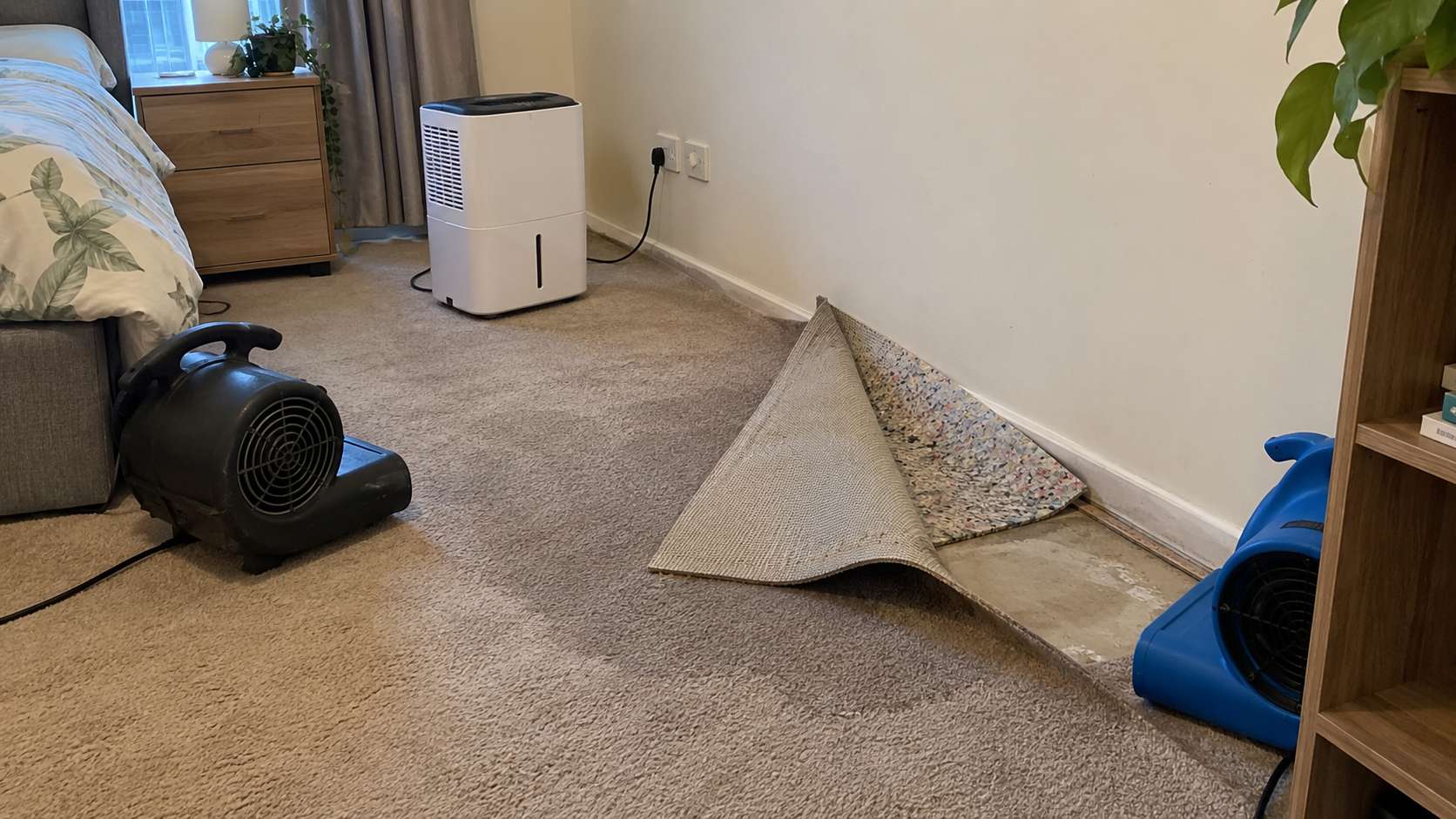
In this situation, the carpet may be cleaned instead of thrown away. But “cleaned” does not mean spraying fragrance or vacuuming the top. It means removing moisture from the carpet, checking underneath, drying the backing, cleaning the fibers, and confirming the area stays dry.
A small surface spot on a removable rug is also easier to handle than wall-to-wall carpet. Rugs can often be taken outside, cleaned, dried in sunlight or strong airflow, and inspected from both sides. Wall-to-wall carpet is harder because moisture can stay trapped underneath.
The biggest test is smell. If the carpet still smells musty after proper drying, something is still wrong. Mold may be in the backing, padding, or floor below.
Reasons Not to Throw Away Your Moldy Carpet
You may not need to throw away your moldy carpet if the problem is still shallow and fixable. Carpet replacement can be expensive, and some carpets can be saved when action is quick enough.
1. The Mold Is Only on a Small Surface Area
If the mold is limited to a tiny area on the surface, and there is no mold underneath, cleaning may work. This is more likely with small rugs or carpet sections where you can inspect the back.
However, do not judge only by the top. Lift the carpet if possible. Check the backing, padding, and floor. If the underside is clean and dry, the carpet has a better chance.
2. The Carpet Got Wet Recently
Time matters. If the carpet got wet today and you start drying immediately, you may be able to prevent mold from growing deeper. The CDC recommends drying the home and everything in it as quickly as possible, within 24–48 hours if you can.
A carpet wet for two hours is very different from a carpet wet for five days.
3. The Water Source Was Clean
Clean water from a supply pipe is less risky than sewage, toilet overflow, floodwater, or dirty drain water. If the carpet was contaminated by dirty water, the issue is not only mold. It becomes a sanitation problem too.
Clean-water damage may be salvageable. Dirty-water damage often makes replacement safer.
4. The Padding Can Be Removed
Sometimes the carpet itself can be saved, but the padding underneath should be removed. Carpet padding absorbs water like a sponge and is difficult to dry fully.
If the padding stayed wet, replacing the padding while professionally cleaning and drying the carpet may be a middle option.
5. It Is a Valuable Rug
If the item is an expensive, antique, handmade, or sentimental rug, professional rug restoration may be worth trying. EPA guidance notes that if valuable or important moldy or water-damaged items are involved, consulting a restoration, water-damage, or remediation expert may be appropriate.
This is different from trying to save a cheap, heavily moldy carpet at home. Valuable rugs should be handled by specialists.
Quick Proven Tips Before You Decide to Keep It
Before deciding that your moldy carpet can stay, follow these quick steps.
- Stop the water source first.
Fix the leak, AC drip, spill, seepage, or humidity issue. Cleaning is pointless if moisture continues. - Extract water immediately.
Use a wet-dry vacuum or professional water extraction. Towels are not enough for soaked carpet. - Lift the carpet if possible.
Check the backing, padding, and floor. Mold often hides underneath. - Remove wet padding.
If the pad is wet or smells musty, replace it. Padding is often harder to save than carpet. - Use fans and a dehumidifier.
Blow air across and under the carpet. Reduce room humidity so the carpet dries faster. - Clean, then dry again.
Use carpet-safe cleaning methods. Do not leave the carpet damp after cleaning. - Check for smell after 24–48 hours.
If the musty smell remains, do not ignore it. The carpet may not be truly clean or dry. - Use professional carpet cleaning if you want to save it.
A professional can extract water, clean deeper fibers, inspect padding, and dry the area more effectively.
These tips are only for salvageable situations. If the carpet is badly contaminated, do not waste time trying to rescue it.
Reasons to Throw Away Your Moldy Carpet
Throwing away a moldy carpet is often the better choice when the risk is high. This is especially true when mold has moved into the backing, padding, or floor underneath.
1. The Carpet Stayed Wet Too Long
If the carpet stayed wet for more than 24–48 hours, assume the risk is higher. EPA guidance emphasizes drying water-damaged areas and items within 24–48 hours to help prevent mold growth.
A carpet that stayed damp for days may look fine on top but smell musty underneath. That hidden moisture is the real problem.
2. The Padding Is Moldy
Moldy padding is a strong reason to remove the carpet system. Padding holds moisture, odor, dust, and contamination. Even if you clean the carpet surface, moldy padding can keep releasing musty smell.
If the padding is stained, slimy, crumbling, damp, or smells bad, replacement is usually smarter.
3. The Carpet Was Soaked by Dirty Water
If the carpet was affected by sewage, toilet overflow, floodwater, drain backup, or contaminated water, throwaway becomes much more likely. In this case, the concern is not only mold.

Bacteria, waste, and other contaminants may be present.
CDC disaster cleanup guidance says to throw away items that cannot be cleaned and dried quickly, including carpeting, carpet padding, rugs, upholstered furniture, pillows, and similar porous items.
4. The Mold Covers a Large Area
A small spot is one thing. Large visible mold growth is another. If mold is spread across a wide carpet area, professional remediation or replacement is usually safer than DIY cleaning.
The EPA says if there has been a lot of water damage or mold growth covers more than 10 square feet, you should consult its larger mold remediation guidance.
5. The Smell Does Not Go Away
A persistent musty smell means something is still damp or contaminated. If you cleaned, dried, vacuumed, and aired out the carpet but the odor returns, the source may be deeper than the surface.
Do not cover it with perfume, carpet powder, incense, or air freshener. That hides the warning sign without solving the problem.
6. Someone in the Home Is Sensitive
If someone in the home has asthma, allergies, chronic lung disease, a weakened immune system, or repeated breathing symptoms, do not take unnecessary risks with a moldy carpet.
The CDC says mold exposure may cause symptoms such as stuffy nose, sore throat, coughing, wheezing, burning eyes, or skin rash in some people. It also notes that people with breathing problems like asthma or weakened immune systems should stay away from moldy sites.
7. Mold Reappears After Cleaning
If mold returns after cleaning, the carpet is either still damp, still contaminated, or sitting over a moisture source. At that point, repeated cleaning becomes a waste of time.
The better move is to remove the carpet, inspect the padding and subfloor, fix the moisture source, dry the area, and replace materials only after the floor is safe.
How to Decide: Keep It or Throw It Away?
Use this simple decision rule.
| Situation | Best Decision |
|---|---|
| Small clean-water spill, dried quickly | Try cleaning and drying |
| Small removable rug, no mold on backing | Clean and dry thoroughly |
| Wet carpet but dry padding | Professional cleaning may work |
| Wet padding | Replace padding, inspect carpet |
| Musty smell after drying | Consider removal |
| Mold on backing | Remove or professionally assess |
| Sewage or floodwater contamination | Throw away |
| Wet for more than 48 hours | Strongly consider removal |
| Sensitive baby, asthma, or immune risk at home | Choose the safer option |
| Mold keeps coming back | Remove and inspect underneath |
The safest approach is to treat the carpet as part of a system: carpet fibers, backing, padding, subfloor, nearby walls, and indoor humidity. If only the top is cleaned but the bottom stays moldy, the problem remains.
What to Do After Removing a Moldy Carpet
If you decide to throw away the moldy carpet, do not just roll it up and drag it through the whole home uncovered. That can spread dust, spores, and odor.
Use these steps:
- Wear gloves, eye protection, and a mask or respirator.
- Lightly mist the carpet surface if needed to reduce dust, without soaking it.
- Cut the carpet into manageable sections.
- Bag or wrap sections in plastic when possible.
- Remove padding separately.
- Clean the subfloor.
- Dry the room completely.
- Check nearby walls and skirting boards.
- Use a dehumidifier if the room is humid.
- Do not install new carpet until the floor is dry and odor-free.
If the subfloor is damp, stained, soft, or musty, call a professional before replacing the carpet. Installing new flooring over a damp base can restart the same mold problem.
The Bottom Line
You do not always have to throw away a moldy carpet. If the mold is small, recent, caused by clean water, and the carpet can be fully dried and professionally cleaned, saving it may be reasonable.
But you should throw away a moldy carpet when it stayed wet too long, smells musty after drying, has mold in the backing or padding, was contaminated by dirty water, covers a large area, or creates health risks for sensitive people.
The real question is not “Can I make the top look clean?” The real question is “Can I make the entire carpet system dry, clean, and safe?” If the answer is no, replacement is the better mold-prevention choice.