


Mold vs Dust in Air Vent: The Fast Visual Check
The fastest way to judge mold vs dust in air vent areas is to look at texture, pattern, smell, and moisture. Dust is usually dry, soft, gray, and spread in a way that follows airflow. Mold is more likely when the mark is spotty, fuzzy, damp-looking, musty, or connected to condensation.
Dust often gathers on the outer grille, around the edges of the vent, or on the ceiling or wall near the airflow path. You may see gray rings, streaks, lint, pet hair, or powdery buildup. If you wipe it with a damp white cloth, it usually comes off as gray or black dirt. The surface underneath may look normal afterward.
Mold is different. It may look like clustered dots, fuzzy patches, slimy spots, dark stains, or greenish-black specks. It may not wipe away cleanly. It may also leave staining or return in the same place after repeated cleaning.
Use this quick comparison:
| Sign | More Likely Dust | More Likely Mold |
|---|---|---|
| Texture | Dry, fluffy, powdery | Fuzzy, slimy, spotty, stained |
| Color | Gray, tan, black lint | Black, green, brown, white, mixed |
| Smell | Dusty or stale | Musty, earthy, damp |
| Pattern | Airflow streaks, edge buildup | Irregular colonies or spots |
| Moisture | No dampness | Condensation, leaks, humidity |
| After wiping | Comes off easily | Stains, smears, or returns |
| Nearby issue | Dirty filter, pet hair | Water leak, AC condensation, wet insulation |
The biggest clue is moisture. Mold needs moisture to grow. A dry vent with gray lint is usually dust. A vent with condensation, musty odor, and recurring spots deserves more attention.
Signs You Are Seeing Dust in the Air Vent
You are probably seeing dust if the buildup is dry, loose, and mostly located on the grille or just outside the vent opening. Dust around vents is common because the AC moves air across the surface. Tiny particles can stick to damp paint, textured ceilings, oily film, or static-charged plastic vent covers.
Dust is more likely when:
- The buildup is gray or light black.
- It looks like lint, powder, or pet hair.
- It follows the direction of airflow.
- It appears on several vents evenly.
- It wipes away easily with a damp cloth.
- There is no musty smell.
- There is no visible condensation.
- The AC filter is dirty or overdue for replacement.
- The home has pets, carpets, renovation dust, or open windows.
Dust can still affect comfort. The American College of Allergy, Asthma & Immunology notes that dust allergies can cause symptoms such as sneezing, stuffy or runny nose, itchy or watery eyes, and coughing. Dust mites are also common indoor allergens.
So even if it is “only dust,” you may still feel bad if you are allergic or if the AC keeps circulating particles. But the fix is usually more straightforward: replace the filter, clean the vent cover, vacuum more often with a good filter, reduce indoor dust sources, and make sure the AC is maintained.
Dust also becomes suspicious when it is wet. Dry dust is normal. Damp dust around a vent can become a surface where mold may grow. If the vent area repeatedly sweats or the ceiling around it feels damp, treat it as a moisture problem, not just a cleaning problem.
Signs You Are Seeing Mold in the Air Vent
You may be seeing mold if the spots look irregular, fuzzy, dark, greenish, brownish, or slimy, especially when there is a musty smell. Mold near an air vent often means moisture is present somewhere: on the grille, inside the duct, around the boot, near insulation, on the ceiling, in the drain pan, or inside the air handler.
Mold is more likely when:
- The vent smells musty when the AC starts.
- Spots return quickly after wiping.
- There is condensation on or around the vent.
- The ceiling or wall near the vent has water stains.
- The AC has a dirty drain pan or clogged drain line.
- The room feels humid even when the AC is running.
- The grille has black, green, or brown clustered spots.
- Mold appears near the return air intake.
- There is known water damage or AC leakage.
CDC says mold can enter homes through doors, windows, vents, and heating and air conditioning systems, and mold exposure has been linked with upper respiratory symptoms, cough, and wheeze in otherwise healthy people, as well as asthma symptoms in people with asthma.
Still, color alone does not confirm mold. Black dust can look scary. Mold can be many colors. A musty smell plus moisture plus recurring growth is much stronger evidence than color.
If the suspected growth is inside the duct, don’t start spraying random chemicals into the vent. EPA warns that duct cleaning has specific limits and that internally insulated ducts that get wet or moldy cannot be effectively cleaned; they should be removed and replaced.
That is why the location matters. Mold on the removable vent cover may be simple to clean. Mold inside the duct system or air handler may need professional assessment.

Symptom Check: Is Your AC Making You Sick?
Your AC may be contributing to symptoms if you feel worse when it runs, better when you leave the building, and worse again when you return. This pattern does not prove mold by itself, but it is a strong reason to inspect the AC system, vents, humidity, and possible water damage.
Symptoms that can fit mold or dirty HVAC exposure include:
- Sneezing
- Stuffy or runny nose
- Coughing
- Wheezing
- Itchy, red, or watery eyes
- Throat irritation
- Skin irritation
- Sinus pressure
- Asthma flare-ups
- Chest tightness in sensitive people
- Musty smell triggering headaches or discomfort
ACAAI says mold allergy symptoms are similar to other respiratory allergy symptoms, including coughing, itchy eyes, sneezing, runny nose, congestion, and dry or scaly skin.
But this is where you should be careful. These symptoms can also come from dust mites, pollen, pet dander, cockroaches, smoke, VOCs, dirty filters, dry air, viral infections, or other indoor air problems. ACAAI notes that dust allergy can also cause sneezing, stuffy or runny nose, itchy or watery eyes, coughing, wheezing, and chest tightness.
So the symptom check is not “I sneeze, therefore it is mold.” A better check is:
- Do symptoms start or worsen when the AC runs?
- Does the vent smell musty, especially at startup?
- Are there visible spots near the vent or intake?
- Is there condensation, dampness, or past leakage?
- Do symptoms improve outside the home or in another room?
- Do symptoms return after cleaning unless the AC is serviced?
- Do multiple people notice the same odor or irritation?
If several answers are yes, your AC system deserves a proper inspection.
Why Mold Grows Around AC Vents
Mold grows around AC vents when moisture and organic material meet. The organic material may be dust, skin cells, fibers, paint film, insulation, or grime. The moisture may come from condensation, high humidity, poor insulation, a leaking duct, a clogged drain, or a cooling imbalance.
Common causes include:
- Dirty air filters restricting airflow
- High indoor humidity
- Cold vent surfaces causing condensation
- Poorly insulated ductwork
- Leaky ducts pulling humid air
- Dirty evaporator coil
- Clogged condensate drain line
- Wet duct insulation
- Oversized AC that cools too fast without dehumidifying well
- Poor bathroom or kitchen ventilation
- Mold near the return intake being pulled into the system
AC systems naturally deal with moisture because cooling air removes humidity. When that moisture drains correctly and the system stays clean, the risk is lower. When water sits in the wrong place, mold risk goes up.
EPA says the key to mold control is moisture control, and after finding mold, the goal is to clean it up and fix the underlying water problem.
That is why wiping a vent grille is not always enough. If condensation keeps forming, mold can return. If the air handler is dirty, the vent may be only the visible symptom. If the duct insulation is wet, the problem can be deeper than the register cover.
How to Fix Dust in Air Vents
If the problem is dust, start with maintenance before jumping into mold remediation. Dust around vents usually improves when filtration, cleaning, and airflow are handled properly.
Here’s a practical fix:
- Turn off the AC.
Don’t clean while air is blowing dust into your face. - Remove and clean the vent cover.
Wash it with mild detergent and warm water. Dry it fully before reinstalling. - Vacuum the vent opening carefully.
Use a vacuum with a brush attachment. Don’t push debris deeper into the duct. - Replace the AC filter.
A dirty filter can increase dust buildup and reduce airflow. - Clean nearby surfaces.
Dust on the ceiling or wall can be pulled toward the vent area. - Check return air grilles.
Dirty return vents can send more dust through the system. - Schedule AC maintenance.
A dirty coil, blower, or air handler can keep recirculating debris.
EPA does not recommend duct cleaning as a routine automatic service for every home, but it says ducts should be cleaned if they are clogged with substantial dust or debris, releasing particles into the home, visibly contaminated with substantial mold growth, or infested with pests.
So don’t pay for duct cleaning just because one grille is dusty. But if there is heavy debris, visible contamination, pest activity, or particles blowing from vents, cleaning may be justified.
How to Fix Mold in Air Vents
If the growth is only on the removable vent cover, you can usually clean the cover safely. Remove it, wash with detergent and water, scrub gently, rinse, dry completely, and reinstall only after the surrounding area is dry.
For mold on nearby painted ceilings or walls, clean small hard surfaces carefully, but also investigate why the area got damp. If the paint is bubbling, drywall is soft, or stains return, the problem may be behind the surface.
For suspected mold inside the AC system, avoid spraying bleach, vinegar, fragrance, or disinfectant into the ducts. That can damage materials, create fumes, or fail to reach the real source.
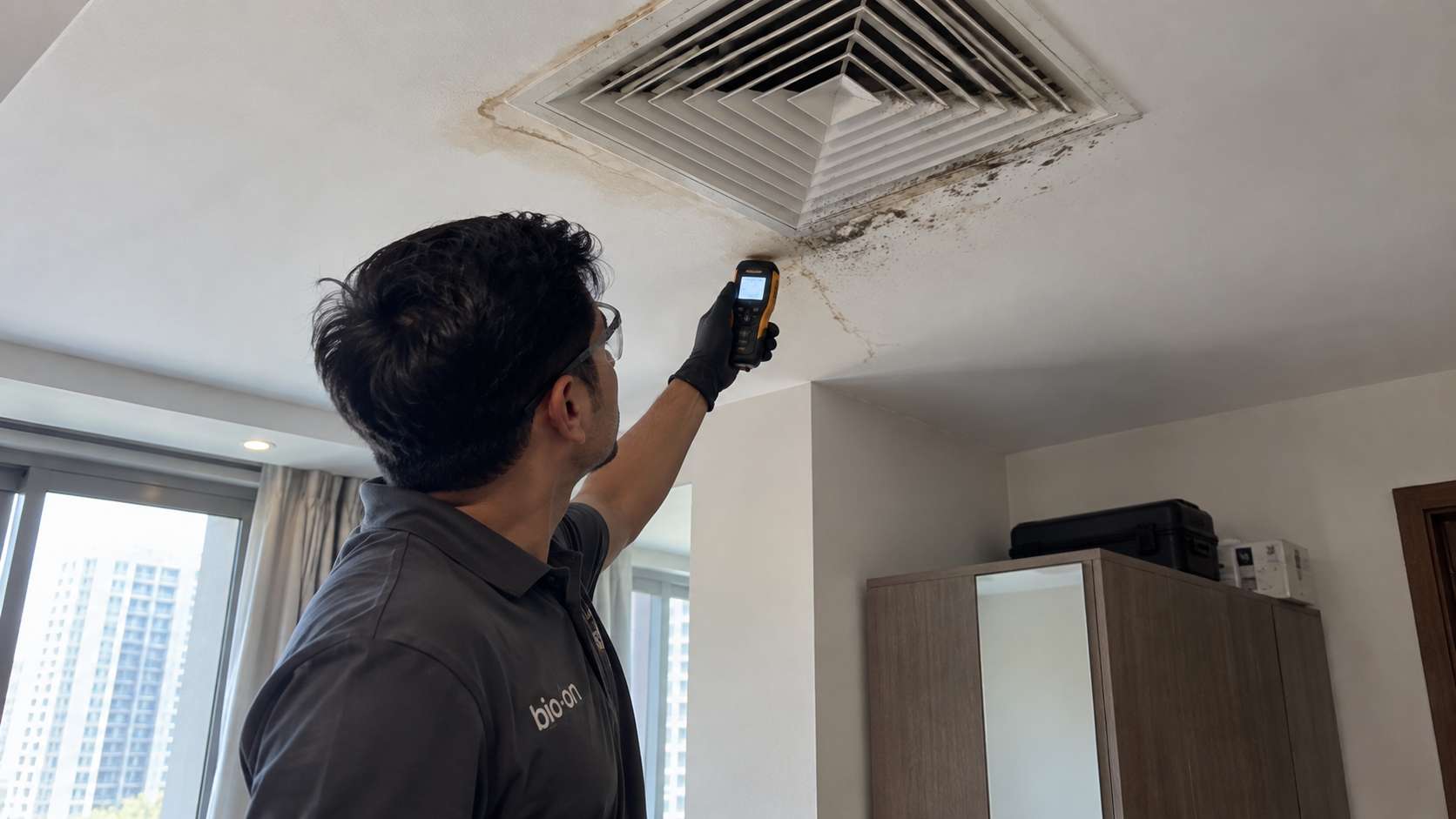
A better process is:
- Inspect the vent cover and surrounding ceiling.
- Check the filter and return intake.
- Look for condensation around the vent.
- Check the drain pan and drain line.
- Inspect the air handler or evaporator coil.
- Look for wet insulation or duct leaks.
- Fix the moisture source.
- Clean or replace contaminated components as needed.
- Dry the system and room properly.
EPA advises consulting its duct cleaning guidance when the HVAC system may be contaminated with mold, such as when it is part of an identified moisture problem or mold is near the intake.
If the contamination involves wet internal insulation, replacement may be needed because EPA says wet or moldy duct insulation cannot be effectively cleaned.
This is where professional help makes sense. An HVAC technician can check mechanical causes. A mold remediation professional can handle contamination, containment, removal, and cleaning. In some cases, you need both.
A Quick Note for Tenants: Who Is Responsible?
If you are a tenant, responsibility depends on the cause, the lease, and local housing rules. In general, tenants are usually expected to keep the unit reasonably clean, report leaks quickly, use ventilation properly, and avoid blocking vents. Landlords or property managers are usually responsible for building defects, plumbing leaks, roof leaks, HVAC failures, structural moisture intrusion, and repairs they control.
EPA’s apartment indoor air quality guidance says residents can sometimes improve indoor air quality by removing a source, changing an activity, unblocking an air supply vent, or temporarily increasing ventilation. But in other cases, only the building owner or manager is in a position to remedy the problem.
So if you see suspected mold around an air vent, document everything:
- Take photos and videos.
- Note dates, smells, symptoms, and AC behavior.
- Report it in writing to the landlord or property manager.
- Ask for HVAC inspection and moisture investigation.
- Keep copies of messages and maintenance reports.
- Avoid damaging or altering the HVAC system yourself.
If the landlord does not respond and the problem involves persistent moisture or health concerns, EPA’s mold guide says renters may contact local, state, or federal health or housing authorities when persistent water problems are not addressed.
Because laws vary by location, treat this as general guidance, not legal advice. For serious rental disputes, check your local tenant laws or speak with a tenant-rights organization.
The Bottom Line
Mold vs dust in air vent problems should be judged by more than color. Dust is usually dry, gray, fluffy, and easy to wipe away. Mold is more likely when the marks are spotty, fuzzy, musty, damp, or returning after cleaning.
If your symptoms get worse when the AC runs, pay attention to the pattern. Sneezing, coughing, wheezing, congestion, itchy eyes, and asthma flare-ups can be linked to mold or dust allergies, but symptoms alone cannot prove the cause. Look for musty odor, condensation, visible growth, dirty filters, wet duct insulation, and moisture problems.
For dust, clean the grille, replace filters, vacuum carefully, and maintain the AC. For mold, clean small removable hard parts only when safe, then fix the moisture source. If mold may be inside the ductwork, air handler, insulation, or HVAC system, don’t just spray chemicals into the vent. Get the system inspected and cleaned properly.
For tenants, document the issue and report it in writing. You may be able to handle simple dust and blocked airflow, but building leaks, HVAC defects, and structural moisture usually need the landlord or property manager to act.