


Mold vs Condensation: What Is the Difference?
Mold and condensation are related because both involve moisture, but they happen at different stages.
Condensation occurs when water vapor in the air turns into liquid after touching a cold surface.
Common examples include:
- Water droplets on windows
- Moist bathroom mirrors after showers
- Damp areas around air conditioning vents
- Wet corners on cold exterior walls
Mold develops when moisture remains on surfaces long enough for fungal growth to begin.
Common mold signs include:
- Black, green, white, or gray patches
- Musty odors
- Discoloration on walls or ceilings
- Peeling paint
- Dark spots around windows or corners
- Mold growth behind furniture
A simple way to understand the relationship:
High humidity → condensation → damp surfaces → mold growth
Condensation does not automatically mean mold will appear. However, repeated condensation creates the moisture conditions mold needs to survive.
Should You Fix Mold or Condensation First?
The answer depends on whether mold is already present.

If there is no visible mold, fix the condensation problem first. Reducing moisture and humidity can prevent mold from developing.
If mold is already growing, address both problems at the same time. Removing mold without controlling condensation will often lead to the mold returning.
When condensation should be your first priority
Focus on condensation control when you notice:
- Water droplets appearing daily on windows
- Constantly humid rooms
- Damp bathroom surfaces
- Moisture buildup after cooking or showering
- A room that feels cold and stuffy
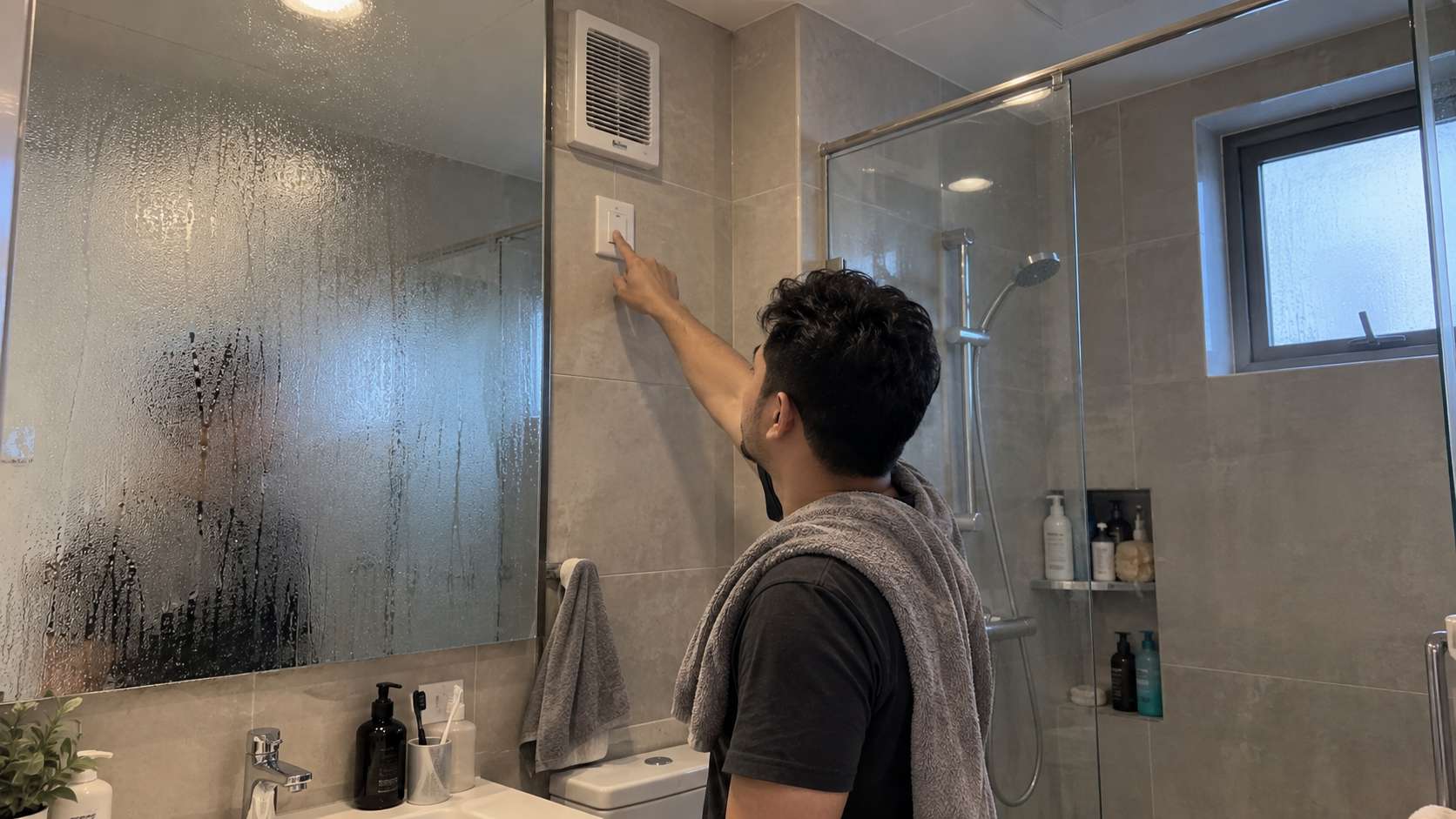
These signs indicate that excess moisture is building up indoors.
Quick fixes include:
- Using exhaust fans during and after showers
- Opening windows when outdoor conditions allow
- Drying wet surfaces quickly
- Keeping indoor humidity at a reasonable level
- Using a dehumidifier in consistently humid rooms
When mold should be your first priority
Mold should be addressed immediately when you see:
- Spreading mold patches
- Mold on drywall or ceilings
- Strong musty smells
- Repeated mold growth after cleaning
- Mold around areas with previous water damage
Cleaning visible mold without fixing the moisture issue may only provide a temporary solution.
How to Fix Condensation Problems Quickly
Condensation usually happens because there is too much moisture in the air or surfaces are too cold.
Here are simple ways homeowners can reduce it.
Improve ventilation
Poor airflow allows humid air to remain trapped.
Improve ventilation by:
- Running bathroom exhaust fans during showers
- Using kitchen ventilation while cooking
- Keeping air moving with fans
- Avoiding drying large amounts of wet laundry indoors
Better airflow helps moisture leave the home instead of settling on cold surfaces.
Control indoor humidity
High humidity is one of the biggest reasons condensation forms.
Simple humidity control methods include:
- Using a dehumidifier in damp rooms
- Fixing plumbing leaks quickly
- Avoiding unnecessary indoor water sources
- Monitoring humidity with a hygrometer
Many homes aim to maintain indoor humidity levels that are comfortable and less favorable for mold growth.
Reduce cold surface problems
Condensation often forms on colder surfaces.
You can reduce this by:
- Improving insulation
- Sealing gaps around windows
- Keeping furniture slightly away from cold walls
- Allowing air circulation behind cabinets and large furniture
This helps prevent moisture from collecting in hidden areas.
How to Fix Mold Problems After Condensation Damage
If condensation has already caused mold growth, the solution requires more than drying the area.
Clean small surface mold carefully
For small areas on non-porous surfaces, homeowners may be able to clean the affected area.
Basic steps include:
- Wearing gloves and protective equipment
- Avoiding spreading spores into other rooms
- Cleaning the surface with an appropriate mold-cleaning product
- Drying the area completely afterward
Avoid simply painting over mold because it does not remove the underlying problem.
Remove moisture conditions causing mold
After cleaning, prevent mold from returning by fixing the cause.
Check for:
- Excess indoor humidity
- Poor bathroom ventilation
- Water leaks
- Condensation around AC systems
- Damp walls
The goal is not only removing visible mold but also removing the environment that allows it to grow.
Know when the problem needs professional help
Professional mold assessment or remediation may be needed when:
- Mold covers a large area
- Mold keeps returning after cleaning
- There is hidden mold behind walls
- Water damage has affected building materials
- The source of moisture cannot be identified
Repeated mold growth usually means the moisture problem has not been fully solved.
Common Mistakes Homeowners Make With Mold and Condensation
Many homeowners treat only the visible symptom instead of the cause.
Common mistakes include:
Cleaning mold but ignoring humidity
A homeowner may remove black spots from a wall but continue producing excess moisture indoors. The mold can return because the environment has not changed.
Using air fresheners to hide musty smells
A musty odor is often a sign of moisture or mold activity. Covering the smell does not solve the source.
Closing windows all day in humid rooms
Keeping rooms closed without proper ventilation can trap moisture inside.
Drying wet areas too slowly
Small damp areas can become larger problems if moisture remains for extended periods.
The Bottom Line: Should You Fix Mold or Condensation First?
Condensation problems should be fixed before they develop into mold, but visible mold should be handled while also correcting the moisture issue behind it.
If you only see water droplets, damp surfaces, or high humidity, focus on ventilation, airflow, and moisture control first. If mold is already present, removing the mold and fixing the condensation source must happen together.
The real solution is not choosing between mold and condensation. It is understanding that condensation creates the conditions, while mold is the result of leaving those conditions untreated.