


Mold vs Bacteria: What Is the Main Difference?
The biggest difference between mold and bacteria is their biological structure. Mold belongs to the fungi family, while bacteria are single-celled microorganisms that are much smaller and simpler.
Mold grows through thread-like structures called hyphae, which form a network known as mycelium. This network allows mold to spread across surfaces and break down organic materials such as wood, paper, fabric, and drywall.
Bacteria are different. They are single-celled organisms that reproduce by dividing into new cells. Many bacteria exist naturally around us, including in soil, water, food, and even on household surfaces.
For homeowners, the practical differences are easier to understand:
| Mold | Bacteria | |
|---|---|---|
| Type | Fungus | Single-celled microorganism |
| Visibility | Often visible | Usually invisible without a microscope |
| Common sign | Spots, fuzzy growth, stains | Odor, contamination, slime, or no visible sign |
| Needs | Moisture + organic material | Moisture + nutrients + suitable conditions |
| Common locations | Walls, ceilings, furniture, AC areas | Water systems, food areas, wet surfaces |
Both can grow when moisture is uncontrolled. That is why fixing leaks, reducing humidity, and improving airflow are important for controlling both.
How Do Mold and Bacteria Grow Inside UAE Homes?
Mold and bacteria both love moisture, but they often appear in different situations.
In the UAE, common conditions that encourage microbial growth include:
- High indoor humidity
- Water leaks
- Poor ventilation
- AC condensation problems
- Plumbing issues
- Flooding or water damage
- Damp walls
- Wet furniture or carpets
Where Mold Commonly Grows
Mold often appears in areas where moisture stays trapped and there is a material it can feed on.
Common examples include:
- Bathroom ceilings
- Wall corners
- Around AC vents
- Behind wardrobes
- Wooden furniture
- Drywall
- Curtains and carpets
- Kitchen cabinets
Mold is easier for homeowners to notice because it creates visible colonies.
You may see:
- Black spots
- Green patches
- White powdery growth
- Orange or yellow stains
- Fuzzy textures
Where Bacteria Commonly Grow
Bacteria are often associated with wet, organic, or contaminated areas.
Common locations include:
- Kitchen sinks
- Drains
- Wet countertops
- Food storage areas
- Standing water
- Plumbing systems
- Damp cleaning tools
Unlike mold, bacteria usually do not announce their presence visually. A surface may look clean while still containing bacteria.
This is why hygiene practices and proper cleaning are important, especially in kitchens and bathrooms.
Can You Tell Mold and Bacteria Apart by Looking?
Usually, yes for mold, but not for bacteria.
Mold often creates visible clues:
- Fuzzy patches
- Colored spots
- Powdery coatings
- Musty odors
- Expanding colonies
Bacteria are much harder to identify because most bacteria are too small to see.
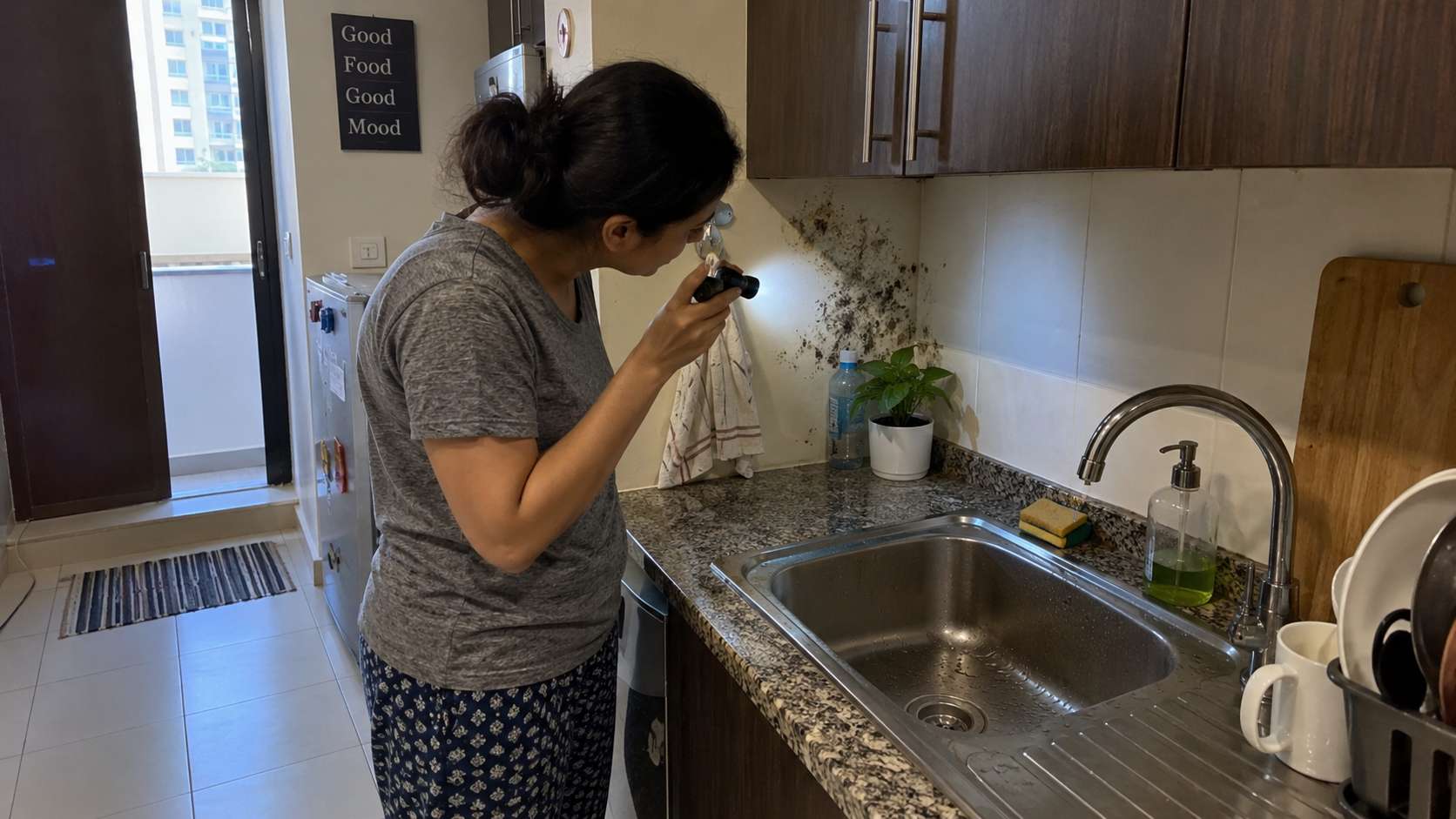
A slimy layer or unpleasant smell does not automatically mean bacteria. It could also be caused by:
- Biofilm buildup
- Mold growth
- Dirt accumulation
- Organic residue
If there is a visible patch growing on a wall, ceiling, or furniture, mold is usually more likely than bacteria.

However, both can exist together. For example, a damp area behind a leaking pipe may contain mold growing on the wall while bacteria grow in the standing moisture nearby.
Which One Is More Dangerous: Mold or Bacteria?
There is no simple answer because the risk depends on the type, amount, location, and exposure.
Neither mold nor bacteria should automatically be considered harmless or extremely dangerous. The real concern is uncontrolled growth inside your living environment.
Mold can become a problem because:
- It releases spores into the air
- It can spread across building materials
- It may trigger reactions in sensitive individuals
- It can damage furniture, walls, and finishes
Bacteria can become a concern because:
- Some types can cause illness
- They can contaminate food and water
- They may multiply quickly in wet environments
For most homeowners, the bigger warning sign is not the microorganism itself but the condition allowing it to grow.
A leaking pipe, damp wall, or high humidity problem creates an environment where unwanted organisms can survive.
How Do You Remove Mold vs Bacteria?
The treatment approach depends on what you are trying to remove.
Treating Mold Problems
Mold removal usually focuses on:
- Identifying and fixing the moisture source
- Removing visible growth
- Drying the affected area
- Preventing future moisture buildup
For small surface mold, homeowners may sometimes clean affected areas using appropriate cleaning methods.
However, professional mold remediation may be needed when:
- Mold covers a large area
- Growth is inside walls or ceilings
- HVAC systems are affected
- Furniture has deep contamination
- Mold keeps returning
Simply wiping mold away without fixing moisture usually leads to recurrence.
Treating Bacteria Problems
Bacteria control usually focuses on:
- Proper cleaning
- Disinfection
- Removing contaminated materials
- Improving hygiene
- Eliminating standing water
For example:
- Kitchen surfaces need regular cleaning and sanitation.
- Drains need proper maintenance.
- Water leaks need repair to prevent ongoing contamination.
Unlike mold, bacteria usually cannot be visually monitored because most growth is invisible.
Why UAE Homeowners Should Pay Attention to Moisture Control
The UAE climate creates unique challenges for indoor environments. Outdoor heat often means homes rely heavily on air conditioning, which can create condensation problems when systems are poorly maintained.
Common moisture-related issues include:
- AC leaks
- Poor ventilation in bathrooms
- Condensation around cold surfaces
- Hidden plumbing leaks
- Humidity trapped behind furniture
These problems can encourage both mold and bacteria growth.
The best prevention strategy is not only cleaning. It is controlling the environment:
- Repair leaks quickly
- Keep indoor humidity balanced
- Maintain AC systems regularly
- Improve airflow in closed areas
- Dry wet materials quickly
- Avoid leaving moisture trapped indoors
The Bottom Line
Mold vs bacteria comes down to visibility, biology, and treatment. Mold is a fungus that commonly appears as visible growth on damp materials, while bacteria are microscopic organisms that are usually harder to detect.
For UAE homeowners, the most important lesson is that both mold and bacteria are often symptoms of the same underlying problem: uncontrolled moisture.
If you see visible patches on walls, ceilings, or furniture, mold is likely the main concern. If you notice contamination, odors, or hygiene issues in wet areas, bacteria may also be involved.
Regardless of which one you discover, the long-term solution is the same: identify the moisture source, remove the problem properly, and prevent the conditions that allow microorganisms to grow again.