


Why Are Elderly People More Vulnerable to Mold Exposure?
Older adults may have a higher risk of experiencing problems from indoor mold because the body can become less resilient with age.
Several factors may increase sensitivity:
1. Reduced Immune System Function
As people age, the immune system can become less effective at responding to environmental threats.
This may make some elderly individuals:
- More sensitive to airborne irritants
- Slower to recover from respiratory irritation
- More vulnerable if exposed to large amounts of mold spores
This does not mean every elderly person exposed to mold will become sick. The impact depends on factors such as exposure level, duration, overall health, and individual sensitivity.
2. Existing Respiratory Conditions
Many elderly people already manage conditions that affect breathing, such as:
- Asthma
- Chronic obstructive pulmonary disease (COPD)
- Chronic bronchitis
- Allergies
Mold exposure may worsen respiratory irritation in sensitive individuals because mold spores can act as airborne triggers.
3. Spending More Time Indoors
Many elderly individuals spend more time inside their homes compared with younger adults.
If a home has:
- Hidden mold
- Poor ventilation
- High humidity
- Water damage
long-term indoor exposure may become more significant.
What Health Risks Can Mold Exposure Create for Elderly People?
Mold exposure can affect different people in different ways. The most common concerns involve respiratory irritation, allergies, and worsening of existing health problems.

Respiratory Problems
The respiratory system is one of the areas most commonly affected by indoor mold exposure.
Possible issues include:
- Persistent coughing
- Throat irritation
- Wheezing
- Nasal congestion
- Increased mucus production
- Breathing discomfort
For elderly individuals with existing lung conditions, these symptoms may interfere with daily comfort and quality of life.
Worsening Allergies and Asthma Symptoms
Mold spores can trigger allergic reactions in sensitive individuals.
Possible allergy-related symptoms include:
- Sneezing
- Runny nose
- Itchy eyes
- Skin irritation
- Sinus discomfort
People with asthma may experience increased difficulty controlling symptoms when exposed to environmental triggers, including mold.
Increased Risk of Fungal Infections in Vulnerable Individuals
Most healthy people can tolerate normal environmental exposure to mold spores.
However, elderly individuals with weakened immune systems or serious medical conditions may have a higher risk of certain fungal infections.
Higher-risk groups may include people who:
- Have significant immune suppression
- Are undergoing certain medical treatments
- Have severe chronic illnesses
Anyone experiencing unusual or persistent symptoms should discuss them with a healthcare professional.
Possible Effects on Overall Well-Being
Living in a home with ongoing mold problems may also affect comfort and daily quality of life.
Some people report symptoms such as:
- Fatigue
- Poor sleep
- Headaches
- Difficulty concentrating
- General discomfort
These symptoms can have many possible causes, so they should not automatically be attributed to mold without proper medical evaluation.
Signs and Symptoms of Mold Exposure in Elderly People
Symptoms can vary depending on the person and the type of exposure.
Common signs that may appear or worsen in a mold-affected environment include:
1. Persistent Coughing or Throat Irritation
A cough that continues without an obvious cause may indicate irritation from airborne particles.
Pay attention if symptoms:
- Improve when leaving the home
- Become worse in certain rooms
- Appear after water damage
2. Increased Breathing Difficulties
Warning signs may include:
- Wheezing
- Shortness of breath
- Chest tightness
Elderly individuals with existing lung conditions should take breathing changes seriously.
3. Nasal and Sinus Problems
Mold exposure may contribute to:
- Stuffy nose
- Sneezing
- Postnasal drip
- Sinus irritation
These symptoms can sometimes be mistaken for seasonal allergies.
4. Skin Irritation
Some individuals may experience:
- Itchy skin
- Redness
- Irritation
especially after contact with mold-contaminated materials.
5. Increased Fatigue or Discomfort
Some people living in damp environments report:
- Feeling unusually tired
- Reduced comfort at home
- Difficulty sleeping
However, these symptoms are not specific to mold and may have many other causes.
Where Is Mold Most Likely to Affect Elderly People at Home?
Mold risks are higher in areas where moisture and poor airflow combine.
Common locations include:
Bathrooms
Bathrooms often have:
- Steam buildup
- Poor ventilation
- Damp surfaces
Check:
- Ceiling corners
- Shower areas
- Grout lines
- Around exhaust fans
Bedrooms
Bedrooms are important because elderly individuals often spend many hours there.
Inspect:
- Behind furniture
- Around windows
- Under mattresses
- Near AC units
HVAC Systems
Air conditioning systems can distribute airborne particles if moisture problems develop inside:
- Filters
- Coils
- Drain pans
- Duct systems
Water-Damaged Areas
Pay attention after:
- Plumbing leaks
- Flooding
- Roof leaks
- AC water leaks
Even small water events can create mold risks if materials remain damp.
How Families Can Reduce Mold Risks for Elderly Residents
The best mold prevention strategy is controlling moisture before mold becomes established.
Maintain Healthy Indoor Humidity
Use:
- Humidity sensors
- Dehumidifiers when needed
- Proper ventilation
Monitoring humidity helps identify conditions that encourage mold growth.
Fix Water Problems Quickly
Do not ignore:
- Leaking pipes
- Ceiling stains
- AC drainage issues
- Damp walls
The longer materials stay wet, the higher the chance of mold growth.
Improve Airflow
Helpful steps include:
- Using bathroom exhaust fans
- Keeping air vents clear
- Avoiding blocking airflow behind furniture
- Maintaining AC systems
Inspect Common Mold Areas Regularly
Families should check:
- Bathrooms
- Closets
- Storage areas
- Under sinks
- Around windows
- Behind large furniture
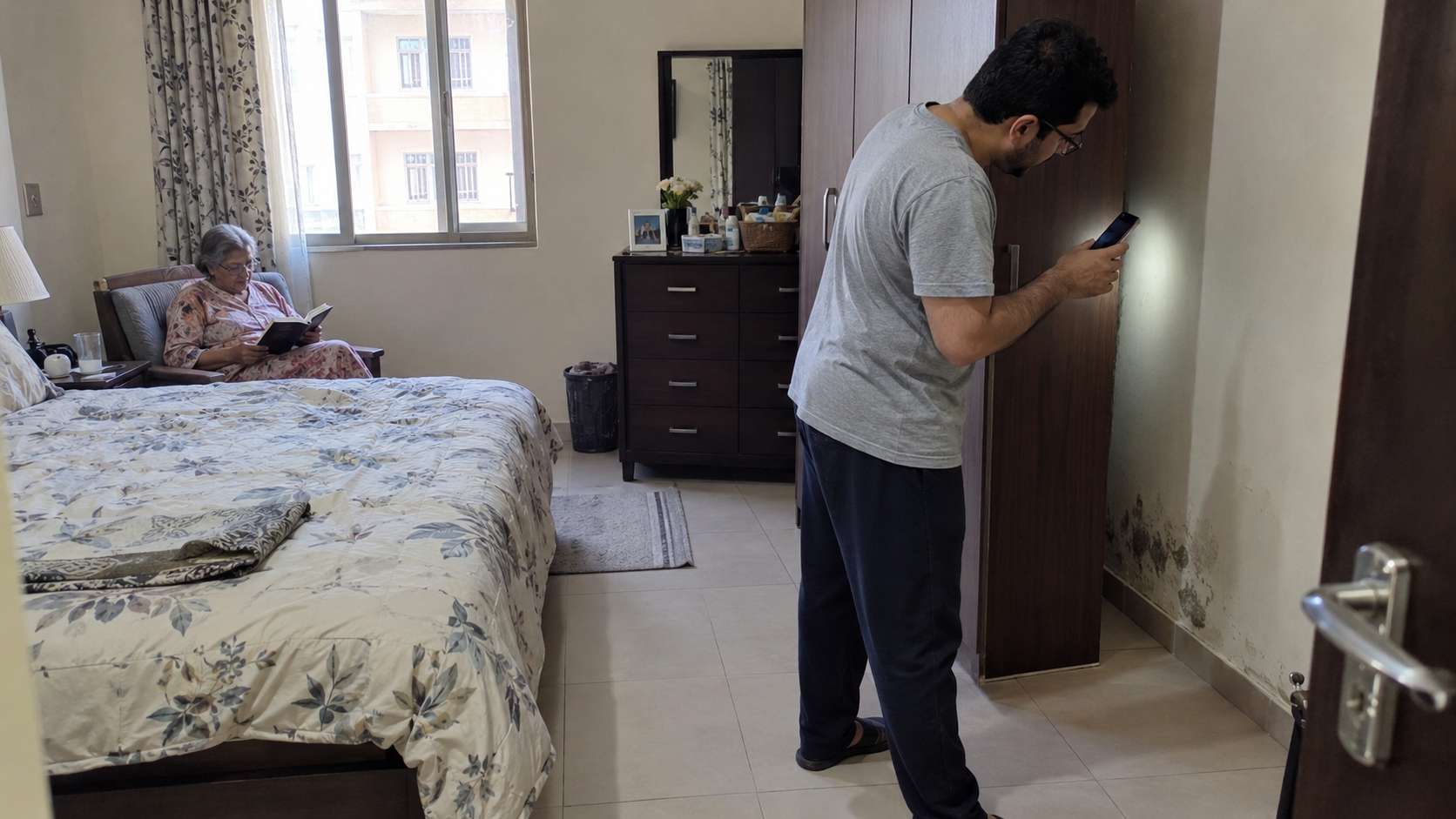
Early detection can prevent larger remediation problems.
When Should Elderly People Avoid Cleaning Mold Themselves?
Small areas of surface mold may sometimes be cleaned safely with appropriate precautions. However, elderly individuals should be cautious about handling mold directly.
Professional help may be more appropriate when:
- Mold covers a large area
- There is significant water damage
- Mold is inside walls or ceilings
- HVAC systems are affected
- The person has respiratory conditions or weakened immunity
During mold cleanup, disturbing contaminated materials can release more spores into the air.
The Bottom Line: Protecting Elderly People From Mold Exposure
Mold toxicity in elderly people is a concern because older adults may be more sensitive to indoor air quality problems, especially when they have existing respiratory issues or reduced immune function.
Mold exposure may contribute to respiratory irritation, allergy symptoms, coughing, breathing problems, and reduced comfort. However, symptoms vary greatly between individuals and should be evaluated carefully.
The most effective protection is not simply removing visible mold. Families should focus on controlling moisture, fixing leaks, improving ventilation, maintaining HVAC systems, and addressing mold problems properly before they become long-term indoor air quality issues.