


What Does a Mold Smell Usually Like?
A mold usually smells musty, earthy, damp, or stale. For me, it reminds me of a closed room that has been humid for a long time, wet cardboard left in storage, or clothes that were put away before they fully dried. Yeah, I know you can imagine the smell.
Some people often describe the mold smell like these:
- Wet soil or fallen leaves
- Old books or damp paper
- Wet cardboard
- A humid basement or storage room
- Mushrooms
- Decaying wood
- Damp towels or clothing
- A stale, slightly sour odor
- A sweet, fruity, or fermented smell in some cases
Molds and bacteria can produce volatile compounds while growing. These are often called microbial volatile organic compounds, or mVOCs. Some of these compounds have strong odors and may contribute to the recognizable musty smell associated with mold growth.
However, not every mold colony smells the same. The odor can change depending on the organism, the affected material, the amount of moisture, room ventilation, temperature, and how long the growth has been present.
How Can You Tell Mold Smell From Other Household Odors?
You can tell a possible mold smell from other odors by considering its character, location, timing, and connection to moisture. Mold often smells earthy and damp rather than sharply chemical, smoky, or sewage-like.
Still, several household problems can produce similar odors.
Mold smell versus a dirty drain
A dirty sink or floor drain may smell sour, rotten, or sewage-like. The odor is often strongest directly above the drain and may become worse when water runs or when the drain has not been used for some time.
A mold odor is generally less like sewage. It may spread around a cabinet, wall, ceiling, carpet, or air-conditioning vent instead of coming directly from the drain opening.
However, the area around a leaking drainpipe can develop mold. You may therefore have both problems at the same time.
Mold smell versus damp laundry
Clothes, towels, rugs, and upholstered furniture can develop a stale smell when they remain wet for too long. That odor can be difficult to distinguish from mold because microbial growth may already be developing within the material.
Wash and fully dry the item, then check whether the odor returns. A smell that remains after cleaning may indicate that contamination has penetrated deeper into the fabric or that the surrounding wardrobe, wall, or floor is also damp.
Mold smell versus sewer gas
Sewer gas is usually sharper and more unpleasant. People commonly describe it as similar to rotten eggs, sewage, or sulfur. Mold tends to smell more like wet soil, decaying paper, mushrooms, or a humid closed room.
A strong sewage or rotten-egg odor should not automatically be treated as mold. Plumbing traps, drain seals, vent pipes, or sewer connections may need to be checked.
Mold smell versus a dusty AC
An air conditioner may briefly produce a dusty or burnt-dust smell when it has not been used for a while. Mold-related AC odors are more likely to smell damp or musty and may return each time the unit starts.
A musty odor from an AC does not prove that mold is deep inside the system. The source could be a dirty filter, wet cooling coil, blocked drain pan, damp insulation, contaminated vent, or moisture around the unit.
Why Can You Smell Mold When You Cannot See It?
You may smell mold without seeing it because growth can remain hidden behind walls, wallpaper, furniture, ceiling materials, flooring, insulation, cabinets, or air-conditioning components. But it can be concerning, this doctor explains the issue well.
Odorous compounds can move through small gaps and mix with room air. Airflow from a vent, ceiling cavity, cabinet, or wall opening may then carry the smell away from the source. This means the place where you first notice the odor is not always where the moisture problem is located.
The EPA recommends suspecting hidden mold when a building smells moldy, but no visible source can be found. So you may want to check these places in your building:
- Behind drywall or wallpaper
- Under carpets and carpet padding
- Above ceiling tiles
- Inside walls around leaking or condensing pipes
- Behind wardrobes and other large furniture
- Inside ductwork
- Beneath flooring
- In roof materials above the ceiling
- Around window frames
- Behind kitchen or bathroom cabinets
The odor may become easier to notice after rain, during periods of high humidity, or when a room has remained closed for several hours. You might also notice it when opening a wardrobe, moving furniture, switching on an AC, or disturbing damp materials.
Fresh air can temporarily dilute the smell. Therefore, an odor that disappears after opening the windows does not necessarily mean the underlying source has gone away.
How Do You Find Where the Mold Smell Is Coming From?
To find the source, start by identifying when and where the odor is strongest. Then look for moisture, staining, damaged materials, condensation, and areas with poor airflow.
You can investigate without immediately opening walls or pulling apart building materials. Now, it’s time to pretend you’re Sherlock Holmes. Trust me, it’s important and not that hard.
1. Close the room briefly
Leave the room closed for an hour or two, then re-enter and note where the odor first becomes noticeable. Avoid using air fresheners or strongly scented cleaners beforehand because they can hide the smell.
2. Check whether the smell changes
Pay attention to whether it becomes stronger:
- After rain
- On humid days
- When the AC starts
- When opening a cabinet
- After using a shower
- Near a washing machine
- When moving a sofa or wardrobe
- When entering after the room has been closed overnight
These patterns can help connect the odor to a particular moisture source.
3. Look for signs of dampness
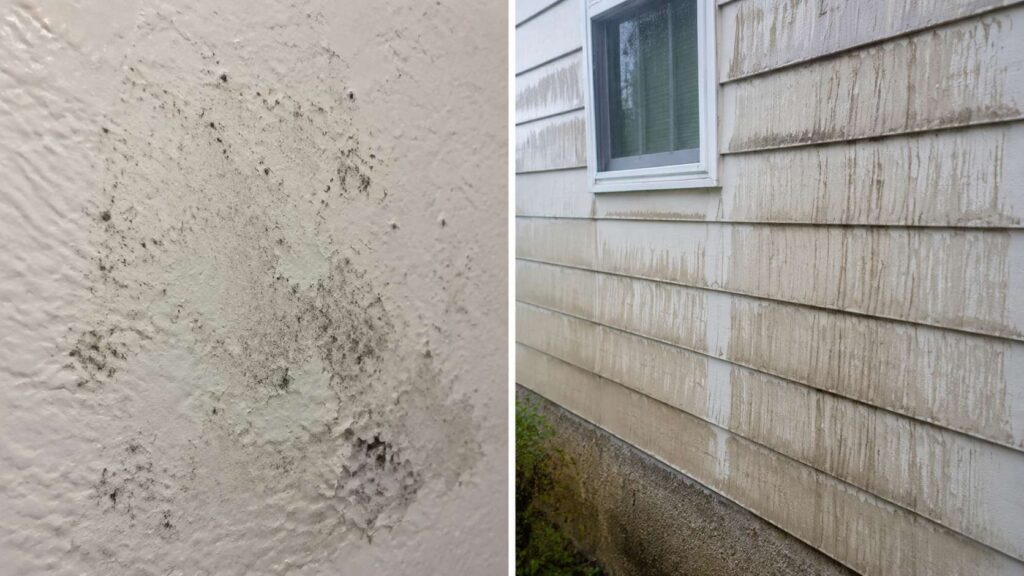
Search for more than visible mold spots. Moisture problems may also appear as:
- Brown or yellow water stains
- Peeling or bubbling paint
- Soft or swollen drywall
- Warped skirting boards
- Loose wallpaper
- Condensation on windows or vents
- Crumbling ceiling material
- Rust around AC vents

Because indoor mold depends on moisture, finding the water source is generally more useful than trying to identify a mold species by smell.
4. Check enclosed and poorly ventilated areas
Inspect behind furniture, under sinks, around pipe openings, inside wardrobes, near exterior walls, beneath windows, and around air-conditioning units. Use a flashlight, but avoid aggressively scraping, cutting, or removing materials.
Opening a contaminated wall or pulling up moldy flooring can release dust and spores into the room. The EPA recommends caution when investigating suspected hidden growth, particularly when building materials need to be disturbed.
Does a Mold Smell Tell You How Serious the Problem Is?
No, a mold smell doesn’t actually tell you how serious the problem is. The strength or type of mold smell does not reliably show how much mold is present or how serious the situation may be.
A small area inside a closed cabinet may produce a noticeable odor because there is little ventilation. Meanwhile, a larger contaminated area may create only a mild smell if air is moving through the space.
Smell also cannot tell you:
- Which mold species is growing
- Whether the mold is producing mycotoxins
- How far the contamination has spread
- Whether the odor is coming from mold, bacteria, or damp materials
- How a particular person will react to the environment
The presence of a musty smell should therefore be treated as a reason to inspect for dampness, not as a home testing method or medical diagnosis.
Indoor dampness and mold exposure have been associated with respiratory symptoms such as coughing, wheezing, and upper-airway irritation. People with asthma, mold allergies, weakened immune systems, or existing lung conditions may be more sensitive. However, an odor alone cannot predict whether someone will develop symptoms.
So, Have You Found the Source of the Mold Smell, Sherlock?
Again, the biggest clue to mold growth is usually musty, earthy, damp, stale smells, or similar to wet cardboard, old books, mushrooms, or decaying wood. You may notice it most strongly in closed rooms, wardrobes, damp corners, carpets, wall cavities, or when an air conditioner starts operating.
But hey, if the musty smell never stops crawling to everyone’s nose inside your home, you need a professional mold remediation service. After all, finding and fixing the source is the key to preventing the odor—and any associated mold growth—from returning.