


Why Does a Gym Have a Mold Smell?
A gym environment naturally creates conditions where mold and musty odors can develop. High humidity, sweat, poor ventilation, and constant water exposure create moisture problems if they are not properly controlled.
Common sources of mold smell in gyms include:
HVAC systems and AC ducts
Air conditioning systems are one of the most common causes of musty odors in commercial gyms.
Inside AC systems, moisture can collect around:
- Cooling coils
- Drain pans
- Air filters
- Duct surfaces
- Vent openings
If dust and moisture combine inside the system, it can create an environment where mold growth and unpleasant odors develop. Since HVAC systems circulate air throughout the gym, a problem in one area can affect the entire facility.
Signs the AC system may be responsible include:
- Musty smell coming from vents
- Odor becoming stronger when the AC turns on
- Uneven air quality between different areas
- Dust buildup around air outlets
In this situation, gym owners may need professional AC duct cleaning and HVAC inspection rather than simply spraying air fresheners.
Rubber flooring and workout equipment
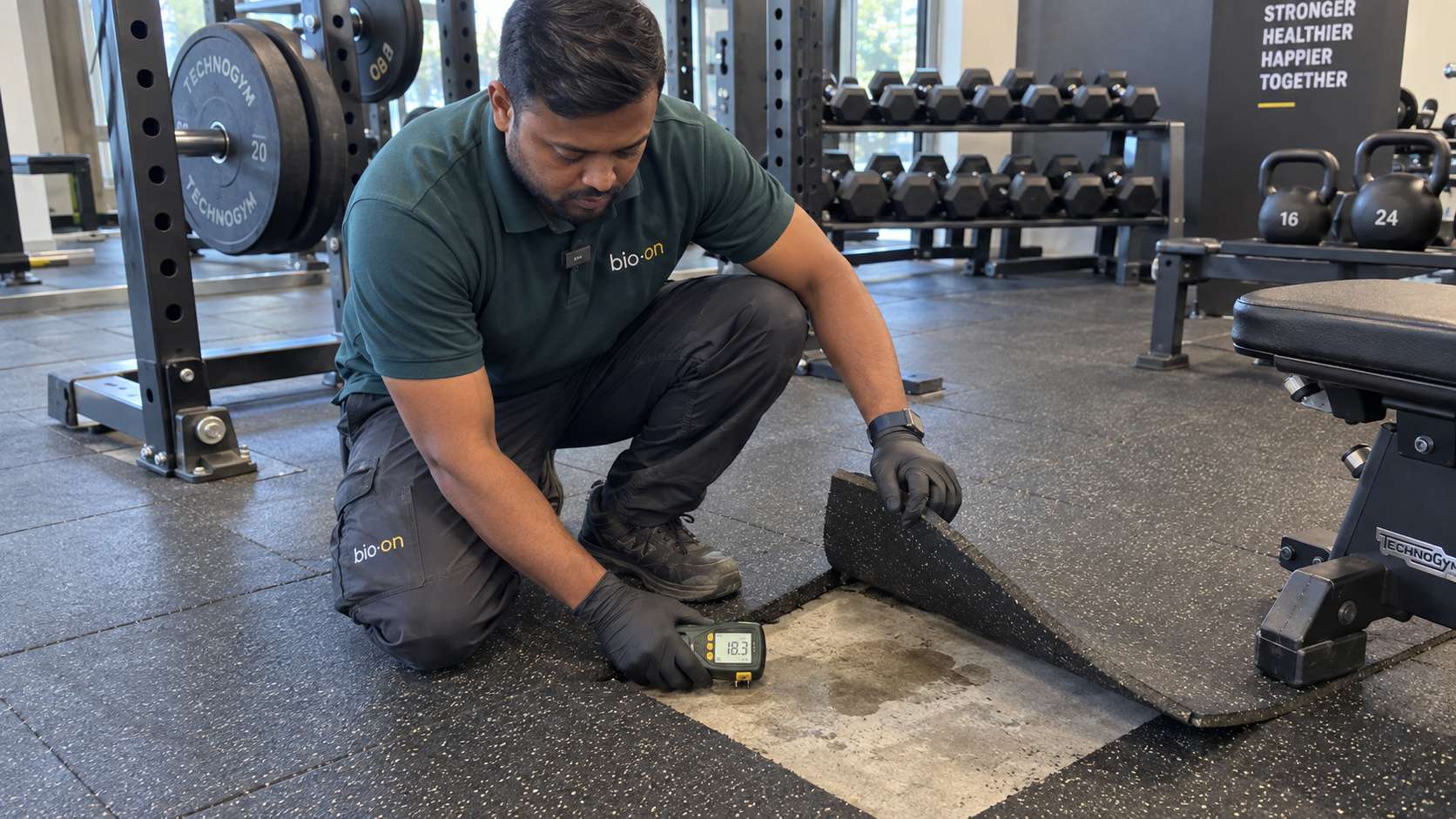
Rubber flooring is common in gyms because it is durable and shock-resistant. However, it can trap moisture underneath if the area is not properly maintained.

Problems can occur when:
- Sweat regularly reaches the floor
- Water spills are not dried quickly
- Cleaning solutions leave moisture behind
- Flooring has poor drainage underneath
The smell may come from bacteria, trapped moisture, or mold growth beneath the flooring surface.
Changing rooms and wet areas
Locker rooms, showers, and bathrooms are high-risk areas because they constantly experience water exposure.
Potential problem areas include:
- Shower corners
- Floor drains
- Grout lines
- Ceiling areas
- Lockers near damp walls
A gym can appear clean while hidden moisture continues creating odors behind surfaces.
Does a Gym Need Deep Cleaning, Mold Remediation, or Moisture Control?
The right solution depends on what is causing the odor. A common mistake among gym owners is hiring a general cleaning service when the problem actually requires moisture inspection or mold remediation.
When gym deep cleaning is enough
Professional gym deep cleaning can help when the odor comes from surface contamination.
This may include:
- Cleaning rubber flooring
- Sanitizing equipment
- Removing sweat buildup
- Cleaning upholstery and mats
- Improving general hygiene
Deep cleaning is useful for routine maintenance, but it may not solve a mold smell caused by hidden moisture or contaminated building materials.
When AC duct cleaning is needed
AC duct cleaning is worth considering when the odor is connected to air circulation.
A professional HVAC cleaning service can inspect:
- Duct interiors
- Air handling units
- Filters
- Drain systems
- Cooling components
Cleaning the HVAC system can help remove accumulated dust and contamination that contribute to poor indoor air quality.
However, duct cleaning alone will not solve the problem if mold growth is coming from a leaking wall, wet flooring, or another moisture source.
When moisture control is the priority
Many gym odor problems happen because moisture is not properly controlled.
Gym owners should evaluate:
- Indoor humidity levels
- Ventilation performance
- Air circulation
- Water leaks
- Drainage issues
Moisture control solutions may include:
- Better ventilation systems
- Dehumidifiers
- Repairing leaks
- Improving exhaust systems
- Regular humidity monitoring
Without controlling moisture, mold odors can return even after cleaning.
When professional mold remediation is required
If inspections confirm active mold growth, professional mold remediation may be necessary.
This is especially important when:
- Mold is growing behind walls or ceilings
- The odor remains after cleaning
- Members complain about persistent musty smells
- Water damage has occurred
- Mold is found inside HVAC-related areas
A professional mold remediation service focuses on removing the contamination source, treating affected areas, and preventing the problem from spreading further.
How Should Gym Owners Choose the Right Service Provider?
Before hiring someone to remove a mold smell, gym owners should avoid choosing a company based only on promises of “odor removal.”
A reliable provider should first identify the cause.
Ask these questions before hiring:
- Can you inspect where the smell is coming from?
- Do you check HVAC systems, flooring, and hidden moisture areas?
- Do you provide moisture detection?
- Can you handle both cleaning and restoration if mold damage is found?
- Will you explain the cause instead of only treating the odor?
The best solution is usually a company that understands commercial environments and can coordinate multiple solutions when needed, such as deep cleaning, HVAC assessment, moisture control, and mold remediation.
The Bottom Line
A mold smell in gyms should never be ignored because it usually indicates a moisture or cleanliness issue that needs attention. The correct fix depends on the source of the odor.
If the smell comes from equipment or surfaces, deep cleaning may solve the problem. If it comes from AC systems, professional duct cleaning may be needed. If moisture or hidden mold is involved, gym owners need proper moisture control and mold remediation.
For gym owners, the goal is not just making the facility smell better temporarily. The real solution is finding the source, removing the cause, and creating a cleaner environment that keeps members confident and comfortable.