


What Mold Resistant Sealant for Wood Actually Does
Mold resistant sealant for wood helps reduce how much moisture the wood absorbs, which makes the surface less friendly to mold and decay fungi. It does not make wood permanently mold-proof.
Wood is naturally porous. It can absorb moisture from leaks, rain, humidity, condensation, wet soil contact, or poor ventilation. Once wood stays damp, fungi can grow. Some fungi mainly stain the surface. Others can slowly break down the wood and cause rot.
The U.S. Forest Products Laboratory explains that fungi affecting wood need organic material, mild temperatures, moisture, and air to grow. Wood already provides the organic material. So your main job is to control moisture.
A good mold resistant sealant can help by:
- Reducing water absorption
- Slowing surface mold growth
- Protecting against stains
- Reducing swelling and cracking
- Helping wood last longer outdoors
- Making surfaces easier to clean
- Creating a barrier against dampness
But sealant does not solve everything. It cannot fix a roof leak, stop plumbing water, repair rotten wood, or remove mold hidden deep inside porous timber. EPA guidance also explains that mold can grow into porous materials and may be difficult or impossible to remove completely.
So think of sealant as prevention and protection, not magic.
Tips to Buy the Best Mold Resistant Sealant for Wood
The best mold resistant sealant for wood is the one that matches the wood type, exposure level, moisture risk, and finish you want. Do not buy only because the label says “anti-mold.” Look at the full use case.
1. Choose indoor or outdoor formula correctly
Outdoor wood needs stronger weather resistance. It must handle rain, UV, heat, expansion, and drying cycles. Indoor wood usually needs lower odor, safer indoor use, and compatibility with paint or furniture finishes.
Use outdoor wood sealant for:
- Decks
- Pergolas
- Fences
- Garden furniture
- Exterior doors
- Window frames
- Balcony wood
- Outdoor cladding
Use indoor wood sealant for:
- Cabinets
- Wardrobes
- Baseboards
- Bathroom trim
- Kitchen wood
- Furniture
- Interior wall panels
Do not use an indoor-only sealant on exterior wood. It may peel or fail quickly.
2. Look for water resistance first
Mold resistant claims are useful, but water resistance matters even more. Mold and rot need moisture, so the product must reduce moisture absorption.
Look for terms such as:
- Water repellent
- Waterproofing wood sealer
- Exterior wood protector
- Moisture resistant
- Weather resistant
- Mildew resistant finish
- Fungal resistant
- Wood preservative
- Anti-mold additive
For exterior wood, a penetrating water-repellent preservative is often better than a thin surface coating that cracks easily.
3. Check whether it prevents mold, mildew, rot, or all three
Mold, mildew, and rot are related but not identical. Mold and mildew often affect the surface. Rot means the wood itself is being broken down by decay fungi.
Some products mainly resist surface mildew on the coating. Others are wood preservatives designed to protect against fungal decay. If your concern is structural wood, outdoor timber, deck posts, or damp framing, look for a product that mentions wood preservative or decay protection, not only mildew resistance.
4. Choose penetrating vs film-forming sealant
A penetrating sealer soaks into the wood. A film-forming coating sits more on top like a protective layer.
Penetrating sealers are useful for:
- Decking
- Outdoor furniture
- Fences
- Rough wood
- Wood that expands and contracts often
Film-forming coatings are useful for:
- Painted trim
- Interior wood
- Furniture
- Decorative finishes
- Smooth surfaces needing a washable layer
For wet exterior wood, penetrating products are often more forgiving because they are less likely to peel than thick surface films.
5. Match the finish you want
Sealants come in clear, tinted, semi-transparent, matte, satin, gloss, and paintable versions. Clear sealants preserve the natural look, but they may offer less UV protection than tinted finishes. Tinted stains can protect exterior wood better because pigments help block sunlight.
For visible wood furniture, choose a finish that matches the appearance you want. For hidden structural wood, performance matters more than looks.
6. Check compatibility with paint, stain, and old coatings
If the wood is already painted, stained, varnished, or sealed, not every new sealant will bond properly. Some products need bare wood. Others can go over existing coatings after sanding.
Before buying, check:
- Can it be used on previously coated wood?
- Does the surface need sanding?
- Is it paintable after curing?
- Does it work over oil-based stains?
- Does it work over water-based finishes?
- Is primer required?
Bad compatibility can cause peeling, sticky surfaces, uneven color, or poor protection.
7. Read the cure time and recoat time
Some wood sealants dry to the touch quickly but need much longer to cure. This matters if the wood is in a bathroom, kitchen, deck, or outdoor area that may get wet soon.
Buy a product that fits your schedule. If rain is expected tomorrow, do not apply an exterior wood sealant today unless the label allows it.
How to Prepare Wood Before Applying Mold Resistant Sealant
Preparation decides whether the sealant works or fails. Even an expensive mold resistant sealant will not perform well on dirty, wet, moldy, or rotten wood.
Start by inspecting the wood. Press the surface gently with a screwdriver or firm tool. If the wood is soft, crumbly, spongy, or deeply cracked, it may already be rotten.
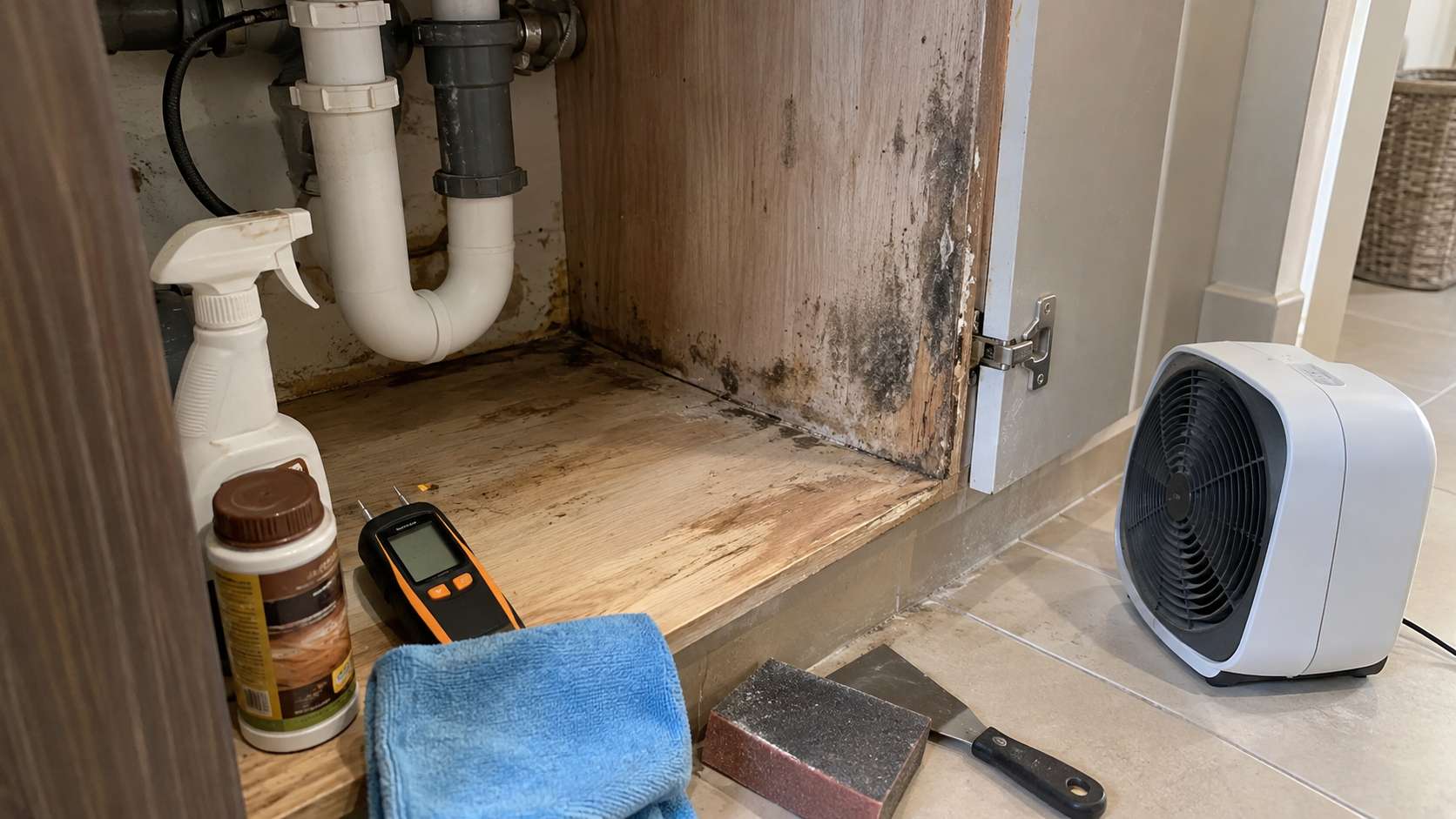
Sealant will not restore rotten wood. Damaged sections may need replacement.
Next, clean the surface. Remove dust, dirt, grease, algae, mildew, old flaking finish, and loose fibers. For finished wood surfaces with mold, EPA says treated or finished wood can be cleaned with mild detergent and clean water, then allowed to dry.
For small surface mold, scrub with detergent and water, rinse lightly, and dry well. Wear gloves, eye protection, and an N95 mask if visible mold is present. Avoid dry sanding moldy wood before cleaning because it can release particles into the air.
Then dry the wood completely. This is critical. Sealing damp wood can trap moisture inside. That trapped moisture may continue feeding mold or decay underneath the coating.
For outdoor wood, wait for dry weather. For indoor wood, use fans, ventilation, or a dehumidifier. If the wood was soaked by a leak or flood, give it more time and check moisture if possible.
EPA guidance says the moisture problem must be fixed before mold cleanup or remediation can be considered finished. The same principle applies before sealing wood.
How to Apply Mold Resistant Sealant to Stop Mold and Rot
To apply mold resistant sealant effectively, clean the wood, dry it, sand it if needed, apply thin even coats, and protect all exposed sides and edges. The edges, cuts, joints, and end grain usually absorb water fastest, so do not ignore them.
Follow these steps:
- Fix the moisture source first.
Repair leaks, improve drainage, stop condensation, and improve ventilation. If water keeps reaching the wood, sealant will eventually fail. - Remove damaged material.
Cut out rotten sections if needed. Replace wood that is soft, crumbling, or structurally weak. - Clean the surface.
Use detergent and water for general dirt and surface mold. Rinse carefully and avoid soaking the wood more than necessary. - Let the wood dry completely.
This may take hours, days, or longer depending on the wood thickness and water exposure. Do not rush this step. - Sand the surface lightly.
Sanding helps remove rough fibers and old loose finish. If the wood was moldy, clean it first before sanding. - Remove dust.
Use a vacuum, tack cloth, or damp cloth depending on the product instructions. Sealant bonds better to a clean surface. - Apply the first coat evenly.
Use a brush, roller, sprayer, or cloth based on the label. Work with the grain. Do not leave puddles unless the product specifically says to flood the surface. - Pay extra attention to end grain and joints.
These areas absorb moisture faster. Coat cut ends, corners, screw holes, and gaps carefully. - Let it dry before recoating.
Follow the recoat time on the label. Applying the second coat too early or too late can affect bonding. - Apply the recommended number of coats.
One thin coat may not be enough for outdoor or high-moisture wood. - Let it cure fully before water exposure.
Keep the wood dry until the sealant has cured enough for use.
For wood near bathrooms, kitchens, windows, or AC areas, also seal nearby gaps where water can enter. A good wood coating helps, but water can still sneak through unsealed joints and behind trim.
Best Places to Use Mold Resistant Sealant on Wood
Mold resistant wood sealant is most useful in places where wood is exposed to moisture but not constantly submerged.
Good areas include:
- Bathroom window frames
- Kitchen cabinets near sinks
- Wardrobe backs near damp walls
- Wooden baseboards
- Laundry room shelving
- Outdoor furniture
- Pergolas and fences
- Deck railings
- Exterior doors
- Wooden balcony features
- AC closet trim
- Wooden storage shelves
Be more cautious with wood that touches soil, sits in standing water, or remains wet for long periods. Those situations may need pressure-treated wood, proper drainage, flashing, waterproof membranes, or structural repair instead of ordinary sealant.
If the wood is in a high-risk area, sealing only the visible face may not be enough. Moisture can enter from the back, bottom, ends, or screw holes. Coat all accessible sides before installation whenever possible.
Common Mistakes That Make Wood Sealant Fail
The most common mistake is sealing over damp wood. This traps moisture and can make mold or rot worse under the surface.
Another mistake is sealing over active mold. Moldy wood should be cleaned and dried first. EPA says mold should be cleaned off hard surfaces with water and detergent and dried completely.

Other mistakes include:
- Using indoor sealant outdoors
- Ignoring end grain
- Applying too thick a coat
- Not removing old peeling finish
- Skipping sanding when needed
- Applying before rain
- Not fixing leaks
- Choosing a decorative finish instead of a protective one
- Using sealant on wood that should be replaced
- Forgetting maintenance coats
Wood protection is not one-time forever. Outdoor sealants wear down from sun, rain, dust, and cleaning. Reapply according to the product label or when water stops beading on the surface.
How to Keep Sealed Wood Mold-Free Longer
After sealing, prevention is mostly about keeping wood dry and clean.
Use these habits:
- Wipe water quickly from wood surfaces
- Keep furniture away from damp walls
- Improve airflow behind wardrobes and cabinets
- Use exhaust fans in bathrooms and kitchens
- Fix leaks immediately
- Keep outdoor wood off direct soil contact
- Clean dirt and algae before they build up
- Recoat outdoor wood before the finish fails
- Use dehumidifiers in damp indoor rooms
- Check hidden wood after storms or plumbing leaks
EPA notes that there is no practical way to eliminate all mold spores indoors; controlling moisture is the way to control indoor mold growth. That is the core rule for wood too.
The Bottom Line
Mold resistant sealant for wood is useful when you want to protect wood from moisture, surface mold, staining, swelling, and early decay. But it works best as a prevention tool, not a rescue treatment for rotten or wet wood.
To buy the best option, choose a product made for wood, match it to indoor or outdoor use, check for water resistance, mold or mildew resistance, decay protection when needed, finish type, and compatibility with paint or stain.
To apply it properly, clean the wood, remove mold and loose finish, dry the surface completely, sand if needed, coat all exposed sides, protect end grain, and follow the label for drying and recoating. Most importantly, fix the moisture source first.
A good sealant helps wood resist mold. A dry environment is what keeps it from coming back.