


1. Design Better Ventilation Systems for Humid UAE Conditions
One of the most practical mold resistant home ideas is improving indoor airflow.
Many UAE homes rely heavily on air conditioning and remain closed for long periods. While this keeps indoor temperatures comfortable, it can also trap humidity, odors, and moisture if ventilation is poor.
Poor airflow creates areas where moisture stays longer, such as:
- Behind wardrobes
- Inside bathrooms
- Around AC units
- Behind large furniture
- Inside storage rooms
A mold resistant home should allow air to move continuously.
Practical improvements include:
- Installing properly sized bathroom exhaust fans
- Keeping air circulation between rooms
- Avoiding blocking AC vents with furniture
- Adding ventilation solutions in storage areas
- Leaving small gaps between furniture and walls
For bathrooms, especially, exhaust fans should remove humid air quickly after showers. Moisture that remains trapped on walls and ceilings can eventually create mold growth.
Good ventilation does not kill existing mold, but it reduces one of the main conditions mold needs to survive.
2. Choose Moisture-Resistant Materials for Wet Areas
Material selection plays a major role in creating a mold resistant home.
Some building materials absorb water easily and can become hidden mold reservoirs when exposed to moisture.
This is especially important in UAE areas such as:
- Bathrooms
- Kitchens
- Laundry rooms
- Balconies
- AC service areas
Better material choices include:
Bathrooms
Consider:
- Waterproof wall systems
- Proper tile installation
- Mold-resistant grout
- Moisture-resistant ceiling materials
Kitchens
Use materials that handle humidity and occasional water exposure, such as:
- High-quality laminates
- Properly sealed countertops
- Moisture-resistant cabinet materials
Storage Areas
Avoid storing items directly on floors where possible. Use:
- Elevated shelves
- Plastic storage containers
- Ventilated cabinets
The goal is reducing the amount of organic material that can absorb moisture and support mold growth.
3. Build Strong Waterproofing Protection
Many mold problems in UAE homes are not caused by poor cleaning. They are caused by hidden water intrusion.
A truly mold resistant home requires proper waterproofing.
Important areas include:
- Bathrooms
- Roof surfaces
- Balconies
- External walls
- Plumbing areas
- AC drainage points
Small waterproofing failures can create long-term moisture problems.
Warning signs include:
- Yellow or brown ceiling stains
- Peeling paint
- Damp smells
- Bubbling walls
- Repeated mold patches
For example, cleaning mold from a bathroom wall without repairing failed waterproofing may only remove the symptom. The moisture behind the wall can continue feeding mold growth.
Waterproofing is one of the most valuable long-term investments for preventing recurring mold problems.
4. Maintain Your AC System Regularly
A UAE home cannot be considered mold resistant without proper AC maintenance.

Air conditioning systems are essential because they control indoor temperature, but they can also become a source of moisture problems.
Common AC-related mold causes include:
- Dirty filters
- Blocked drainage pipes
- Condensation buildup
- Moist evaporator coils
- Poor duct hygiene
Regular AC maintenance should include:
- Cleaning or replacing filters
- Checking drain lines
- Inspecting condensation areas
- Cleaning internal components when necessary
Pay special attention to signs such as:
- Musty smell when turning on AC
- Water dripping from indoor units
- Increased humidity indoors
- Visible mold around vents
A neglected AC system can spread mold particles throughout multiple rooms, making prevention much harder.
5. Create Smart Furniture Placement to Prevent Hidden Mold
Furniture layout can influence mold risk more than many homeowners realize.
Large furniture pieces placed tightly against walls can reduce airflow and create hidden humid zones.
Common problem areas include:
- Wardrobes against external walls
- Sofas pushed tightly into corners
- Cabinets covering damp walls
- Beds blocking ventilation areas
A mold resistant home should allow air movement around furniture.
Simple improvements include:
- Leaving small gaps between furniture and walls
- Avoiding overcrowded storage
- Choosing furniture with raised legs when possible
- Regularly checking hidden corners
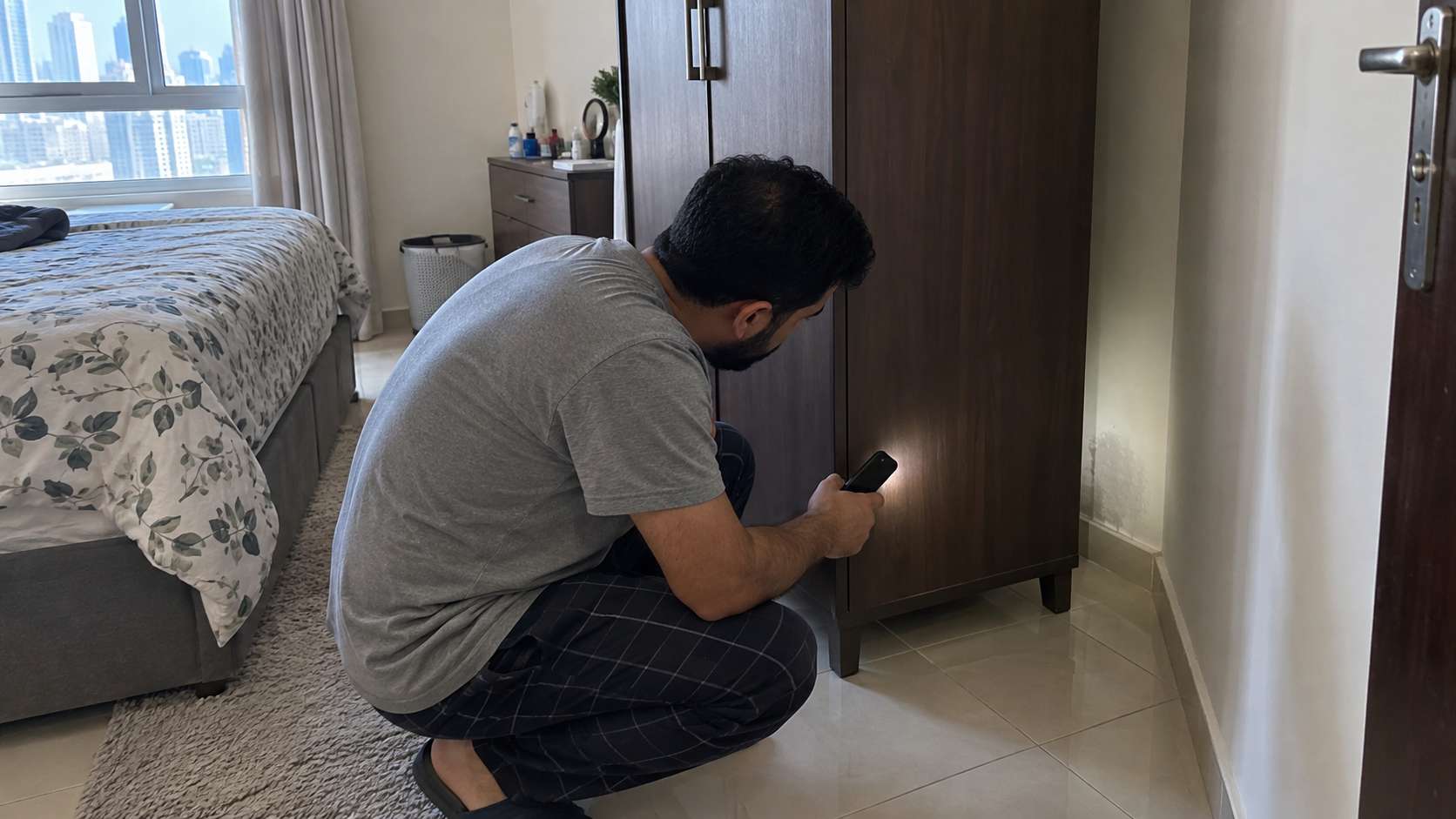
This is especially important in UAE apartments where rooms may have limited airflow.
A hidden damp patch behind a cabinet can grow unnoticed for months.
6. Use Smart Humidity Monitoring and Moisture Control
Humidity control is one of the strongest defenses against mold.
Many homeowners only notice mold after visible damage appears. A humidity monitoring approach allows problems to be identified earlier.
Useful tools include:
Hygrometers
A hygrometer helps monitor indoor humidity levels.
It can reveal:
- Rooms with excessive moisture
- Humidity spikes after showers
- Areas needing better ventilation
Dehumidifiers
In some UAE environments, especially during humid seasons, dehumidifiers can help reduce excess moisture.
They are particularly useful for:
- Storage rooms
- Bedrooms with poor airflow
- Areas affected by condensation
Moisture Detection Tools
Moisture meters can help identify hidden damp areas before mold becomes visible.
These tools are useful after:
- Water leaks
- Flooding
- Plumbing repairs
- Wall staining
The earlier moisture problems are discovered, the easier they are to fix.
7. Create a Regular Mold Prevention Maintenance Routine
The final step in building a mold resistant home is consistency.
Even the best materials and designs cannot prevent mold if moisture problems are ignored.
A simple maintenance routine can include:
Monthly Checks
Inspect:
- AC units
- Bathroom corners
- Under sinks
- Storage areas
- Window frames
After Water Events
Take action after:
- Plumbing leaks
- Heavy condensation
- AC leaks
- Flooding incidents
Dry affected areas quickly and inspect for hidden moisture.
Seasonal Preparation
Before humid periods:
- Clean AC systems
- Check ventilation
- Inspect waterproofing
- Remove unnecessary stored materials
Mold prevention works best when homeowners treat moisture control as regular home maintenance rather than an emergency response.
The Bottom Line
A mold resistant home in the UAE is created through smart design choices, moisture control, and consistent maintenance. The most effective strategies are improving ventilation, choosing moisture-resistant materials, protecting waterproofing systems, maintaining AC units, and preventing hidden damp areas.
Mold does not appear because a home is old or new. It appears when moisture stays in the wrong places for too long.
By designing a home that controls humidity and responds quickly to water problems, UAE homeowners can significantly reduce mold risks and create a healthier indoor environment.