


Mold Remover for Concrete Walls: What Actually Works
The best mold remover for concrete walls is the one that matches the real condition of the wall. A small patch on a dry garage wall is very different from black mold spreading across a damp basement wall.
Concrete can look simple because it is solid. But mold can cling to dust, paint, mineral deposits, dirt, old coatings, and moisture inside the surface texture. If the wall keeps absorbing water from the ground, from a leak, or from indoor humidity, mold can return after almost any cleaner.
So before choosing a product, check these five things:
- Is the concrete wall still damp?
- Is there visible water seepage?
- Is the mold just on the surface, or is the paint/coating peeling?
- Is the affected area small or widespread?
- Does the room smell musty even after cleaning?
If the wall is dry, the mold is minor, and the surface is accessible, DIY can be reasonable. If the wall is wet, the mold is large, or the odor keeps returning, a stronger spray will not solve the root cause.
EPA’s core advice is still the best foundation: scrub mold off hard surfaces with detergent and water, dry completely, and fix the water problem. It also says chemical biocides like chlorine bleach are not recommended as routine mold cleanup practice.
Now let’s rank the seven best options from 7th to 1st.
7. Industrial-Strength Mold Stain Remover Sprays
Industrial-strength mold stain remover sprays are useful when your main problem is dark staining on concrete, not deep moisture damage. Products in this category often use strong bleach-based chemistry to lighten black, green, or brown mold and mildew stains fast.
This is why they are popular. You spray, wait, and the wall often looks cleaner within minutes. For garage walls, exterior masonry, concrete floors, brick walls, and old basement staining, that fast visual result can be satisfying.

RMR-86, for example, describes its mold and mildew stain remover as a professional-grade formula for stubborn stains on surfaces including concrete floors and brick walls.
Where it works best:
- Cosmetic mold stains
- Outdoor concrete walls
- Garage walls
- Concrete floors and masonry
- Non-delicate surfaces
- Areas where whitening is the goal
Where it falls short:
- Active leaks
- Wet basement walls
- Mold inside cracks or coatings
- Hidden mold behind finished walls
- Poor ventilation
- Large contamination
- Recurring mold
The biggest downside is safety and surface compatibility. Strong stain removers can smell harsh, irritate skin and lungs, damage nearby materials, and leave you thinking the mold problem is solved just because the stain faded.
Use this type of product only with ventilation, gloves, eye protection, and label-following. Also, never mix bleach-based mold removers with vinegar, ammonia, toilet cleaner, or acid cleaners.
6. Antimicrobial and Encapsulating Coatings
Antimicrobial and encapsulating coatings are not the first cleaner you use on moldy concrete walls. They are follow-up treatments used after cleaning, drying, and moisture correction. Their job is to create a protective coating that helps resist mold growth on the dry coating surface.
This can be useful on unfinished basement walls, crawl space concrete, block walls, utility areas, and surfaces that have already been remediated.
Fiberlock AfterShock is an example of this category. Fiberlock describes it as an antimicrobial coating that kills residual mold and mildew remaining after pre-cleaning and disinfecting contaminated surfaces, then inhibits future mold and mildew growth.
Fiberlock IAQ 6000 is another mold-resistant coating option. Its product page says it contains a fungistatic agent to resist mold growth on the dry coating surface only. That wording is important because it confirms the limit: the protection is on the coating surface, not inside a wet wall.
Where it works best:
- After mold cleanup
- After the wall is dry
- After leaks are fixed
- On concrete or masonry that needs a protective coating
- In utility areas, basements, and crawl spaces
Where it cannot help:
- Active mold that has not been cleaned
- Wet concrete
- Water seepage
- Efflorescence or mineral salt problems
- Hidden mold behind finished walls
- Structural moisture issues
Never paint or encapsulate moldy surfaces before proper cleaning. EPA specifically says not to paint or caulk moldy surfaces.
5. Concrobium Mold Control
Concrobium Mold Control is a popular non-bleach mold-control product that can be used on many materials, including concrete. It is often chosen by people who want something less harsh-smelling than bleach-based stain removers.
Concrobium’s product information describes it as a mold control product that eliminates existing mold, prevents regrowth, and removes musty odors. It is listed for surfaces including concrete, brick, stone, tile, grout, drywall, wood, metal, fabric, and upholstery.
The big appeal is that it does not work like a stain-bleaching product. It dries to form an antimicrobial shield, and Rust-Oleum support describes that dried film as encapsulating and physically crushing mold spores.
Where it works best:
- Light to moderate surface mold
- Concrete walls where bleach smell is a concern
- Musty odor control
- Preventive treatment after cleaning
- Maintenance in basements, cellars, garages, and utility rooms
Where it may disappoint:
- Deep black staining
- Heavy visual discoloration
- Mold inside cracks or under coatings
- Wet walls
- Large colonies
- Hidden water damage
The key thing to know: Concrobium is better as a mold-control and prevention product than a dramatic stain remover. If your goal is to make old black staining disappear instantly, a bleach-based stain remover may look more impressive. If your goal is lower-odor mold control after proper cleaning, Concrobium is more appealing.
4. Hydrogen Peroxide Cleaner
Hydrogen peroxide is one of the more practical household-accessible options for mold on concrete walls. It can help oxidize organic matter and clean surface mold without the same chlorine odor as bleach. For small patches, many people use 3% hydrogen peroxide, the common pharmacy concentration, though professional peroxide cleaners can be stronger.
Hydrogen peroxide works best when combined with physical scrubbing. Spray or apply it to the affected area, let it sit long enough to work, scrub with a stiff brush, wipe or rinse as appropriate, then dry the wall completely.
Where it works best:
- Small concrete wall patches
- Basement or garage surface mold
- Areas where bleach odor is not acceptable
- Light staining
- Mold on textured concrete
- DIY cleaning with careful ventilation
Where it cannot help:
- Active water seepage
- Mold behind paint
- Deeply contaminated porous surfaces
- Large areas
- Structural water damage
- Walls that never dry
Hydrogen peroxide can discolor some finishes, so test first if the wall is painted, sealed, stained, or decorative. Also avoid mixing it with vinegar or other cleaners.
From a practical cleaning-service viewpoint, peroxide is useful because it gives you more cleaning power than plain detergent while still encouraging scrubbing and removal. But it is not magic. If the wall remains damp, mold can return.
3. Detergent, Stiff Brush, and Complete Drying
This sounds too simple, but detergent plus scrubbing is one of the most important options for concrete walls. Mold cleanup is not only about killing organisms. It is about physically removing growth, residue, dirt, and food sources from the surface.
EPA says mold can be scrubbed from hard surfaces with detergent and water, then dried completely.
For concrete, use a stiff nylon brush, not a soft cloth. Concrete has pores and texture. A cloth may wipe the surface, but a brush gets into the rough areas better.
Basic method:
- Wear gloves, eye protection, and a mask or respirator if needed.
- Lightly dampen the area to reduce dust release.
- Scrub with detergent and warm water.
- Rinse or wipe away dirty residue.
- Use fans and dehumidification after cleaning.
- Keep the wall dry.
- Recheck after a few days.
Where it works best:
- Small mold patches
- Light basement wall growth
- Garage concrete
- Utility rooms
- Surface mold caused by temporary humidity
- Pre-cleaning before another treatment
Where it falls short:
- Severe staining
- Mold behind coatings
- Wet walls
- Large contamination
- Areas needing containment
- Mold linked to water damage
This method ranks high because it addresses removal, not just killing. Many DIY mistakes happen when people spray a chemical and leave dead residue on the wall. Scrubbing removes more of the actual contamination.
2. Moisture Control Plus HEPA Cleaning
Moisture control is not a bottle of mold remover, but it is the most important “remover” if mold keeps coming back on concrete walls. Without moisture control, every product on this list becomes temporary.
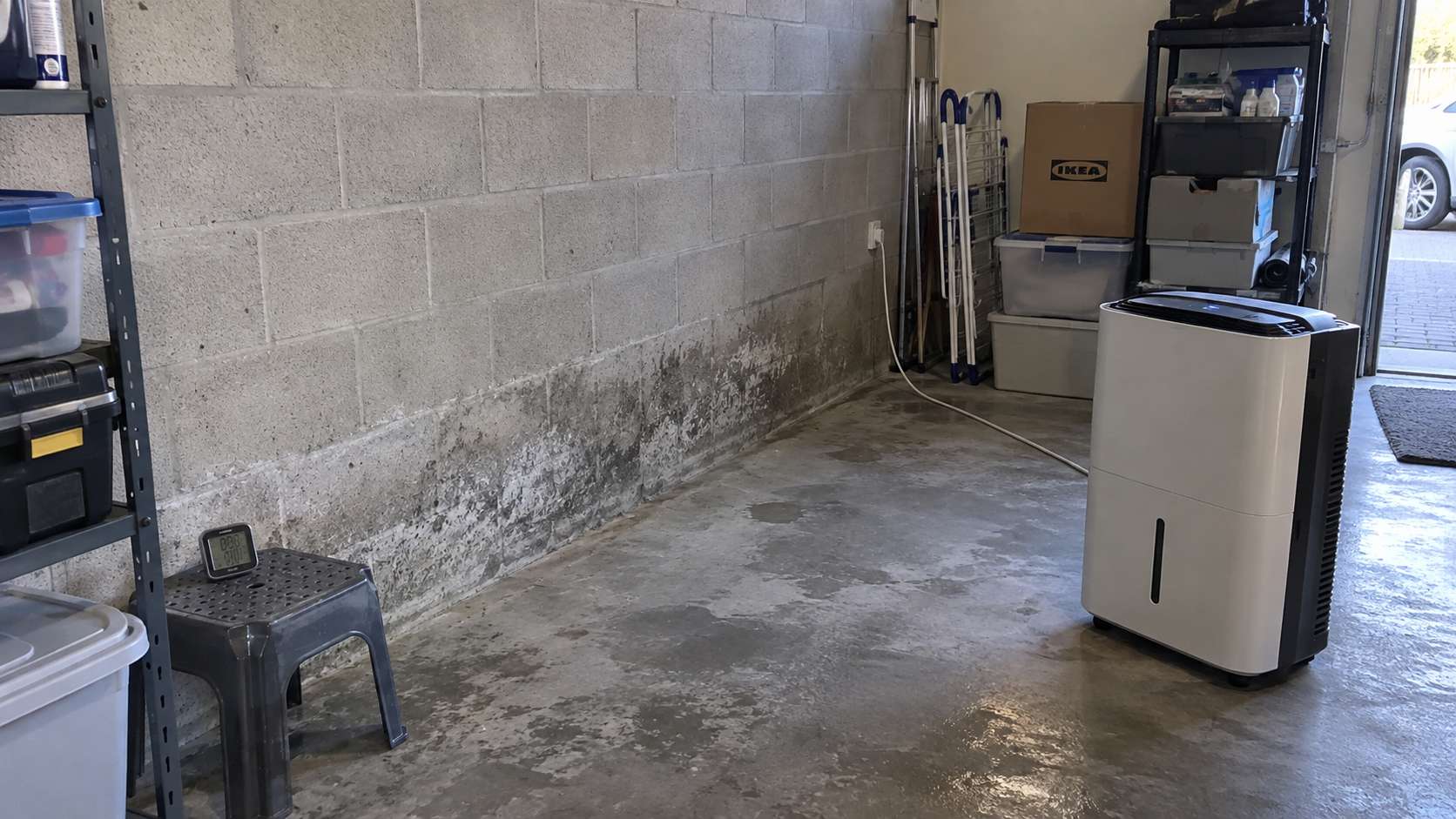
Concrete walls often grow mold because of:
- Basement seepage
- Foundation cracks
- Poor drainage outside
- Condensation
- High indoor humidity
- Leaking pipes
- Poor ventilation
- Damp storage against the wall
- Flooding or past water damage
Fixing those conditions can include sealing exterior water entry, improving drainage, repairing leaks, adding dehumidification, increasing airflow, moving stored items away from walls, and drying the wall fully.
HEPA vacuuming can also help after drying and removal, especially when loose debris, dust, or settled particles remain. EPA’s remediation guidance recommends HEPA vacuums for final cleanup after materials have been thoroughly dried and contaminated materials removed.
Where this works best:
- Recurring basement mold
- Concrete block walls
- Crawl spaces
- Storage rooms
- Garages
- Utility areas
- Damp mechanical rooms
Where it cannot help alone:
- Heavy active mold that still needs removal
- Severe contaminated materials
- Hidden mold behind finishes
- Major flooding without remediation
- Unsafe air quality situations
This option ranks above many cleaners because it solves the reason mold survives. You can spray the wall every week, but if humidity stays high, the wall will keep becoming mold-friendly.
1. Professional Mold Remediation Service
The best mold remover for concrete walls is professional mold remediation when the problem is serious, recurring, hidden, or moisture-driven. A professional does not just choose a chemical. They inspect the source, contain the work area, remove contamination, clean the concrete, dry the space, and help prevent the same problem from coming back.
This is the right choice when:
- Mold covers more than 10 square feet.
- The wall is wet or damp.
- Mold returns after DIY cleaning.
- There is a musty smell in the room.
- Water is entering through the wall.
- The mold is in a basement or crawl space.
- There was flooding.
- People inside have asthma, allergies, or immune concerns.
- The property is commercial, rental, or insurance-related.
- You need documentation before repair or repainting.
EPA says that if you hire a mold cleanup contractor, make sure the contractor has experience cleaning mold and follows professional or government guidance, including EPA, ACGIH, or IICRC guidance.
Professional remediation may include:
- Moisture inspection
- Containment
- PPE and worker safety controls
- HEPA vacuuming
- Controlled cleaning
- Antimicrobial treatment when appropriate
- Drying and dehumidification
- Removal of unsalvageable materials
- Protective coatings after cleaning
- Prevention recommendations
This is why professional service takes the top rank. Concrete wall mold is often not just a dirty surface. It is often a sign of water movement, humidity, or hidden building issues. Professionals can connect cleaning with source correction.
The Bottom Line
The best mold remover for concrete walls depends on the severity of the problem. For small, dry, surface-level mold, detergent, scrubbing, drying, hydrogen peroxide, or Concrobium-style mold control may be enough. For ugly staining on compatible surfaces, industrial-strength mold stain removers can work fast. For already cleaned and dry walls, antimicrobial or mold-resistant coatings can help reduce future surface growth.
But none of those options can beat moisture. If the concrete wall stays wet, mold can come back. If the mold is widespread, hidden, recurring, or linked to water intrusion, the best option is professional mold remediation.
So the real ranking is simple: sprays can clean stains, scrubbing can remove growth, coatings can help prevent regrowth, but professional remediation is the most complete solution when the wall is telling you there is a deeper moisture problem.