


How to Book a Mold Remediation Service for Moldy Upholstery
Booking a mold remediation service starts with choosing a company that understands upholstery materials, not just general surface cleaning.
A proper upholstery mold remediation provider should first evaluate:
- The type of upholstery material
- How deep the mold has spread
- Whether the foam or padding is affected
- The source of moisture causing the mold
- Whether restoration is possible
Before booking, ask the company:
- Do you handle mold remediation specifically for upholstery?
- What inspection process do you use?
- Will you protect the surrounding area during treatment?
- What cleaning methods and equipment will you use?
- Can you restore the furniture without damaging the fabric?
Avoid companies that immediately promise that every moldy sofa can be saved. The right approach depends on the condition of the upholstery.
A professional service should provide an assessment first, then recommend the safest restoration method.
What Can You Expect When Hiring Upholstery Mold Remediation?
A professional mold remediation service usually follows a structured process to remove mold while protecting the upholstery.
Initial Inspection and Assessment
The first step is determining the severity of the problem.
Technicians typically check:
- Visible mold growth
- Musty odors
- Moisture levels
- Fabric condition
- Cushion and foam condition
- Hidden areas underneath or behind the upholstery
This step helps determine whether the mold is only on the surface or has penetrated deeper layers.
For example, mold on the outer fabric of a dining chair may be easier to restore than mold inside a thick sofa cushion that has absorbed moisture for months.
Containment and Preparation
Before cleaning begins, professionals usually prepare the area to reduce the risk of spreading spores.
This may include:
- Isolating the furniture
- Protecting nearby surfaces
- Using protective equipment
- Controlling airflow around the work area
The goal is to prevent mold particles from spreading to other rooms during the remediation process.
Mold Removal and Upholstery Cleaning
Professional upholstery mold remediation focuses on removing mold growth while preserving the material.
Depending on the upholstery type and contamination level, specialists may use methods such as:
- HEPA vacuuming to capture loose mold spores
- Controlled dry cleaning methods
- Low-moisture cleaning techniques
- Steam cleaning when suitable for the material
- Antimicrobial treatments
- Odor removal procedures
- Specialized upholstery extraction
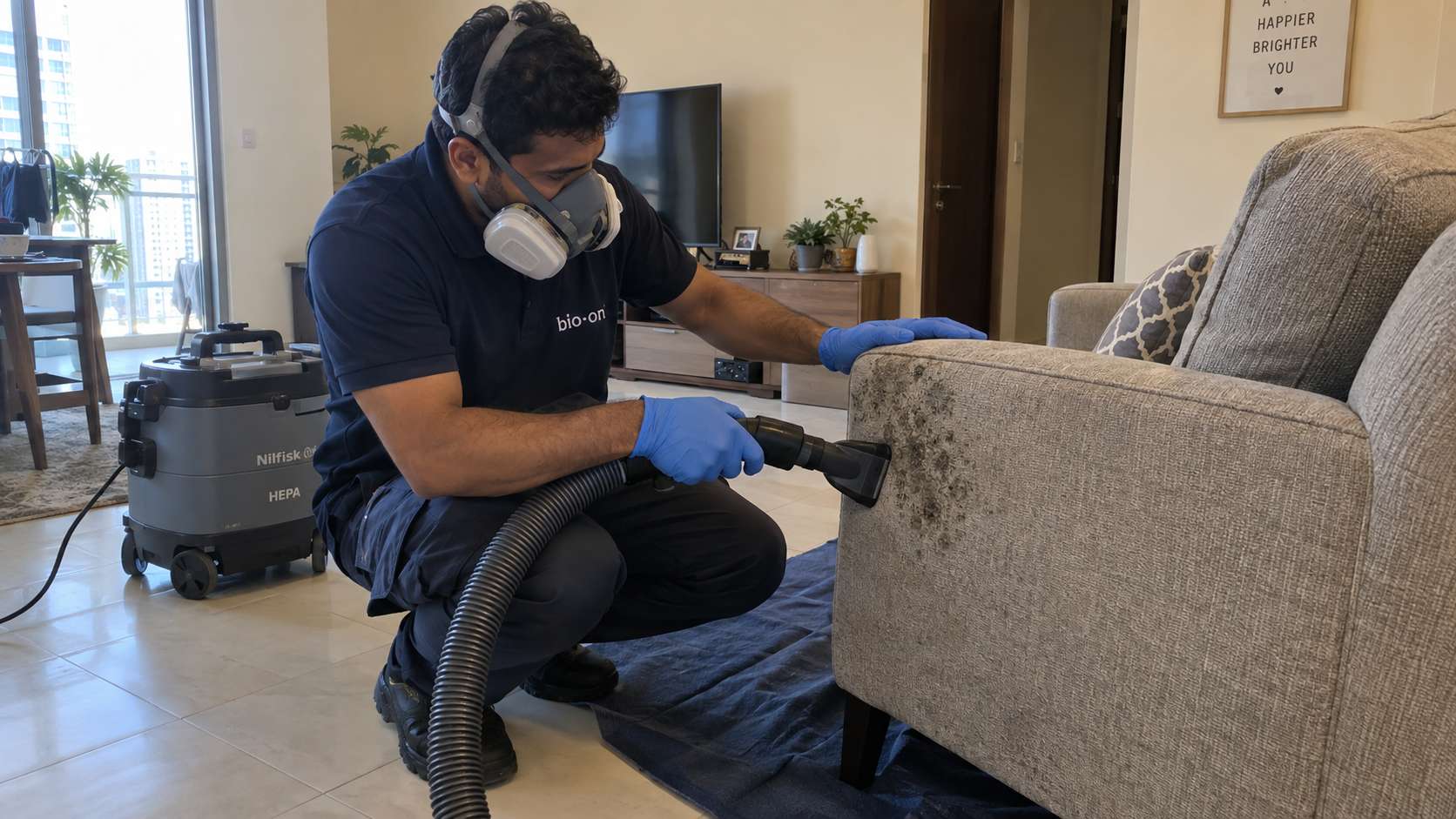
The exact method depends on whether the fabric can tolerate moisture and heat.
Using too much water during cleaning can actually worsen the problem by leaving moisture trapped inside cushions.

Professionals use controlled techniques to clean effectively while reducing the chance of mold returning.
What Tools and Products Are Used to Clean Mold From Upholstery?
Professional mold remediation companies use specialized equipment designed for sensitive materials.
Common tools may include:
HEPA Vacuum Equipment
HEPA filtration systems help capture small particles instead of releasing them back into the air.
This is useful during mold remediation because disturbing mold growth can release spores.
Moisture Detection Tools
Before and after treatment, technicians may use moisture meters to identify damp areas.
This helps confirm:
- Where moisture is coming from
- Whether the upholstery is properly dried
- Whether hidden dampness remains
Upholstery Extraction Equipment
Professional extractors can remove dirt, moisture, and contaminants from upholstery when the material allows it.
The key difference compared with regular cleaning is moisture control. Upholstery should not remain wet after treatment.
Antimicrobial and Mold Treatment Solutions
Professionals may apply specialized antimicrobial products designed for upholstery materials.
These treatments are used to:
- Reduce remaining microbial contamination
- Help prevent regrowth
- Control odors
The products used should be suitable for the specific fabric. Using the wrong chemical can cause:
- Color fading
- Fabric damage
- Staining
- Texture changes
That is why professional assessment matters.
How Much Does Upholstery Mold Remediation Cost?
The cost of mold remediation for upholstery depends on several factors, including:
- Size of the furniture
- Type of upholstery material
- Amount of mold growth
- Depth of contamination
- Required cleaning method
- Whether odor treatment is needed
- Whether cushions or internal materials require restoration
Typical pricing factors include:
| Service Factor | How It Affects Cost |
|---|---|
| Small chair or cushion | Usually lower cost due to smaller surface area |
| Large sofa or sectional | Higher cost because of size and labor |
| Surface mold only | Easier restoration process |
| Mold inside foam | More complex treatment |
| Valuable or delicate fabric | Requires more careful handling |
| Severe contamination | May require additional remediation steps |
For an accurate quote, a professional company usually needs details such as:
- Furniture type
- Number of pieces affected
- Photos of the mold
- Location
- How long the mold has been present
If the upholstery has extensive internal contamination, the technician may also explain whether restoration is more practical than replacement.
Why Professional Mold Remediation Is Better Than Regular Upholstery Cleaning
Regular upholstery cleaning focuses mainly on dirt, stains, and general odors. Mold remediation focuses on identifying and removing fungal contamination while addressing the moisture problem behind it.
The difference is important because mold is not just a stain.
A proper remediation approach considers:
- Mold source identification
- Safe removal methods
- Moisture control
- Drying procedures
- Prevention of recurrence
Simply removing visible marks may leave hidden mold inside cushions or backing materials.
The Bottom Line: Don’t Panic, Professional Help Is Available
Finding mold on upholstery can feel overwhelming, especially when it affects expensive sofas, chairs, or custom furniture. However, early professional intervention can often save furniture that appears beyond repair.
The right mold remediation service will inspect the upholstery, choose safe cleaning methods, use proper equipment, and restore the furniture while minimizing damage.
If you discover mold on upholstery in your UAE home, don’t panic. Bio-On is ready to help with professional mold remediation and can arrive within one hour to assess and restore your affected upholstery. Getting expert help quickly can prevent further spread and give your furniture the best chance of recovery.