


Why Mold on Office Chair Should Not Be Ignored
Mold on office chair should not be ignored because the chair is close to your breathing zone, your clothes, your skin, and your hands for many hours a day. Unlike mold on a distant ceiling corner, a moldy chair is something you sit on, lean against, move around, and disturb repeatedly.
Office chairs can grow mold when they stay damp. This can happen from sweat, spilled drinks, wet cleaning, steam cleaning without proper drying, AC humidity, condensation, water leaks, or storage in a poorly ventilated room. Fabric and foam are especially risky because they can hold moisture inside. The surface may look dry while the inner cushion is still damp.
This is why a moldy office chair is not always “just dirty.” Dirt, skin flakes, food crumbs, dust, and moisture can give mold what it needs. In Dubai, the issue can be more frustrating because offices often depend heavily on air conditioning. If the AC system is not controlling humidity well, or if cold surfaces create condensation, mold can appear on furniture, carpets, vents, partitions, and stored items.
The key question is simple: is the mold only on the chair, or is the chair showing you a bigger office moisture problem? If only one old chair smells bad after being stored, the issue may be limited. But if several chairs, carpets, files, curtains, or AC vents smell musty, treat it as an indoor environment issue, not just a furniture cleaning task.
Five Signs Mold on Office Chair Makes You Sick
Mold on an office chair does not affect everyone the same way. Some people sit near mold and feel almost nothing. Others react quickly, especially if they have allergies, asthma, sinus problems, or sensitive skin. CDC notes that mold exposure can cause different health effects, or none at all, depending on the person and the situation.
Here are five signs the chair may be contributing to your symptoms.
1. You Keep Sneezing, Coughing, or Clearing Your Throat at Work
If you start sneezing, coughing, or clearing your throat after sitting at your desk, pay attention. Mold spores, fragments, dust, and musty particles from the chair can become airborne when you sit down, adjust the backrest, roll the chair, or brush against the fabric.
This does not prove the chair is the only cause. Office dust, perfume, AC airflow, cleaning chemicals, and poor ventilation can also irritate your airways. But if symptoms are stronger near your workstation and lighter elsewhere, the chair deserves inspection.
2. Your Eyes, Nose, or Throat Feel Irritated
Watery eyes, itchy eyes, blocked nose, runny nose, throat dryness, or sinus pressure can happen when you are exposed to damp indoor conditions. Mold is not always the only trigger, but visible mold plus irritation is a strong reason to investigate.
The pattern matters. If you feel worse after sitting on a specific chair, leaning back, or working in one room, do not dismiss it as “normal office tiredness.”
3. Your Asthma or Breathing Feels Worse in the Office
People with asthma may notice more wheezing, chest tightness, shortness of breath, or more frequent inhaler use in damp or moldy spaces. Research reviewed by health agencies links damp indoor spaces with asthma symptoms in people who already have asthma.
This is a situation where you should be more careful. Do not aggressively scrub moldy fabric indoors, because that can disturb the mold and spread particles. Move away from the chair, report the issue, and consider medical advice if breathing symptoms are significant.
4. You Get Headaches or Feel Unwell That Improves After Leaving
Some people report headaches, fatigue, brain fog, or a general “sick office” feeling in damp buildings. These symptoms can have many causes, so it is not smart to blame mold automatically. Still, if the pattern is clear—worse at your desk, better outside, worse again when you return—the environment should be checked.

A musty chair beside damp carpet, stained ceiling tiles, or a poorly maintained AC system is a bigger warning than one isolated spot.
5. Your Skin Gets Itchy Where You Touch the Chair
Moldy upholstery can irritate skin, especially on arms, hands, thighs, or the back of your neck if those areas contact the chair. Some people may notice itchiness, redness, or a rash-like reaction after sitting for long periods.
Again, there are other possible causes, such as detergent residue, dust mites, fabric dye, heat, sweat, or friction. But visible mold on the seat, armrest, or back cushion means you should stop using the chair until it is cleaned properly or replaced.
How to Clean Mold on Your Office Chair
You can clean small, light surface mold from some office chairs, but the safe method depends on the chair material. Hard plastic, metal, and vinyl are easier. Fabric, mesh, leather, faux leather, and foam are more complicated.
Before cleaning, move the chair away from other furniture if possible. Wear gloves and a good mask, especially if you are sensitive to mold. Do not dry-brush mold indoors because it can spread particles into the air.
For hard plastic, metal, wheels, and chair base, wipe the surface with water and mild detergent. Scrub gently, then wipe again with a clean damp cloth. Dry everything completely.
For vinyl or faux leather, use a mild soap solution. Avoid soaking the seams because moisture can get trapped under the surface. Dry it with a clean towel and leave it in a ventilated area.
For fabric or mesh, vacuuming with a normal vacuum is not ideal because it can spread fine particles if the vacuum does not have proper filtration. If the mold is only a small surface spot, blot and clean with mild detergent, avoid soaking the cushion, and dry fast with airflow. If the mold has entered the foam or the smell remains, cleaning the surface may not solve it.
For leather, be extra careful. Too much water can damage it. Use a cleaner suitable for leather, wipe gently, and dry properly. If the mold is inside seams or padding, professional restoration may be needed.
EPA guidance says porous materials that are wet and moldy may need to be discarded, and upholstered furniture can be difficult to dry fully within 48 hours. It also notes that valuable upholstered furniture may need help from a restoration or water-damage professional.
A simple cleaning flow looks like this:
- Take the chair out of use.
- Inspect the seat, backrest, armrests, wheels, underside, seams, and cushion edges.
- Clean hard surfaces with mild detergent and water.
- Clean fabric only if the mold is light and superficial.
- Dry the chair completely with strong airflow.
- Check again after 24–48 hours.
- Replace or professionally treat the chair if the smell or stains return.
Do not rely on perfume sprays. A fresh scent does not remove mold. Also, do not mix bleach with other chemicals. In many upholstered chairs, bleach can damage fabric and may not solve mold inside the cushion anyway.
When the Chair Should Be Replaced Instead of Cleaned
The chair should be replaced if mold has grown deeply into the cushion, foam, or upholstery. Surface cleaning may make it look better, but hidden mold can remain inside porous material.
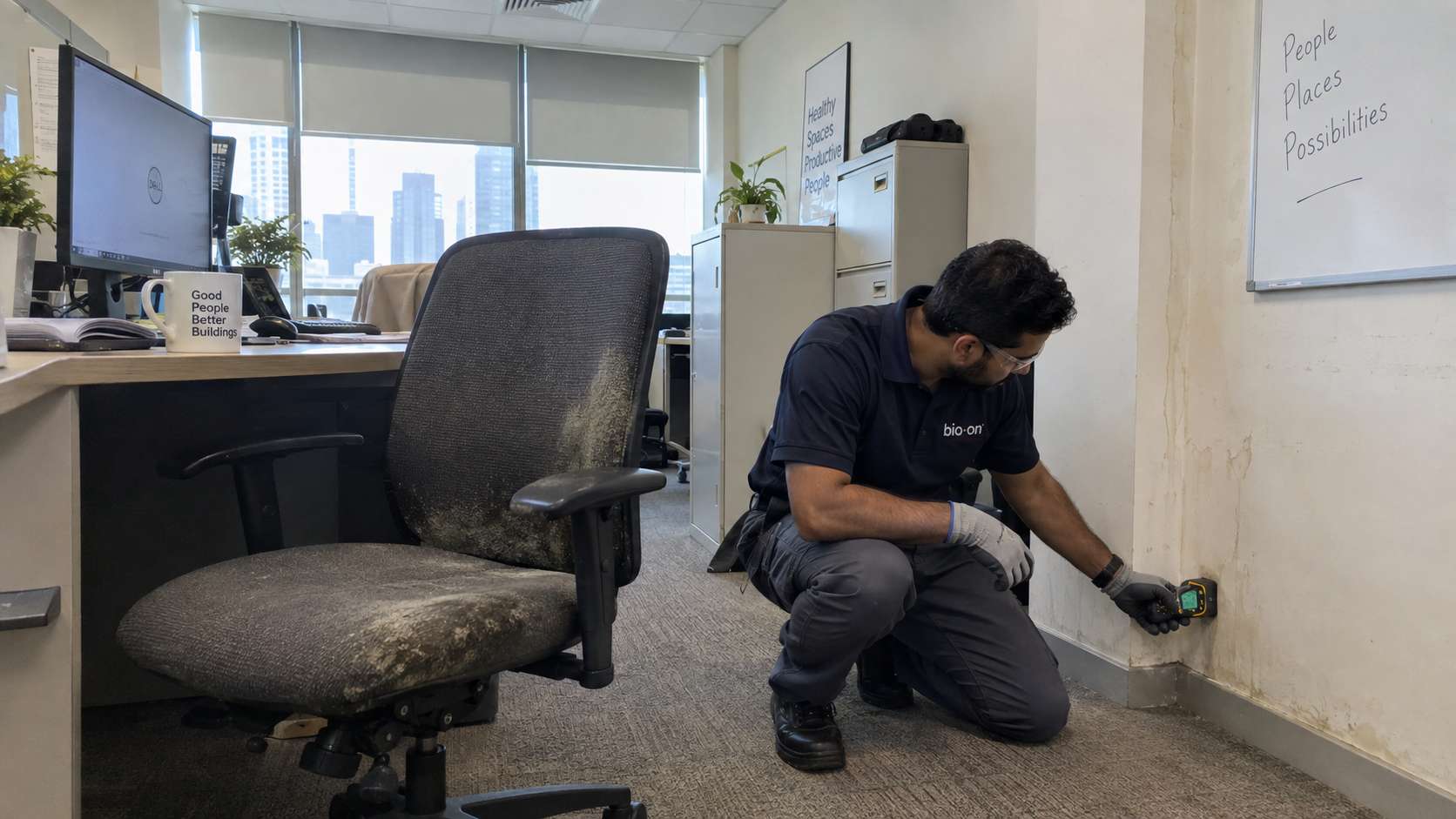
Replacement is usually the smarter choice when:
- The chair smells musty again after cleaning.
- The cushion was wet for more than a short period.
- Mold appears on several parts of the fabric.
- The underside of the cushion has dark patches.
- The foam feels damp, soft, or degraded.
- The chair was stored in a moldy room.
- The user has asthma, allergies, or immune-related health concerns.
- Multiple chairs in the same office show similar growth.
This is especially true for low-cost office chairs. Deep cleaning and drying may cost more than replacement. But for expensive ergonomic chairs, executive chairs, or custom seating, a professional may be able to assess whether restoration is worth trying.
The most important thing is not to keep using the chair while deciding. Sitting on it every day can keep disturbing the contaminated material. It can also transfer musty odor and particles to clothes, bags, and nearby furniture.
How to Stop Mold from Coming Back on Office Chairs
Stopping mold from coming back is mostly about moisture control. Cleaning only removes the visible problem. Moisture control removes the reason it grew.
Start by checking the office environment. Look for damp carpet, ceiling stains, AC leaks, condensation around vents, wet walls, poor ventilation, and rooms that feel humid even with the AC on. In workplaces, NIOSH says correcting dampness sources is more useful for preventing health problems than relying only on air sampling.
Then improve the way the chair is used and maintained. Do not push chairs tightly against damp walls. Do not store chairs in closed, humid rooms. After deep cleaning, make sure upholstery dries fully before anyone sits on it again. If your office uses steam cleaning, ask how they dry the chairs afterward. Steam without proper drying can make the problem worse.
In Dubai offices, also pay attention to AC behavior. If the office is too cold, surfaces can sweat when humid air enters. If the AC is oversized, poorly maintained, or not running long enough to remove moisture, humidity can stay high. A chair near a cold vent, glass partition, damp carpet, or poorly ventilated corner may become a mold hotspot.
Good prevention looks like this:
- Keep indoor humidity under control.
- Fix leaks quickly.
- Clean spills immediately.
- Avoid leaving wet jackets, towels, or cleaning cloths on chairs.
- Improve airflow around workstations.
- Maintain AC filters, coils, drains, and ducts.
- Dry cleaned upholstery completely.
- Inspect stored chairs before bringing them back into use.
If mold returns after cleaning, do not keep repeating the same surface treatment. Recurring mold means the source has not been solved.
How to Hire Professional Mold Remediation Service in Dubai
Hiring a professional mold remediation service in Dubai makes sense when the mold is not limited to one easy-to-clean surface, when people feel sick in the office, or when the smell keeps returning after cleaning.
A proper mold remediation company should do more than spray chemicals. They should inspect the moisture source, check affected materials, control cross-contamination, remove or clean contaminated items safely, dry the area, and give prevention advice. For offices, the company should understand furniture, carpets, HVAC-related moisture, partitions, ceilings, storage areas, and indoor air quality.
When comparing companies in Dubai, ask these questions:
- Are you licensed or approved for relevant cleaning, disinfection, or remediation work in Dubai?
- Do you inspect the moisture source before quoting?
- Do you handle upholstered furniture and office environments?
- Will you recommend replacement if the chair is too contaminated?
- Do you use containment or safe work practices if mold may spread?
- Do your technicians use PPE?
- Do you provide before-and-after photos?
- Do you explain the chemicals or treatment products used?
- Can you check nearby carpets, walls, AC vents, and hidden damp areas?
- Do you give a written scope of work?
Dubai Municipality maintains health and safety approved lists for professional use of biocides and cleaning/disinfection activities, so it is reasonable to ask a provider about relevant local approval, licensing, and permitted service scope.
Be careful with companies that promise instant permanent removal without inspecting the moisture source. Also be careful if they only offer fogging. Fogging may reduce surface contamination in some cases, but it does not remove moldy foam, fix damp carpet, repair an AC leak, or dry wet materials. Mold remediation is not just “spray and smell nice.”
For cost, prices vary depending on the office size, number of chairs, severity, inspection needs, AC involvement, access, and whether furniture must be restored or discarded. A single chair cleaning may be relatively affordable, but a true office mold investigation and remediation can cost much more because it may include moisture mapping, containment, HEPA vacuuming, deep cleaning, drying, and treatment of surrounding areas. Avoid accepting a quote that does not explain what is included.
The Bottom Line
Mold on office chair is a warning sign, not just an ugly stain. It can irritate some people, especially those with allergies, asthma, or sensitive airways, and it may point to a wider office moisture problem.
Clean small surface mold only when the material is suitable and the chair can be dried completely. For mold inside fabric, foam, seams, or recurring musty odor, replacement or professional restoration is usually safer. In Dubai, choose a mold remediation service that checks the source of moisture, understands office furniture and AC-related humidity, and can explain its cleaning method clearly.
The safest mindset is simple: don’t just clean the chair. Find out why it became moldy in the first place. That is what prevents the same problem from coming back.