


Why Mold Odor Appears After Vacation
Mold odor appears after vacation when moisture, warmth, and poor airflow create the right conditions for microbial growth. Your home may have looked clean before you left, but a closed house can change quickly if humidity rises or a small leak goes unnoticed.
That musty smell is often strongest when you first open the door. It may come from one room, a wardrobe, an AC vent, a bathroom, a kitchen cabinet, or a storage area. Sometimes the source is obvious. Other times, the smell spreads through the home because air has been stagnant for days.
Common reasons include:
- AC was turned off completely.
- Indoor humidity rose while the home was closed.
- AC drain line leaked or clogged.
- A pipe, sink trap, or toilet supply line leaked slowly.
- Bathroom floors, towels, or mats were left damp.
- Windows or balcony doors were not sealed properly.
- Wet cleaning cloths, mops, or laundry were left inside.
- Wardrobes and cabinets stayed closed with no airflow.
- Furniture was pushed tightly against walls.
- There was an existing small mold issue before you left.
The CDC recommends keeping home humidity no higher than 50% all day, and says an air conditioner or dehumidifier can help keep humidity low. So if the house sat closed without cooling or dehumidification, mold odor becomes much more likely.
The smell itself is not the full diagnosis. It is a clue. Your job is to find what stayed damp.
Mold Growth Comes After You Made These Mistakes
Certain tiny mistakes can grow bigger, ultimately leading to mold growth. These mistakes could trigger serious mold issues if you leave your house for some quite times, weeks, or even months. But what mistakes could possibly trigger it? Here’s the answer.
Mistake 1: You Turned the AC Off Completely
Turning the AC off completely is one of the most common vacation mistakes in humid climates. It may save electricity for a short time, but it can also allow indoor humidity to rise. When the air becomes humid and stagnant, walls, fabrics, wardrobes, carpets, mattresses, and wood surfaces can start holding moisture.
You do not need to keep the AC at your normal comfort temperature while you are away. But you should usually keep it running enough to control humidity, especially if you are leaving the home for several days or weeks.
This is important because mold prevention is not only about temperature. It is about moisture. A home can be warm and dry with low mold risk, or cool and damp with high mold risk. Humidity is the real enemy.
Before your next vacation:
- Set the AC higher than usual, but do not turn it off completely.
- Use “Auto” fan mode instead of constant fan mode.
- Replace or clean dirty AC filters.
- Check for water stains near AC indoor units.
- Make sure the condensate drain is not blocked.
- Use a humidity monitor if possible.
- Keep indoor humidity under control, ideally around 30–50%.
Also, check whether your AC has a dry mode or humidity-control setting. Some systems are better than others at removing moisture. If your home still feels damp even when the AC is running, a dehumidifier may help.
Mistake 2: You Left Moisture Sources Inside the Home
Another reason mold odor appears after vacation is that moisture was already inside the home before you left. Even small things can create a problem when the house is closed for days.
A damp towel, wet bath mat, half-dry mop, laundry basket, wet shoes, damp rug, or recently cleaned carpet can smell terrible after a week in a closed room. The same applies to bathrooms, kitchens, and laundry areas that were not dried before leaving.
Before traveling, many people clean the house quickly, then close everything while some surfaces are still damp. That creates a sealed environment where moisture cannot escape.
Before your next trip, do this:
- Dry bathroom floors and shower areas.
- Remove wet towels and bath mats.
- Do not leave laundry in the washer.
- Empty and dry mop buckets.
- Throw away food waste.
- Clean and dry kitchen counters.
- Open cabinet doors slightly where safe.
- Move furniture slightly away from walls.
- Do not leave damp shoes, rugs, or bags in closed wardrobes.
This is especially important in apartments and villas with closed wardrobes, built-in cabinetry, and limited air movement. Mold odor often starts in these hidden areas before it spreads into the room.
Mistake 3: A Small Leak Went Unnoticed While You Were Away
A mold odor after vacation can also mean a leak happened while you were gone. It may not be a dramatic flood.
A slow drip under the sink, a leaking water heater valve, a toilet supply line leak, a dishwasher hose leak, or AC drain overflow can be enough.
Small leaks are dangerous because they can stay hidden. Water may soak into MDF cabinets, drywall, skirting boards, flooring layers, carpet padding, or ceiling panels. By the time you smell something, the material may have been damp for days.
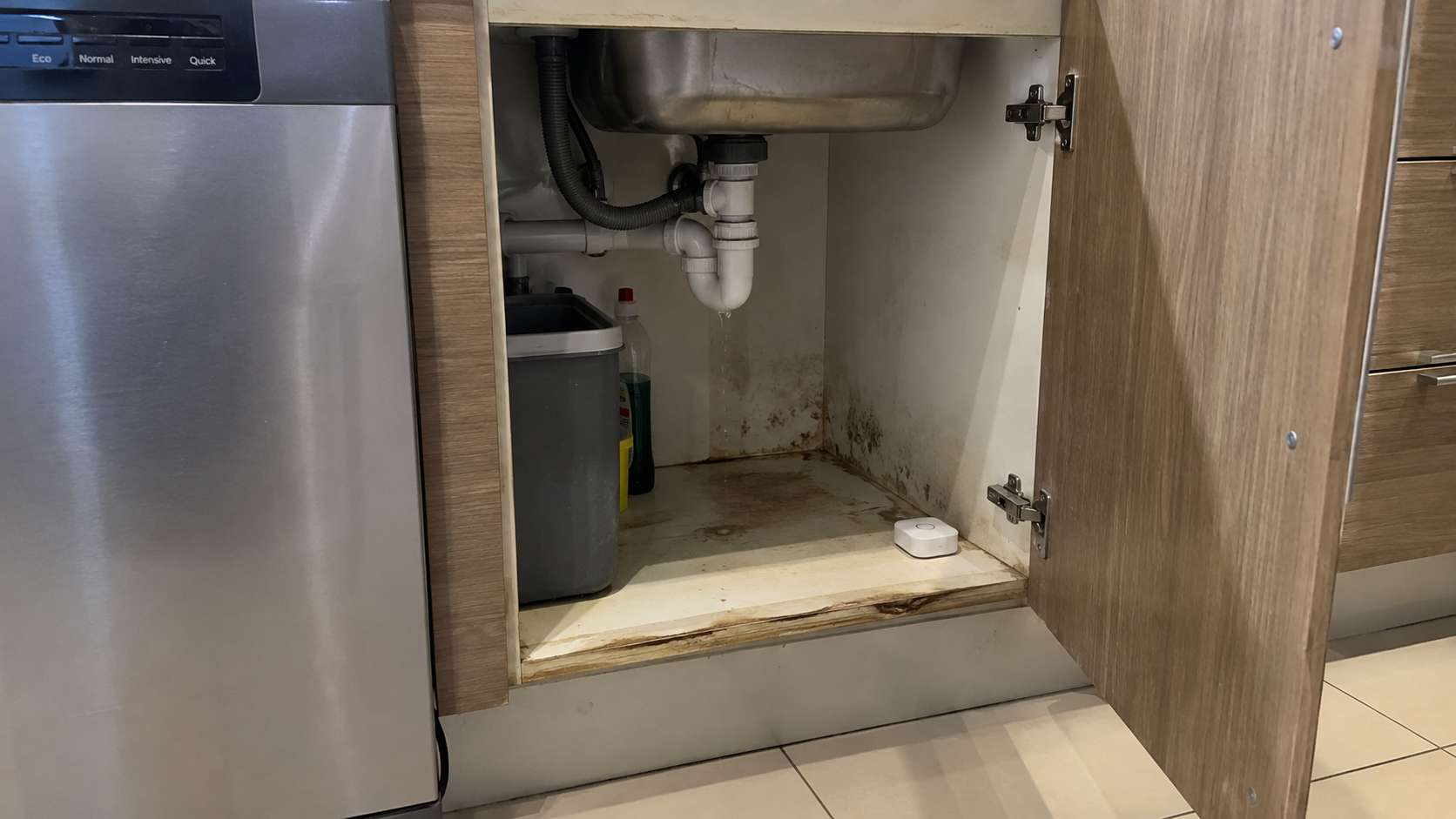
Check these areas first:
- Under kitchen sinks
- Under bathroom vanity cabinets
- Around toilet bases
- Behind washing machines
- Near dishwashers
- Around water heaters
- Under AC indoor units
- Near AC drain lines
- Around balcony doors
- Behind furniture on exterior walls
- Under rugs or carpets
- Inside wardrobes sharing a bathroom wall
Touch surfaces carefully. Look for swelling, bubbling paint, soft wood, stains, damp corners, peeling edges, or cold wall patches. A musty smell plus swollen material usually means moisture has been trapped.
The EPA’s simple rule is clear: moisture control is the key to mold control. It recommends drying wet or damp spots within 48 hours and maintaining low indoor humidity. If the leak happened several days before you came back, the area may already need deeper drying or material removal.
For future vacations, place water leak detectors under sinks, near washing machines, beside water heaters, and near AC drain risk areas.
What to Do Immediately After Finding Mold Odor
If you come home and smell mold, act the same day. The goal is to reduce airborne mustiness, find the source, and stop the conditions that allow mold to keep growing.
Start with this quick response:
- Open the home carefully.
If outdoor humidity is not extreme, open windows and doors for fresh air. If outdoor air is very humid, use AC and dehumidification instead of leaving everything open for hours. - Turn on the AC or dehumidifier.
Lower indoor humidity. Use a hygrometer if you have one. The CDC says an air conditioner or dehumidifier can help keep humidity low. - Find the strongest smell.
Walk room by room. Check wardrobes, bathrooms, kitchen cabinets, AC vents, laundry areas, storage rooms, and walls behind large furniture.
- Remove damp items.
Take out wet towels, rugs, mats, cardboard boxes, paper items, fabric storage, and musty clothes. Wash, dry, discard, or isolate them. - Dry wet areas fast.
Use fans, dehumidifiers, and AC. Keep cabinets open. Pull furniture away from walls. Lift rugs. Expose the wet area to moving air. - Clean hard surfaces.
Wipe tiles, plastic, metal, sealed surfaces, counters, and cabinet interiors with a suitable cleaner. Dry everything afterward. - Do not hide the smell.
Avoid perfume sprays, incense, candles, and air fresheners. They can mask the warning sign without fixing the problem.

If you see visible mold, avoid aggressive dry brushing or sanding. That can spread particles. The CDC says the best thing is to safely remove mold and prevent future growth. It also advises drying the home and everything in it within 24–48 hours if possible.
How to Stop Mold Odor From Spreading
To stop mold odor from spreading, you need to stop moisture and isolate the source. A musty smell can move through rooms, AC airflow, open doors, and soft materials.
First, close off the room where the smell is strongest if you suspect visible mold or heavy contamination. This helps prevent disturbed particles or odors from moving around the home while you inspect.
Then remove or isolate soft materials that absorbed odor. These include curtains, rugs, clothes, cushions, cardboard boxes, shoes, leather bags, books, and fabric storage bins. Soft and porous items can hold musty smells even after the room air improves.
Next, focus on the moisture source. A dehumidifier can reduce air moisture, but it cannot fix a leak. A cleaner can wipe surfaces, but it cannot dry soaked drywall. A candle can change the smell, but it cannot stop mold.
Use this order:
- Stop leaks first.
- Lower humidity.
- Dry wet materials.
- Remove items that cannot dry.
- Clean hard surfaces.
- HEPA vacuum after surfaces are dry, if needed.
- Keep monitoring for odor return.
Do not paint over moldy or musty areas. The CDC warns that painting or caulking over mold will not prevent it from growing. If the material is damp underneath, paint only traps the problem and may make the repair worse later.
If the smell returns after cleaning, the source is still there.
When Mold Odor Means You Need Professional Help
You may be able to handle a mild musty smell if it comes from damp laundry, wet towels, a small rug, or a closed wardrobe with no visible mold. But you should consider professional help when the odor is strong, persistent, hidden, or linked to water damage.
Call a professional if:
- The smell remains after ventilation and drying.
- You see visible mold larger than a small patch.
- The odor is strongest near AC vents.
- Walls, ceilings, cabinets, or flooring are swollen.
- There was a leak while you were away.
- The home was closed for weeks with high humidity.
- Mold keeps returning after cleaning.
- Someone has asthma, allergies, or breathing problems.
- You suspect mold behind walls, under flooring, or inside ductwork.
- The source is unclear.
The EPA says if there has been a lot of water damage or mold growth covers more than 10 square feet, its mold remediation guidance should be consulted. In practical terms, bigger or hidden mold problems should not be treated like a simple cleaning job.
A professional inspection can help identify moisture behind walls, AC-related mold, leak sources, and affected materials. This matters because odor often comes from places you cannot see.
How to Prevent Mold Odor Before Your Next Vacation
The best way to prevent mold odor is to prepare the home before you leave. Do not wait until you come back to fight mustiness.
Use this pre-vacation checklist:
- Keep the AC on at a higher setting, not completely off.
- Keep indoor humidity controlled.
- Use a dehumidifier in damp areas if needed.
- Clean or replace AC filters.
- Check AC drain lines for leaks or blockages.
- Dry bathrooms, showers, and floors.
- Remove wet towels, laundry, and rugs.
- Empty trash bins.
- Clean food residue from kitchen surfaces.
- Leave interior doors open for airflow.
- Leave wardrobe doors slightly open where practical.
- Move furniture slightly away from walls.
- Turn off water supply to appliances if appropriate.
- Install leak detectors under sinks and near water heaters.
- Ask someone to check the home during long trips.
If you already had mold before vacation, do not rely on AC alone. Fix the moisture source and clean or remediate the affected area first. Mold odor after vacation is often worse when an existing small problem was left untreated.
Also, buy a simple humidity monitor. It is one of the cheapest ways to know whether your home is staying in a safer range. Without it, you are guessing.
The Bottom Line
Mold odor after vacation usually means your home stayed too humid, too closed, or too damp while you were away. The most common mistakes are turning off the AC completely, leaving wet items inside, ignoring small leaks, and closing cabinets or wardrobes with poor airflow.
Act quickly when you return. Ventilate wisely, lower humidity, inspect hidden spaces, dry damp materials, clean hard surfaces, and remove items that cannot be saved. If the smell remains, gets stronger, or comes from walls, cabinets, flooring, or AC vents, get professional help before mold spreads further.
For your next vacation, remember this simple rule: do not just lock the door and leave. Control humidity, prevent leaks, keep air moving, and remove moisture sources before you go. That is how you come back to a fresh home instead of a musty one.