


How Serious Is Mold Near AC Vent?
Mold beside an AC vent can range from minor surface growth to evidence of a hidden moisture problem. Its seriousness depends on how much growth is present, why it developed, whether it returns after cleaning, and whether contamination extends into the duct, insulation, or ceiling.
The visible patch is often only part of the problem. Mold needs moisture to grow, so its presence means the area has remained damp long enough to support it.
Common reasons include:
- Condensation forming on a cold vent grille
- High humidity inside the bedroom
- Weak airflow caused by a dirty filter
- Poor insulation around the duct or vent boot
- A leaking drain line or AC component
- Water entering through the ceiling
- Hidden moisture inside gypsum board or insulation
- A contaminated air-handling unit or duct section
A small patch on a washable metal grille is not as concerning as mold spreading across painted walls or ceiling materials. In fact, porous surfaces can absorb moisture and support growth beneath the visible layer.
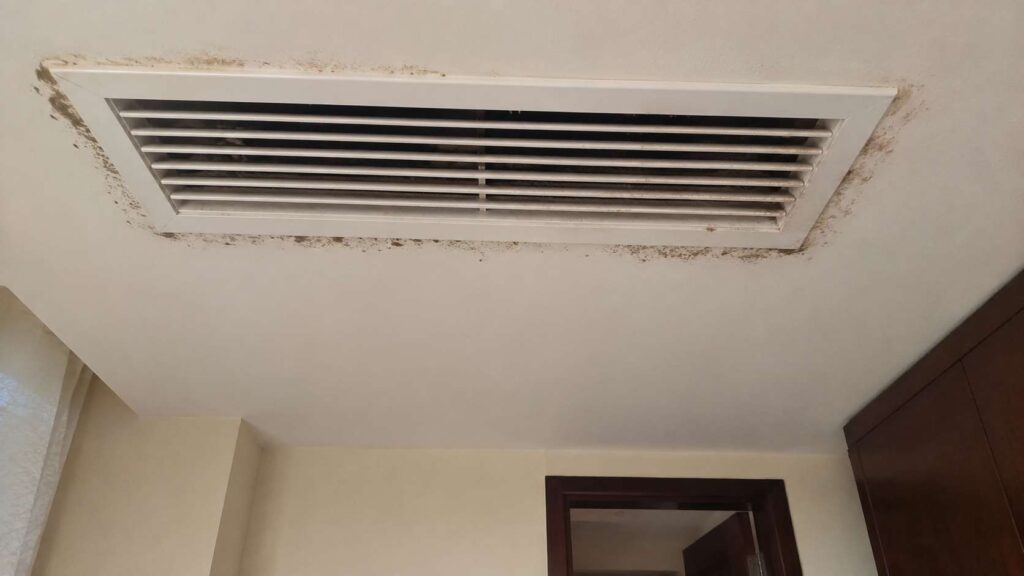
Location also matters. In a bedroom, you often spend six to eight hours close to the affected area while sleeping. If contaminated air is being circulated, closing the bedroom door will not solve the underlying issue.
Do not judge the problem only by color. Black, green, white, grey, or brown growth can all require attention. The amount of moisture, affected materials, and possible spread are more useful indicators than appearance alone.
What Health Problems Can It Cause?
Getting exposed to damp or moldy indoor environments may irritate the airways, eyes, skin, nose, and throat. People experience few effects, while those with asthma, allergies, chronic respiratory conditions, or reduced immunity may react more strongly.
The symptoms you may experience include:
- Sneezing or a blocked nose
- Runny nose or sinus irritation
- Red, burning, or watery eyes
- Sore or irritated throat
- Dry or persistent coughing
- Wheezing
- Chest tightness
- Shortness of breath
- Itchy skin or a rash
These symptoms are not proof that mold is the cause. In my experience, dust, pollen, cleaning chemicals, pets, and other indoor contaminants can produce similar reactions. But again, a clear pattern may provide a useful warning.
Watch videoAlso, please pay attention to when symptoms:
- Become worse after sleeping in the bedroom
- Improve after spending time away from home
- Affect several people using the same room
As a note, people with asthma may experience stronger coughing, wheezing, or difficulty breathing around mold. Those with chronic lung disease or weakened immune systems should avoid disturbing visible growth and should seek medical advice about possible exposure.
Urgent medical care may be needed for severe breathing difficulty, intense chest tightness, faintness, bluish lips, or an asthma attack that does not respond to the person’s usual medication.
The goal is not to diagnose yourself based on a ceiling stain. The sensible approach is to reduce exposure, address the moisture source, and speak with a healthcare professional if symptoms persist or are significant.
How to See If the Mold Problem Is Getting Worse
The problem is getting more serious when growth spreads in more spots, quickly returns, produces a persistent odor, or appears alongside moisture damage. Changes in the ceiling, airflow, or how you feel inside the bedroom can also suggest that surface cleaning is no longer enough.
So make sure to watch for these alarming signs:
The patch keeps returning
Cleaning may remove visible marks without correcting condensation, leakage, or high humidity. If the same spots return within days or weeks, moisture is still reaching the surface.
Repeated growth may also indicate that mold remains in paint, sealant, insulation, or other materials behind the vent.
There is a musty smell during operation
A musty odor that becomes stronger when the AC starts may suggest contamination near the vent, inside the duct, around the cooling coil, or within another damp component.
Odor alone cannot identify the exact location, but it is a good reason to inspect beyond the visible grille.

The affected area is spreading
Look beyond the vent itself. Check for:
- New spots on the ceiling
- Discoloration around several vents
- Peeling or bubbling paint
- Crumbling gypsum board
- Damp rings or yellow-brown stains
- Warped ceiling panels
- Wet insulation
These signs point to a broader moisture issue rather than ordinary surface dust.
So, How Bad Is It?
Mold near AC vent in your bedroom is serious enough to investigate, but it does not automatically mean the entire cooling system is contaminated. A tiny patch on a removable grille may result from local condensation and may be manageable with careful cleaning and moisture control.
The situation becomes more concerning when growth spreads, returns, smells musty during AC use, appears with ceiling damage, or coincides with respiratory symptoms. In those cases, stop treating it as a cosmetic stain. The best thing you can do is to identify the moisture source, assess the nearby AC components and building materials, and remove contamination without spreading it through the room.