


Mold Jobs in Remediation and Indoor Health Careers
Mold jobs are specialized roles focused on finding, controlling, removing, preventing, or documenting mold and moisture problems inside buildings. These jobs often exist in restoration companies, property maintenance teams, indoor air quality firms, environmental consulting companies, insurance restoration businesses, and public health settings.
The most basic mold job is the remediation technician. This is the person who sets up containment, removes contaminated material, cleans surfaces, uses HEPA-filtered equipment, and helps dry the affected area. But that is only one part of the field.
A broader mold career path may include:
- Mold remediation technician
- Lead mold technician
- Water damage restoration technician
- Mold inspector or assessor
- Indoor air quality technician
- Environmental health technician
- Environmental remediation technician
- Project manager
- Health and safety specialist
- Industrial hygiene or OEHS consultant
BLS groups some related work under hazardous materials removal, environmental science and protection, and occupational health and safety. For example, BLS describes hazardous materials removal workers as people who identify and dispose of harmful substances, including mold, asbestos, lead, and radioactive waste.
That tells you something important: mold work is not just “cleaning.” In professional settings, it involves moisture investigation, personal protective equipment, containment, controlled removal, documentation, and safety judgment.
Mold Remediation Technician
A mold remediation technician is the entry point for many mold jobs. This is the hands-on role that deals directly with affected materials, equipment, and site preparation.
A day in this role often starts with loading equipment: containment plastic, tape, air scrubbers, HEPA vacuums, PPE, cleaning products, demolition tools, and drying equipment. At the job site, the technician may help seal off the work area, protect unaffected rooms, remove damaged drywall or insulation, clean framing, bag debris, and document progress with photos.
Common responsibilities include:
- Setting up containment barriers
- Wearing respirators, gloves, suits, and eye protection
- Removing mold-damaged porous materials
- Cleaning hard surfaces
- Operating HEPA air scrubbers and vacuums
- Helping with drying and moisture control
- Following supervisor instructions and safety procedures
- Keeping the work area clean and controlled
The work can be hot, dusty, tight, and physically demanding. Crawlspaces, attics, bathrooms, kitchens, basements, and water-damaged apartments are common environments.
Salary varies heavily by region. ZipRecruiter listed the average annual pay for a mold remediation technician in the U.S. at about $46,603 as of late August 2026, while Salary.com listed environmental remediation technician average pay at about $39,858 per year as of September 2026. These are not perfect matches for every mold job, but they give a practical market range.
Useful certifications include IICRC Applied Microbial Remediation Technician, often called AMRT. IICRC says AMRT covers mold and sewage remediation techniques for people in restoration, property management, IEQ investigations, and related professions.
Skills needed:
- Physical stamina
- Attention to detail
- Basic construction knowledge
- Ability to follow safety rules
- Comfort wearing PPE
- Moisture awareness
- Communication with homeowners or tenants
- Careful cleaning habits
Lead Mold Technician or Crew Chief
A lead mold technician, sometimes called a crew chief, is the person who runs the field crew. This role still does hands-on work, but it adds planning, quality control, safety checks, and communication.
A normal day may start by reviewing the work order, confirming the scope, assigning tasks, checking containment, and making sure equipment is placed correctly. The lead technician may speak with the customer, update the project manager, check moisture readings, supervise demolition, and make sure workers do not spread contamination outside the contained area.
Responsibilities often include:
- Leading the remediation crew
- Reading the job scope or protocol
- Checking containment and negative pressure
- Training junior technicians
- Managing equipment setup
- Tracking materials removed
- Communicating job progress
- Documenting photos, readings, and completion details
- Watching for safety issues
This role needs better judgment than an entry-level technician role. A lead technician has to know when something looks wrong. For example, if mold is found behind a cabinet but the protocol only mentions the visible wall, the lead technician should stop and report it instead of guessing.

Salary usually sits above regular technician pay. A practical U.S. range may be around $45,000 to $65,000 per year, depending on market, overtime, company size, emergency callouts, and certification. In busier restoration companies, overtime and after-hours water damage work can change total earnings.
Useful certifications include IICRC AMRT, Water Restoration Technician, OSHA safety training, respirator fit-test training, and company-specific equipment training. IICRC also offers Mold Remediation Specialist certification for professionals in the mold remediation industry, with listed experience requirements for that higher-level certification path.
Skills needed:
- Leadership
- Job-site organization
- Mold remediation standards awareness
- Moisture mapping
- Basic construction sequencing
- Customer communication
- Safety enforcement
- Problem-solving under pressure
Mold Inspector or Mold Assessor
A mold inspector or assessor focuses on investigation, not removal. This role is often separate from remediation because the inspector may need to provide an independent assessment.
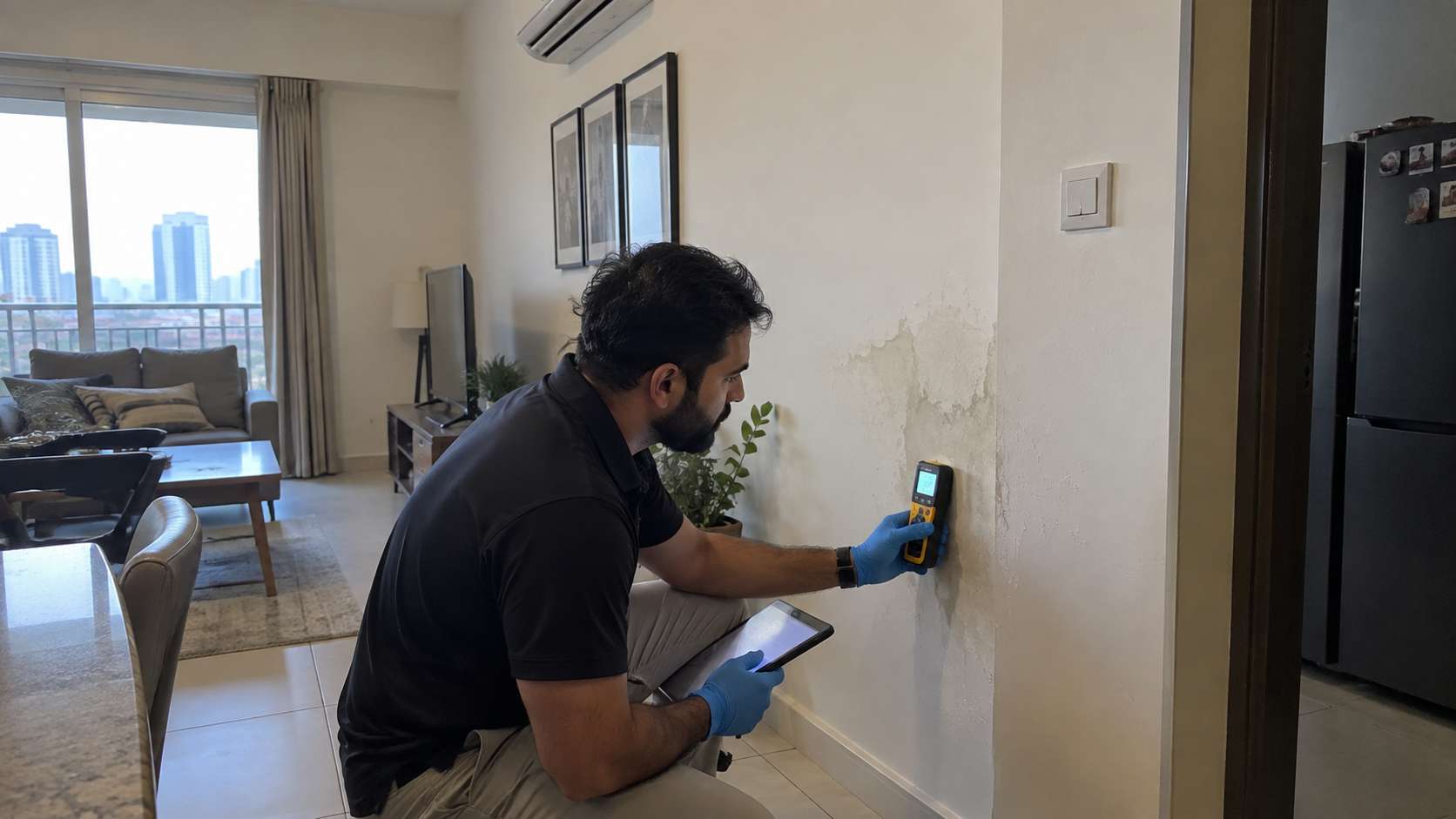
A typical day may include visiting homes, offices, schools, rental properties, or commercial buildings. The inspector talks with the occupant, looks for water damage, checks humidity, uses moisture meters, inspects HVAC-related areas when appropriate, takes photos, and may collect air or surface samples. After the visit, they prepare a report explaining findings and recommended next steps.
Responsibilities often include:
- Investigating visible mold and moisture sources
- Looking for leak patterns or condensation problems
- Collecting air, tape-lift, swab, or surface samples when needed
- Coordinating with a laboratory
- Writing clear inspection reports
- Explaining findings without exaggeration
- Recommending remediation scope when appropriate
- Avoiding conflicts of interest when required by local rules
The “day in the life” is less demolition and more investigation. You may spend the morning in a water-damaged condo, the afternoon in an office with odor complaints, and the evening writing reports.
Salary can vary widely. Some job postings for licensed mold inspector or indoor air quality professional roles show ranges such as $60,000 to $90,000 with base pay, commission, and bonuses, though this depends on employer, licensing, location, and sales responsibility.
Certifications and licenses depend strongly on location. Some U.S. states regulate mold assessment and remediation separately. Common credentials in the wider field may include ACAC mold-related certifications, IICRC training, indoor environmental consulting credentials, and state-specific licenses where required.
Skills needed:
- Moisture investigation
- Report writing
- Sampling discipline
- Building science basics
- Clear client communication
- Ethical judgment
- Attention to detail
- Comfort explaining uncertainty
A good mold inspector does not simply say, “You have mold.” They explain why moisture is present, where the likely source is, what materials may be affected, and what should happen next.
Indoor Air Quality Technician or Consultant
An indoor air quality technician, often shortened to IAQ technician, works on broader indoor environmental concerns. Mold may be one part of the job, but the role can also involve humidity, ventilation, odors, particulate matter, HVAC cleanliness, water damage history, and occupant complaints.
A day in this role may include setting up air sampling equipment, checking temperature and relative humidity, inspecting ventilation patterns, checking for moisture intrusion, reviewing occupant concerns, and preparing data for a consultant or project manager.
Responsibilities may include:
- Indoor air sampling
- Moisture and humidity measurements
- HVAC-related visual checks
- Odor complaint investigation
- Data logging
- Client interviews
- Lab coordination
- Supporting written reports
- Recommending further investigation or remediation
This role is more technical than basic cleanup. It may involve instruments, sample handling, field notes, and environmental interpretation. It is a good path for someone who likes building diagnostics but does not want to spend every day doing demolition.
Salary can overlap with environmental technician pay. BLS reports that environmental science and protection technicians monitor the environment and investigate pollution and contamination issues, including those affecting public health. The 2025 median pay listed for that occupation was about $55,090 per year.
Certifications can include IICRC AMRT for mold-related work, indoor environmental credentials, OSHA safety training, and eventually higher-level OEHS or industrial hygiene pathways. AIHA describes industrial hygiene and OEHS as broad fields with many career opportunities and recognizes certification as an important professional marker in that space.
Skills needed:
- Technical curiosity
- Sampling accuracy
- Basic science literacy
- HVAC awareness
- Moisture diagnostics
- Data organization
- Report support
- Professional communication
Environmental Remediation Technician
Environmental remediation technicians work on cleanup projects that may include mold, but can also include soil, water, chemical, lead, asbestos, storm damage, sewage, and other contamination issues. Mold is one possible specialization inside the wider remediation world.
A day in this job can look very different depending on the employer. One week may involve building cleanup after water intrusion. Another week may involve hazardous material handling, contaminated site work, or support for environmental engineers and specialists.
Responsibilities may include:
- Preparing cleanup sites
- Wearing PPE and following safety plans
- Removing contaminated materials
- Operating remediation equipment
- Following disposal procedures
- Supporting testing or monitoring
- Cleaning tools and work zones
- Recording site activity
The salary range depends on hazards, location, licensing, union status, and travel. Salary.com’s 2026 average for environmental remediation technician was about $39,858 per year, but specialized hazardous or emergency-response work can pay more.
Training may include OSHA hazardous waste training, respirator training, confined space awareness, fall protection, DOT hazardous materials training, and mold-specific certifications when assigned to microbial remediation work. BLS notes that some hazmat removal workers need federally or state-mandated training, licenses, or permits depending on the type of remediation.
Skills needed:
- Safety discipline
- Ability to work in uncomfortable environments
- Equipment handling
- Documentation
- Teamwork
- Physical endurance
- Adaptability
- Respect for regulated procedures
This path can be a strong option if you want mold work but also want broader environmental cleanup experience.
Restoration Project Manager
A restoration project manager handles the business and coordination side of mold jobs. They may not do the cleaning themselves every day, but they are responsible for making sure the project is scoped, scheduled, documented, staffed, and completed properly.
A typical day may involve visiting job sites, speaking with property owners, coordinating with insurance adjusters, reviewing estimates, ordering materials, checking crew progress, managing subcontractors, and making sure the job meets the remediation protocol.
Responsibilities often include:
- Estimating project cost
- Reviewing inspection reports or remediation protocols
- Scheduling crews
- Coordinating equipment and materials
- Communicating with customers
- Managing documentation for insurance
- Checking project quality
- Handling change orders
- Closing out jobs
This role needs both technical understanding and people skills. Mold projects can be stressful for property owners. A project manager has to explain the process without creating panic. They also need to protect the company from poor documentation, unclear scope, and safety mistakes.
Salary can range widely. In the U.S., restoration project managers may earn roughly $55,000 to $90,000+ depending on region, company size, commission structure, emergency work, and experience. Mold-specific experience, water mitigation knowledge, estimating software skills, and insurance restoration knowledge can raise earning potential.
Helpful certifications include IICRC AMRT, Water Restoration Technician, Applied Structural Drying, OSHA training, Xactimate or estimating software training, and supervisor-level mold credentials.
Skills needed:
- Customer communication
- Estimating
- Job scheduling
- Documentation
- Crew leadership
- Mold and water damage knowledge
- Insurance process awareness
- Conflict management
This is often the next step for experienced technicians who want less physical labor and more responsibility.
Occupational Health, Safety, and Industrial Hygiene Roles
Some mold jobs move into occupational and environmental health and safety. These roles are more advanced and may require a science, safety, engineering, or environmental health background.
An industrial hygiene or OEHS professional may evaluate mold concerns in workplaces, schools, healthcare facilities, offices, or industrial buildings. They may review exposure risks, inspect building conditions, design sampling strategies, recommend controls, and write technical reports.
A day in this role may include meetings with facility managers, field inspections, exposure assessment planning, reviewing lab data, writing protocols, and advising on worker safety.
Responsibilities may include:
- Investigating indoor environmental complaints
- Designing assessment plans
- Reviewing remediation protocols
- Interpreting sample results
- Recommending engineering or administrative controls
- Advising on PPE and worker protection
- Supporting compliance and risk management
- Communicating findings to non-technical stakeholders
BLS places occupational health and safety specialists and technicians in a related career family focused on preventing workplace illness and injury. This career direction can go beyond mold into chemical exposure, noise, ergonomics, ventilation, and safety systems.
Certifications may include higher-level indoor environmental or industrial hygiene credentials, depending on education and experience. AIHA also points people toward OEHS career development and certification as a professional benchmark.
Skills needed:
- Scientific thinking
- Technical report writing
- Exposure assessment
- Building systems knowledge
- Risk communication
- Professional ethics
- Data interpretation
- Regulatory awareness
This is one of the more technical long-term career tracks connected to mold and indoor environmental health.
Certifications That Help in Mold Jobs
Certifications are not always legally required, but they can make a big difference. Requirements vary by country, state, province, employer, project type, and insurance expectations. Always check local rules before assuming one certification is enough.
Common certification and training paths include:
| Certification or Training | Best For |
|---|---|
| IICRC AMRT | Mold remediation technicians and restoration workers |
| IICRC WRT | Water damage and drying work |
| IICRC MRS | More advanced mold remediation specialists |
| OSHA safety training | Job-site safety and hazard awareness |
| Respirator fit testing | Workers using respirators |
| ACAC mold-related certifications | Inspectors, remediators, consultants |
| State mold license | Required in some regulated locations |
| IAQ/OEHS credentials | Indoor air quality and environmental health roles |
IICRC states that AMRT covers mold and sewage remediation techniques, while its Mold Remediation Specialist certification is developed for professionals in the mold remediation industry.
The best certification depends on the job you want. For hands-on removal, start with remediation and water damage training. For inspection, look at assessment, sampling, and report-writing credentials. For consulting, build toward environmental health, industrial hygiene, or OEHS qualifications.
Skills That Make You Better at Mold Jobs
The best mold workers are not just people who can scrub and remove drywall. They understand moisture, containment, safety, and communication.
Important skills include:
- Moisture thinking: Mold is usually a moisture problem first.
- Containment discipline: Poor containment can spread contamination.
- Cleaning detail: Rushed cleaning can leave residue behind.
- PPE habits: Respirators and protective gear only help when used correctly.
- Documentation: Photos, readings, and notes protect everyone.
- Building knowledge: Walls, HVAC, insulation, plumbing, and airflow all matter.
- Customer communication: People dealing with mold are often worried.
- Judgment: Not every stain needs panic, but not every hidden leak is harmless.
Soft skills matter more than beginners expect. A homeowner may be scared. A tenant may be frustrated. A property manager may want clear documentation. A good mold professional explains the situation calmly and avoids exaggeration.
The Bottom Line
Mold jobs can be a real career path, not just temporary cleanup work. You can start as a mold remediation technician, move into lead technician or project manager roles, specialize in mold inspection, or grow into indoor air quality and environmental health careers.
The hands-on side of the field needs physical stamina, safety habits, and cleaning discipline. The technical side needs sampling knowledge, moisture investigation, report writing, and environmental health awareness. Certifications like IICRC AMRT, mold specialist credentials, OSHA safety training, and local licenses can help you qualify for better roles, especially as you move beyond entry-level work.
The best path depends on what kind of work you want. If you like fieldwork and visible results, remediation may fit. If you like investigation and reports, mold inspection or IAQ work may be better. If you want a broader long-term career, environmental health, safety, or industrial hygiene can turn mold experience into a wider professional track.