


How Can Mold in Garage Get Into the House?
mold in garage can get into the house when spores, dust, and musty odors travel through air movement or contaminated objects. This is more likely in attached garages because the garage and living space often share doors, walls, ceilings, utility gaps, and sometimes air pressure patterns.
The most common route is the door between the garage and the house. Every time you open it, garage air can move inside. If the door has a gap at the bottom, weak weatherstripping, or no proper seal, air can leak even when the door is closed. In hot or humid climates, pressure differences from AC systems can also pull garage air into the house.
Mold can also move through:
- Cracks around walls, ceilings, and floor joints
- Gaps around pipes, wires, and utility penetrations
- Poorly sealed attic or ceiling spaces above the garage
- Shared HVAC ducts or air returns
- Stored boxes, furniture, tools, and sports equipment
- Shoes, clothing, bags, and pet items
- Dust that gets tracked indoors
The risk becomes higher when the garage has active moisture. Mold spores are common in the environment, but they become a bigger indoor problem when they land on damp surfaces and keep growing. If the garage is dry, clean, and well-sealed from the house, the chance of serious spread is much lower.
So, the direct answer is yes, garage mold can reach the house. But whether it becomes a real indoor mold problem depends on moisture, airflow, contamination level, and how quickly you control it.
What Makes Garage Mold More Likely to Spread Indoors?
Garage mold is more likely to spread indoors when there is a moisture source, poor separation between the garage and the house, and frequent movement of people or items between both spaces. The garage does not need to look severely damaged for spread to happen. Sometimes the first clue is a musty smell near the connecting door.
1. The Garage Is Attached to the House
An attached garage creates more risk than a detached garage because it shares a boundary with the living area. Even if there is a door, the separation may not be airtight. Air can move through gaps around the frame, under the door, through wall penetrations, or into ceiling cavities.
If bedrooms, kitchens, or living rooms sit beside or above the garage, the risk can be higher. Moldy air or damp smells may move through cracks and small openings, especially when the indoor AC creates negative pressure.
2. The Garage Has a Moisture Problem
Mold needs moisture. Garage mold usually grows because something is keeping materials damp.
Common garage moisture sources include:
- Roof leakage
- Wall seepage
- Plumbing leaks
- AC drain leaks
- Poor floor drainage
- Water entering under the garage door
- Condensation on cold surfaces
- Wet cars parked inside
- Damp cardboard boxes
- Leaking water heaters
- Washing machine or utility sink leaks
- Poor ventilation after rain or washing
If the garage remains damp, mold can keep producing more spores and odor. Cleaning the visible stain without fixing the moisture source usually leads to return growth.
3. Stored Items Are Moldy
Garages often contain cardboard boxes, old furniture, wood, fabric, books, clothes, carpets, decorations, and tools. Many of these materials can hold moisture and grow mold.
Cardboard is one of the worst offenders. It absorbs humidity, sits directly on the floor, and often remains untouched for months. If you bring moldy boxes or furniture into the house, you can carry spores indoors without realizing it.
Before moving stored items inside, check for musty smell, staining, fuzzy growth, water marks, or soft material. If an item smells moldy, do not place it in a bedroom, closet, or living room.
4. Air Moves From the Garage Into the House
Airflow is one of the biggest factors. If air from the garage regularly moves into the home, mold particles and odors may come with it.
This can happen when:
- The connecting door is opened often
- Weatherstripping is damaged
- There is no door sweep
- Utility gaps are unsealed
- The house AC pulls air from the garage
- Exhaust fans create pressure changes
- Ductwork leaks near the garage
- The garage ceiling connects to an attic space
If the house smells musty near the garage entrance, this is a warning sign.

The smell may not prove mold contamination inside the living space, but it suggests garage air is entering the home.
5. HVAC or Ductwork Is Involved
The garage should generally not share return air with the living space. If there are duct leaks, poorly sealed vents, or air pathways near the garage, airborne particles and odors can spread more easily.
Mold near AC equipment, ducts, or air returns deserves extra attention. Air movement can carry odors and particles farther than a closed, isolated surface area.
If you suspect HVAC involvement, do not only clean the wall. Have the AC system, ducts, drainage, and surrounding areas checked.
What Are the Limitations of Garage Mold Spread?
Garage mold does not always mean your entire house is contaminated. The risk depends on conditions. A small patch on a garage wall, caused by a one-time leak that has been fixed, is very different from widespread mold growing on damp drywall, stored furniture, and boxes in an attached garage.
Important limitations include:
- Dry mold is less active than damp mold, but it can still become airborne when disturbed. Scraping, sweeping, or moving moldy materials can release particles.
- Spores entering the house do not always mean mold will grow inside. Mold needs moisture to colonize. If indoor surfaces are dry and clean, growth is less likely.
- Musty odor does not always prove visible mold inside the house. It may be odor transfer from the garage.
- A detached garage usually creates lower indoor risk. However, moldy items can still be carried into the house.
- Surface mold on non-porous materials is easier to control than mold inside porous materials. Mold on metal or plastic may be cleaned more easily than mold inside drywall, insulation, wood, cardboard, or fabric.
- Air testing is not always needed for every case. It may help when the smell is unexplained, mold is hidden, symptoms are reported, or there is a dispute, but visible moisture and mold often already justify repair.
The key is not to panic. Instead, judge the situation by moisture, size, material, airflow, and whether the mold is recurring. If the garage mold is small, dry, and on a cleanable hard surface, careful cleaning and moisture control may be enough. If it is widespread, damp, hidden, or connected to the house airflow, professional help is safer.
How to Stop mold in garage From Spreading Into the House
To stop garage mold from spreading, you need to control moisture first, then clean or remove contaminated materials, then seal the pathways between garage and house. Doing only one of these steps may not be enough.
1. Fix the Moisture Source
Start by finding out why mold is growing. Look for leaks, seepage, condensation, poor drainage, or damp stored items.
Check:
- Roof and ceiling stains
- Wall cracks or seepage
- Water entering under the garage door
- Plumbing lines
- Water heater area
- AC drain lines
- Floor slope and drainage
- Damp cardboard or fabric
- Condensation on cold surfaces
If water is still entering, mold will likely return. Repair the leak, seal the water entry point, improve drainage, or address condensation before spending money on repainting.
2. Remove or Clean Moldy Materials Safely
For small mold patches on hard surfaces, careful cleaning may be possible. Use gloves, eye protection, and a proper mask. Avoid dry sweeping, aggressive brushing, or blowing air directly at mold because that can spread particles.
Porous materials are more difficult. Moldy cardboard, insulation, carpet, fabric, and damaged drywall may need removal rather than cleaning. If an item smells strongly musty, it may continue affecting the air even after surface wiping.
Do not carry moldy items into the house to “sort them later.” Sort them outside or in the garage with protection, and bag contaminated materials before disposal.
3. Seal the Garage-to-House Door
The door between the garage and house should close tightly. Replace damaged weatherstripping and install a proper door sweep if there is a gap at the bottom.
Also check:
- Door frame gaps
- Cracked caulking
- Utility holes
- Pipe penetrations
- Electrical openings
- Ceiling gaps
- Baseboard cracks along shared walls
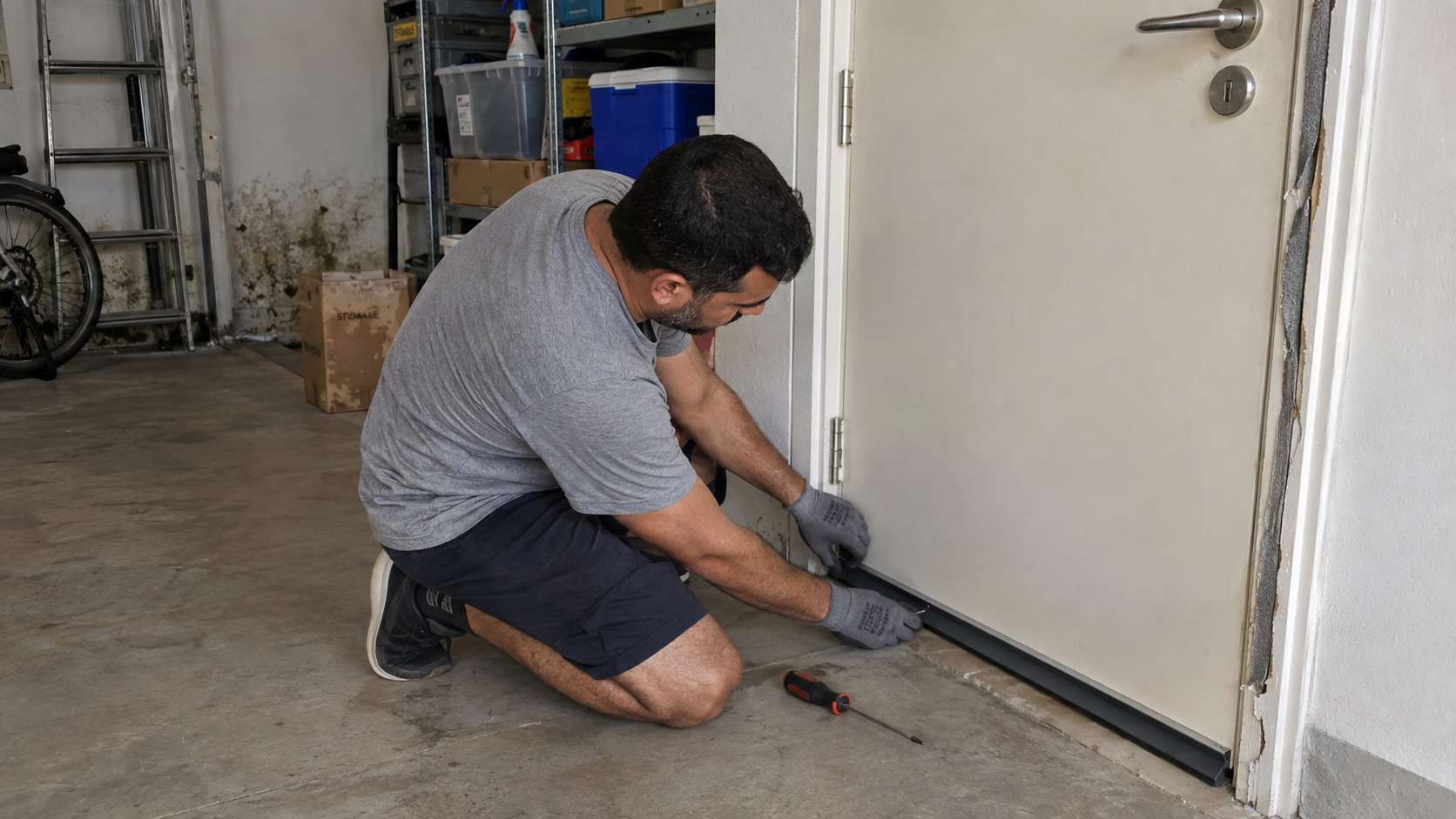
Sealing these gaps helps reduce air transfer from the garage into the house. This is useful not only for mold, but also for dust, vehicle odors, pests, and humidity.
4. Control Humidity and Airflow
Keep the garage as dry as possible. Good airflow helps, but avoid pushing moldy air directly into the house.
Useful steps include:
- Use a dehumidifier if the garage stays humid.
- Open the garage door occasionally when outdoor conditions are dry.
- Avoid storing wet items inside.
- Dry wet cars, mats, and tools quickly.
- Keep items off the floor on shelves.
- Replace cardboard storage with sealed plastic bins.
- Leave space between stored items and walls.
- Improve drainage near the garage entrance.
- Fix cracks where rainwater enters.
If your climate is very humid, ventilation alone may not solve the problem. You may need dehumidification and better sealing.
5. Protect the Living Area During Cleanup
During garage mold cleanup, keep the connecting door closed. Seal gaps temporarily if needed. Do not run fans that blow garage air toward the house. Avoid moving moldy boxes through living rooms.
After cleanup, wash clothing used during the work, clean shoes, and wipe tools before bringing them inside. These simple steps reduce the chance of carrying particles indoors.
If the garage mold is large or disturbed during removal, professional containment may be needed.
When Should You Call a Professional?
You should call a professional when mold in the garage is widespread, keeps returning, affects porous materials, smells strongly musty, or may be connected to the house through air pathways or HVAC.
Professional help is especially important if:
- Mold covers a large area
- Mold is on drywall, insulation, wood framing, or stored furniture
- The garage wall is damp or soft
- Mold returns after cleaning
- There is a hidden leak or seepage problem
- The garage connects to bedrooms or living spaces
- Musty smell is entering the house
- Mold is near AC equipment or ductwork
- Family members have asthma, allergies, or respiratory sensitivity
- You are not sure how far the moisture has spread
A professional mold remediation service can inspect the moisture source, assess affected materials, set up containment when needed, remove contaminated materials safely, clean affected surfaces, and help reduce indoor air quality risks.
This is important because the goal is not only to make the garage look clean. The goal is to prevent garage mold from becoming a home air quality problem.
The Bottom Line
mold in garage can get into the house, especially when the garage is attached, damp, poorly sealed, connected to air pathways, or filled with moldy stored items. Spores, dust, and musty odors can move through door gaps, cracks, utility openings, HVAC issues, and normal foot traffic.
However, garage mold does not automatically mean the whole house is contaminated. The real risk depends on the size of the mold problem, the moisture source, airflow, materials affected, and whether indoor areas are also damp.
To stop the spread, fix the water source first, clean or remove moldy materials safely, seal the garage-to-house connection, control humidity, and avoid bringing contaminated items indoors. If the mold is widespread, recurring, hidden, or already affecting indoor air quality, professional mold remediation is the safer option.