


What Should You Do After Seeing Mold in Airbnb?
If you discover mold in your Airbnb, document the condition before moving, cleaning, or disturbing the affected area. Then report the issue to the host through Airbnb as soon as possible. Your first priority should be creating evidence and communicating the problem clearly.
Follow these steps:
1. Document everything immediately
Before touching or cleaning anything, take photos and videos showing:
- The visible mold growth
- The location where you found it
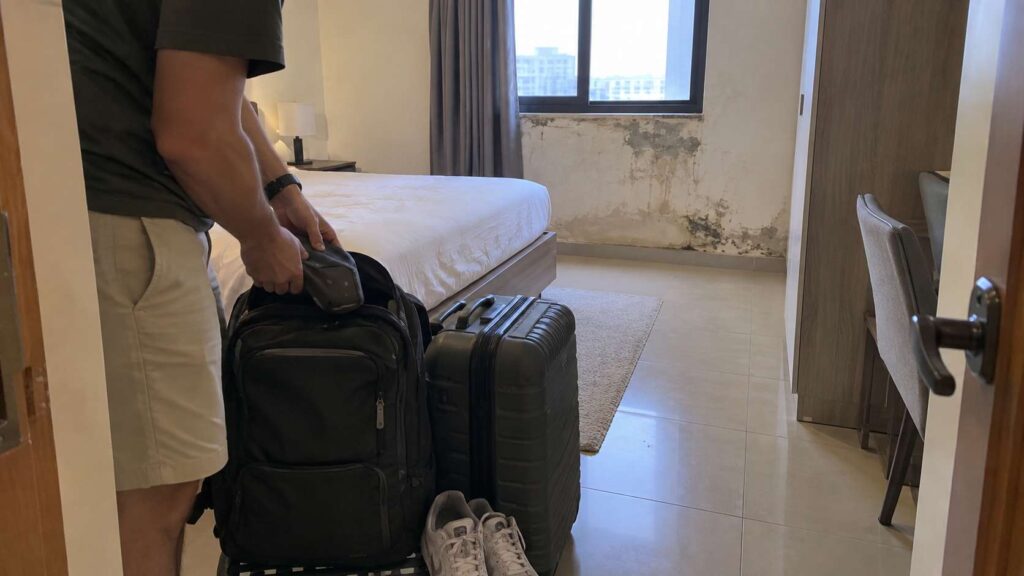
- Water stains, leaks, peeling paint, or damaged materials
- The overall condition of the room or property
- Any belongings affected by mold or moisture
Airbnb currently asks guests to report reservation and cleanliness issues within 72 hours of discovering them. Photos and videos can be used as supporting evidence when Airbnb determines whether the problem qualifies under its Rebooking and Refund Policy.
Try to include details that show the severity of the problem. For example, a small spot on bathroom grout is different from mold spreading across a bedroom wall or ceiling.
2. Report the issue through Airbnb
Always communicate through the Airbnb app rather than only contacting the host privately.
This creates an official record showing:
- When you reported the issue
- What you discovered
- How the host responded
- What solution was offered
Explain the problem clearly and avoid making unsupported claims. Instead of saying, “This place is dangerous,” describe what you observed:
“I found visible mold growth around the bedroom window and a strong musty odor throughout the room. I have attached photos and would like assistance with a solution.”
3. Avoid cleaning the mold yourself
While your first instinct may be to wipe away the mold, this can create problems.
Cleaning it yourself may:
- Spread mold spores into the air
- Remove important evidence
- Make it harder to determine the original condition
Your role as a guest is to report the issue and request assistance, not repair a property maintenance problem.
4. Protect yourself and your belongings
If the mold appears significant, consider:
- Moving personal items away from affected areas
- Avoiding sleeping directly in the affected room
- Keeping luggage closed if possible
- Limiting time inside the property until a solution is provided
If you experience allergy symptoms, breathing discomfort, or irritation after exposure, keep notes about when symptoms started and consider seeking medical advice if needed.
What Does Airbnb’s Policy Say About Mold?
Airbnb’s host standards specifically state that listings should be clean and free of health hazards before check-in, and mold is listed as an example of a health hazard.
Airbnb’s Rebooking and Refund Policy also covers accommodations that are not habitable at check-in because they are not reasonably clean and sanitary or contain health or safety hazards. However, the presence of mold does not automatically guarantee a particular refund.
When Airbnb determines that a qualifying Reservation Issue has disrupted a stay, possible outcomes include:
- A full refund
- A partial refund
- Help finding a similar place to stay
Airbnb states that the outcome may depend on the severity of the issue, its impact on the guest, the portion of the stay affected, whether the guest leaves the accommodation, other mitigating factors, and the strength of the evidence provided.
These are Airbnb’s platform policies. Separate consumer-protection or accommodation laws may also apply depending on the country or jurisdiction where the property is located.
How Can You Get the Best Relocation After Finding Mold in Airbnb?
If the Airbnb is not suitable to continue staying in, getting relocated quickly depends on how you communicate your situation.

Here are steps that can improve your chances:
Explain why the property is not suitable
Avoid focusing only on the word “mold.” Explain the impact.
For example:
- “The bedroom has visible mold growth near the sleeping area.”
- “There is a strong musty odor that remains after ventilation.”
- “The bathroom ceiling has extensive mold and water damage.”
- “I do not feel comfortable staying in this room due to the condition.”
Clear descriptions help Airbnb support understand why relocation may be necessary.
Provide strong evidence
Support your request with:
- Photos
- Videos
- Screenshots of your conversation with the host
- The original listing photos if they differ from the current condition
Evidence is especially important if the host disagrees with your complaint.
Contact Airbnb support early
Do not wait until the end of your stay if the problem seriously affects your accommodation.
Early reporting shows that:
- You acted responsibly
- The problem existed during your stay
- You gave Airbnb and the host a chance to respond
Be flexible with replacement options
During busy travel periods, immediate relocation may be more difficult. Being open to reasonable alternative properties can help speed up the process.
However, the replacement should still meet your basic needs and not create another accommodation problem.
How Do You Get the Refund You Deserve for Mold in Airbnb?
Getting a refund usually depends on proving that the mold issue affected your stay and following the correct reporting process.
To improve your chances:
Report before leaving whenever possible
Leaving without notifying the host or Airbnb may make it harder to verify the problem.
Give them an opportunity to respond unless the situation requires immediate departure.
Keep all communication inside Airbnb
Messages through the platform provide a record of:
- Your complaint
- The host’s response
- Any attempts to resolve the problem
Avoid relying only on phone calls or personal messages.
Explain the financial impact
If you need to leave and pay for another accommodation, keep:
- New hotel receipts
- Transportation costs caused by relocation
- Other related expenses
These records may help when requesting reimbursement or support.
Stay factual
Strong complaints focus on evidence rather than emotional language.
Better:
“There is visible mold growth on the bedroom wall, and the room has a persistent musty smell.”
Less effective:
“This Airbnb is completely unacceptable and unsafe.”
Clear facts make it easier for Airbnb to evaluate the situation.
So, What’s the Takeaway
Finding mold in Airbnb does not mean you need to panic, but you should take it seriously and respond professionally. Document the condition, report it through Airbnb, and avoid removing evidence by attempting to clean the mold yourself.
Your ability to receive relocation or a refund depends on the severity of the problem, your documentation, and how quickly you report the issue. A guest who acts quickly, communicates clearly, and keeps proper evidence has the best chance of receiving a fair resolution.
When booking future stays, pay attention to reviews mentioning musty smells, moisture problems, cleanliness issues, or previous mold complaints. A few minutes of research before booking can help prevent a much bigger problem during your trip.