


Why Mold in Abandoned Offices Control Needs a Different Approach
Mold in abandoned offices control needs a different approach because unused commercial spaces often have long-term moisture problems that go unnoticed. A small leak under normal conditions may be fixed in one day. In an abandoned office, that same leak may continue for months and spread into carpets, drywall, ceiling boards, furniture, files, and AC components.
The EPA’s guidance for commercial buildings is clear that the key to mold control is moisture control. Leaks in plumbing and the building envelope should be fixed as soon as possible, and small mold problems should be cleaned before they become larger problems.
The risk is not only visual damage. Damp and moldy buildings have been associated with respiratory symptoms, asthma, rhinosinusitis, bronchitis, and other building-related health complaints, especially in sensitive people. That matters when an abandoned office is about to be reopened for staff, tenants, clients, or renovation workers.
Abandoned offices also have more uncertainty. You may not know when the leak started. You may not know whether the AC was off for weeks. You may not know if previous cleaners sprayed chemicals over mold without removing the source. So the safest approach is structured: inspect, control moisture, isolate affected areas, remove what cannot be saved, clean what can be saved, dry the office, and verify that conditions stay stable.
1. Inspect the Whole Office Before Cleaning Anything
The first method is a full moisture and mold inspection before any major cleaning starts. This is important because abandoned offices can have multiple mold sources at the same time.
Start with obvious areas: stained ceilings, damp carpets, peeling paint, swollen skirting boards, musty rooms, broken windows, leaking pantry plumbing, toilet seepage, and AC condensation. Then check less obvious areas: behind cabinets, under desks, inside false ceilings, behind gypsum walls, under vinyl flooring, inside storage rooms, and around HVAC supply and return vents.
Do not judge the problem only by what you see on the surface. A wall may look slightly stained while the inside is wet. A carpet may look normal but smell musty when lifted. A closed meeting room may have mold behind wallpaper because the AC was off and humidity stayed high.
A useful inspection should answer five questions:
- Where is the moisture coming from?
- How far has the dampness spread?
- Which materials are porous and likely contaminated?
- Which items can be cleaned safely?
- Is the office safe for workers to enter without protection?
This step prevents a common mistake: cleaning visible mold while leaving the leak, damp carpet, or wet ceiling cavity untouched. That kind of cleanup may look successful for a few days, then the mold returns.
2. Fix Water Leaks, Seepage, and Condensation First
The second method is to fix the water source before spending money on cosmetic cleaning. Mold can grow only when the conditions support it. If water keeps entering the office, cleaning becomes a repeated cycle.
In abandoned offices, moisture sources often include roof leaks, cracked exterior walls, pipe leaks, toilet leaks, AC drain blockage, condensation around ducts, broken windows, flooding from nearby units, and humidity entering through poorly sealed openings. In Dubai and other humid climates, even an office without a major leak can become damp if the AC and dehumidification are not working properly.
Look for signs like:
- Brown ceiling marks
- Bubbling paint
- Soft drywall
- Damp carpet edges
- Rust on metal furniture
- Musty odor near AC vents
- Water marks around windows
- Swollen door frames
- Mold concentrated in corners
The fix depends on the source. Plumbing leaks need repair. Roof seepage needs waterproofing or roof treatment. AC condensation needs HVAC inspection. External wall seepage may require sealing and drainage correction. Carpet dampness may require removal and drying of the slab underneath.
This is where many abandoned office projects fail. The owner pays for cleaning, painting, and deodorizing, but nobody solves the moisture path. A few weeks later, the office smells musty again. Mold control only works when the water problem is corrected first.
3. Restore Ventilation, AC, and Humidity Control
The third method is to bring the indoor air condition back under control. Abandoned offices often sit closed with poor airflow. The AC may be off, set incorrectly, poorly maintained, or unable to remove enough humidity. That creates the perfect environment for musty odor and mold growth.
Good ventilation does not mean opening everything randomly in a humid climate. If outdoor air is hot and humid, opening windows for long periods may increase indoor humidity. The better approach is controlled drying: proper AC operation, dehumidification when needed, clean filters, functional drains, and enough airflow around enclosed rooms.
In commercial spaces, check the HVAC system carefully before reopening. Mold can be linked to damp filters, dirty coils, clogged drain pans, wet insulation, or condensation on duct surfaces. If the AC spreads musty air across the office, cleaning only the furniture and walls will not solve the bigger problem.
The CDC/NIOSH workplace mold guidance emphasizes that mold indoors points to a water or moisture problem that should be addressed immediately. In practical terms, the office should not only look dry. It should remain dry after the AC runs, after doors are closed, and after weather changes.
For abandoned offices, humidity control should continue during the vacancy period. Even if the office is not occupied yet, it still needs basic environmental control. Otherwise, mold may return before renovation, leasing, or staff move-in.
4. Remove Moldy Porous Materials That Cannot Be Saved
The fourth method is removing porous materials that are too contaminated to clean properly. This includes carpet, underlay, ceiling tiles, gypsum board, insulation, cardboard, fabric partitions, damaged office chairs, and some upholstered furniture.
Porous materials are tricky because mold can grow into them, not only on top of them. A cleaner may wipe the surface and make it look better, but the deeper contamination can stay inside. If the material was wet for a long time, smells musty, or has visible mold across a broad area, replacement is often safer than repeated cleaning.
In abandoned offices, the most common removal candidates are:
- Moldy carpet and carpet padding
- Water-damaged gypsum walls
- Sagging ceiling tiles
- Moldy cardboard archive boxes
- Fabric-covered office partitions
- Upholstered chairs with musty foam
- Wet insulation inside walls or ceilings
- MDF cabinets swollen by moisture

This step can feel expensive, but it often saves money later. Keeping contaminated porous materials can make the office smell bad again after repainting. It can also spread particles during renovation work.
Removal should be controlled, not chaotic. Workers should avoid dragging moldy materials through clean areas without protection. Waste should be bagged properly. If the contamination is large, hidden, or near HVAC systems, professional containment may be needed to prevent cross-contamination.
5. Clean Salvageable Surfaces With the Right Method
The fifth method is to clean materials that can actually be saved. Hard, non-porous surfaces are usually easier to clean than porous ones. Examples include glass, metal, tiles, some plastic furniture, sealed countertops, and certain painted surfaces if they are not damaged.
Cleaning should usually involve physical removal of mold, not just spraying. Mold is not controlled properly when it is simply covered with fragrance, paint, or a quick chemical mist. The visible growth and contaminated dust need to be removed from the surface.
Common salvageable areas may include:
- Metal desk frames
- Glass partitions
- Tile floors
- Plastic chair bases
- Door handles
- Cabinets with intact hard laminate
- Washable pantry surfaces
- Some painted walls with minor surface mold
For business spaces, cleanup method matters because the office may later be occupied by employees, visitors, tenants, or contractors. Harsh chemical use without proper planning can create odor, residue, or safety concerns. Also, mixing cleaning chemicals is dangerous and should be avoided.
HEPA vacuuming, damp wiping, controlled cleaning, and proper drying are often part of professional remediation practices. The EPA’s commercial building mold guidance includes selecting cleanup methods and containment equipment to protect the building and occupants during remediation.
The goal is not to make the office “smell fresh” for one day. The goal is to remove contamination, dry the area, and keep the clean zones protected from dirty zones.
6. Use Containment Before Disturbing Heavy Mold Growth
The sixth method is containment. This is especially important in abandoned offices where mold may have spread across several rooms or into ceiling voids. Once workers start removing ceiling tiles, cutting drywall, lifting carpet, or moving moldy furniture, spores and dust can spread quickly.
Containment means separating the affected area from the cleaner parts of the office. In professional work, this may involve plastic sheeting, sealed work zones, negative air machines, HEPA filtration, controlled access, and safe waste handling. The exact setup depends on the size and severity of the problem.
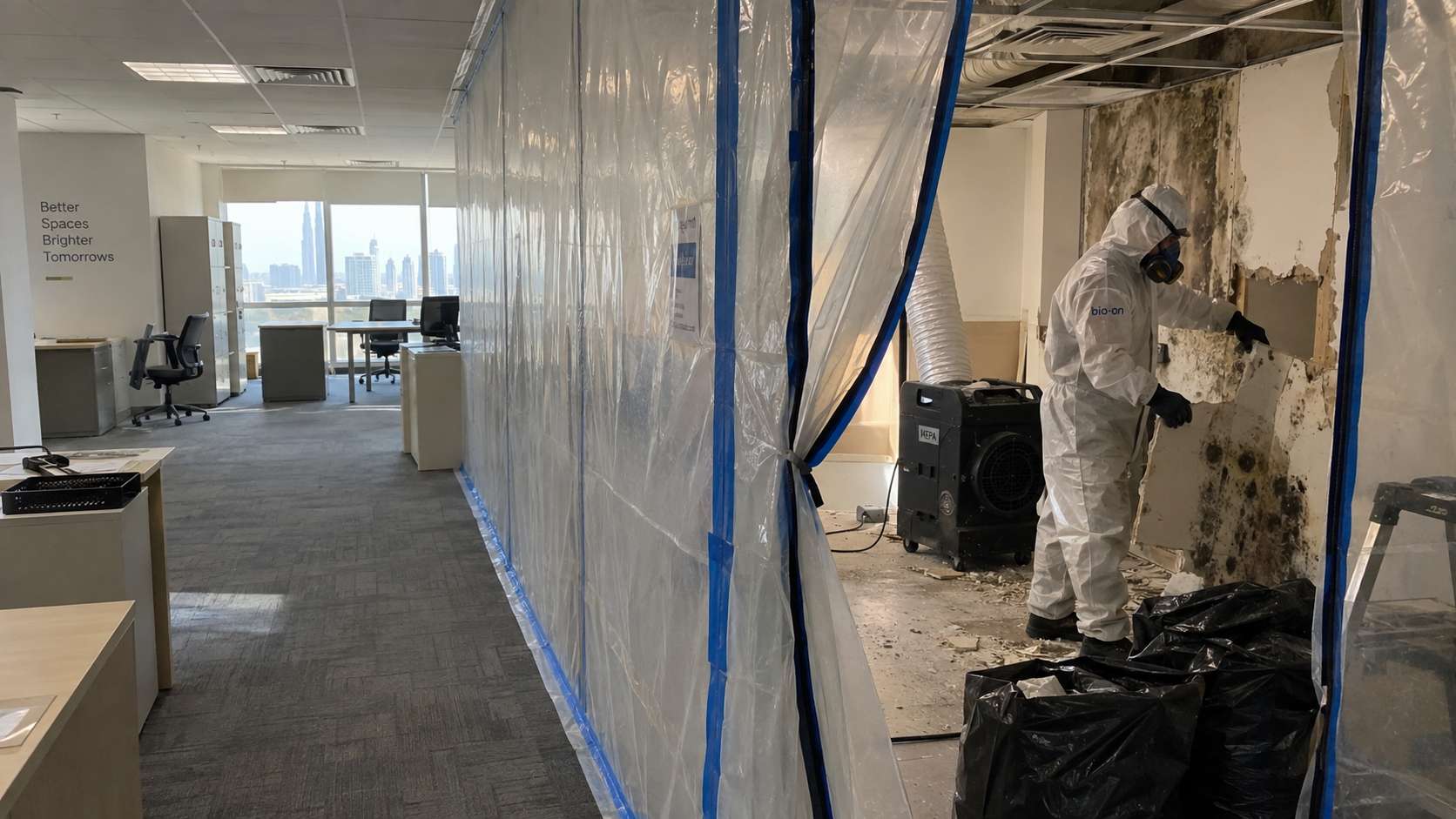
Containment is important when:
- Mold covers a large area
- Materials need demolition
- Mold is near AC return vents
- The office is inside a shared commercial building
- Other tenants are nearby
- Sensitive documents, equipment, or furniture must be protected
- The office will soon be occupied again
Without containment, cleanup can accidentally spread contamination from one room to another. A team may remove moldy carpet from a back office, then carry it through the reception area and contaminate clean flooring. Or they may open a ceiling cavity and spread dust into the HVAC system.
This is why abandoned office mold control should be planned like a building recovery task, not a normal janitorial cleaning. The more you disturb moldy materials, the more important containment becomes.
7. Hire a Professional Mold Remediation Service for Businesses
The seventh method is hiring a professional mold remediation service for businesses, especially when the abandoned office has widespread mold, musty odor, hidden dampness, water damage, or AC-related contamination.
A business-focused remediation company should do more than wipe surfaces. They should inspect the office, identify the moisture source, separate affected zones, remove unsalvageable materials, clean salvageable surfaces, control dust, dry the space, and give prevention guidance. For commercial properties, they should also understand office layouts, ceiling voids, HVAC systems, carpets, partitions, storage rooms, and business reopening timelines.
In Dubai, it is reasonable to check whether the company operates under relevant local approvals, licensing, or permitted scopes. Dubai Municipality provides health and safety approved lists, including approved biocides for professional business-to-business use and accredited cleaning and disinfection companies.
Before hiring, ask:
- Do you inspect moisture sources before quoting?
- Do you handle abandoned commercial offices?
- Can you check carpets, ceilings, partitions, furniture, and HVAC-related areas?
- What materials should be removed instead of cleaned?
- Will you use containment if demolition is needed?
- Do your technicians use PPE?
- Do you use HEPA filtration or HEPA vacuuming where needed?
- What products will be used, and are they appropriate for business premises?
- Can you provide photos and a written scope of work?
- Do you give prevention recommendations after remediation?
Be careful with companies that only offer fogging, perfume treatment, or “mold killing spray” without inspection. Fogging may have limited use in certain situations, but it does not remove wet drywall, dry damp carpet, repair leaks, or clean mold inside porous materials. If the office has been abandoned for a long time, the solution must be deeper than deodorizing the air.
What Not to Do in an Abandoned Moldy Office
Some actions can make mold control harder, more expensive, or less safe. The most common mistake is sending a normal cleaner into a heavily contaminated office without inspection or protection. The cleaner may wipe visible stains but unknowingly spread moldy dust.
Avoid these mistakes:
- Do not paint over mold.
- Do not install new furniture before fixing humidity.
- Do not run a dirty AC system without inspection.
- Do not dry-brush moldy walls or furniture.
- Do not keep moldy carpet padding.
- Do not rely only on air freshener.
- Do not store clean items inside a musty room.
- Do not reopen the office just because the smell is temporarily reduced.
Another mistake is doing mold testing too early. Testing can be useful in some cases, but it should not delay obvious repairs. If you see mold and find moisture, the priority is to fix the moisture and remove the mold safely. Testing alone does not solve the building condition.
How to Know the Office Is Ready to Reopen
An abandoned office is closer to reopening when the moisture source is fixed, damaged materials are removed or restored, surfaces are clean, and the office no longer smells musty after being closed for some time.
You should also check whether humidity stays controlled during normal AC operation. If the office smells fine only when doors are open, but becomes musty after one night closed, the problem may still be active.
A basic reopening checklist includes:
- No active leaks
- No visible mold growth
- No recurring musty odor
- Dry walls, ceilings, and floors
- Clean or replaced carpets and ceiling tiles
- HVAC inspected and cleaned if needed
- Moldy furniture removed or restored
- Waste disposed of safely
- Prevention plan in place
- Staff or tenants informed if relevant
For businesses, reopening too early can create bigger problems. Employees may complain of odors or symptoms. Tenants may lose trust. Renovation materials may become contaminated. Brand-new furniture may absorb musty smells from the old environment. It is better to stabilize the space first than to rush the handover.
The Bottom Line
Mold in abandoned offices control is not about one magic product. It is about controlling moisture, restoring airflow, removing materials that cannot be saved, cleaning salvageable surfaces properly, and preventing contamination from spreading during the work.
The seven best methods are inspection, leak repair, humidity control, removal of contaminated porous materials, proper cleaning, containment, and hiring a professional mold remediation service for businesses when the problem is too large or risky for basic cleaning.
If the office has been empty for weeks or months, treat mold as a building condition issue, not just a stain. Once the moisture source is fixed and the contaminated materials are handled correctly, the office has a much better chance of staying clean, safe, and ready for people to use again.