


How to Safely Clean Mold High Up on the Ceiling and Wall
Cleaning mold from a high ceiling or wall requires more than simply wiping the visible spots. The main goal is to remove the mold while avoiding exposure and preventing spores from spreading.
Before cleaning, prepare the area properly.
1. Wear Proper Protective Equipment
When mold is disturbed, spores can become airborne. Even a small cleaning job can release particles that may irritate the eyes, skin, and respiratory system.
Before starting, wear:
- N95 or higher-rated respirator mask
- Protective gloves
- Safety goggles
- Long sleeves and clothing that covers exposed skin
Avoid cleaning mold without protection, especially when working directly underneath ceiling growth where falling particles can reach your face.
2. Protect the Room Below the Mold
Mold cleaning at ceiling height can create additional mess because cleaning solutions, mold particles, and debris may fall.
Before starting:
- Move furniture away from the affected area
- Cover floors with disposable plastic sheets
- Remove decorative items nearby
- Keep children and pets away from the area
If possible, close doors to prevent spores from spreading into other rooms.
3. Use the Right Cleaning Method for the Surface
The correct cleaning method depends on the material.

For painted walls or non-porous surfaces:
- Apply an appropriate mold-cleaning solution
- Allow enough contact time according to product instructions
- Gently wipe the affected area
- Dry the surface completely
For porous materials such as:
- Ceiling tiles
- Drywall
- Wallpaper
- Certain wood products
surface cleaning may not fully remove mold because growth can extend inside the material.
Painting over mold is also not a permanent solution. It may hide the appearance temporarily while moisture and mold remain underneath.
What You Need to Safely Reach Mold High Up on the Ceiling and Wall
One of the biggest challenges with ceiling and upper-wall mold is reaching the affected area without creating an accident risk.
The wrong equipment can make cleaning dangerous.
Use a Stable Step Ladder or Extension Tool
For moderate heights, homeowners should use:
- A stable step ladder with a wide base
- A ladder placed on a flat, non-slippery surface
- A tool designed for cleaning ceilings and walls
Avoid:
- Standing on chairs or tables
- Stretching too far sideways from a ladder
- Using unstable household furniture as a platform
Falls are one of the biggest risks during high-level cleaning.
Consider Long-Handle Cleaning Tools
For small surface areas, extension tools can help reduce the need to climb.
Useful options include:
- Extendable microfiber dusters
- Long-handle cleaning pads
- Telescopic cleaning poles
However, these tools have limitations. They may help reach the area, but they do not replace proper mold removal methods if the problem is extensive.
Improve Visibility Before Cleaning
Ceiling mold is often difficult to inspect because lighting conditions can hide details.
Before cleaning:
- Use bright portable lighting
- Check the full surrounding area
- Look for water stains or discoloration nearby
Visible mold spots may only represent part of the moisture problem.
When You Should Not Clean Mold High Up on the Ceiling and Wall
Not every mold problem is suitable for DIY cleaning. Some situations create unnecessary safety risks or indicate a deeper moisture issue.
You should avoid cleaning it yourself when:
Mold Covers a Large Area
Large mold growth usually means the problem has existed for a longer period.
Be cautious if:
- Mold covers a significant section of the ceiling
- Multiple walls are affected
- Mold keeps spreading after cleaning
Large areas may require containment and specialized equipment to prevent spores from spreading.
The Ceiling Has Signs of Water Damage
Ceiling mold often develops because of hidden moisture problems.
Do not simply clean and repaint if you notice:
- Water stains
- Bubbling paint
- Soft ceiling areas
- Cracks near mold growth
- Active dripping or leaks
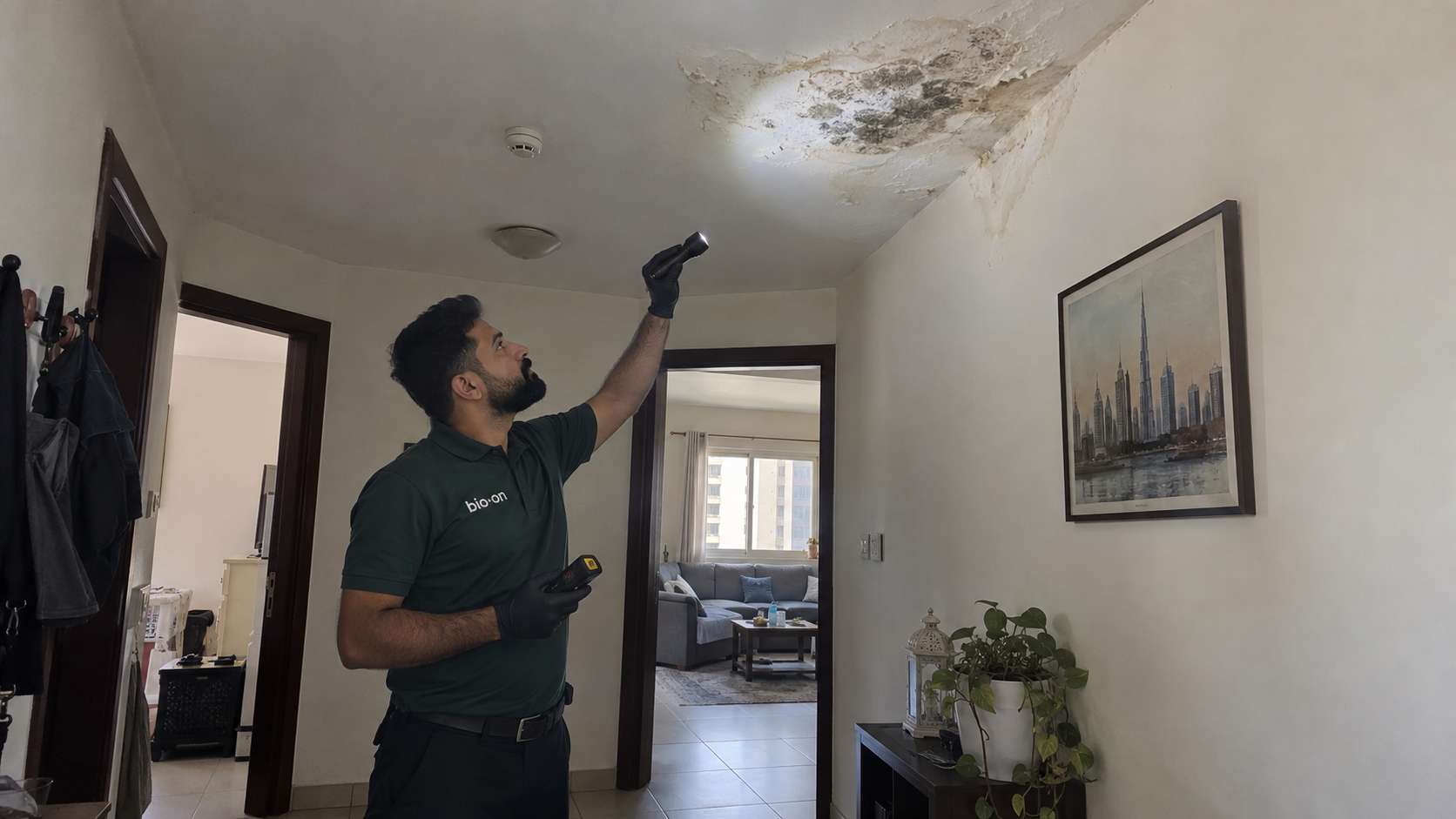
The moisture source must be fixed first. Otherwise, mold will likely return.
Mold Is Near Air Conditioning Systems
Mold near AC vents, ceiling units, or duct openings requires extra caution.
Air movement from HVAC systems can potentially distribute spores throughout the property.
Professional inspection may be necessary to determine whether the contamination is limited to the visible surface or involves hidden areas.
You Cannot Safely Reach the Area
If cleaning requires:
- A tall ladder
- Working above stairs
- Stretching beyond a safe position
- Handling chemicals overhead
it may not be worth the risk.
A mold problem should not become a fall injury risk.
Someone in the Home Is Sensitive to Mold Exposure
Extra caution is needed when the household includes:
- Young children
- Elderly residents
- People with respiratory sensitivities
In these situations, professional mold remediation may provide a safer approach.
Why Professional Mold Remediation Is Often the Better Long-Term Solution
Cleaning visible mold only addresses what you can see. The bigger question is why mold appeared and whether the conditions allowing growth still exist.
Professional mold remediation focuses on:
- Identifying moisture sources
- Containing affected areas
- Removing contaminated materials when necessary
- Cleaning affected surfaces safely
- Reducing the chance of mold returning
This is especially important for mold high up on ceilings and walls because these areas are often connected to hidden problems such as roof leaks, plumbing issues, condensation, or poor ventilation.
Bio-On: A Safer Long-Term Solution for Mold High Up on Ceilings and Walls
For homeowners dealing with difficult-to-reach mold, Bio-On provides a safer long-term approach compared with repeatedly cleaning visible spots.
Instead of only removing surface stains, professional mold remediation helps address the full problem by identifying the cause, controlling contamination, and restoring affected areas properly.
Bio-On can help homeowners who are dealing with:
- Persistent ceiling mold
- Recurring wall mold
- Hidden moisture problems
- Mold growth in difficult locations
- Larger contamination areas
Professional teams have the right safety equipment, cleaning methods, and experience to handle high-level mold problems without homeowners needing to take unnecessary risks with ladders or chemical exposure.
The Bottom Line
Mold high up on the ceiling and wall can sometimes be cleaned safely if the growth is small, accessible, and the moisture source has already been fixed. Proper protection, stable equipment, and careful cleaning methods are essential.
However, homeowners should avoid DIY cleaning when mold is extensive, difficult to reach, connected to water damage, or keeps returning. In these situations, professional mold remediation from Bio-On offers a safer long-term solution by addressing both the visible mold and the conditions that allow it to come back.