


How Does Mold Growth Make Indoor Air Bad?
Active mold colonies can affect indoor air by releasing spores, fragments, odors, and microbial compounds. The concentration and movement of these particles vary with colony size, location, ventilation, humidity, and disturbance. Hidden growth may therefore influence a room even when little is visible.
A musty odor is one of the most common signs. It may resemble damp earth, wet fabric, old paper, or a closed storage space. The smell can remain stronger near wall cavities, cabinets, carpets, or air-conditioning outlets.
Indoor air conditions may also change because of:
- Increased fungal particles
- Dust containing fungal fragments
- Damp or stagnant odors
- Material emissions caused by water damage
- Reduced comfort in humid rooms
- Contamination moving through shared air pathways
An air-conditioning system can distribute odors and particles when contamination is located near coils, filters, ducts, or return-air pathways. However, mold visible near a vent does not automatically prove that the entire duct system is contaminated.
How Does It Affect Everyone’s Health?
Exposure to damp and moldy environments may irritate the eyes, skin, nose, throat, or airways. Some people experience no noticeable reaction, while others may be more sensitive, particularly those with allergies, asthma, respiratory conditions, or weakened immune defenses.
Possible complaints associated with exposure include:
- Nasal irritation
- Sneezing
- Coughing
- Throat discomfort
- Eye irritation
- Skin irritation
These symptoms are not specific to mold. Dust, pollen, smoke, pets, infections, and other indoor contaminants can cause similar reactions. The presence of symptoms alone cannot confirm a hidden fungal problem or identify a particular species.
People with persistent or severe symptoms should seek guidance from a qualified healthcare professional. A building professional can investigate moisture and material conditions, while a medical professional evaluates the person’s health.
Where Does Mold Commonly Start Growing in Your Home?
Indoor mold commonly develops where moisture collects, drying is slow, and air movement is limited. Bathrooms and kitchens are familiar locations, but hidden colonies may also form inside walls, air-conditioning components, flooring systems, cabinets, and storage areas.
Typical moisture-prone locations include:
Bathrooms
Showers, bathtubs, grout, ceilings, silicone seals, and poorly ventilated corners receive frequent moisture. Steam may also condense on colder walls and ceilings.
Kitchens
Leaks beneath sinks, steam from cooking, damaged seals, and water around appliances can create damp areas that remain unnoticed. That becomes the main source of problem for a moldy kitchen.

Air-Conditioning Systems
Condensate pans, cooling coils, filters, insulation, ducts, and nearby walls may become damp. Dust inside the system can provide additional material for fungi to use.
Windows and Exterior Walls
Warm humid air may condense on cool glass, frames, or wall surfaces. Damaged seals can also allow rainwater to enter.
Bedrooms
Growth may develop behind wardrobes, headboards, curtains, or mattresses placed against cool walls. Limited airflow allows moisture to remain trapped.
Basements and Storage Rooms
Ground moisture, low ventilation, plumbing problems, and stored cardboard can create favorable conditions.
Ceilings and Wall Cavities
Roof leaks, pipe leaks, and poorly insulated surfaces may support hidden colonies before discoloration appears inside the room.
The location often provides clues about the moisture source. Mold below a window may indicate condensation or water intrusion, while repeated ceiling staining may point to a leak above.
How Does Mold Spread Indoors?
Mold spreads by extending across damp materials and by releasing microscopic spores and fragments into the surrounding environment. Air movement, cleaning activity, people, pets, and ventilation systems can carry these particles to other surfaces, although new colonies develop only where conditions support them.
A colony can spread in two main ways.
Growth Across Materials
Hyphae may expand outward across a surface or penetrate porous materials. If two damp materials touch, the colony can move from one to the other.
For example, moisture behind a wardrobe may affect:
- The painted wall
- The wardrobe backing
- Stored cardboard
- Clothing
- Carpet edges
- Nearby skirting boards
The resulting contamination may extend beyond the first visible patch.
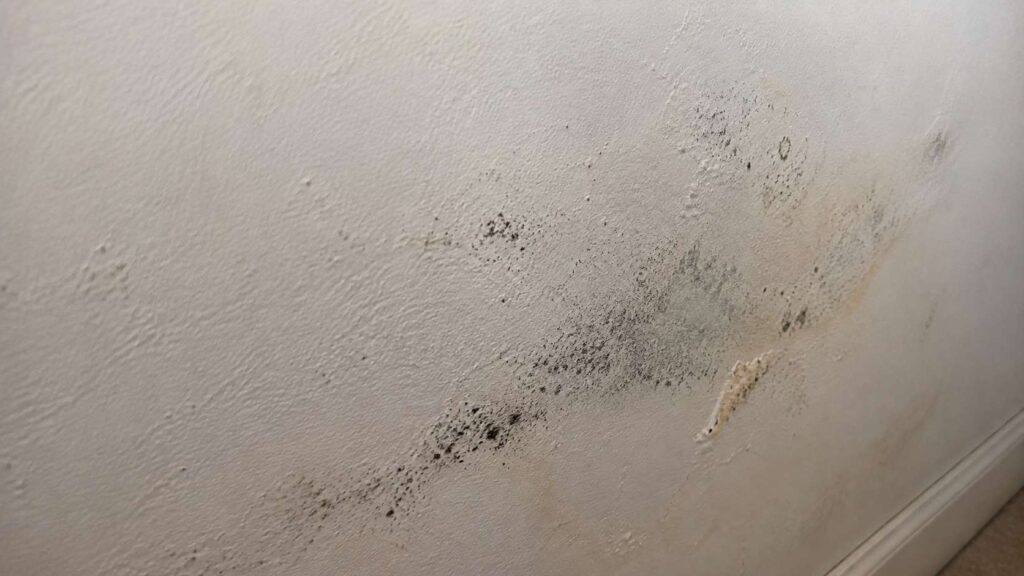
Movement Through the Air
Mature colonies can release spores when disturbed or when air passes across them. Spores may then settle elsewhere in the room or move through doorways and ventilation pathways.
Activities that may disturb contamination include:
- Brushing dry patches
- Scraping damaged paint
- Removing moldy drywall
- Pulling up contaminated carpet
- Using a fan near the affected area
- Vacuuming without suitable filtration
- Opening an air-conditioning component
Finding spores elsewhere does not automatically mean active growth has spread throughout the building. A new colony still needs moisture and suitable material. This is why moisture control remains the central preventive measure.
Can Mold Also Affect Building Materials?
Yes, definitely! Let me show you how. Mold can stain, weaken, or degrade materials as colonies digest available nutrients and moisture alters the structure beneath them. In my experience, the level of damage depends on the material, how wet it became, how long the condition lasted, and whether the contamination entered below the surface.
Nonporous materials such as glass, glazed tile, and some metals do not absorb fungal structures deeply. Deposits may often remain on the surface, although seals, joints, or dust layers around them can still support growth.
Porous materials present a greater challenge. These include:
- Drywall
- Ceiling tiles
- Insulation
- Carpet padding
- Upholstery
- Cardboard
- Untreated wood
- Particleboard
- Fabric
Drywall may become soft, swollen, stained, or crumbly after prolonged dampness. Composite wood can expand and lose strength. Wallpaper may peel as moisture affects the adhesive beneath it.
Material damage often becomes more expensive when drying and repairs are delayed. Early moisture correction can limit how much must later be removed.
Should I Get a Professional Assessment Now?
Yes, a professional assessment is needed when contamination is widespread, hidden, recurring, located inside an HVAC system, or connected to significant water damage. Specialist help is also valuable when the source is unclear, or removal could spread particles through occupied areas.
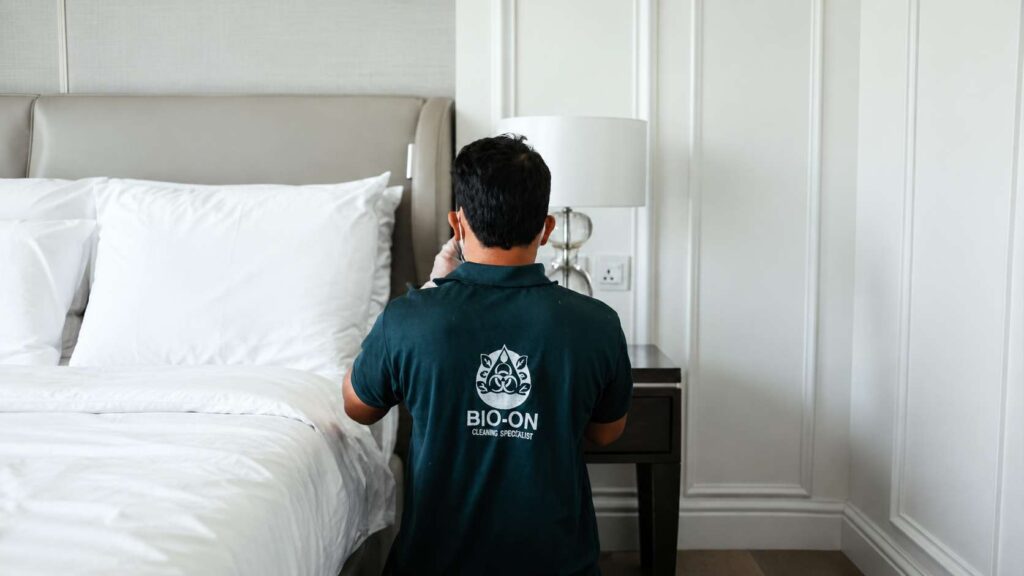
A careful assessment should focus on:
- Where the moisture originates
- Which materials are affected
- How far the damage may extend
- Which materials can be restored
- Which materials require removal
- How the area will be isolated
- How dust and debris will be controlled
- How the structure will be dried
- How recurrence will be prevented
Testing is not automatically required in every visible case. When a damp material clearly contains fungal growth, identifying the exact species may not change the need to repair the water source and remove contamination.
Professional cleaning becomes particularly important when walls, ceilings, insulation, air-conditioning components, or large areas are involved. These situations may require containment, protective equipment, controlled material removal, filtration, and post-cleaning checks. Definitely not something you want to do yourself. For that, leave the job to the professionals.
So, What’s the Verdict?
The final verdict is that mold growth starts when spores meet moisture, suitable material, and enough time to develop. It spreads through materials and airborne particles, potentially damaging finishes, creating musty odors, and affecting indoor air.
The most important warning sign is recurrence. A patch that repeatedly returns usually means moisture remains active somewhere nearby. Small surface problems may be manageable after the cause is corrected, but hidden, widespread, recurring, or HVAC-related contamination is safer to assess and remove professionally. Stay safe!