


How to Compare Mold Damage Repair Companies in UAE
Choose a company based on how clearly it explains the problem, the work required, and what is included in the quotation. A low price may look attractive, but it can become expensive when containment, moisture checks, damaged-material removal, drying, or reconstruction are left out.
Before hiring anyone, try these:
Ask What the Inspection Covers
Ask whether the inspection goes beyond the visible mold. The team should check nearby walls, ceilings, moisture levels, AC-related areas, and possible signs of leaks or previous water damage.
A quick glance at the wall is not enough when mold may be growing behind paint, gypsum board, insulation, or ceiling panels.
Request a Written Scope
Request a quotation that clearly explains:
- Which rooms or surfaces will be treated
- Which damaged materials may need removal
- How the work area will be contained
- Whether cleaning, drying, and waste removal are included
- Who will handle rebuilding, painting, or finishing
- What is excluded from the price
- How hidden damage or extra work will be approved
This makes it easier to compare companies fairly and prevents surprise charges later.
Check Relevant Experience
Choose a provider that regularly handles mold-damaged walls, ceilings, cabinetry, and areas near AC systems. General cleaners and painters may improve the appearance, but mold damage repair requires moisture investigation, controlled removal, drying, and safe rebuilding.
Confirm the Company’s Details
Confirm the company’s trade licence, contact details, service authorization, and ability to provide formal quotations and work documentation. This is especially important when the job involves a landlord, property manager, maintenance company, or insurance claim.
Judge How Clearly the Team Communicates
Choose a team that explains each step in plain language. Avoid companies that use fear, vague chemical claims, or promises that mold will never return without first addressing the moisture source.
For a busy homeowner, clear communication matters. You should know what is happening, who is responsible, and when each stage can move forward.
What the Repair Process Should Look Like
A proper mold damage repair process should move from assessment and moisture control to removal, drying, verification, and rebuilding. Finishing the wall before the area is dry can hide the problem instead of solving it.
A professional process normally includes:
- Defining the affected area by checking the rooms, walls, ceilings, fixtures, and nearby belongings.
- Controlling the moisture source by fixing or coordinating repairs for leaks, condensation, drainage faults, or high humidity.
- Containing the work zone to reduce the spread of contaminated dust and debris.
- Removing materials that cannot be restored, such as badly affected drywall, insulation, ceiling panels, or damaged timber products.
- Cleaning salvageable surfaces using methods suitable for the material and level of contamination.
- Drying the structure with dehumidification, air movement, AC adjustments, or further moisture repairs when needed.
- Checking the condition through visual inspection, moisture readings, and work documentation.
- Rebuilding and finishing only after the affected area is ready to be covered.
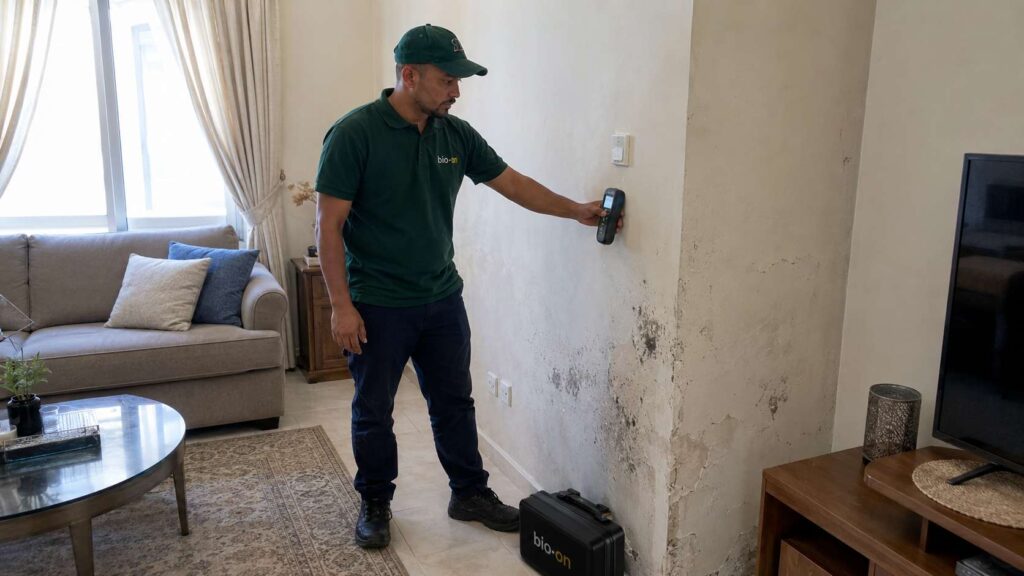
This order protects you from paying for fresh paint, new boards, or cabinetry that may need to be removed again later.
What You’ll Get When Hiring a Mold Damage Repair Service
A complete mold damage repair service should deal with both the contamination and the physical damage left behind. The goal is to return the affected part of your home to a clean, dry, and usable condition.
Depending on the damage, the service may include:
- Inspecting visible and nearby areas
- Tracing the moisture source
- Containing the work zone
- Removing materials that cannot be restored
- Cleaning surfaces that can be saved
- Drying and checking the structure
- Replacing boards, insulation, cabinetry, primer, or paint
Some companies manage remediation and reconstruction themselves. Others coordinate with plumbers, AC technicians, carpenters, painters, or building maintenance teams. For busy homeowners, a provider that can manage this coordination may save significant time and reduce delays.

Choose Repair That Addresses the Cause
The right mold damage repair service should leave more than a cleaner-looking wall. It should identify the moisture problem, deal with contaminated or damaged materials, dry the affected structure, and rebuild only when the area is ready.
These awesome people definitely know how to do their job so you don’t have to worry about future mold comeback.
Compare providers by how clearly they explain the cause, remediation process, drying checks, repair scope, and exclusions. A painter can restore the colour of a wall, but lasting repair begins beneath the paint.