


Why Is Mold Coming Back After Remediation?
Mold coming back after remediation usually means the original conditions that allowed mold to grow were not fully solved. Mold needs moisture. If moisture returns or never fully left, mold can return too.
A successful remediation job is not only about removing visible mold. It should also identify and control the water problem, dry affected materials, remove damaged porous materials when needed, clean contaminated dust, and verify that the area is ready for restoration.
If mold returns within days or weeks, the issue may be connected to the original project. If it returns months later, it may still be related, but it could also be a new leak, new condensation problem, or poor indoor humidity control.
Common reasons include:
- A hidden leak was not found.
- Wall seepage or roof leakage continued.
- The affected area was not fully dried.
- Moldy porous material was left behind.
- HVAC or AC contamination was not addressed.
- The area was restored too quickly.
- Humidity stayed too high after remediation.
- Furniture was placed too close to a damp wall.
- Condensation kept forming on cold surfaces.
- The source was treated cosmetically instead of structurally.
The first mistake many people make is assuming that mold returning means they simply need another cleaning. But if the same patch comes back in the same place, that is a clue. The mold is usually following moisture.
So the question is not only, “How do I remove the mold again?” The better question is, “Why did the environment become mold-friendly again after remediation?”
What Should You Do First When Mold Returns?
When mold returns, the first thing you should do is document it and avoid disturbing it. Do not scrub, sand, spray heavily, repaint, or cover the area before you understand what happened.
Take clear photos and videos. Capture the mold close up and from a wider angle so the location is obvious. Include nearby clues such as AC vents, windows, ceilings, pipes, cabinets, damp patches, stains, or peeling paint. Write down when you first noticed it, whether it appeared after rain, AC use, showering, cooking, or a recent leak.
Then check for moisture signs:
- Is the wall damp to the touch?
- Is paint bubbling or peeling?
- Is the area musty?
- Is there condensation nearby?
- Is there water staining?
- Is the floor, skirting, or cabinet swollen?
- Is the AC leaking or smelling musty?
- Did the mold return in the exact same spot?

After that, contact the remediation company that did the work. Send the photos, date of return, affected area, and your original service report or invoice. Ask them to inspect the area again and explain whether this is related to the previous remediation, a new moisture source, or incomplete drying.
A reliable company should be willing to review the issue, especially if the mold returned soon after their work. They may need to check moisture levels, inspect hidden areas, review containment, assess HVAC involvement, and confirm whether the source repair was completed.
Avoid blaming too early, but also avoid accepting vague answers. “Just clean it again” is not enough if the same mold keeps returning.
How to Tell If It Was Incomplete Remediation or a New Moisture Problem
You can often tell the difference by looking at timing, location, moisture behavior, and whether the same materials were involved. You may still need professional inspection, but these clues help you ask better questions.
If mold returns in the same area shortly after remediation, incomplete remediation or incomplete drying becomes more likely. This can happen when contaminated material was left behind, the area was not dried enough, hidden cavities were not inspected, or cleaning was done without solving the moisture source.
If mold appears in a new area months later, a new water problem may be more likely. For example, a new AC drain blockage, roof leak after rain, bathroom waterproofing failure, window condensation, or pipe leak can create new mold even after a previous remediation was successful.
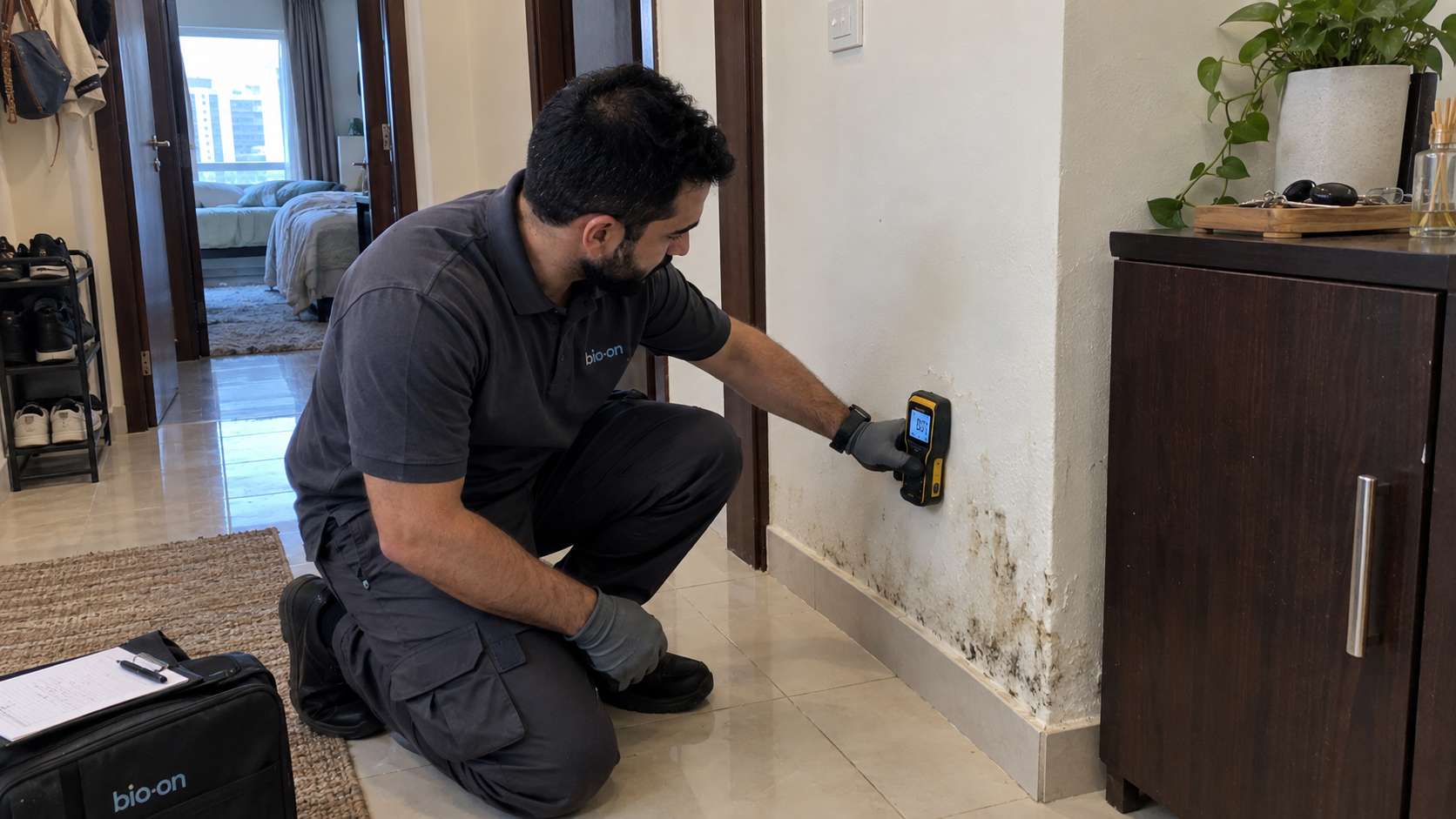
Here is a simple way to think about it:
| What You Notice | What It May Suggest |
|---|---|
| Mold returns in the same spot within days or weeks | Incomplete drying, missed source, or incomplete remediation |
| Mold returns after rain | Roof, balcony, facade, window, or wall seepage issue |
| Mold returns near AC vents | AC coil, duct, drain pan, humidity, or condensation issue |
| Mold returns behind furniture | Poor airflow, cold wall condensation, or damp wall |
| Mold returns after shower use | Bathroom waterproofing, exhaust, grout, or plumbing issue |
| Mold appears in a new room months later | New leak, humidity problem, or separate moisture source |
| Musty smell remains after remediation | Hidden contamination, HVAC issue, or incomplete cleaning |
The most important evidence is moisture. Mold cannot keep growing without a moisture source. If the area is still damp, the job is not finished, even if the visible mold was removed.
Questions to Ask the Mold Remediation Company
When you contact the mold remediation company, ask direct questions. You are not only asking them to “come and look.” You are asking them to explain what was done, what was verified, and why mold returned.
Ask these questions:
- Was the original moisture source identified and fixed?
Mold remediation without source repair is temporary. If the cause was seepage, leaking pipe, AC condensation, or roof leakage, someone must confirm it was corrected. - Were moisture readings taken before and after drying?
A wall or ceiling can look dry while still holding moisture inside. Ask whether the area was measured, not just visually checked. - Were porous materials removed if they were contaminated?
Drywall, gypsum board, insulation, carpet, MDF, and some wood products can hold mold deeper than the surface. - Was the HVAC or AC system inspected?
If mold spores, dust, or musty odors are moving through the AC system, cleaning only the wall may not solve the full problem. - Was containment used during remediation?
Containment helps prevent spores and contaminated dust from spreading to clean areas during removal. - Was post-remediation verification done?
This may include visual inspection, moisture checks, air testing, surface testing, or clearance assessment depending on the project. - Was restoration done only after the area was dry?
Repainting or closing walls too early can trap moisture and create conditions for mold to return. - Is the return covered under any workmanship warranty or follow-up policy?
Do not assume. Ask clearly and check your service agreement.
A good remediation company should be able to answer these questions with details, not vague reassurance. If they cannot explain what caused the return, you may need an independent mold inspector or building moisture specialist.
Should You Clean the Mold Yourself After Remediation?
You should not clean returning mold yourself if it is recurring, spreading, hidden, or connected to a damp surface. Cleaning it yourself may disturb spores, erase useful evidence, and make it harder to prove what went wrong.
For a very small spot on a hard, non-porous surface, light cleaning may be possible with proper protection. But if you recently paid for professional remediation, it is usually better to document the return first and let the company inspect it before you touch it.
Avoid these actions:
- Do not dry-scrub the mold.
- Do not sand moldy paint.
- Do not spray random chemicals heavily.
- Do not repaint over the spot.
- Do not install cabinets or panels over it.
- Do not seal a damp wall without drying it.
- Do not mix bleach with other cleaners.
- Do not keep sleeping in a room with strong musty odor if symptoms are worsening.
If you must stay in the property while waiting for inspection, reduce exposure. Keep children, elderly family members, people with asthma, and people with immune issues away from the affected area when possible. Improve ventilation if it does not spread contamination to other rooms. Use a dehumidifier if humidity is high, but remember that a dehumidifier does not remove established mold.
If the returning mold is near electrical outlets, ceilings, active leaks, or HVAC ducts, do not treat it as a simple cleaning job. Get professional help.
What If the Mold Returned Because the Moisture Source Was Never Fixed?
If the mold returned because the moisture source was never fixed, remediation alone will keep failing. Mold removal and moisture repair must work together.
This is common in properties with:
- Roof leaks
- Balcony seepage
- Bathroom waterproofing failure
- Pipe leaks
- AC drain blockages
- Condensation on cold walls
- Poor ventilation
- High indoor humidity
- Damp exterior walls
- Water intrusion through windows
- Flood or plumbing history
In this case, the next contractor you need may not be only a mold remediator. You may also need a plumber, waterproofing contractor, AC technician, leak detection specialist, roofing contractor, or building maintenance team.
The correct sequence should be:
- Find the moisture source.
- Stop the leak, seepage, or condensation problem.
- Dry the affected materials properly.
- Remove unsalvageable mold-contaminated materials.
- Clean and remediate the affected area.
- Verify that the area is dry and clean.
- Restore walls, ceilings, paint, flooring, or cabinets.
- Monitor the area after rain, AC use, or water use.
If you skip step one, every step after it becomes temporary. That is why repeated mold is often a building failure, not a cleaning failure.
When Should You Get an Independent Mold Inspection?
You should get an independent mold inspection when the remediation company cannot clearly explain why the mold returned, when the problem affects your health or rental dispute, or when you need unbiased documentation.
An independent inspection is useful when:
- Mold returned soon after professional remediation.
- The company says the work is fine, but symptoms or smells remain.
- Your landlord, tenant, insurer, or property manager disputes the issue.
- You suspect hidden mold behind walls or ceilings.
- The affected area was restored before drying was verified.
- You need written evidence before paying for more work.
- You are not sure whether the problem is mold, moisture, or staining.
- Multiple contractors give conflicting opinions.
An independent inspector may perform a visual inspection, moisture mapping, humidity readings, thermal imaging, air sampling, surface sampling, or cavity checks. Not every case needs all of these. The goal is to answer the specific question: is there active mold growth, where is the moisture coming from, and was the remediation successful?
If testing is done, ask what the results will actually tell you. Mold testing without moisture investigation can be incomplete. You need both environmental evidence and building-cause evidence.
How to Prevent Mold From Coming Back Again
To prevent mold from coming back again, you need moisture control, proper drying, good airflow, and follow-up monitoring. Remediation removes the contamination. Prevention keeps the environment from becoming mold-friendly again.
Start with moisture:
- Fix leaks quickly.
- Repair seepage and waterproofing failures.
- Keep indoor humidity under control.
- Use exhaust fans in bathrooms and kitchens.
- Service AC units and clean drain lines.
- Do not block vents or return air paths.
- Keep furniture slightly away from exterior walls.
- Avoid drying wet clothes indoors without ventilation.
- Check windows, ceilings, and AC vents for condensation.
- Use a dehumidifier in rooms that stay humid.
Then monitor the remediated area. Look at the same wall, ceiling, cabinet, or AC zone every few days at first. Check after rain, after shower use, and after long AC operation. If the same spot starts smelling musty or showing stains again, act early.
Also be careful with restoration. New paint, wallpaper, panels, cabinets, or flooring should not be installed until the area is dry. Restoration can hide early warning signs. It can also trap remaining moisture if done too soon.
A mold-free result depends on the full chain: source repair, drying, removal, cleaning, verification, and prevention. One weak link can bring the problem back.
The Bottom Line
If you find mold coming back after remediation, do not ignore it and do not simply scrub or repaint it. Mold returning after professional remediation usually means moisture is still present, hidden contamination was missed, drying was incomplete, or a new leak, seepage, humidity, or AC problem has appeared.
Your first steps are to document the mold, avoid disturbing it, contact the remediation company, request a follow-up inspection, and ask for proof that the moisture source was fixed and the area was properly dried. If the answer is unclear, get an independent mold inspection.
Professional remediation should solve more than the visible stain. It should solve the conditions that allowed mold to grow. If mold comes back, the real job is to find what was missed, fix the source, verify the cleanup, and prevent the same environment from feeding mold again.