


How Do You Know There Is Mold Behind the Fridge?
Because the area behind a refrigerator is rarely checked, mold is often discovered through indirect signs rather than visible growth.
Common warning signs include:
A musty or moldy smell near the fridge
Odor is one of the earliest signs of a possible mold problem.
A moldy smell may be described as:
- Musty
- Earthy
- Damp
- Old or stale
- Similar to wet cardboard

If the smell becomes stronger when you open the fridge door, move the appliance, or turn on nearby ventilation, there may be a hidden moisture issue.
However, not every bad smell is caused by mold. Food spills, dirty drain pans, and bacterial buildup can also create unpleasant odors.
Dark spots or discoloration behind the appliance
When you move the fridge, check for:
- Black, green, or gray patches
- White powdery growth
- Staining on the wall
- Mold around the floor edges
Mold may grow on:
- Walls
- Baseboards
- Cabinets
- Wooden flooring
- Dust buildup around the refrigerator coils
Dampness or water pooling
Moisture is the main reason mold grows.
Possible causes include:
- A leaking refrigerator water supply line
- A blocked defrost drain
- Condensation buildup
- Water spills that reached hidden areas
- A damaged drip pan
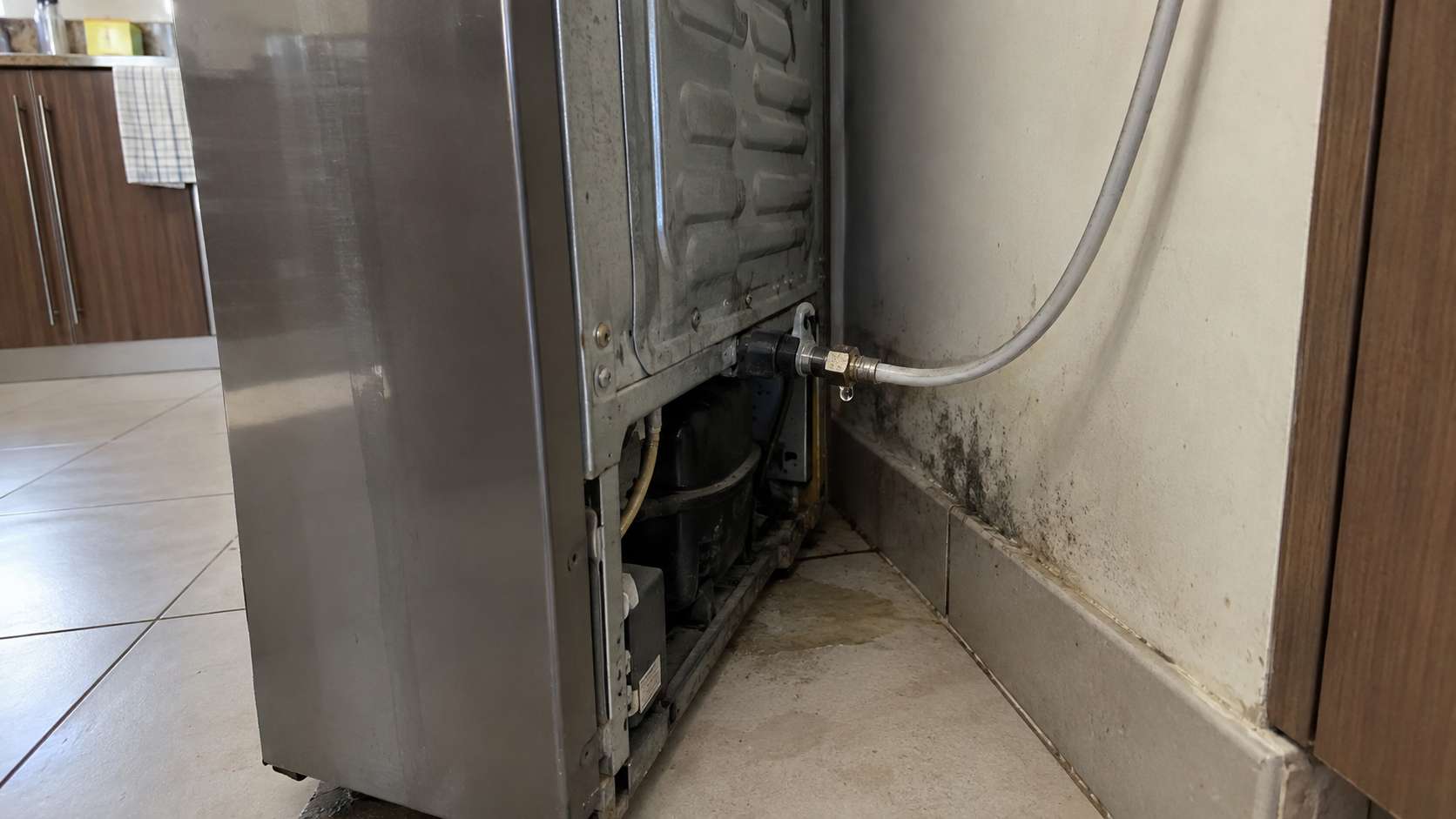
If the area stays wet, cleaning the mold without fixing the moisture source will likely result in regrowth.
Can Mold Behind the Fridge Affect Your Health?
Mold behind a fridge may contribute to indoor air quality problems, especially when the growth is extensive or the area remains damp for a long time.
Some people may experience irritation when exposed to mold spores, including:
- Sneezing
- Runny or blocked nose
- Coughing
- Throat irritation
- Watery or itchy eyes
- Worsening allergy symptoms
People who are more sensitive to indoor air irritants may notice symptoms more quickly.
However, symptoms alone cannot confirm that mold behind the fridge is the cause. Similar reactions can come from dust, cleaning chemicals, pet allergens, or other indoor pollutants.
If there is a strong persistent mold odor, visible growth, or a history of water damage, the focus should be on finding and removing the source.
Are Foods Inside the Fridge at Risk of Mold Exposure?
Many homeowners worry that mold behind the fridge means their food is contaminated. In most cases, mold growing behind the appliance does not automatically mean the food inside the refrigerator is unsafe.
The refrigerator interior is a separate environment with its own temperature and airflow conditions.
However, food may need attention if:
- Mold is growing inside the fridge compartment
- Food containers are visibly contaminated
- There is a strong mold smell inside the refrigerator
- Spores have spread onto exposed food surfaces
Pay special attention to foods that are already prone to mold growth, such as:
- Bread
- Soft fruits
- Cheese
- Leftovers
- Open containers
If food has visible mold, it is generally safer to discard it rather than trying to remove only the affected part, especially for soft foods where mold can spread below the surface.
Also check the fridge itself:
- Clean shelves and drawers
- Remove expired food
- Wash spills
- Inspect door seals
- Clean the drip area if accessible
The main concern with mold behind the fridge is usually the surrounding environment, not automatically the food stored inside.
How to Remove Mold Behind a Fridge Yourself
Small areas of surface mold can sometimes be handled with careful DIY cleaning if the moisture problem has already been fixed.
Follow these steps:
1. Move the refrigerator safely
Before moving the appliance:
- Unplug the fridge if necessary
- Turn off the water supply if it has a water connection
- Ask for assistance because refrigerators can be heavy
Avoid damaging the water line or electrical connections while moving it.
2. Identify and fix the moisture source
Before cleaning, check:
- Water supply hoses
- Drain areas
- Nearby pipes
- Wall dampness
- Condensation buildup
If water is still entering the area, mold will likely return.
3. Clean the affected surface
For small surface areas:
- Wear gloves and a mask
- Improve ventilation
- Remove loose debris carefully
- Clean hard surfaces with appropriate cleaning methods
Avoid mixing cleaning chemicals, especially bleach with other products, because dangerous fumes can form.
Porous materials such as damaged drywall, swollen wood, or heavily affected flooring may require replacement instead of simple cleaning.
4. Dry the area completely
After cleaning:
- Improve airflow
- Use fans if appropriate
- Keep the area dry before pushing the fridge back
Moisture control is the most important prevention step.
How to Prevent Mold Behind the Fridge
Preventing mold is easier than dealing with recurring growth.
Useful prevention strategies include:
Keep space around the refrigerator
Avoid pushing the fridge completely against the wall.
Proper airflow helps:
- Reduce condensation
- Improve cooling efficiency
- Prevent moisture buildup
Check water connections regularly
If your fridge has an ice maker or water dispenser, inspect the supply line for:
- Small leaks
- Loose connections
- Water stains
Even slow leaks can create hidden mold problems.
Clean behind the fridge periodically
A simple maintenance routine can include:
- Vacuuming dust from coils
- Checking for moisture
- Cleaning spills
- Inspecting nearby walls and floors
Control indoor humidity
High humidity can increase condensation around appliances.
Helpful steps include:
- Improving ventilation
- Using exhaust fans
- Monitoring indoor humidity levels
- Repairing leaks quickly
The Bottom Line
Mold behind the fridge is usually a sign of a moisture problem that needs attention, not just a cleaning issue. A musty smell, visible spots, or dampness around the appliance should be investigated before the problem spreads.
The first step is finding and fixing the moisture source. After that, small surface areas may be cleaned safely, while larger or recurring mold problems may require professional assessment.
Your food inside the fridge is not automatically contaminated because mold exists behind the appliance, but any visible mold on food or inside the refrigerator should be handled carefully. Keeping the area dry, clean, and well-ventilated is the best way to prevent mold from returning.