


Why Does Mold Appear After Buying an Old Apartment?
Mold often appears after purchase because previous moisture problems were hidden or unresolved.
During a property viewing, many warning signs can remain unnoticed because:
- Furniture covers affected walls
- Fresh paint hides stains
- The apartment has been empty
- AC systems were not running regularly
- Humidity conditions changed after moving in
Older apartments are especially vulnerable because building materials and systems may have experienced years of wear.
Common causes include:
Previous water leaks
Past leaks from:
- Bathrooms
- Kitchens
- Pipes
- AC drainage systems
- Windows
- Roof areas
can leave moisture trapped inside walls or flooring.
Even if the visible leak was repaired, remaining damp materials can continue supporting mold growth.
Plumbing problems
Old apartments may have aging pipes, damaged seals, or slow leaks that are difficult to notice.
Small leaks can create:
- Damp walls
- Swollen cabinets
- Wet flooring underneath tiles
- Mold behind drywall
AC moisture problems
In humid climates, AC systems are a common source of mold risk.
Problems may include:
- Blocked condensate drains
- Poor AC maintenance
- Water dripping from indoor units
- Mold inside air handling components
Poor ventilation and high humidity
Apartments with limited airflow, especially bathrooms and storage rooms, can develop mold when moisture remains trapped.
Common areas include:
- Behind wardrobes
- Bathroom ceilings
- Corners of bedrooms
- Storage spaces
What Should You Do When Mold Appears After Purchase?
The first reaction for many homeowners is to scrub the mold away or repaint the affected area. However, this may only hide the problem temporarily.
A better approach is to follow these steps.
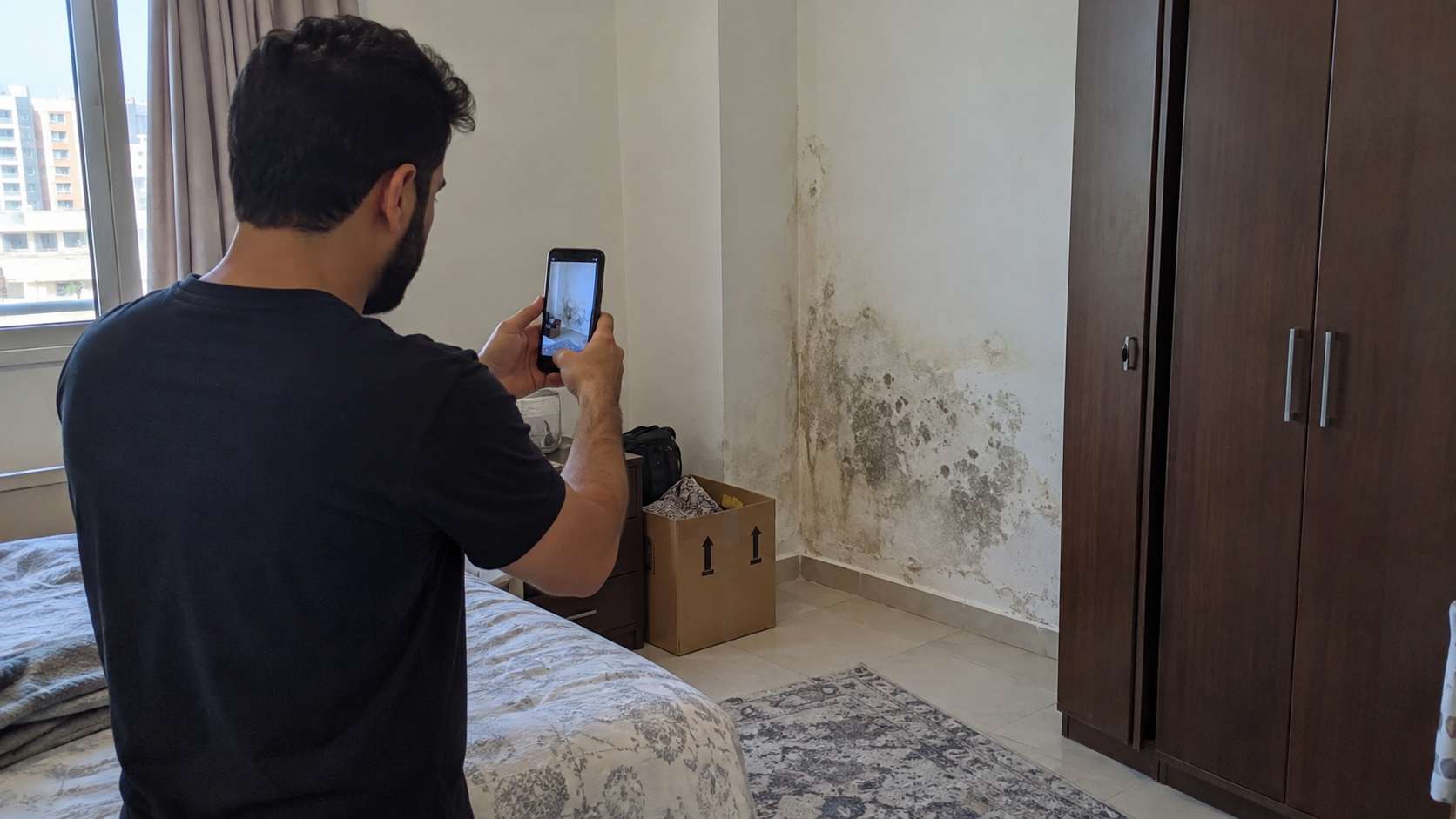
Document everything
Before cleaning or removing anything, take photos and videos.
Record:
- Where the mold appears
- How large the affected area is
- Visible stains or damage
- Any water leaks or moisture signs
Documentation is useful for:
- Understanding how the problem developed
- Discussing the issue with sellers, landlords, or building management
- Supporting possible disputes if necessary
Find the moisture source
Mold is a symptom of excess moisture.
Inspect possible sources such as:
- Leaking pipes
- Bathroom waterproofing issues
- AC condensation leaks
- Window water intrusion
- Hidden wall moisture
Fixing the moisture source must happen before mold removal.
Otherwise, mold may return after cleaning.

Avoid disturbing large mold areas
Small surface mold may sometimes be cleaned safely, but large contamination should be handled carefully.
Avoid:
- Scraping large mold patches dry
- Breaking contaminated walls without protection
- Using fans that spread spores into other rooms
Disturbing mold without proper containment can spread contamination.
Get a professional mold inspection
If mold appears shortly after purchase, especially in an older apartment, a professional assessment can help determine the real problem.
An inspection may include:
- Visual examination
- Moisture testing
- Thermal imaging
- Air quality testing when appropriate
- Checking hidden areas
The goal is to understand whether the mold is:
- A small surface issue
- A hidden moisture problem
- A larger building-related issue
Can You Blame the Previous Owner for Mold After Buying?
This depends on the situation, the agreement, and local property regulations.
In some cases, buyers discover problems that were genuinely unknown during the sale. In other cases, there may be concerns if important defects were intentionally hidden.
If you suspect the mold existed before purchase:
- Review the purchase agreement
- Check inspection reports
- Keep all evidence
- Speak with a qualified legal professional if needed
However, proving when mold started can be complicated.
Mold growth depends on many factors, including humidity, leaks, maintenance, and how long moisture remained.
This is why proper documentation and professional assessment are important.
How Should You Repair Mold Damage After Purchase?
The repair process depends on the extent of damage.
Minor mold issues
Small areas may only require:
- Removing the moisture source
- Cleaning affected surfaces
- Improving ventilation
- Monitoring humidity
Moderate damage
More serious problems may require:
- Removing damaged drywall
- Replacing affected insulation
- Treating contaminated areas
- Repairing flooring
- Repainting after proper preparation
Severe mold problems
Extensive contamination may require full remediation, including:
- Containment
- Professional mold removal
- Material removal
- Deep cleaning
- Air quality verification
- Complete restoration
The goal is not just removing visible mold. The goal is restoring the apartment so the conditions that caused mold no longer exist.
The Bottom Line
Mold appearing after purchase is a common concern, especially with older apartments where hidden moisture problems may exist behind walls, ceilings, flooring, or furniture.
The right response is not to panic or simply cover the mold with paint. First, document the problem, identify the moisture source, and determine the severity through proper inspection.
If the issue is minor, repairs may be straightforward. If hidden moisture or extensive contamination exists, professional remediation and restoration may be necessary.
Buying an older property always comes with some uncertainty, but acting quickly after discovering mold can prevent a small problem from becoming a major and expensive repair.