


What Should a Mold and Mildew Remover Actually Do?
A mold and mildew remover on a budget does remove visible growth, reduce contaminated residue, and support proper drying. But judging it only by whether it makes stains disappear quickly is not right.
See, some products bleach or lighten stains without solving the actual mold condition. A wall may look cleaner, but moisture can remain behind paint, inside drywall, under flooring, or behind cabinets. That is why the EPA advises scrubbing mold off hard surfaces with detergent and water, then drying completely.
For property owners, a good remover should answer these questions:
| Question | Why It Matters |
|---|---|
| What surface is affected? | Tile, glass, drywall, wood, carpet, and insulation need different methods. |
| Is the material porous? | Mold can grow deeper into porous materials. |
| Why did mold appear? | Cleaning will not last if moisture remains. |
| Is the area small or spreading? | Larger areas need more control and safety. |
| Is there a musty smell? | Odor may suggest hidden dampness or contamination. |
| Are vulnerable people exposed? | Asthma, allergies, COPD, and immune issues increase concern. |
So, the “best” mold and mildew remover is not always the strongest chemical. It is the option that matches the real condition of the property.
Product or Professional Mold Remover Company: Which One Do You Need?
A store-bought mold and mildew remover may be enough for small, fresh, surface-level growth on hard materials. A professional company is better when the problem is large, recurring, hidden, or connected to moisture damage.
Use this simple comparison:
| Situation | Product May Be Enough | Professional Company Is Better |
|---|---|---|
| Bathroom tile grout | Yes, if small and surface-level | If it keeps returning or spreads behind silicone |
| Shower glass or ceramic tile | Usually yes | If odor remains after cleaning |
| Painted wall | Only if small, dry, and paint is intact | If paint bubbles, peels, stains, or feels damp |
| Drywall or gypsum board | Usually risky | Yes, especially after leaks or flooding |
| Carpet or underlay | Rarely enough | Yes, especially if wet or musty |
| Ceiling tiles or insulation | Usually not enough | Yes, removal may be needed |
| AC vents or HVAC areas | Surface cleaning only | Yes, if odor or contamination may be inside |
| Recurring mold | No | Yes, source inspection is needed |
| Musty smell with no visible mold | No | Yes, hidden moisture should be checked |
A cleaning product treats the surface you can reach. A professional company should investigate the source, determine the affected materials, control spread, clean safely, remove damaged materials if needed, and guide prevention.
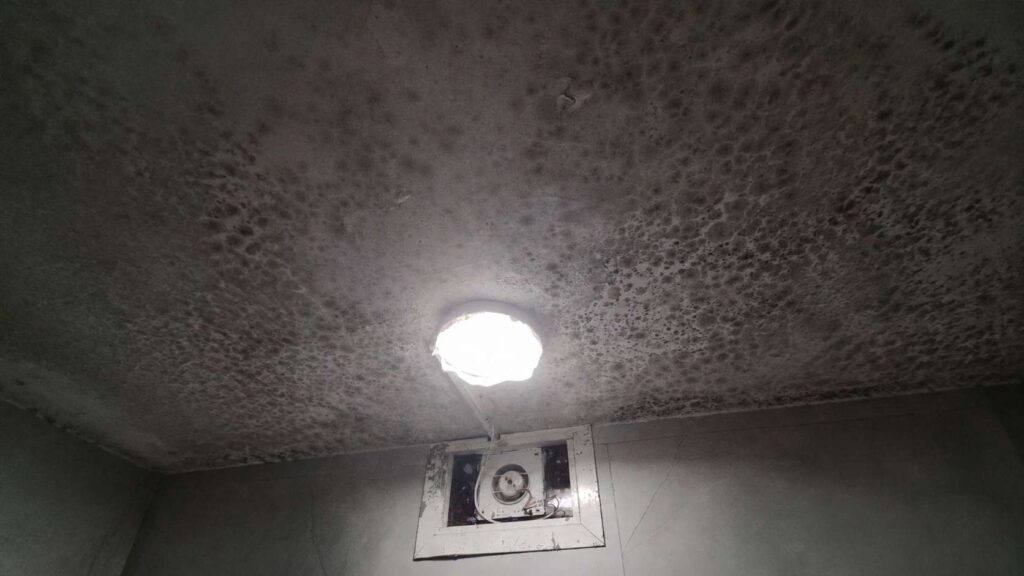
How to Choose the Best Mold and Mildew Remover Product
Simple. Just choose a product based on the surface, label directions, safety requirements, and the type of stain you are treating. Do not choose only by claims like “kills 99.9%” or “instant mold removal.”
For minor surface mildew, look for:
- Clear instructions for the exact surface you want to clean
- Compatibility with tile, grout, glass, plastic, or sealed surfaces
- Safety instructions for ventilation, gloves, and eye protection
- Clear warnings about what not to mix it with
- Advice on drying after use
Avoid using harsh products on delicate, porous, or damaged materials unless the label clearly says it is suitable. As a matter of fact, some cleaners can discolor paint, damage sealant, irritate skin, or create strong fumes.
A product is most suitable when the mold or mildew is:
- Small
- Recent
- Visible
- On a hard surface
- Not caused by ongoing leakage
- Not connected to a musty room smell
- Not growing on drywall, carpet, insulation, or ceiling board
If the product removes the stain but the mold comes back, stop repeating the same treatment. That usually means the moisture source is still active. Let me tell you, that’s a pretty bad thing. You’re going to need a professional to completely get rid of it.
How to Choose a Licensed Mold and Mildew Remover Company
A licensed mold and mildew remover company should provide more than cleaning labor. It should offer inspection, safe work practices, proper treatment, and prevention guidance.
Before hiring, check these points:
1. Licensing and local approval
Ask whether the company is licensed to operate in your area and whether it is approved for the type of cleaning or remediation work you need. In places like Dubai or the wider UAE, this matters because property owners often need proof that the company is legitimate, insured, and allowed to perform specialized cleaning.

Do not rely only on a logo or website claim. Ask for trade license details, approval documents, insurance information, or service documentation when needed.
2. Moisture inspection before treatment
A reliable company should not rush straight into spraying. Mold grows because moisture is present. The company should ask about leaks, AC condensation, water damage, humidity, odor, and previous cleaning attempts.
They may check:
- Walls and ceilings
- Bathrooms and kitchens
- AC vents and ducts
- Cabinets and wardrobes
- Carpet edges
- Windows and exterior walls
- Moisture-prone corners
- Recent leak or flood areas
If they do not inspect the moisture source, the treatment may not last.
3. Surface-specific cleaning methods
The company should explain how they will treat each material. Tile, painted walls, drywall, wood, carpet, ceiling tiles, and insulation do not require the same method.
A good company will tell you what can be cleaned, what needs removal, and what should be dried before repair. Here’s a sneak peek of how a professional licensed mold removal clean it.
4. Safety and containment
Larger mold jobs may need containment to prevent mold particles from spreading. The EPA explains that containment during remediation is used to limit mold release into the air and surrounding areas, reducing exposure for workers and occupants. It also describes HEPA vacuuming as one remediation method.
Ask whether the company uses containment, HEPA filtration, PPE, and controlled disposal when the job requires it.
5. Clear documentation
For homes, rentals, offices, hotels, clinics, and commercial properties, documentation matters. Ask whether the company can provide before-and-after photos, findings, moisture notes, treatment scope, and prevention advice.
Documentation protects you if the issue involves tenants, landlords, management, insurance, or future buyers.
Mold and Mildew Remover Methods by Surface Type
The right removal method depends heavily on the surface. This is where many DIY attempts fail.
| Surface | Best Removal Approach | When to Upgrade to Professional Help |
|---|---|---|
| Tile and glass | Scrub with a suitable cleaner, rinse or wipe, dry fully | If mold returns quickly or grout is deeply stained |
| Grout and silicone | Clean surface buildup; replace failed silicone if needed | If mold is behind sealant or wall moisture is present |
| Painted wall | Damp clean only if small, dry, and paint is intact | If paint bubbles, peels, stains, or smells musty |
| Wood furniture | Clean gently, avoid soaking, dry in airflow | If mold is deep, recurring, or wood is swollen |
| Drywall | Surface cleaning is limited | If damp, soft, stained, or water-damaged |
| Carpet and underlay | Cleaning may help minor odor only | If wet, moldy, or musty underneath |
| Ceiling tiles | Often difficult to restore | Replacement is usually safer if moldy |
| Insulation | Usually not cleanable | Remove and replace if wet or moldy |
| AC vents/HVAC areas | Clean visible grille carefully | Professional HVAC/mold inspection if odor continues |
Hard surfaces are generally more suitable for cleaning. Porous materials can hold mold deeper inside. EPA guidance notes that absorbent or porous materials such as ceiling tiles and carpet may need to be thrown away if they become moldy.
How to Compare Quotes From Mold and Mildew Removal Companies
When comparing quotes, please do not just go for a service only by price. A low quote may only include surface spraying, while a proper service may include inspection, protection, cleaning, drying, disposal, and documentation.
Ask each company:
| Question | Why It Matters |
|---|---|
| Do you inspect the moisture source? | Mold returns if dampness remains. |
| Are you licensed or approved for this work? | Helps confirm legitimacy and accountability. |
| What surfaces are included? | Different materials need different treatment. |
| Is containment included if needed? | Important for larger or sensitive jobs. |
| Do you remove damaged materials? | Some porous materials cannot be saved. |
| Do you use HEPA filtration? | Useful for particle control in larger remediation. |
| Do you provide before-and-after photos? | Helps confirm the work completed. |
| Is testing included or separate? | Testing is not always needed, but pricing should be clear. |
| What prevention advice is included? | Long-term success depends on moisture control. |
Be careful with any company that promises permanent removal without inspecting moisture. Also be cautious if the only solution offered is fogging, fragrance, or chemical spraying. Those may have limited roles, but they should not replace physical cleaning, drying, and source correction.
Bio-On provides a complete mold cleaning solution by addressing the moisture sources first. Then, they adjust the cleaning method by looking at the severity, surface type, and the overall condition in your property.
Not stopping there, Bio-On also provides routine follow-up care. This way, you don’t have to worry that the mold will come back.
Now, You Know What to Choose
The best mold and mildew remover is the one that fits the real problem. For small mildew on tile, glass, or sealed surfaces, a suitable cleaning product may be enough if you use it safely and dry the area completely. For recurring, hidden, musty-smelling, water-damage-related, or porous-material mold, a licensed mold and mildew removal company is the safer choice.
When choosing a company, look for licensing, moisture inspection, surface-specific methods, safety controls, clear documentation, and prevention advice. The goal is not only to make the stain disappear.
The real goal is to remove the mold properly, fix the moisture source, protect the property, and reduce the chance of it coming back.