


Is It Memory Foam Mattress Mold or Just a Stain?
It is mold if it has an irregular shape, changes over time, and may produce a musty or earthy odor. It’s a stain if it is linked to a spill, sweat, body oils, or another identifiable source and does not continue spreading once the mattress has dried.
So make sure to check the mark under bright natural light without rubbing or disturbing it. Mold does not always appear black. Depending on the species, surface, moisture level, and growth stage, it may look:
- Black or dark grey
- Green or olive
- White and powdery
- Speckled or clustered
- Fuzzy, dusty, or slightly raised
A stain is more likely when the discoloration has a defined source. Yellowing around the sleeping area, for example, commonly develops from sweat, body oils, or aging materials. A brown ring may follow a spilled drink or a previous cleaning attempt that left moisture behind.
Odor is one of the most useful distinctions. Active or hidden mold often produces a persistent musty smell that remains after bedding is removed. But the absence of odor does not completely rule it out, particularly when the affected area is small.
Why Memory Foam Can Develop Mold
Memory foam develops mold when moisture remains trapped long enough for fungal spores to grow. The foam’s dense cellular structure can hold moisture from sweat, spills, condensation, damp bedding, humid air, or an inadequately ventilated bed base.
The problem does not always begin on the upper sleeping surface. Growth often starts underneath the mattress, where airflow is restricted, and moisture escapes slowly.
Common reasons include:
- Placing the mattress directly on the floor
- Using a solid base without enough ventilation
- Sleeping in a humid or poorly ventilated room
- Making the bed while the mattress or bedding is still damp
- Leaving a spill to soak into the foam
- Using excessive liquid during cleaning
- Positioning the bed against a cold or damp wall
Body heat and perspiration can also add moisture night after night. A breathable mattress protector can reduce direct exposure to sweat and spills, but it cannot fix high room humidity or poor airflow beneath the bed.

Memory foam is harder to assess than a hard, nonporous surface. Visible spots may represent only the exposed part of the contamination. Once moisture penetrates deeply, the centre of the mattress can remain damp even when the outside feels dry.
How to Check the Entire Mattress Before Cleaning
Check every side of the mattress before deciding that the contamination is small enough to clean. All you need to do is to remove all bedding and check the top, seams, handles, underside, zipper area, mattress cover, bed base, slats, headboard, surrounding floor, and nearby wall.
Begin with the area beneath the mattress. This is where moisture and restricted airflow commonly combine, especially when the bed has a solid platform or sits directly on the floor.
Check for:
- Multiple clusters of dark or pale spots
- Damp or cool areas in the foam
- Musty odor across more than one section
- Discoloration beneath a removable cover
- Mold on the bed frame or foundation
- Softening, crumbling, or deterioration of the foam
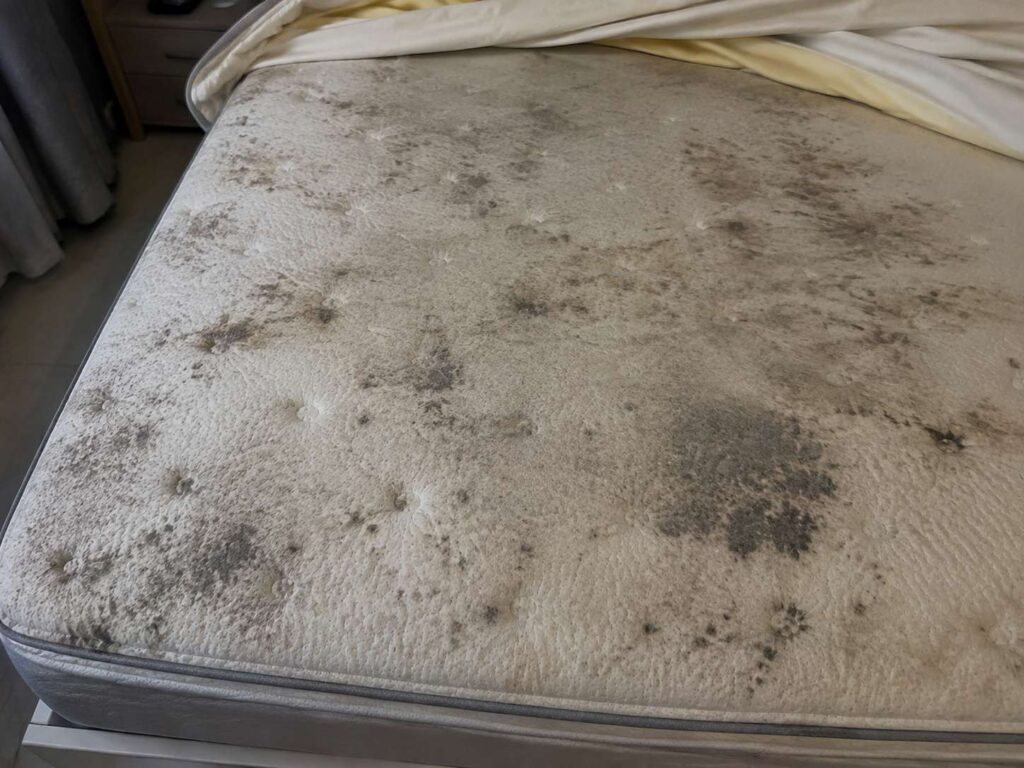
A removable fabric cover can hide contamination, but throwing it into the trash does not necessarily expose the entire problem. Review the manufacturer’s instructions before opening or washing the cover. Some mattresses contain inner materials that should not be disturbed, and some covers are not intended for machine washing.
Consider what happened before the spots appeared. A recently spilled drink creates a different risk from a mattress left damp after flooding, plumbing leakage, or weeks of high humidity. Prolonged or contaminated water exposure makes successful cleaning far less likely.
When a Memory Foam Mattress May Be Cleanable
Cleaning may be reasonable when the suspected growth is recent, confined to a very small surface area, and linked to a moisture source that has already been corrected. The mattress should otherwise be dry, structurally sound, and free from widespread odor.
A cleaning attempt is more defensible when all of the following are true:
- Only one small area is affected
- The marks appear limited to the surface
- There is no evidence of growth underneath
- The foam was not saturated
- The mattress does not smell musty throughout
- The mattress can be dried completely
Move the mattress to a well-ventilated location away from occupied sleeping areas. Wear gloves and avoid pressing, scrubbing, or soaking the foam. Remove bedding and wash suitable items according to their care labels.
Use as little liquid as possible. Memory foam is difficult to rinse and can retain cleaning moisture, creating conditions for the problem to return. Light surface treatment is different from saturating the material.
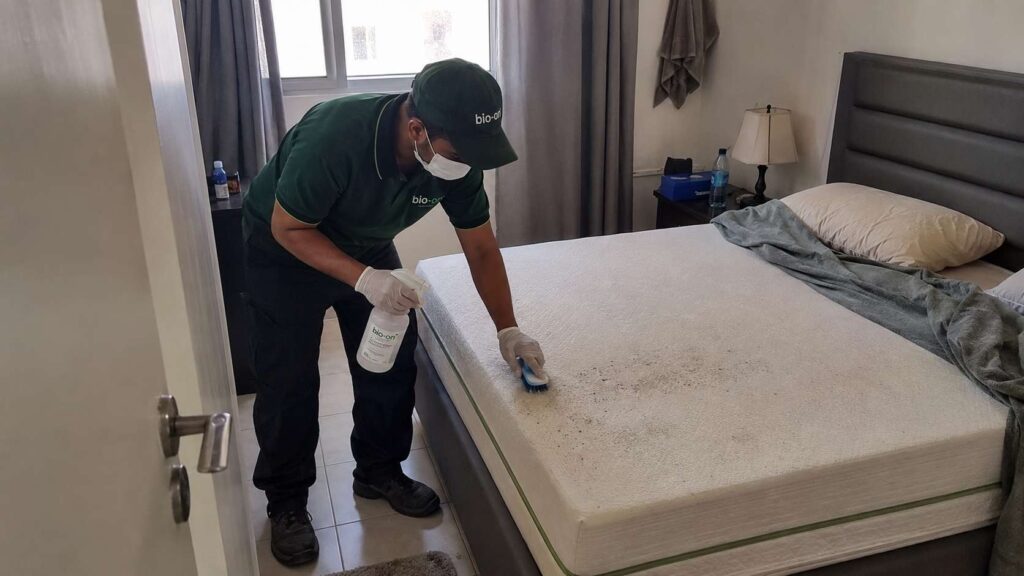
After treatment, the mattress must dry fully before it is covered or used. Air circulation around every side is important. A fan and dehumidifier help it dry out, but they do not remove contamination that has already penetrated the foam.
When the Mattress Should Be Replaced
Okay, but when should you choose to replace the mattress? Replace it when contamination is widespread, embedded in the foam, recurring, associated with major water damage, or impossible to dry completely. The cost and effort of repeated cleaning rarely justify keeping a mattress that cannot be confidently restored.
Replace the mattress when you find:
- Mold in several separate areas
- Growth on both the top and underside
- Contamination beneath the outer cover
- A strong odor throughout the mattress
- Exposure to flooding, sewage, or contaminated water
- Extensive mold on the bed base and nearby surfaces

Health circumstances also affect the decision. People with asthma, mold allergies, chronic respiratory conditions, weakened immune systems, or strong reactions around the bed should not continue sleeping on a mattress with unresolved suspected growth.
Age and condition matter as well. Replacing an older, sagging, damaged mattress is usually more sensible than attempting uncertain remediation. Even when visible marks are removed, there is no simple household test that proves deeply contaminated foam has been cleaned throughout.
How to Prevent Mold From Returning
Controlling moisture above, below, and around the mattress is the best way to keep mold away. A cleaned or replacement mattress can develop the same problem if it returns to a damp room, non-ventilated foundation, or moisture-damaged wall.
Improve the sleeping setup by:
- Using a ventilated slatted or breathable bed base
- Keeping the mattress off the floor
- Leaving space between the bed and an exterior wall
- Using a washable, breathable mattress protector
- Washing and fully drying bedding regularly
A dehumidifier can reduce environmental moisture, but it should not be treated as a substitute for repairing leaks or improving airflow. It also cannot clean fungal growth already established within the mattress.
After receiving a new mattress, inspect the bed frame before installation. Clean and dry reusable components, including slats and nearby flooring. Replace porous foundation materials when they remain musty, stained, swollen, or contaminated.
So, Did You Spot Mold Growth on Your Memory Foam Mattress?
Now you know how to tell a sign of mold growth and a regular stain apart. Memory foam mattress mold is more likely when discoloration is irregular, spreading, musty-smelling, or associated with dampness beneath the bed. A stable mark with a known cause and no odor may simply be a stain, but the underside and foam beneath the cover still need inspection.
Should you clean it or replace it? Well, it depends. But if you choose to clean, do it on only small, recent, surface-level growth when the mattress remained mostly dry and can be dried completely. Meanwhile, replace it when contamination is widespread, deeply embedded, recurring, linked to major water exposure, or likely to create an unacceptable health risk.