


Lysol Mold and Mildew Remover Review: What It Does Best
Lysol Mold and Mildew Remover is best understood as a bathroom mold and mildew stain remover, not a full building remediation product. It performs strongest when the problem is on the surface: shower corners, glazed tile, tubs, sinks, counters, sealed grout, toilet exteriors, and other hard bathroom materials.
The product is marketed as a bleach-based cleaner that removes mold and mildew stains, soap scum, and tough bathroom spots. Kroger’s product listing describes it as formulated with bleach and made for bathroom surfaces such as bathtubs, counters, sinks, toilets, ceramic, grout, metal, plastic, porcelain, and vinyl.
That matches what many users seem to like about it. On Walmart, Lysol Mold and Mildew Foamer Cleaner with Bleach shows a 4.7 out of 5 rating from more than 2,300 ratings, with 85% listed as 5-star ratings. Several positive reviews mention that it works quickly on moldy tub areas, bathroom grout, and shower surfaces, though users also commonly mention a strong bleach smell.
Target’s listing tells a similar story. It shows a 4.5 out of 5 rating from more than 1,700 ratings, with high scores for cleaning effectiveness, quality, and value. Positive reviewers commonly say it works well on old bathrooms, moldy grout, bathroom surfaces, and even window areas affected by mildew-like staining.
Our practical read: this is the kind of cleaner people like because the visual result is obvious. You spray, let it sit, and the black or dark mildew staining often fades. That instant “before and after” effect is why bleach-based mold sprays stay popular.
What People Usually Say About Lysol Mold and Mildew Remover
Most positive reviews focus on speed, whitening, and ease. People often say it removes dark spots with less scrubbing than regular bathroom cleaners. In bathrooms with stained grout lines, shower corners, and tub edges, that matters because people usually want a fast fix, not a full restoration process.
The common positive themes are:
- It works quickly on visible mold and mildew stains.
- It brightens grout, tile, and tub areas.
- It reduces the need for heavy scrubbing.
- It is affordable compared with specialty mold products.
- The foaming spray helps it cling better than thin liquid cleaners.
- It feels stronger than ordinary bathroom sprays.
There are also recurring complaints. The biggest one is the bleach smell. Many users like the result but warn that the odor is strong. That is not surprising for a bleach-based bathroom product. CDC advises good ventilation when using bleach products indoors and warns not to mix bleach with other cleaners or disinfectants.
Another common complaint is packaging or leaking during delivery. Target’s recent reviews include negative comments about bottles arriving open, leaking, or damaged. That is not really an effectiveness problem, but it affects the buyer experience because a leaking bleach product can damage other items.
Some users also say the mold comes back. That is not always the product’s fault. Mold and mildew return when the bathroom stays damp, ventilation is weak, caulk is already contaminated, or the water source is not fixed. A Reddit cleaning discussion described a similar pattern: Lysol bathroom cleaner with bleach wiped out mild recurring shower mold, but the mold returned after about a month.
So the review pattern is balanced: people generally like it for visible bathroom stains, but it does not solve the reason the mold keeps appearing.
Our Hands-On View as a Mold Cleaning Service
From a professional mold cleaning perspective, Lysol Mold and Mildew Remover is useful, but only in a narrow lane. It is a surface cleaner. It can help with cosmetic mold and mildew staining on non-porous or mostly non-porous bathroom surfaces. It is not a professional remediation method for moisture-damaged building materials.
In real mold cleaning work, the question is never just, “Can this product kill mold?” The better question is, “Where is the mold growing, what is feeding it, and why is the material staying wet?”

A bleach spray can make tile look clean. But if the moisture source remains, mold can return. EPA guidance is clear that mold cleanup depends on moisture control and that mold should be scrubbed from hard surfaces with detergent and water, then dried completely. EPA also says chemical biocides such as chlorine bleach are not recommended as routine mold cleanup practice.
That does not mean Lysol is useless. It means it should be used for the right kind of problem.
In our hands-on view, it is strongest for:
- Shower tile with surface mildew
- Tub edges with black staining
- Bathroom sinks with mildew stains
- Toilet exterior areas
- Glazed ceramic tile
- Non-porous surfaces with soap scum and mold staining
- Light mold residue on washable bathroom surfaces
It is weakest for:
- Mold behind silicone caulk
- Mold inside porous grout
- Mold behind drywall
- Mold under flooring
- Mold inside cabinets
- Mold caused by active leaks
- Mold connected to AC condensation
- Mold covering large areas
- Mold inside HVAC components
The product can improve appearance fast. But professional cleaning is more about source control, containment, removal, and drying than appearance alone.
How Good It Is at Killing Mold
Lysol Mold and Mildew Remover is effective for killing or reducing surface mold and mildew when used correctly on the right surface. Lysol’s own instructions for a bleach multi-purpose cleaner say that, to kill mold and mildew, the product should be applied to a pre-cleaned surface, left wet for 5 minutes, allowed to air dry, and reapplied weekly or when growth appears.
That contact time matters. Many people spray and wipe too quickly. With disinfectants and mold-control products, the surface usually has to stay wet for the required time. If you wipe it after ten seconds, you may still get some whitening, but you may not be following the kill claim properly.
On non-porous bathroom surfaces, this product can perform very well. Bleach is strong at breaking down stains and visually whitening dark mold or mildew marks. That is why many reviewers describe the result as dramatic, especially on tile and grout lines. Real Simple also selected Lysol Mold & Mildew Foamer with Bleach as a bathroom cleaner option for mold and mildew issues, noting it as a targeted product for that problem.
But there is an important limitation: “killing” mold is not the same as removing mold contamination. Dead mold fragments, residue, and staining may still remain. EPA’s basic cleanup advice focuses on scrubbing mold off hard surfaces with detergent and water and drying completely.
So our verdict on effectiveness is this: for visible surface mildew in a bathroom, it is strong. For actual building mold remediation, it is incomplete.
Where Lysol Mold and Mildew Remover Works Well
This product works best in bathrooms because bathrooms create the exact mess it is designed for: soap scum, humidity, body oils, standing moisture, and surface mildew. The bleach formula can cut through staining while also brightening the surface.
Good use cases include:
- Small black spots on shower tile
- Mildew stains around tub edges
- Stains on glazed ceramic tile
- Surface discoloration on sealed grout
- Moldy-looking sink edges
- Toilet exterior areas
- Shower door tracks, if the material tolerates bleach
- Non-porous bathroom surfaces with recurring mildew staining
The foam format is a real advantage. Thin cleaners can run down vertical walls quickly. Foam clings a little better, which gives the active ingredients more time on the stain. That is likely one reason people like it for grout and shower corners.
Still, surface compatibility matters. Bleach can discolor fabric, damage some metals, affect natural stone, and irritate skin and lungs if used carelessly. Lysol’s FAQ says its products should be used according to back-of-pack directions and notes that some Lysol products are not recommended on brass, copper, aluminum, painted wood, certain fabrics, leather, rayon, silk, satin, or acrylic plastics.
Before using it on anything expensive, decorative, painted, natural, sealed, or unusual, test a small hidden area first. Bathroom cleaners are not automatically safe for every bathroom material.
Where This Product Cannot Help at All
Lysol Mold and Mildew Remover cannot fix the cause of mold. This is the biggest limitation.
It cannot repair a leaking pipe. It cannot dry wet drywall. It cannot remove mold growing behind a wall. It cannot replace rotten caulk. It cannot restore water-damaged wood. It cannot clean mold inside insulation. It cannot make a badly ventilated bathroom suddenly safe from recurring mildew.
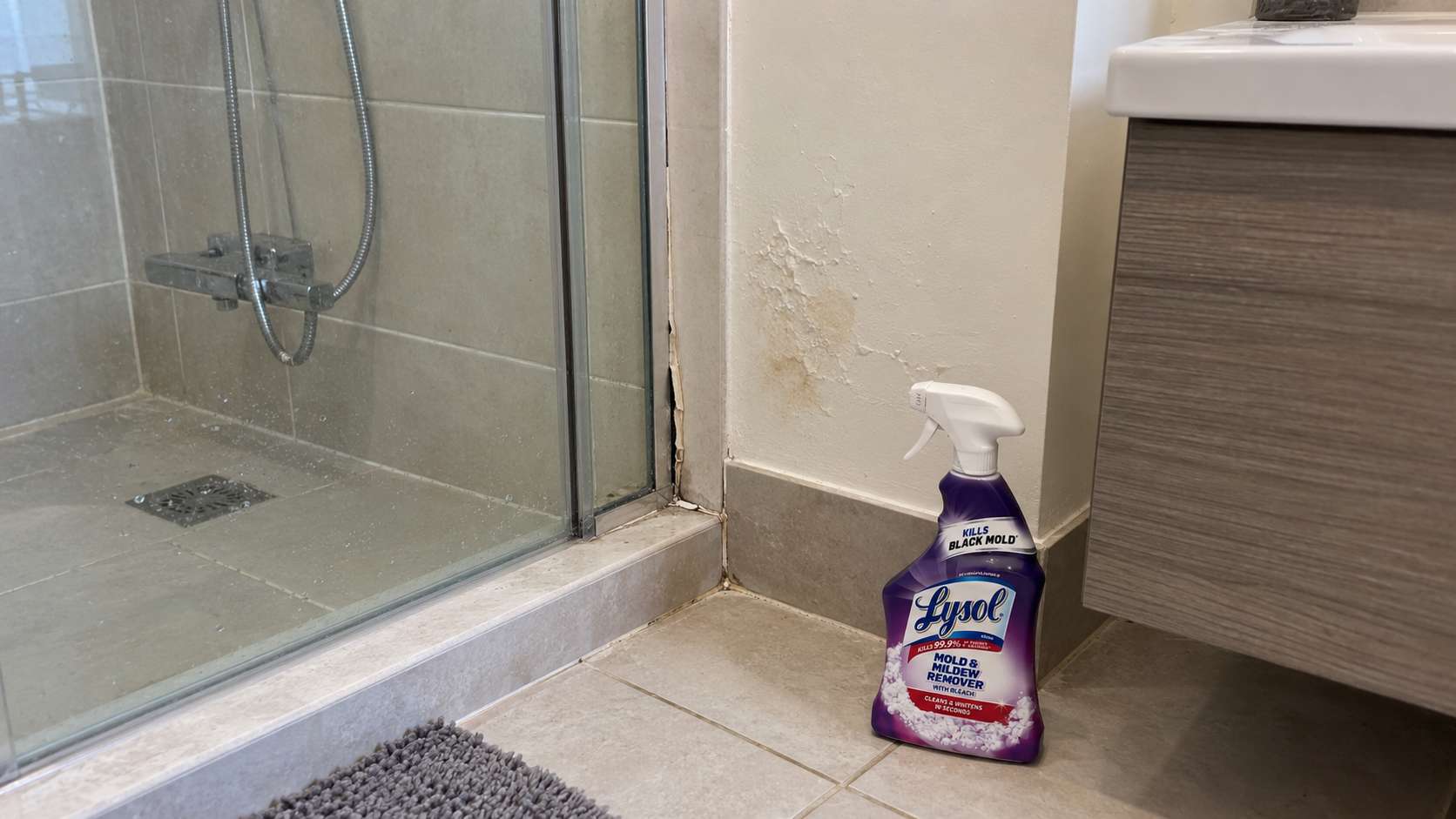
It also cannot properly solve mold on porous materials. If mold has grown into drywall, carpet backing, particle board, ceiling tiles, cardboard, or insulation, a surface spray is usually not enough. These materials can hold moisture and organic matter below the surface. The visible stain may fade, but the contamination or moisture problem can remain.
EPA says that if the moldy area is less than about 10 square feet, most people can usually handle it themselves, but larger areas or heavy water damage should be approached with more caution. EPA also recommends consulting its mold remediation guidance when mold growth covers more than 10 square feet or when there has been a lot of water damage.
Lysol also cannot replace proper remediation when the problem involves:
- Hidden wall cavities
- Flood damage
- Sewage contamination
- Large mold colonies
- Mold inside HVAC systems
- Mold in rental or workplace disputes
- Sensitive occupants with asthma or immune concerns
- Recurring musty odor with no visible source
- Wet building materials that never fully dried
If you keep spraying and the mold keeps coming back, the product is not the real issue. The building condition is.
Safety, Smell, and Surface Concerns
This product is strong, and that is part of both its appeal and its downside. The same bleach-based strength that whitens mold stains can also irritate your eyes, nose, throat, and skin when used without ventilation.
Use it with open windows, running exhaust fans, gloves, and enough airflow. Do not use it in a tiny closed bathroom with the door shut. Do not lean into the sprayed area and breathe the mist. Do not mix it with vinegar, ammonia, toilet bowl cleaner, descaler, or any other cleaning product.
CDC specifically warns that bleach should never be mixed with ammonia or other cleaners because dangerous vapors can form. CDC also recommends cleaning visibly dirty surfaces first before disinfecting with bleach and using good ventilation when bleach products are used indoors.
Be careful around children, pets, and anyone with asthma, chemical sensitivity, or respiratory issues. Even when used correctly, strong bathroom cleaners can be uncomfortable for sensitive people.
Surface damage is another issue. Bleach-based cleaners can lighten fabrics, discolor porous stone, dull some finishes, and corrode certain metals with repeated exposure. Rinse where the label requires rinsing, especially around metal fixtures, food-contact surfaces, and areas touched often.
Our practical safety rule: use the smallest amount needed, only on suitable surfaces, with ventilation, and only after you know the product fits the material.
Our Final Verdict: DIY Cleaner or Professional Mold Help?
Lysol Mold and Mildew Remover is worth using if your problem is small, visible, and bathroom-based. For everyday shower mildew, tub-edge staining, sink grime, and tile discoloration, it is one of the more practical consumer products because it works fast and does not require complicated steps.
You probably do not need a professional if:
- The affected area is small
- The mold is only on hard bathroom surfaces
- There is no active leak
- There is no musty smell behind walls
- The stain improves and does not return quickly
- No one in the home has severe mold sensitivity or serious respiratory risk
But you should consider a professional mold remediation service if:
- Mold keeps coming back after cleaning
- The affected area is larger than about 10 square feet
- There was flooding or major water damage
- The mold is behind caulk, drywall, cabinets, or flooring
- You smell mold but cannot find the source
- The problem involves HVAC or AC systems
- Occupants have asthma, allergies, or immune concerns
- The property is commercial, rental, or insurance-related
A professional does more than spray. They look for moisture, isolate affected areas, remove contaminated materials, use HEPA equipment, dry the structure, and help prevent the same issue from returning.
So the final verdict is fair but firm: Lysol Mold and Mildew Remover is a strong bathroom stain remover and a useful DIY product for small surface mold problems. It is not a replacement for mold remediation. Use it when the mold is minor and surface-level. Hire a professional when the mold is hidden, recurring, widespread, moisture-driven, or connected to health-sensitive spaces.
The Bottom Line
Lysol Mold and Mildew Remover gets good reviews for a reason. It is affordable, easy to use, and visually effective on bathroom mold and mildew stains. Many users like how quickly it brightens grout, tile, tubs, and shower corners, and retailer reviews generally show strong satisfaction for cleaning performance.
But the product has clear limits. It smells strongly of bleach, needs careful ventilation, can damage sensitive surfaces, and cannot fix the moisture source that caused the mold. It can clean what you see, but it cannot inspect what you cannot see.
For small bathroom mildew, it is a solid DIY cleaner. For serious mold, recurring mold, hidden mold, or water-damaged materials, professional remediation is the safer and more complete choice.