


Why You Need to Kill Pink Mold in Shower Areas Properly
You need to kill pink mold in shower areas properly because the pink stain is usually part of a slimy biofilm, not just a simple surface mark. If you only rinse it with water or wipe the top layer, the film can return quickly.
Pink shower slime usually grows where moisture and residue meet. Shower corners, tile grout, drain edges, glass door tracks, shampoo shelves, rubber seals, and shower curtains are common hotspots. These areas trap soap scum, dead skin cells, conditioner residue, dust, and water. That gives bacteria a comfortable place to stick and multiply.
This is why pink slime often appears even in bathrooms that look “clean enough.” It does not always mean your bathroom is filthy. Sometimes it means the surface stays wet too long, the exhaust fan is weak, the grout is rough, or the shower is not being dried after use.
However, you should still take it seriously. Damp bathrooms can also support true mold growth. CDC explains that exposure to damp and moldy environments may cause different health effects in different people, or none at all. Some people may experience symptoms such as stuffy nose, wheezing, red or itchy eyes, or skin irritation.
So, the goal is simple: remove the pink biofilm now and fix the damp conditions that allow it to come back.
Best DIY Cleaning Solutions for Pink Mold in Shower
The best DIY cleaning solution depends on the surface. Shower tile, glass, ceramic, plastic, grout, silicone, and fabric curtains do not all respond the same way. A product that works well on glazed tile may damage natural stone, discolor fabric, or weaken old caulk.
Dish Soap and Warm Water for First Cleaning
Start with dish soap and warm water. This sounds basic, but it is one of the most important steps because soap helps break up body oils, shampoo residue, and surface grime.
Mix warm water with a small amount of dish soap. Apply it to the pink areas and scrub with a bathroom brush, sponge, or old toothbrush. Focus on corners, grout, tracks, and the lower wall area where water sits.
This step physically removes the slime layer. Do not skip it and go straight to disinfectant. Disinfectants work better after the surface is already cleaned.
Hydrogen Peroxide for Grout and Tile
Hydrogen peroxide can be useful for many shower surfaces because it helps lift stains and break down organic residue. It is often gentler than chlorine bleach, although you still need to test it first.
Apply 3% hydrogen peroxide to the affected area, let it sit for several minutes, then scrub and rinse. It can help on grout lines, tile corners, and areas where pink slime has started to stain.
Avoid mixing hydrogen peroxide with vinegar, bleach, ammonia, or other cleaners. Use one cleaning product at a time.
White Vinegar for Soap Scum and Mineral Buildup
White vinegar can help dissolve soap scum and mineral deposits that give pink slime a place to cling. It is especially useful on glass doors, showerheads, and some tile surfaces.
Spray vinegar on the affected area, let it sit briefly, scrub, rinse, and dry. But be careful with natural stone such as marble, travertine, limestone, or certain premium finishes. Acidic cleaners can damage stone.
Vinegar is not always the strongest “kill” product, but it can be helpful for removing the buildup that supports recurring slime.
Baking Soda Paste for Gentle Scrubbing
Baking soda is useful when you need mild abrasion. Mix baking soda with a little water to create a paste. Apply it to grout, corners, or textured areas. Scrub gently, rinse, and dry.
This is not a magic disinfectant. Its main benefit is mechanical cleaning. It helps loosen residue without being too harsh on many surfaces.
Bleach-Based Bathroom Cleaner for Hard Non-Porous Surfaces
Bleach-based bathroom cleaners can work on hard non-porous surfaces like glazed tile, porcelain, ceramic, glass, and some plastic surfaces. They can lighten stains and disinfect surfaces when used according to the label.
However, bleach should not be your default for every mold-related cleanup. EPA says the use of a biocide such as chlorine bleach is not recommended as a routine practice during mold cleanup, and its basic guidance is to scrub mold off hard surfaces with detergent and water, then dry completely.
In practical terms, bleach-based cleaners may help in a shower, but they are not always the long-term answer. They may whiten the visible stain while the deeper problem remains in caulk, grout pores, or moisture conditions.
Never mix bleach with vinegar, ammonia, toilet cleaner, acidic descaler, or other chemicals. That can create dangerous fumes.
Step-by-Step Guide to Kill Pink Mold in Shower
Here is a simple cleaning process that works for many normal bathroom situations.
Step 1: Prepare the Shower Area
Open the bathroom door or window if available. Turn on the exhaust fan. Wear gloves. If you are sensitive to cleaning fumes, wear eye protection and avoid strong chemical sprays.
Remove shampoo bottles, razors, loofahs, mats, toys, soap dishes, and shower curtains. Pink slime often hides under these items.
Step 2: Wash the Area With Soap First
Use warm water and dish soap or a bathroom detergent. Scrub the pink areas thoroughly. This removes the surface slime and residue.
Pay attention to:
- grout lines;
- silicone caulk;
- drain edges;
- shower door tracks;
- tile corners;
- wall-floor joints;
- shelves and niches;
- rubber seals;
- curtain folds.
Rinse the area after scrubbing.
Step 3: Apply the Right Cleaner for the Surface
Choose one cleaner based on your surface. Hydrogen peroxide is a good option for many tile and grout areas. Vinegar can help with soap scum, but avoid it on natural stone. A bleach-based cleaner may be used carefully on hard non-porous surfaces when the label allows it.
Let the cleaner sit long enough to work, but do not let harsh chemicals dry on the surface. Follow the product label.
Step 4: Scrub Again
Scrub the area again after the cleaner has had contact time. Pink slime is sticky, so physical scrubbing is important.
Use a grout brush, toothbrush, non-scratch sponge, or detail brush. For shower door tracks, use a small brush that can reach the corners.
Step 5: Rinse Completely
Rinse the surface with clean water. Leftover cleaner residue can irritate skin or damage finishes. It can also mix with future products if someone cleans again later.
Step 6: Dry the Shower Fully
Drying is not optional. Use a towel, squeegee, or airflow to dry the shower. Pink slime returns quickly when surfaces stay wet.
EPA guidance says bathroom mold that reappears can often be reduced by increasing ventilation and cleaning more frequently, and hard surfaces should be scrubbed with detergent and water and dried completely.
Step 7: Repeat After 24–48 Hours if Needed
If the stain is old, you may need a second cleaning. But if the pink growth returns within a few days, the issue is probably not only surface dirt. You may have failing grout, damaged caulk, poor ventilation, hidden moisture, or contamination in shower accessories.
Cleaning Products That Work Best for Pink Shower Mold
The best products are not always the strongest products. The best product is the one that matches the surface and removes the biofilm without damaging your bathroom.
Best for Daily Maintenance
A mild bathroom cleaner or dish soap solution is enough for routine cleaning. Use it weekly on shower walls, glass, shelves, and corners. This prevents residue from building up.
Best for Grout Lines
Hydrogen peroxide or an oxygen-based cleaner can work well for many grout lines. Use a brush and give it enough contact time. If the grout is cracked or deeply stained, cleaning may only improve the surface.
Best for Soap Scum
White vinegar-based cleaners can help remove soap scum and mineral film. But avoid acidic cleaners on natural stone or sensitive finishes.
Best for Hard Non-Porous Disinfection
A labeled bathroom disinfectant or bleach-based shower cleaner can be useful for ceramic, porcelain, glass, and glazed tile. Follow the label carefully. Do not use it randomly on every material.
Best for Shower Curtains and Liners
Washable shower curtains and liners can often be cleaned in the washing machine, depending on the care label. Add towels to help scrub during the wash cycle. Dry them fully before rehanging. Replace curtains that remain stained, slimy, or smelly.
Best for Silicone Caulk
This is the hard one. If pink or black staining has penetrated silicone caulk, cleaners may not fully remove it. You may need to remove and replace the caulk. Cleaning the surface again and again may only waste time.

Prevention Strategies So Pink Mold Does Not Return
Preventing pink mold in the shower is mostly about moisture, airflow, and residue control.
After every shower, rinse soap from the walls and floor. Then use a squeegee on glass and tile. This one-minute habit can reduce water sitting on surfaces.
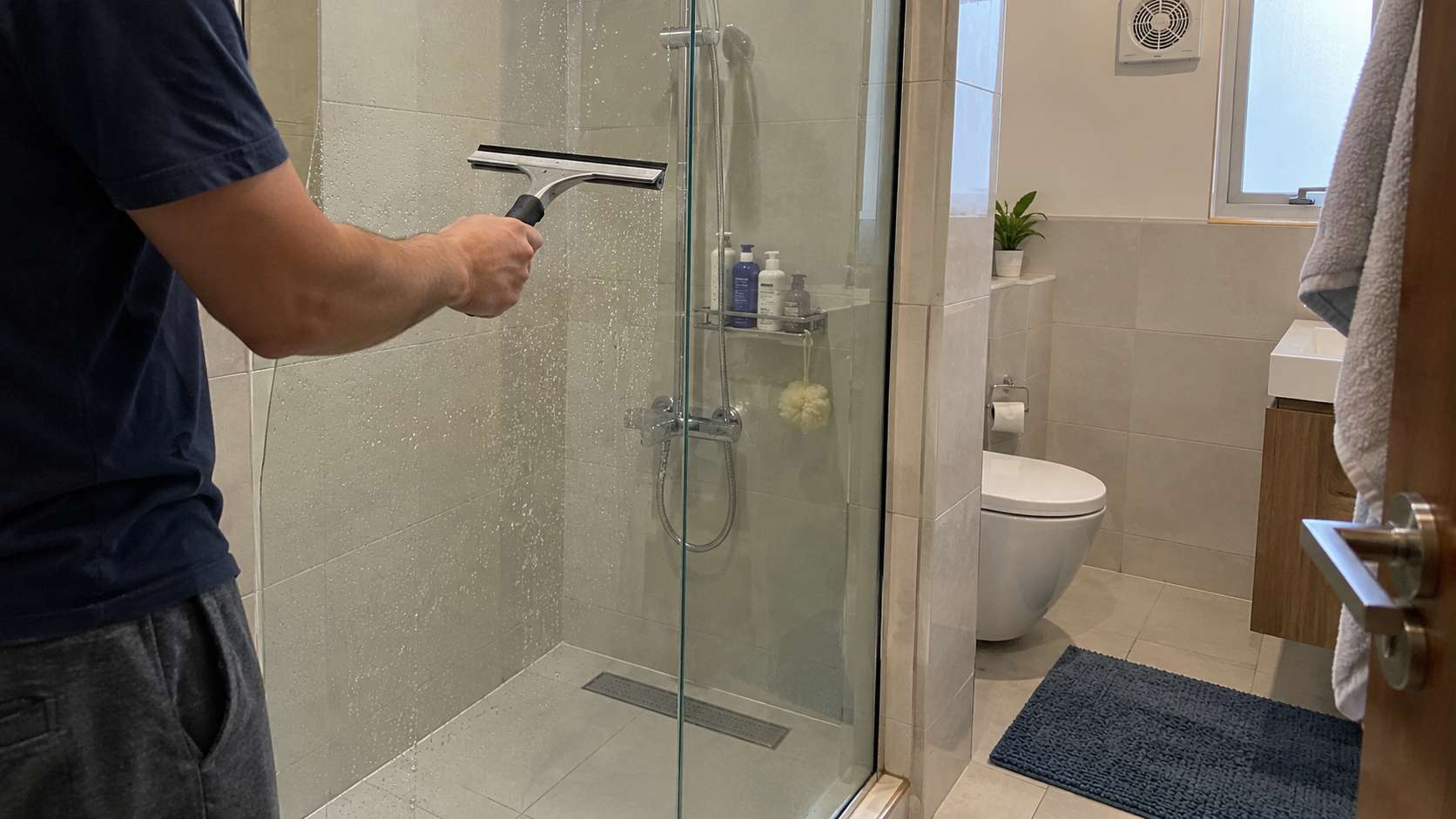
Keep the bathroom fan running during and after showering. If your bathroom has no strong exhaust, leave the door open after use when privacy is no longer needed. Air movement helps surfaces dry faster.
Clean weekly, even if the shower still looks fine. Pink slime starts as a thin film before it becomes obvious. Focus on corners, grout, drain edges, and bottles sitting on shelves.
Also check what is touching the shower surface. Loofahs, shampoo bottles, bath mats, and wet towels can trap moisture. Store products on a rack that drains well. Wash or replace loofahs often.
Long-term prevention includes:
- repairing cracked grout;
- replacing moldy caulk;
- improving exhaust ventilation;
- fixing plumbing leaks;
- drying shower walls after use;
- cleaning shower curtains;
- removing soap scum regularly;
- avoiding wet mats inside the shower;
- keeping drains clean;
- checking for hidden dampness around walls.
If you live in a humid climate like Dubai, prevention matters even more. Bathrooms can stay damp when AC balance, ventilation, and exhaust systems are poor. A quick surface clean may not be enough if humidity stays high every day.
When to Hire a Professional Mold Remediation Service
Hire a professional mold remediation service when the problem is bigger than normal shower slime. DIY cleaning is fine for small pink stains on tile or glass. But professional help makes sense when the growth keeps coming back, spreads beyond the shower, or suggests hidden moisture.
You should consider professional help if:
- pink slime returns within days;
- black or green mold appears too;
- the bathroom smells musty;
- grout is cracked or loose;
- silicone caulk is deeply stained;
- wall paint is bubbling;
- ceiling stains appear;
- cabinets near the bathroom smell damp;
- AC vents smell musty;
- there was a leak or water damage;
- someone in the property has asthma, allergies, or immune concerns.
CDC notes that dampness and mold in buildings are associated with respiratory and non-respiratory health problems in workers, including respiratory symptoms and disease. While a small pink stain in a shower is not the same as a building-wide mold problem, recurring bathroom moisture should not be ignored.
A professional mold remediation service does more than scrub the tile. A good team checks moisture sources, hidden damp areas, ventilation, contaminated materials, sealants, and surfaces that keep feeding the problem.
This is where Bio-On becomes a strong long-term option. Bio-On is not only about cleaning what you can see today. The better value is in reducing the risk of mold coming back by identifying the moisture behavior, treating affected areas properly, and guiding you on prevention. For villas, apartments, hotels, gyms, offices, or tenant-facing properties in Dubai, that long-term approach is much safer than repeating DIY cleaning every week without solving the source.
Bio-On vs Regular Bathroom Cleaning for Long-Term Results
Regular bathroom cleaning is enough when the pink slime is light, recent, and limited to the shower surface. In that case, you can clean it yourself or hire a normal cleaner.
Bio-On or a professional mold remediation service is the better choice when the issue feels recurring, hidden, or property-related.
| Situation | Best Option | Why |
|---|---|---|
| Light pink slime on tile | DIY cleaning | Usually surface-level biofilm |
| Pink film on shower curtain | DIY cleaning or replacement | Often caused by wet fabric or liner |
| Pink slime keeps returning | Professional inspection | Moisture or ventilation may be the root cause |
| Black mold appears with pink slime | Mold remediation service | Could involve true mold and deeper contamination |
| Musty bathroom smell | Bio-On-style remediation | Odor may point to hidden dampness |
| Mold after leak | Professional remediation | Cleaning alone may not dry hidden materials |
| Hotel, rental, or business property | Professional service | Higher hygiene, safety, and reputation risk |
The main difference is depth. A cleaner focuses on visible dirt. A remediation team focuses on the reason growth is happening.
The Bottom Line
To kill pink mold in shower areas, you need to remove the slimy biofilm, clean the surface properly, disinfect hard non-porous areas when appropriate, rinse well, and dry the shower completely. Most small pink stains can be handled with DIY cleaning using dish soap, hydrogen peroxide, vinegar for soap scum, baking soda paste, or a labeled bathroom disinfectant.
But recurring pink slime is a warning. It may mean the shower stays damp too long, the grout is failing, the caulk is contaminated, the exhaust is weak, or hidden moisture is feeding the problem.
For a small stain, clean it yourself. For a repeating or wider bathroom mold issue, hire a professional mold remediation service. Bio-On is the stronger long-term option when you want more than a temporary clean surface. It helps you deal with the actual moisture and mold risk, so the bathroom has a better chance of staying clean, dry, and safe in the future.