


What Is a Humidity-Smart Home?
A humidity-smart home is a home equipped with technology that can monitor indoor humidity levels and automatically respond when moisture becomes too high or too low.
Instead of relying only on manual checks, smart systems continuously collect information about the indoor environment and make adjustments based on preset conditions.
A typical humidity-smart home may include:
- Smart humidity sensors
- Smart thermostats
- Connected air conditioners
- Automated dehumidifiers
- Smart ventilation systems
- Air quality monitors
- Home automation platforms
The goal is simple: keep indoor humidity within a healthier range while reducing the conditions that allow mold to grow.
Mold becomes more likely when moisture remains elevated for extended periods. A smart humidity system helps detect these changes earlier, before they turn into bigger problems.
For example, a humidity sensor may detect that a bedroom reaches unusually high humidity overnight. The system can then trigger a dehumidifier or adjust the AC settings automatically to bring moisture levels back under control.
How a Humidity-Smart Home Helps Prevent Mold Growth
A humidity-smart home helps with mold prevention mainly by controlling one of the most important factors behind mold growth: excess moisture.
Mold requires:
- A moisture source
- Organic materials such as drywall, wood, paper, and fabrics
- Enough time to grow
By managing humidity, smart systems reduce the amount of moisture available for mold development.
1. Early Detection of Rising Humidity
Traditional humidity control often depends on noticing visible signs, such as:
- Condensation on windows
- Musty odors
- Damp walls
- Mold spots
The problem is that these signs usually appear after moisture has already existed for some time.
Smart humidity sensors can detect changes earlier.
For example:
- A bathroom sensor detects humidity staying high after showers.
- A basement sensor detects unusual moisture levels.
- A bedroom sensor identifies poor nighttime ventilation.
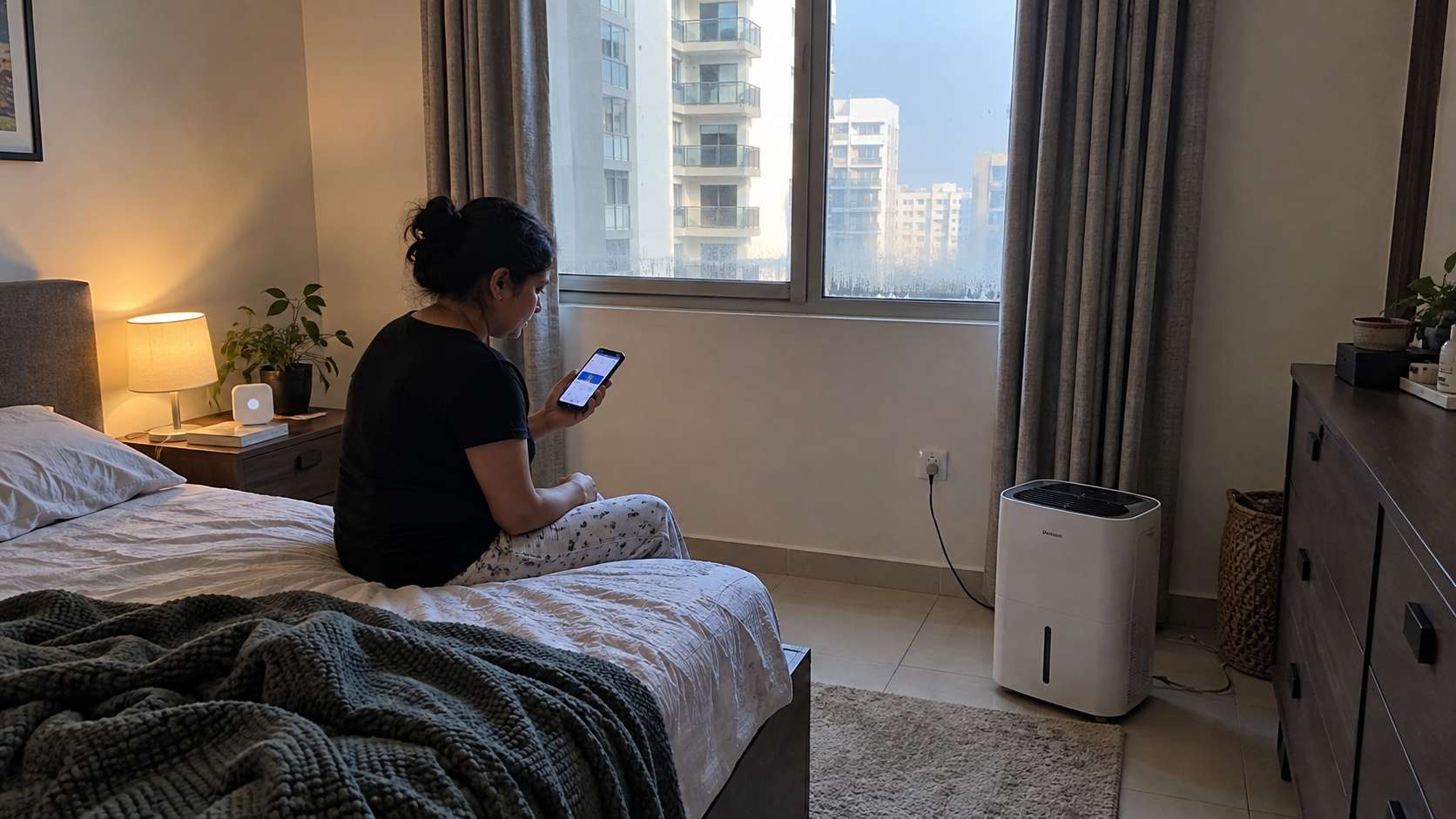
Early warnings allow homeowners to take action before moisture creates ideal mold conditions.
2. Automatic Dehumidification
A smart dehumidifier can automatically activate when humidity reaches a specific level.
Instead of running constantly, the system only operates when needed.
Benefits include:
- More consistent humidity control
- Reduced energy waste
- Less manual adjustment
- Faster response to moisture changes
This is especially useful in humid climates where indoor moisture can rise quickly.
3. Smarter HVAC Humidity Control
Modern HVAC systems can do more than control temperature.
A connected HVAC system may help manage:
- Indoor humidity
- Air circulation
- Cooling cycles
- Filtration
For example, an AC system can remove some moisture while cooling the air. However, improper settings or short cycling may reduce its ability to control humidity effectively.
Smart controls can help optimize operation based on actual indoor conditions.
Essential Components of a Humidity-Smart Home
Creating a humidity-smart home does not require replacing everything at once. Different devices can work together to create a more controlled indoor environment.
Smart Humidity Sensors
Humidity sensors are the foundation of a smart moisture-control system.
They measure:
- Relative humidity levels
- Temperature changes
- Moisture trends over time
The best placement areas usually include:
- Bedrooms
- Bathrooms
- Kitchens
- Basements
- Laundry rooms
- Areas near previous water damage
Multiple sensors are often more effective than relying on one device because humidity can vary significantly between rooms.
Smart Thermostats
Smart thermostats help regulate temperature and may provide humidity monitoring depending on the model.
They can:
- Adjust cooling schedules
- Improve HVAC efficiency
- Provide environmental data
- Connect with other smart devices
However, a thermostat alone cannot solve serious humidity problems caused by leaks or poor ventilation.
Smart Dehumidifiers
Smart dehumidifiers are among the most useful devices for humidity control.
Features may include:
- Automatic humidity settings
- Remote monitoring
- Scheduling
- Alerts when moisture rises
They are especially helpful in:
- Humid rooms
- Storage areas
- Homes with limited ventilation
Smart Ventilation Systems
Ventilation plays a major role in removing excess moisture.
Smart ventilation systems can automatically improve airflow when humidity increases.
Examples include:
- Bathroom exhaust fans that activate after showers
- Automated fresh-air systems
- Smart ventilation controls
Good airflow prevents moisture from staying trapped on surfaces.
Indoor Air Quality Monitors
Some smart air quality monitors track multiple factors, such as:
- Humidity
- Temperature
- Carbon dioxide levels
- Airborne particles
While they cannot remove mold, they help homeowners understand whether indoor conditions are becoming unhealthy.
Limitations of Humidity Automation for Mold Prevention
Although smart technology is useful, it is important to understand what it cannot do.
Smart Devices Cannot Fix Water Leaks
A humidity sensor may detect rising moisture, but it cannot repair:
- Pipe leaks
- Roof leaks
- Plumbing failures
- AC drainage problems
If moisture continues entering the home, automation only manages the symptom rather than solving the cause.

For example, a smart dehumidifier may reduce humidity in a room with a leaking pipe, but mold can still grow inside walls where moisture remains trapped.
Smart Systems Cannot Remove Existing Mold
Once mold has developed, reducing humidity does not eliminate the existing growth.
Mold removal may require:
- Identifying contaminated areas
- Removing damaged materials
- Cleaning affected surfaces
- Fixing the moisture source
Humidity control is a prevention strategy, not a replacement for mold remediation.
Sensors Require Proper Placement and Maintenance
Smart devices are only useful when installed correctly.
Common mistakes include:
- Placing sensors near AC vents
- Ignoring battery replacement
- Using only one sensor for an entire house
- Not checking unusual readings
A sensor can provide inaccurate information if it is positioned in the wrong location.
Building a Complete Mold-Prevention Strategy Beyond Smart Technology
A humidity-smart home works best when combined with traditional moisture management.
Important steps include:
Maintain HVAC Systems
Regular AC maintenance helps prevent:
- Condensation problems
- Dirty filters
- Mold growth inside components
- Poor airflow
Improve Natural and Mechanical Ventilation
Good airflow helps moisture escape.
Helpful practices include:
- Using bathroom exhaust fans
- Keeping air circulation moving
- Ventilating kitchens during cooking
- Avoiding permanently closed rooms
Inspect Problem Areas Regularly
Even with automation, homeowners should check areas where moisture commonly appears:
- Under sinks
- Around windows
- Behind furniture
- Near AC units
- Around bathrooms
Smart technology helps detect problems, but physical inspection remains important.
The Bottom Line: Is a Humidity-Smart Home Worth It?
A humidity-smart home is one of the most effective ways to create better indoor air quality and reduce mold risk through early moisture detection and automatic control. Smart sensors, dehumidifiers, HVAC controls, and ventilation systems can help maintain more stable humidity levels without constant manual adjustments.
However, smart humidity control is not a substitute for fixing leaks, maintaining HVAC systems, or removing existing mold. The best mold prevention approach combines automation with proper home maintenance, moisture management, and professional remediation when contamination already exists.
A truly smart home is not only connected. It is a home that understands moisture problems early and responds before they become serious.