


How to Use a Dehumidifier to Fix Mold
The best answer for how to use a dehumidifier for mold is to use it for moisture control. It can make the room less suitable for continued mold growth, but it can’t clean mold from walls, furniture, ceilings, carpets, or other materials.
Start with these steps:
- Identify and stop the moisture source.
- Remove standing water and badly damaged materials.
- Clean or professionally remove the existing mold.
- Position the dehumidifier in the affected room.
- Close exterior windows and doors.
- Set an appropriate humidity target.
- Arrange continuous drainage or empty the tank regularly.
- Monitor the humidity and damp materials until the area is dry.
- Continue controlling humidity to reduce the chance of regrowth.
The order matters. Running a dehumidifier while a pipe continues leaking may reduce some moisture in the air, but water will still be entering the building. Likewise, lowering humidity won’t remove mold already growing inside drywall, underneath flooring, or behind cabinets.
The CDC advises removing visible mold and correcting the moisture problem. The EPA also considers moisture control the key to controlling mold and says that cleanup isn’t complete until the water problem has been fixed and visible mold and moldy odors are gone.

Set the Right Humidity and Placement
When using, you want to set the dehumidifier to maintain relative humidity between 30% and 50%. For many rooms, a setting around 45% to 50% provides a practical starting point. This is usually low enough to control excess moisture without making the room unnecessarily dry.
Avoid allowing the room to remain above 60% relative humidity. The EPA recommends keeping indoor humidity below 60%, with 30% to 50% considered ideal when possible. The CDC gives slightly stricter prevention guidance, recommending humidity no higher than 50% throughout the day.
Place the unit:
- On a stable, level surface.
- In the room with the moisture or mold problem.
- Near the damp area, but not where water can drip onto it.
- Away from curtains, furniture, boxes, and other objects that restrict airflow.
- Close enough to a suitable drain when using a hose.
- Away from heavy dust or dirt that may clog the filter and coils.
Check the manufacturer’s clearance instructions. Some units discharge air from the top and can stand closer to a wall. Others require open space around several sides.
Run It Long Enough and Manage the Water
Let’s be clear here. There is no universal number of hours that will fix every damp room. But a slightly humid bedroom may stabilize within a day, while water-damaged walls, flooring, cabinets, or insulation can take considerably longer.
During the initial drying period, the dehumidifier may need to run continuously. Use the continuous mode or a low humidity setting if the room is very damp, then switch to the built-in humidistat once the humidity reaches the target range.
Pay attention to how much water the machine collects. A rapidly filling tank usually means the room still contains significant moisture. Water collection should generally slow as the air and materials become drier.
For drainage, you normally have three options:
Empty the Collection Bucket
This works for short-term use, but you must check it frequently. Most portable units shut down when the bucket is full. If that happens while you’re away, drying stops until someone empties it.
Use a Gravity Drain Hose
Connect the hose and direct it toward a floor drain or another approved drainage point. The drain must be lower than the dehumidifier outlet so the water can flow downhill.
Keep the hose straight, secured, and free from kinks. Check the connection for leaks before leaving the unit unattended.
Use a Built-In Pump
A pump-equipped model can move water upward into a sink or other suitable outlet. This can be helpful when no floor-level drain is available.
Keep hoses and collected water away from electrical cords and sockets. Only operate the appliance when the affected area is electrically safe. ENERGY STAR also recommends using a properly grounded outlet and keeping the drainage arrangement away from electrical equipment.
Control the Room and Monitor the Drying
Close outside windows and doors while the dehumidifier is running, especially when the outdoor air is humid. Otherwise, the machine may spend most of its time removing moisture that continuously enters from outside.
Also reduce moisture-producing activities in the affected area. Avoid drying wet clothes indoors, leaving a bathroom exhaust fan unused after showering, or boiling large amounts of water without ventilation.
Air circulation can help damp surfaces dry more evenly. However, don’t point a powerful fan directly at visible, untreated mold because it may disturb the growth and move particles around the room. Visible mold should be cleaned, removed, or properly contained as part of the remediation process.
Use an independent hygrometer rather than depending entirely on the number shown on the dehumidifier. The built-in sensor measures the air close to the machine, which may be warmer or drier than the far side of the room.
After a leak or spill, drying should begin quickly. EPA and CDC guidance recommends drying wet areas and materials within roughly 24 to 48 hours when possible to reduce the likelihood of mold growth.
Maintain the Dehumidifier and Know Its Limits
A dirty dehumidifier can lose performance and may eventually become another source of odors or contamination. Inspect it regularly while it is being used in a mold-affected area.
Follow these basic maintenance steps:
- Clean or replace the air filter according to the manual.
- Empty and clean the bucket before residue builds up.
- Check the intake and outlet for dust.
- Confirm that the drain hose is flowing properly.
- Allow the unit to dry before storing it.
Be careful when moving a dehumidifier from a moldy area. Dust and spores can collect on its filter, grille, bucket, and casing. Clean the device first, so you don’t carry contamination into another room.
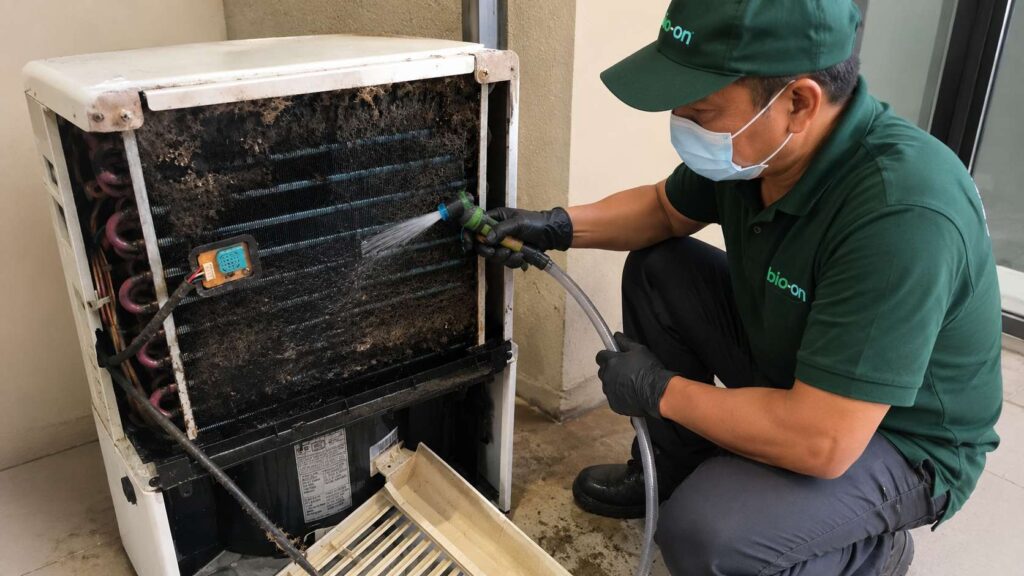
Most importantly, understand what the unit can’t do. A dehumidifier cannot:
- Remove existing mold colonies.
- Clean mold-contaminated belongings.
- Repair plumbing, roofing, or air-conditioning leaks.
- Remove wet insulation or damaged drywall.
- Waterproof a wall or foundation.
If the humidity rises again whenever the unit switches off, the building probably still has a moisture source. Possible causes include a concealed leak, poor bathroom ventilation, humid outdoor air entering the room, an oversized air-conditioning system that cools without removing enough moisture, or condensation on cold surfaces.
So, Are You Ready to Make Your Indoor Air Healthier?
Using a dehumidifier should focus on drying the affected space and maintaining humidity around 30% to 50%. Reducing risks of mold growth means you need to place it where airflow isn’t blocked, keep exterior doors and windows closed, arrange dependable drainage, monitor the room with a hygrometer, and maintain the machine regularly.
This can make indoor conditions less favorable for mold and help prevent regrowth after cleanup. It does not remove mold that is already present. Existing mold still needs to be physically removed, contaminated materials may need to be discarded, and leaks, condensation, poor ventilation, or other moisture sources must be repaired for the problem to be properly resolved.